

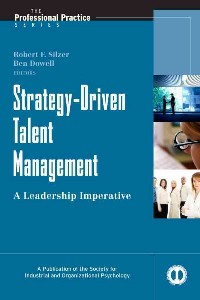
简介
A Publication of the Society for Industrial and Organizational Psychology Praise for Strategy-Driven Talent Management "Silzer and Dowell's Strategy-Driven Talent Management provides a comprehensive overview of the different elements of the best talent management processes used in organizations today. This is a valuable resource for leaders and managers, HR practitioners and anyone involved in developing leadership talent."
— Ed Lawler , Professor, School of Business, University of Southern California "Talent is the key to successful execution of a winning business strategy. Strategy-Driven Talent Management by Silzer & Dowell provides a thorough and very practical guide to building and managing talent based on the strategic needs of the organization. Business leaders will find this an excellent resource with many interesting examples and best practices from leading companies."
— Herbert L. Henkel , Chairman and Chief Executive Officer, Ingersoll Rand "Thanks to Strategy-Driven Talent Management , we can move from an attractive idea of talent management to practices that deliver. This book brings the work of practitioners—the people who are inventing, crafting, and shaping the field of talent management—to the forefront. Their collective experiences and insights will certainly enrich your own research and practice."
— Cynthia McCauley , PhD, Senior Fellow, Center for Creative Leadership "It is exciting to see that Rob Silzer and Ben Dowell have given us the state of the art in 2010 of integrating human resource issues into strategic management. This volume is a must read for human resource and line leaders alike. The journey is far from over, but this volume of work will chart the course for further progress."
— Noel Tichy , Professor, Management and Organizations, University of Michigan, Ross School of Business
目录
Contents 11
Figure, Tables, and Exhibits 15
Foreword 19
Preface 23
The Imperative of Talent 23
Premise of the Book 25
Acknowledgments 27
The Editors 31
The Contributors 33
Part One: General Frameworks 49
Chapter 1: STRATEGIC TALENT MANAGEMENT MATTERS 51
A Leadership Imperative 51
Business Reasons for Talent Management 56
Strategically Driven Human Resources 57
What Is Talent? 61
Defining Talent Management 62
Talent Management Success Factors 70
1. Driven by Business Strategy 72
2. Integrated with Other Processes 78
3. Managed as a Core Business Practice 85
4. Engrained as a Talent Mindset 88
Other Talent Management Approaches 92
Issues in Talent Management 95
Talent Roles 105
Talent Management Going Forward 115
References 116
Chapter 2: BUILDING COMPETITIVE ADVANTAGE THROUGH INTEGRATED TALENT MANAGEMENT 121
Talent Management Defined 123
Three Levels of Talent Management Integration 128
A Model of Integrated Talent Management 143
Implementation of Talent Stewardship 161
Future Challenges and New Directions 163
References 165
Part Two: Key Practices 169
Chapter 3: BUILDING THE TALENT PIPELINE: Attracting and Recruiting the Best and Brightest 171
The War for Talent Starts with Attraction 171
Step 1: Identifying Your Talent Acquisition Strategy 172
Step 2: Creating a Compelling Employment Value Proposition 179
Step 3: Creating a Memorable Employment Brand 182
Step 4: Crafting Your Talent Brand 184
Step 5: Determining the Most Productive Talent Channels 189
Step 6: Measuring Your Success 198
Alignment Is the Secret Sauce 202
A Research Agenda 204
Conclusion 204
References 205
Chapter 4: ROPES TO SKIP AND THE ROPES TO KNOW: Facilitating Executive Onboarding 207
The Onboarding Challenge 210
The Science of Onboarding 213
The Executive Onboarding Process: A Five-Stage Model 221
Onboarding Contingencies: It All Depends 246
Investing in Onboarding 251
Some Lessons Learned and Some Questions 253
References 256
Chapter 5: IDENTIFYING AND ASSESSING HIGH-POTENTIAL TALENT: Current Organizational Practices 261
Prediction Challenge 264
Corporate High-Potential Survey 267
Definitions of Potential 268
High-Potential Categories 276
High-Potential Time Frames 277
Size of High-Potential Pool 278
Identification Process for High Potentials 280
Predictors of Future Performance 290
Assessment Techniques and Tools 313
Assessment Versus Prediction 317
Tracking Progress 319
Conclusion 321
Future Directions 322
References 325
Chapter 6: DEVELOPING LEADERSHIP TALENT: Delivering on the Promise of Structured Programs 329
Leadership Education and Development: A Historical Perspective 330
A Typology of Formal Leadership Development Approaches 334
Conclusion 357
References 358
Chapter 7: DEVELOPING LEADERSHIP TALENT THROUGH EXPERIENCES 361
Why Experiences Are So Important 362
How to Build a Talent Management Taxonomy that Leverages Experience 366
How to Embed Experiences in Talent Management Systems 378
Future Directions for Research and Practice 388
References 391
Chapter 8: CHANGING BEHAVIOR ONE LEADER AT A TIME 397
Leadership Matters 398
What We Know About Behavior Change 400
Factors Influencing Individual Change 411
A Model for the Change Process 412
Individual Differences: Which Leaders Can Learn? 414
Differences in Leadership Level and Job Complexity 423
Characteristics of the Coach 427
Factors in the Organization 431
Measuring the Effectiveness of Coaching 433
Implications and Lessons Learned 438
Conclusion 440
References 440
Chapter 9: MANAGING LEADERSHIP TALENT POOLS 447
The Business Case 450
Foundations 452
Key Factors in Managing Leadership Talent Pools 453
Roles in the Talent Review Process 455
Characteristics of Successful Talent Reviews 462
The Architecture of a Talent Review 463
Alternative Approaches to Talent Reviews 473
Talent Assessment 474
Outcomes of Talent Reviews 476
Lessons Learned 479
Future Directions in Research 482
Conclusion 485
References 485
Chapter 10: EMPLOYEE ENGAGEMENT: A Focus on Leaders 487
Defining Terms and Some History 488
Which Elements Matter Most? 491
The \u201cAha\u201d 494
Engagement in Practice 498
The Future 503
References 505
Part Three: Critical Issues 509
Chapter 11: BUILDING FUNCTIONAL EXPERTISE TO ENHANCE ORGANIZATIONAL CAPABILITY 511
Overview of Functional Expertise 512
Methodology for Building Functional Expertise 520
Key Lessons Learned 547
Future Trends and Suggested Research 548
References 549
Chapter 12: MANAGING AND MEASURING THE TALENT MANAGEMENT FUNCTION 551
Laying the Groundwork for Effective Evaluation 552
Defining the Metrics 571
Data Collection and Analysis 580
Bank of America Case Study 587
Conclusion 592
References 594
Chapter 13: MANAGING TALENT IN GLOBAL ORGANIZATIONS 597
Global Talent Management Strategy Framework 600
Strategic Actions to Develop Global Leaders 623
How Do I Get Started? 630
Practical Advice from Practitioners 631
Future Research 635
Conclusion 637
References 637
Chapter 14: MANAGING TALENT IN CHINA 643
Western Multinationals in China 643
The Chinese Context 645
Talent Management in China 650
Future Research 658
Conclusions 659
References 660
Part Four: Different Perspectives 663
Chapter 15: TAKE THE PEPSI CHALLENGE: Talent Development at PepsiCo 665
Talent Management at PepsiCo 666
Trends and Observations 676
Lessons Learned 683
Conclusion 687
References 687
Chapter 16: INTEGRATED TALENT MANAGEMENT AT MICROSOFT 689
Microsoft as a Business 689
Talent Management at Microsoft 690
CareerCompass: Career Models at Microsoft 691
Performance Management at Microsoft 695
Leadership Assessment, Movement, and Development at Microsoft 697
Lessons Learned 700
Chapter 17: THEY CAN DO IT! YOU CAN HELP!: A Look at Talent Practices at The Home Depot 703
The Case for Talent Management 703
Talent Channels 705
Creating Successful Hiring Partnerships 706
Creating Successful Leadership Pipeline Programs 709
Lessons Learned 712
Conclusion 715
Chapter 18: ALLSTATE\u2019S \u201cGOOD HANDS\u201d APPROACH TO TALENT MANAGEMENT: An Interview with Ed Liddy and Joan Crockett 717
A CEO\u2019s Personal Point of View on Talent Management 717
Allstate Background 718
An Outsider Perspective on Talent and Human Resources 721
Allstate\u2019s Commitment to Making Strategically Valuable Talent Decisions 723
Talent Strategy at the Pivot Point: Agents as Entrepreneurs 724
Strategic Critical Success Factors for Leaders 727
Talent Management Synergy Through Integrated HR 731
Strategic HR Partnership at Allstate 739
Conclusion 745
References 746
Chapter 19: A VIEW FROM THE TOP ON TALENT MANAGEMENT: An Interview with Warren Staley, Recently Retired CEO of Cargill Incorporated 747
Chapter 20: CHIEF HUMAN RESOURCE OFFICER PERSPECTIVES ON TALENT MANAGEMENT 759
Defining Talent Management 760
Influences on Talent Management 762
CHRO Influence on Talent Management 773
Integration of Human Resource Functions 776
Predictors of High Potential 780
International Challenges 783
Measuring Talent Management Success 784
Lessons Learned 786
Future Directions 789
References 790
Part Five: Future Directions for Practice and Research 791
Chapter 21: BUILDING SUSTAINABLE TALENT THROUGH TALENT MANAGEMENT: Benefits, Challenges, and Future Directions 793
Talent Management Themes 793
Benefits of Strategy-Driven Talent Management 800
Challenges to the Effective Management of Talent 801
Future Talent Management 813
Conclusion 813
References 814
Chapter 22: CRITICAL RESEARCH ISSUES IN TALENT MANAGEMENT 815
Key Strategic Links 815
Organizational Talent Strategy and Talent Models 818
Talent as a Driver of Business Strategy 819
Talent Model for Individuals 819
Talent Programs and Practices 820
Talent Pools and Differential Investment 822
Talent Decisions 823
Talent Measures and Outcomes 824
Organizational Acceptance 825
Talent Management Talent 826
Conclusion 827
References 828
Chapter 23: TALENT MANAGEMENT: An Annotated Bibliography 829
Chapter 1: Strategic Talent Management Matters 829
Chapter 2: Building Competitive Advantage Through Integrated Talent Management 832
Chapter 3: Building the Talent Pipeline: Attracting and Recruiting the Best and Brightest 834
Chapter 4: Ropes to Skip and the Ropes to Know: Facilitating Executive Onboarding 837
Chapter 5: Identifying and Assessing High-Potential Talent: Current Organizational Practices 840
Chapter 6: Developing Leadership Talent: Delivering on the Promise of Structured Programs 843
Chapter 7: Developing Leadership Talent Through Experiences 846
Chapter 8: Changing Behavior One Leader at a Time 849
Chapter 9: Managing Leadership Talent Pools 852
Chapter 10: Employee Engagement: A Focus on Leaders 855
Chapter 11: Building Functional Competence to Enhance Functional Capability 857
Chapter 12: Managing and Measuring the Talent Management Function 860
Chapter 13: Managing Talent in Global Organizations 863
Chapter 14: Managing Talent in China 867
Name Index 871
Subject Index 883
Figure, Tables, and Exhibits 15
Foreword 19
Preface 23
The Imperative of Talent 23
Premise of the Book 25
Acknowledgments 27
The Editors 31
The Contributors 33
Part One: General Frameworks 49
Chapter 1: STRATEGIC TALENT MANAGEMENT MATTERS 51
A Leadership Imperative 51
Business Reasons for Talent Management 56
Strategically Driven Human Resources 57
What Is Talent? 61
Defining Talent Management 62
Talent Management Success Factors 70
1. Driven by Business Strategy 72
2. Integrated with Other Processes 78
3. Managed as a Core Business Practice 85
4. Engrained as a Talent Mindset 88
Other Talent Management Approaches 92
Issues in Talent Management 95
Talent Roles 105
Talent Management Going Forward 115
References 116
Chapter 2: BUILDING COMPETITIVE ADVANTAGE THROUGH INTEGRATED TALENT MANAGEMENT 121
Talent Management Defined 123
Three Levels of Talent Management Integration 128
A Model of Integrated Talent Management 143
Implementation of Talent Stewardship 161
Future Challenges and New Directions 163
References 165
Part Two: Key Practices 169
Chapter 3: BUILDING THE TALENT PIPELINE: Attracting and Recruiting the Best and Brightest 171
The War for Talent Starts with Attraction 171
Step 1: Identifying Your Talent Acquisition Strategy 172
Step 2: Creating a Compelling Employment Value Proposition 179
Step 3: Creating a Memorable Employment Brand 182
Step 4: Crafting Your Talent Brand 184
Step 5: Determining the Most Productive Talent Channels 189
Step 6: Measuring Your Success 198
Alignment Is the Secret Sauce 202
A Research Agenda 204
Conclusion 204
References 205
Chapter 4: ROPES TO SKIP AND THE ROPES TO KNOW: Facilitating Executive Onboarding 207
The Onboarding Challenge 210
The Science of Onboarding 213
The Executive Onboarding Process: A Five-Stage Model 221
Onboarding Contingencies: It All Depends 246
Investing in Onboarding 251
Some Lessons Learned and Some Questions 253
References 256
Chapter 5: IDENTIFYING AND ASSESSING HIGH-POTENTIAL TALENT: Current Organizational Practices 261
Prediction Challenge 264
Corporate High-Potential Survey 267
Definitions of Potential 268
High-Potential Categories 276
High-Potential Time Frames 277
Size of High-Potential Pool 278
Identification Process for High Potentials 280
Predictors of Future Performance 290
Assessment Techniques and Tools 313
Assessment Versus Prediction 317
Tracking Progress 319
Conclusion 321
Future Directions 322
References 325
Chapter 6: DEVELOPING LEADERSHIP TALENT: Delivering on the Promise of Structured Programs 329
Leadership Education and Development: A Historical Perspective 330
A Typology of Formal Leadership Development Approaches 334
Conclusion 357
References 358
Chapter 7: DEVELOPING LEADERSHIP TALENT THROUGH EXPERIENCES 361
Why Experiences Are So Important 362
How to Build a Talent Management Taxonomy that Leverages Experience 366
How to Embed Experiences in Talent Management Systems 378
Future Directions for Research and Practice 388
References 391
Chapter 8: CHANGING BEHAVIOR ONE LEADER AT A TIME 397
Leadership Matters 398
What We Know About Behavior Change 400
Factors Influencing Individual Change 411
A Model for the Change Process 412
Individual Differences: Which Leaders Can Learn? 414
Differences in Leadership Level and Job Complexity 423
Characteristics of the Coach 427
Factors in the Organization 431
Measuring the Effectiveness of Coaching 433
Implications and Lessons Learned 438
Conclusion 440
References 440
Chapter 9: MANAGING LEADERSHIP TALENT POOLS 447
The Business Case 450
Foundations 452
Key Factors in Managing Leadership Talent Pools 453
Roles in the Talent Review Process 455
Characteristics of Successful Talent Reviews 462
The Architecture of a Talent Review 463
Alternative Approaches to Talent Reviews 473
Talent Assessment 474
Outcomes of Talent Reviews 476
Lessons Learned 479
Future Directions in Research 482
Conclusion 485
References 485
Chapter 10: EMPLOYEE ENGAGEMENT: A Focus on Leaders 487
Defining Terms and Some History 488
Which Elements Matter Most? 491
The \u201cAha\u201d 494
Engagement in Practice 498
The Future 503
References 505
Part Three: Critical Issues 509
Chapter 11: BUILDING FUNCTIONAL EXPERTISE TO ENHANCE ORGANIZATIONAL CAPABILITY 511
Overview of Functional Expertise 512
Methodology for Building Functional Expertise 520
Key Lessons Learned 547
Future Trends and Suggested Research 548
References 549
Chapter 12: MANAGING AND MEASURING THE TALENT MANAGEMENT FUNCTION 551
Laying the Groundwork for Effective Evaluation 552
Defining the Metrics 571
Data Collection and Analysis 580
Bank of America Case Study 587
Conclusion 592
References 594
Chapter 13: MANAGING TALENT IN GLOBAL ORGANIZATIONS 597
Global Talent Management Strategy Framework 600
Strategic Actions to Develop Global Leaders 623
How Do I Get Started? 630
Practical Advice from Practitioners 631
Future Research 635
Conclusion 637
References 637
Chapter 14: MANAGING TALENT IN CHINA 643
Western Multinationals in China 643
The Chinese Context 645
Talent Management in China 650
Future Research 658
Conclusions 659
References 660
Part Four: Different Perspectives 663
Chapter 15: TAKE THE PEPSI CHALLENGE: Talent Development at PepsiCo 665
Talent Management at PepsiCo 666
Trends and Observations 676
Lessons Learned 683
Conclusion 687
References 687
Chapter 16: INTEGRATED TALENT MANAGEMENT AT MICROSOFT 689
Microsoft as a Business 689
Talent Management at Microsoft 690
CareerCompass: Career Models at Microsoft 691
Performance Management at Microsoft 695
Leadership Assessment, Movement, and Development at Microsoft 697
Lessons Learned 700
Chapter 17: THEY CAN DO IT! YOU CAN HELP!: A Look at Talent Practices at The Home Depot 703
The Case for Talent Management 703
Talent Channels 705
Creating Successful Hiring Partnerships 706
Creating Successful Leadership Pipeline Programs 709
Lessons Learned 712
Conclusion 715
Chapter 18: ALLSTATE\u2019S \u201cGOOD HANDS\u201d APPROACH TO TALENT MANAGEMENT: An Interview with Ed Liddy and Joan Crockett 717
A CEO\u2019s Personal Point of View on Talent Management 717
Allstate Background 718
An Outsider Perspective on Talent and Human Resources 721
Allstate\u2019s Commitment to Making Strategically Valuable Talent Decisions 723
Talent Strategy at the Pivot Point: Agents as Entrepreneurs 724
Strategic Critical Success Factors for Leaders 727
Talent Management Synergy Through Integrated HR 731
Strategic HR Partnership at Allstate 739
Conclusion 745
References 746
Chapter 19: A VIEW FROM THE TOP ON TALENT MANAGEMENT: An Interview with Warren Staley, Recently Retired CEO of Cargill Incorporated 747
Chapter 20: CHIEF HUMAN RESOURCE OFFICER PERSPECTIVES ON TALENT MANAGEMENT 759
Defining Talent Management 760
Influences on Talent Management 762
CHRO Influence on Talent Management 773
Integration of Human Resource Functions 776
Predictors of High Potential 780
International Challenges 783
Measuring Talent Management Success 784
Lessons Learned 786
Future Directions 789
References 790
Part Five: Future Directions for Practice and Research 791
Chapter 21: BUILDING SUSTAINABLE TALENT THROUGH TALENT MANAGEMENT: Benefits, Challenges, and Future Directions 793
Talent Management Themes 793
Benefits of Strategy-Driven Talent Management 800
Challenges to the Effective Management of Talent 801
Future Talent Management 813
Conclusion 813
References 814
Chapter 22: CRITICAL RESEARCH ISSUES IN TALENT MANAGEMENT 815
Key Strategic Links 815
Organizational Talent Strategy and Talent Models 818
Talent as a Driver of Business Strategy 819
Talent Model for Individuals 819
Talent Programs and Practices 820
Talent Pools and Differential Investment 822
Talent Decisions 823
Talent Measures and Outcomes 824
Organizational Acceptance 825
Talent Management Talent 826
Conclusion 827
References 828
Chapter 23: TALENT MANAGEMENT: An Annotated Bibliography 829
Chapter 1: Strategic Talent Management Matters 829
Chapter 2: Building Competitive Advantage Through Integrated Talent Management 832
Chapter 3: Building the Talent Pipeline: Attracting and Recruiting the Best and Brightest 834
Chapter 4: Ropes to Skip and the Ropes to Know: Facilitating Executive Onboarding 837
Chapter 5: Identifying and Assessing High-Potential Talent: Current Organizational Practices 840
Chapter 6: Developing Leadership Talent: Delivering on the Promise of Structured Programs 843
Chapter 7: Developing Leadership Talent Through Experiences 846
Chapter 8: Changing Behavior One Leader at a Time 849
Chapter 9: Managing Leadership Talent Pools 852
Chapter 10: Employee Engagement: A Focus on Leaders 855
Chapter 11: Building Functional Competence to Enhance Functional Capability 857
Chapter 12: Managing and Measuring the Talent Management Function 860
Chapter 13: Managing Talent in Global Organizations 863
Chapter 14: Managing Talent in China 867
Name Index 871
Subject Index 883
- 名称
- 类型
- 大小
光盘服务联系方式: 020-38250260 客服QQ:4006604884
云图客服:
用户发送的提问,这种方式就需要有位在线客服来回答用户的问题,这种 就属于对话式的,问题是这种提问是否需要用户登录才能提问
Video Player
×
Audio Player
×
pdf Player
×
