

简介
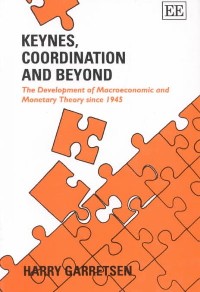
This book proposes that the coordination problems lies at the heart of Keynes' economics and argues that Keynes' message got lost in the post-war period. The text develops an extension of Keynes' ideas within a general equilibrium framework and within alternative frameworks such as Austrian economics. It is demonstrated that in the absence of a co-ordinating device like the Walrasian auctioneer or in the presence of uncertainty, co-ordination can no longer be superimposed. This ultimately implies that apart from some notable exceptions, the Keynesian revolution was in fact stifled at birth because the validity of the central concepts of microeconomics have never been challenged.
目录
Table Of Contents:
List of Illustrations viii
Acknowledgements ix
Introduction
Keynes's theoretical legacy and its inheritants: purpose of this study 1(4)
Micro, macro and methodology 5(6)
Outline of the following chapters 11(8)
Notes 16(3)
Indeterminacy in Macroeconomics: On the Structure of Keynes's General Theory
Introduction 19(2)
Basic issues of the General Theory 21(1)
The labour market 22(2)
The goods market 24(3)
Investment, the interest rate, money and fundamental indeterminacy 27(3)
Keynes on determinism and indeterminacy 30(11)
Notes 38(3)
The Right Answers to the Wrong Question? An Assessment of the Microfoundations Debate
Introduction 41(2)
Keynes's economics and general equilibrium theory: the origin of the microfoundations debate 43(6)
New-classical macroeconomics 49(4)
New-Keynesian macroeconomics 53(7)
The microfoundation of price rigidities 53(3)
Coordination failures 56(4)
Summary and conclusions 60(8)
Notes 65(3)
Alternative Approaches
Introduction 68(1)
Post-Keynesian economics 69(13)
Some basic features of post-Keynesian economics 69(9)
Microfoundations, coordination, Keynes and post-Keynesian economics 78(4)
Austrian economics 82(8)
Some basic features of Austrian economics 82(4)
Microfoundations, coordination, Keynes and Austrian economics 86(4)
(Dis)Similarities between the alternative approaches 90(12)
Appendix: Liquidity and mark-up pricing: two examples 92(3)
Notes 95(7)
Indeterminacy and Multiplicity
Introduction 102(1)
Indeterminacy in a Keynesian OLG model 103(13)
Introduction 103(1)
Keynes and the classics in a general equilibrium framework 104(1)
The one sector OLG model 105(4)
A multi-sector extension and two fallacies of composition 109(6)
Conclusions 115(1)
The inclusion of money in the model 116(4)
Indeterminacy, multiplicity, and Keynes 120(9)
To sum up: a pyrrhic victory? 129(6)
Notes 130(5)
Money, Prices and Uncertainty
Introduction 135(1)
Is money essential? 136(5)
The essential properties of money 141(21)
Introduction 141(1)
Money and portfolio equilibrium 142(1)
Keynes's view of production and unemployment in an economy where money has no special properties 143(2)
The essential properties of money and the level of employment in a monetary economy 145(4)
A preliminary evaluation of the essential properties of money 149(3)
Conclusions 152(3)
Appendix: The required degree of price flexibility 155(1)
Notes 156(6)
The Trade-off between Price Flexibility and Price Rigidity
Introduction 162(1)
Money and nominal inertia 163(6)
The trade-off between price flexibility and price stickiness: an example 169(5)
The degree of nominal inertia 174(4)
Money, prices, uncertainty and the alternative approaches 178(3)
Conclusions 181(8)
Notes 184(5)
Implications of the Coordination Problem
Introduction 189(1)
Implications of the coordination problem for individual behaviour (I): non-uniqueness of equilibria 190(5)
Implications of the coordination problem for individual behaviour (II): dealing with uncertainty 195(4)
To sum up (I): facing the coordination problem 199(3)
To sum up (II): extending Keynes's analysis 202(5)
Notes 203(4)
References 207(16)
Index 223
List of Illustrations viii
Acknowledgements ix
Introduction
Keynes's theoretical legacy and its inheritants: purpose of this study 1(4)
Micro, macro and methodology 5(6)
Outline of the following chapters 11(8)
Notes 16(3)
Indeterminacy in Macroeconomics: On the Structure of Keynes's General Theory
Introduction 19(2)
Basic issues of the General Theory 21(1)
The labour market 22(2)
The goods market 24(3)
Investment, the interest rate, money and fundamental indeterminacy 27(3)
Keynes on determinism and indeterminacy 30(11)
Notes 38(3)
The Right Answers to the Wrong Question? An Assessment of the Microfoundations Debate
Introduction 41(2)
Keynes's economics and general equilibrium theory: the origin of the microfoundations debate 43(6)
New-classical macroeconomics 49(4)
New-Keynesian macroeconomics 53(7)
The microfoundation of price rigidities 53(3)
Coordination failures 56(4)
Summary and conclusions 60(8)
Notes 65(3)
Alternative Approaches
Introduction 68(1)
Post-Keynesian economics 69(13)
Some basic features of post-Keynesian economics 69(9)
Microfoundations, coordination, Keynes and post-Keynesian economics 78(4)
Austrian economics 82(8)
Some basic features of Austrian economics 82(4)
Microfoundations, coordination, Keynes and Austrian economics 86(4)
(Dis)Similarities between the alternative approaches 90(12)
Appendix: Liquidity and mark-up pricing: two examples 92(3)
Notes 95(7)
Indeterminacy and Multiplicity
Introduction 102(1)
Indeterminacy in a Keynesian OLG model 103(13)
Introduction 103(1)
Keynes and the classics in a general equilibrium framework 104(1)
The one sector OLG model 105(4)
A multi-sector extension and two fallacies of composition 109(6)
Conclusions 115(1)
The inclusion of money in the model 116(4)
Indeterminacy, multiplicity, and Keynes 120(9)
To sum up: a pyrrhic victory? 129(6)
Notes 130(5)
Money, Prices and Uncertainty
Introduction 135(1)
Is money essential? 136(5)
The essential properties of money 141(21)
Introduction 141(1)
Money and portfolio equilibrium 142(1)
Keynes's view of production and unemployment in an economy where money has no special properties 143(2)
The essential properties of money and the level of employment in a monetary economy 145(4)
A preliminary evaluation of the essential properties of money 149(3)
Conclusions 152(3)
Appendix: The required degree of price flexibility 155(1)
Notes 156(6)
The Trade-off between Price Flexibility and Price Rigidity
Introduction 162(1)
Money and nominal inertia 163(6)
The trade-off between price flexibility and price stickiness: an example 169(5)
The degree of nominal inertia 174(4)
Money, prices, uncertainty and the alternative approaches 178(3)
Conclusions 181(8)
Notes 184(5)
Implications of the Coordination Problem
Introduction 189(1)
Implications of the coordination problem for individual behaviour (I): non-uniqueness of equilibria 190(5)
Implications of the coordination problem for individual behaviour (II): dealing with uncertainty 195(4)
To sum up (I): facing the coordination problem 199(3)
To sum up (II): extending Keynes's analysis 202(5)
Notes 203(4)
References 207(16)
Index 223
- 名称
- 类型
- 大小
光盘服务联系方式: 020-38250260 客服QQ:4006604884
云图客服:
用户发送的提问,这种方式就需要有位在线客服来回答用户的问题,这种 就属于对话式的,问题是这种提问是否需要用户登录才能提问
Video Player
×
Audio Player
×
pdf Player
×
