

简介
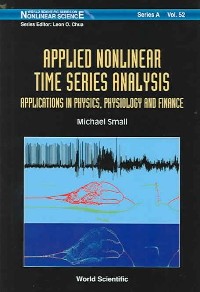
"Nonlinear time series methods have developed rapidly overa quarter of a century and have reached an advanced state of maturity during the last decade. Implementations of these methods for experimental data are now widely accepted and fairly routine; however, genuinely useful applications remain rare. This book focuses on the practice of applying these methods to solve real problems." "To illustrate the usefulness of these methods,a wide variety of physical and physiological systems are considered. The technical tools utilized in this book fallinto three distinct, but interconnected areas: quantitative measures of nonlinear dynamics, Monte-Carlo statistical hypothesis testing, and nonlinear modeling. Ten highly detailed applications serve as case studies of fruitful applications and illustrate the mathematical techniques described in the text."--BOOK JACKET.
目录
Table Of Contents:
Preface vii
1. Time series embedding and reconstruction 1(46)
1.1 Stochasticity and determinism: Why should we bother? 2(3)
1.2 Embedding dimension 5(5)
1.2.1 False Nearest Neighbours 6(1)
1.2.2 False strands and so on 7(1)
1.2.3 Embed, embed and then embed 8(1)
1.2.4 Embed and model, and then embed again 9(1)
1.3 Embedding lag 10(4)
1.3.1 Autocorrelation 10(1)
1.3.2 Mutual information 11(1)
1.3.3 Approximate period 11(1)
1.3.4 Generalised embedding lags 12(2)
1.4 Which comes first? 14(1)
1.5 An embedding zoo 15(4)
1.6 Irregular embeddings 19(9)
1.6.1 Finding irregular embeddings 21(7)
1.7 Embedding window 28(13)
1.7.1 A modelling paradigm 30(4)
1.7.2 Examples 34(7)
1.8 Application: Sunspots and chaotic laser dynamics: Improved modelling and superior dynamics 41(3)
1.9 Summary 44(3)
2. Dynamic measures and topological invariants 47(38)
2.1 Correlation dimension 48(6)
2.2 Entropy, complexity and information 54(15)
2.2.1 Entropy 54(4)
2.2.2 Complexity 58(2)
2.2.3 Alternative encoding schemes 60(9)
2.3 Application: Detecting ventricular arrhythmia 69(5)
2.4 Lyapunov exponents and nonlinear prediction error 74(6)
2.5 Application: Potential predictability in financial time series 80(2)
2.6 Summary 82(3)
3. Estimation of correlation dimension 85(30)
3.1 Preamble 86(1)
3.2 Box-counting and the Grassberger-Procaccia algorithm 87(3)
3.3 Judd's algorithm 90(5)
3.4 Application: Distinguishing sleep states by monitoring respiration 95(7)
3.5 The Gaussian Kernel algorithm 102(3)
3.6 Application: Categorising cardiac dynamics from measured ECG 105(6)
3.7 Even more algorithms 111(4)
4. The method of surrogate data 115(34)
4.1 The rationale and language of surrogate data 116(4)
4.2 Linear surrogates 120(5)
4.2.1 Algorithm 0 and its analogues 121(1)
4.2.2 Algorithm 1 and its applications 122(1)
4.2.3 Algorithm 2 and its problems 123(2)
4.3 Cycle shuffled surrogates 125(4)
4.4 Test statistics 129(4)
4.4.1 The Kolmogorov-Smirnov test 131(1)
4.4.2 The χ虏 test 131(1)
4.4.3 Noise dimension 132(1)
4.4.4 Moments of the data 132(1)
4.5 Correlation dimension: A pivotal test statistic - linear hypotheses 133(10)
4.5.1 The linear hypotheses 135(1)
4.5.2 Calculations 136(6)
4.5.3 Results 142(1)
4.6 Application: Are financial time series deterministic? 143(4)
4.7 Summary 147(2)
5. Non-standard and non-linear surrogates 149(30)
5.1 Generalised nonlinear null hypotheses: The hypothesis is the model 150(5)
5.1.1 The "pivotalness" of dynamic measures 152(1)
5.1.2 Correlation dimension: A pivotal test statistic - non-linear hypothesis 153(2)
5.2 Application: Infant sleep apnea 155(2)
5.3 Pseudo-periodic surrogates 157(9)
5.3.1 Shadowing surrogates 158(3)
5.3.2 The parameters of the algorithm 161(2)
5.3.3 Linear noise and chaos 163(3)
5.4 Application: Mimicking human vocalisation patterns 166(2)
5.5 Application: Are financial time series really deterministic? 168(6)
5.6 Simulated annealing and other computational methods 174(2)
5.7 Summary 176(3)
6. Identifying the dynamics 179(44)
6.1 Phenomenological and ontological models 180(1)
6.2 Application: Severe Acute Respiratory Syndrome: Assessing governmental control strategies during the SARS outbreak in Hong Kong 181(14)
6.3 Local models 195(3)
6.4 The importance of embedding for modelling 198(2)
6.5 Semi-local models 200(8)
6.5.1 Radial basis functions 200(1)
6.5.2 Minimum description length principle 201(4)
6.5.3 Pseudo linear models 205(2)
6.5.4 Cylindrical basis models 207(1)
6.6 Application: Predicting onset of Ventricular Fibrillation, and evaluating time since onset 208(15)
7. Applications 223(6)
Bibliography 229(12)
Index 241
Preface vii
1. Time series embedding and reconstruction 1(46)
1.1 Stochasticity and determinism: Why should we bother? 2(3)
1.2 Embedding dimension 5(5)
1.2.1 False Nearest Neighbours 6(1)
1.2.2 False strands and so on 7(1)
1.2.3 Embed, embed and then embed 8(1)
1.2.4 Embed and model, and then embed again 9(1)
1.3 Embedding lag 10(4)
1.3.1 Autocorrelation 10(1)
1.3.2 Mutual information 11(1)
1.3.3 Approximate period 11(1)
1.3.4 Generalised embedding lags 12(2)
1.4 Which comes first? 14(1)
1.5 An embedding zoo 15(4)
1.6 Irregular embeddings 19(9)
1.6.1 Finding irregular embeddings 21(7)
1.7 Embedding window 28(13)
1.7.1 A modelling paradigm 30(4)
1.7.2 Examples 34(7)
1.8 Application: Sunspots and chaotic laser dynamics: Improved modelling and superior dynamics 41(3)
1.9 Summary 44(3)
2. Dynamic measures and topological invariants 47(38)
2.1 Correlation dimension 48(6)
2.2 Entropy, complexity and information 54(15)
2.2.1 Entropy 54(4)
2.2.2 Complexity 58(2)
2.2.3 Alternative encoding schemes 60(9)
2.3 Application: Detecting ventricular arrhythmia 69(5)
2.4 Lyapunov exponents and nonlinear prediction error 74(6)
2.5 Application: Potential predictability in financial time series 80(2)
2.6 Summary 82(3)
3. Estimation of correlation dimension 85(30)
3.1 Preamble 86(1)
3.2 Box-counting and the Grassberger-Procaccia algorithm 87(3)
3.3 Judd's algorithm 90(5)
3.4 Application: Distinguishing sleep states by monitoring respiration 95(7)
3.5 The Gaussian Kernel algorithm 102(3)
3.6 Application: Categorising cardiac dynamics from measured ECG 105(6)
3.7 Even more algorithms 111(4)
4. The method of surrogate data 115(34)
4.1 The rationale and language of surrogate data 116(4)
4.2 Linear surrogates 120(5)
4.2.1 Algorithm 0 and its analogues 121(1)
4.2.2 Algorithm 1 and its applications 122(1)
4.2.3 Algorithm 2 and its problems 123(2)
4.3 Cycle shuffled surrogates 125(4)
4.4 Test statistics 129(4)
4.4.1 The Kolmogorov-Smirnov test 131(1)
4.4.2 The χ虏 test 131(1)
4.4.3 Noise dimension 132(1)
4.4.4 Moments of the data 132(1)
4.5 Correlation dimension: A pivotal test statistic - linear hypotheses 133(10)
4.5.1 The linear hypotheses 135(1)
4.5.2 Calculations 136(6)
4.5.3 Results 142(1)
4.6 Application: Are financial time series deterministic? 143(4)
4.7 Summary 147(2)
5. Non-standard and non-linear surrogates 149(30)
5.1 Generalised nonlinear null hypotheses: The hypothesis is the model 150(5)
5.1.1 The "pivotalness" of dynamic measures 152(1)
5.1.2 Correlation dimension: A pivotal test statistic - non-linear hypothesis 153(2)
5.2 Application: Infant sleep apnea 155(2)
5.3 Pseudo-periodic surrogates 157(9)
5.3.1 Shadowing surrogates 158(3)
5.3.2 The parameters of the algorithm 161(2)
5.3.3 Linear noise and chaos 163(3)
5.4 Application: Mimicking human vocalisation patterns 166(2)
5.5 Application: Are financial time series really deterministic? 168(6)
5.6 Simulated annealing and other computational methods 174(2)
5.7 Summary 176(3)
6. Identifying the dynamics 179(44)
6.1 Phenomenological and ontological models 180(1)
6.2 Application: Severe Acute Respiratory Syndrome: Assessing governmental control strategies during the SARS outbreak in Hong Kong 181(14)
6.3 Local models 195(3)
6.4 The importance of embedding for modelling 198(2)
6.5 Semi-local models 200(8)
6.5.1 Radial basis functions 200(1)
6.5.2 Minimum description length principle 201(4)
6.5.3 Pseudo linear models 205(2)
6.5.4 Cylindrical basis models 207(1)
6.6 Application: Predicting onset of Ventricular Fibrillation, and evaluating time since onset 208(15)
7. Applications 223(6)
Bibliography 229(12)
Index 241
- 名称
- 类型
- 大小
光盘服务联系方式: 020-38250260 客服QQ:4006604884
云图客服:
用户发送的提问,这种方式就需要有位在线客服来回答用户的问题,这种 就属于对话式的,问题是这种提问是否需要用户登录才能提问
Video Player
×
Audio Player
×
pdf Player
×
