

微信扫一扫,移动浏览光盘
简介
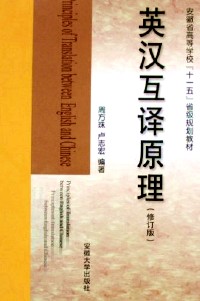
《英汉互译原理(修订版)》综合语言学、文体学、文化学和文学等相关学科的基础理论,从不同角度论证了英汉互译的基本原理及方法与策略。全书分为六章:第一章概述翻译的定义、功能、译者的必备条件及翻译标准。第二章介绍翻译策略、方法与技巧。第三章论述词语的翻译,内容包括:英汉词语的异同,语境与选词的关系,同义词的语义重叠及词汇的语体等级,成语、典故、谚语及文化负载词的翻泽。第四章论述句子的翻译,内容包括:英汉句法结构的异同,形式对应的可行性,各种从句的翻译及特殊句型的转换机制。第五章从文体学的角度探讨不同文体作品的翻译,内容包括:广告翻译、新闻翻译、旅游文本翻译和科技及外交文献的翻泽。第六章着力论述各类文学作品的翻译原理,作者以阐释学、接受美学及阅读理论为理据,探讨了小说、散文、诗歌、戏剧等文学作品翻译的可行性。《英汉互译原理(修订版)》融人了作者在翻泽理论方面的部分研究成果。
目录
Chapter One Introduction
1.1 Definition
1.2 Qualification
1.3 Criteria of Translation
Chapter Two Strategies and Methods
2.1 Strategies
2.1.1 Domestication
2.1.2 Foreignization
2.2 Methods and Techniques
2.2.1 Literal Translation vs Free Translation
2.2.2 Extension
2.2.3 Conversion
2.2.4 Amplification
2.2.5 Simplification
2.2.6 Negation and Affirmation in Translation
2.2.7 Shift Between the Concrete and the Abstract
2.3 Dictionary and Translation
Chapter Three Translation of Words
3.1 Semantic Change
3.1.1 Broadening
3.1.2 Narrowing
3.1.3 Melioration
3.1.4 Deterioration
3.1.5 Antonomasia
3.2 Gaps in Translation
3.2.1 Lexical Gap
3.2.2 Semantic Gap
3.3 Context of Situation and Word Selection
3.3.1 Semantic Radiation
3.3.2 Direct Context and Word Selection
3.3.3 Indirect Context and Word Selection
3.4 Synonyms and Choice of Words
3.4.1 Synonyms
3.4.2 Choice of Words
3.5 Levels of Formality of Words and Diction
3.5.1 Semantic Overlap and Classification of Levels of Formality of Words
3.5.2 Levels of Formality and Diction
3.6 Proper Use of Idiomsin Translation
3.6.1 Similarities and Diversities between Chinese and English Idioms
3.6.2 Corresponding Idioms
3.6.3 Partly Corresponding Idioms
3.6.4 Modifiers Are Rendered into Idioms
3.7 Translation of Proverbs an dTwo-part Allegorical Sayings
3.7.1 Proverbs
3.7.2 Two-part Allegorical Sayings
3.8 Translation of Allusions
3.8.1 Traditional Allusions
3.8.2 New Allusions
3.9 Translation of Culture-loaded Words
3.9.1 Similarity and Difference of Cultural Connotations between English and……
3.9.2 Cognitive Schema Theory Applied to Translation of Culture-loaded Words
Chapter Four Translation of Sentences
4.1 Differences and Similarities between Englishand Chinese in Syntax
4.1.1 Difference and Similarityin Sentence Order
4.1.2 Difference and Similarity in Syntax
4.2 Translation of Attributive Clauses
4.3 Comparison and Contrast
4.4 Translation of Long Sentences
4.5 Conversion between the Passive Voice and the Active Voice
4.5.1 Introduction
4.5.2 Conversion between the Passive Voiceand the Active Voice
Chapter Five Translation of Various Types of Writings
5.1 Translation of Advertisements
5.1.1 Lexical Level
5.1.2 Syntactic Level
5.1.3 Rhetorical Devices
5.2 Translation of Journalistic Texts
5.2.1 Definition
5.2.2 Classification
5.2.3 Stylistic Features
5.2.4 Major Components
5.2.5 Translation Strategies
5.3 Translation of English for Tourism
5.3.1 Definition
5.3.2 Stylistic Features
5.3.3 Translation Strategies
5.4 Translation of Scientific and Technical Writings
5.4.1 Linguistic Features of Scientific and Technical Writings
5.4.2 Increaseor Decreasein Quantity
5.5 Translation of Diplomatic Literature
5.5.1 Features of Diplomatic Language
5.5.2 Translation of Diplomatic Literature
Chapter six Translation of Literary Works
6.1 Introduction
6.2 Fidelity to SLT Literary Messages
6.2.1 Fidelity to Semantic Information
6.2.2 Fidelity to Grammatical Information
6.2.3 Fidelity to Rhetorical Information
6.2.4 Fidelity to Pragmatic Information
6.2.5 Fidelity to Cultural Information
6.2.6 Fidelity to Syntactic Information
6.2.7 Fidelity to Aesthetic Information
6.3 Translation of Fiction
6.3.1 Introduction
6.3.2 Translation of Titles
6.3.3 The Stylistic Features Reproduced in Translation
6.4 Translation of Prose
6.5 Translation of Poetry
6.5.1 Opposite Opinionson Translation of Poetry
6.5.2 Different Opinionson Subjectivity
6.5.3 Translation of Poetry between English and Chinese
6.6 Translation of Dramatic Texts
6.6.1 A Performance-oriented Translationvs.A Reader-oriented Translation
6.6.2 Textvs.Subtext
Appendix 翻译练习参考答案
Bibliography
1.1 Definition
1.2 Qualification
1.3 Criteria of Translation
Chapter Two Strategies and Methods
2.1 Strategies
2.1.1 Domestication
2.1.2 Foreignization
2.2 Methods and Techniques
2.2.1 Literal Translation vs Free Translation
2.2.2 Extension
2.2.3 Conversion
2.2.4 Amplification
2.2.5 Simplification
2.2.6 Negation and Affirmation in Translation
2.2.7 Shift Between the Concrete and the Abstract
2.3 Dictionary and Translation
Chapter Three Translation of Words
3.1 Semantic Change
3.1.1 Broadening
3.1.2 Narrowing
3.1.3 Melioration
3.1.4 Deterioration
3.1.5 Antonomasia
3.2 Gaps in Translation
3.2.1 Lexical Gap
3.2.2 Semantic Gap
3.3 Context of Situation and Word Selection
3.3.1 Semantic Radiation
3.3.2 Direct Context and Word Selection
3.3.3 Indirect Context and Word Selection
3.4 Synonyms and Choice of Words
3.4.1 Synonyms
3.4.2 Choice of Words
3.5 Levels of Formality of Words and Diction
3.5.1 Semantic Overlap and Classification of Levels of Formality of Words
3.5.2 Levels of Formality and Diction
3.6 Proper Use of Idiomsin Translation
3.6.1 Similarities and Diversities between Chinese and English Idioms
3.6.2 Corresponding Idioms
3.6.3 Partly Corresponding Idioms
3.6.4 Modifiers Are Rendered into Idioms
3.7 Translation of Proverbs an dTwo-part Allegorical Sayings
3.7.1 Proverbs
3.7.2 Two-part Allegorical Sayings
3.8 Translation of Allusions
3.8.1 Traditional Allusions
3.8.2 New Allusions
3.9 Translation of Culture-loaded Words
3.9.1 Similarity and Difference of Cultural Connotations between English and……
3.9.2 Cognitive Schema Theory Applied to Translation of Culture-loaded Words
Chapter Four Translation of Sentences
4.1 Differences and Similarities between Englishand Chinese in Syntax
4.1.1 Difference and Similarityin Sentence Order
4.1.2 Difference and Similarity in Syntax
4.2 Translation of Attributive Clauses
4.3 Comparison and Contrast
4.4 Translation of Long Sentences
4.5 Conversion between the Passive Voice and the Active Voice
4.5.1 Introduction
4.5.2 Conversion between the Passive Voiceand the Active Voice
Chapter Five Translation of Various Types of Writings
5.1 Translation of Advertisements
5.1.1 Lexical Level
5.1.2 Syntactic Level
5.1.3 Rhetorical Devices
5.2 Translation of Journalistic Texts
5.2.1 Definition
5.2.2 Classification
5.2.3 Stylistic Features
5.2.4 Major Components
5.2.5 Translation Strategies
5.3 Translation of English for Tourism
5.3.1 Definition
5.3.2 Stylistic Features
5.3.3 Translation Strategies
5.4 Translation of Scientific and Technical Writings
5.4.1 Linguistic Features of Scientific and Technical Writings
5.4.2 Increaseor Decreasein Quantity
5.5 Translation of Diplomatic Literature
5.5.1 Features of Diplomatic Language
5.5.2 Translation of Diplomatic Literature
Chapter six Translation of Literary Works
6.1 Introduction
6.2 Fidelity to SLT Literary Messages
6.2.1 Fidelity to Semantic Information
6.2.2 Fidelity to Grammatical Information
6.2.3 Fidelity to Rhetorical Information
6.2.4 Fidelity to Pragmatic Information
6.2.5 Fidelity to Cultural Information
6.2.6 Fidelity to Syntactic Information
6.2.7 Fidelity to Aesthetic Information
6.3 Translation of Fiction
6.3.1 Introduction
6.3.2 Translation of Titles
6.3.3 The Stylistic Features Reproduced in Translation
6.4 Translation of Prose
6.5 Translation of Poetry
6.5.1 Opposite Opinionson Translation of Poetry
6.5.2 Different Opinionson Subjectivity
6.5.3 Translation of Poetry between English and Chinese
6.6 Translation of Dramatic Texts
6.6.1 A Performance-oriented Translationvs.A Reader-oriented Translation
6.6.2 Textvs.Subtext
Appendix 翻译练习参考答案
Bibliography
Principles of translation between English and Chinese
- 名称
- 类型
- 大小
光盘服务联系方式: 020-38250260 客服QQ:4006604884
云图客服:
用户发送的提问,这种方式就需要有位在线客服来回答用户的问题,这种 就属于对话式的,问题是这种提问是否需要用户登录才能提问
Video Player
×
Audio Player
×
pdf Player
×
