

简介
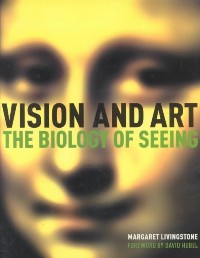
In his foreword to this groundbreaking volume, Nobel Prize winner David Hubel expresses the hope that "in the future, visual neurobiology will enhance art much the same way as a knowledge of bones and muscle has for centuries enhanced the ability of artists to portray the human body." The future begins now, with this far-reaching book.
In Vision and Art, Harvard neurobiologist Margaret Livingstone demonstrates that how we see art depends ultimately on the cells in our eyes and in our brains. She begins by offering a comprehensive account of the biology of vision, drawing on the history of science and her own cutting-edge discoveries. She explains cogently how the eye and brain translate different wavelengths of light into the colors and forms of the world around us. She then turns to art and delves into the science underlying various phenomena in painting, using many examples - from the mysterious allure of the Mona Lisa to the amazing atmospheric effects of the Impressionists - to illustrate her points. Along the way, she shows how similar effects can be used to enhance the impact of advertisements, and explores the different ways images look in paintings, in photographs, on TV, and on computer screens.
Accompanying Livingstone's lively and lucid prose are many easy-to-understand charts and diagrams that clarify her points. Some of these illustrations are based on simple and elegant experiments that show us how the human visual system translates light into color. Others demonstrate how cells in the retina code information and send it to the brain. Still others shed light on how great painters devise techniques to fool the eye into seeing depth and movement. By skillfully bridging the space between science and art, Vision and Art will arm artists and designers with new techniques that they can use in their own craft and thrill any reader with an interest in the biology of human vision. (Publisher)
目录
Foreword p. 8
Preface p. 10
Acknowledgments p. 11
Fiat Lux: Let There Be Light p. 12
The Eye and Color Vision p. 24
Luminance and Night Vision p. 36
The First Stages of Processing Color and Luminance: Where and What p. 46
Acuity and Spatial Resolution: Central and Peripheral Vision p. 68
The Next Level of Color Processing: Surround Effects p. 84
From 3-D to 2-D: Perspective p. 100
From 3-D to 2-D: Shading and Chiaroscuro p. 108
From 3-D to 2-D: Stereopsis p. 138
Illusions of Motion p. 152
Color Mixing and Color Resolution p. 164
Television, Movies, and Computer Graphics p. 188
Epilogue: Talent, Music, and Learning Disabilities p. 196
Further Reading p. 204
Index p. 205
Credits p. 208
Preface p. 10
Acknowledgments p. 11
Fiat Lux: Let There Be Light p. 12
The Eye and Color Vision p. 24
Luminance and Night Vision p. 36
The First Stages of Processing Color and Luminance: Where and What p. 46
Acuity and Spatial Resolution: Central and Peripheral Vision p. 68
The Next Level of Color Processing: Surround Effects p. 84
From 3-D to 2-D: Perspective p. 100
From 3-D to 2-D: Shading and Chiaroscuro p. 108
From 3-D to 2-D: Stereopsis p. 138
Illusions of Motion p. 152
Color Mixing and Color Resolution p. 164
Television, Movies, and Computer Graphics p. 188
Epilogue: Talent, Music, and Learning Disabilities p. 196
Further Reading p. 204
Index p. 205
Credits p. 208
- 名称
- 类型
- 大小
光盘服务联系方式: 020-38250260 客服QQ:4006604884
云图客服:
用户发送的提问,这种方式就需要有位在线客服来回答用户的问题,这种 就属于对话式的,问题是这种提问是否需要用户登录才能提问
Video Player
×
Audio Player
×
pdf Player
×
