

简介
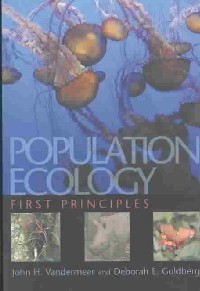
Publisher's description: How can the future number of deer, agricultural pests, or cod be calculated based on the present number of individuals and their age distribution? How long will it take for a viral outbreak in a particular city to reach another city five hundred miles away? In addressing such basic questions, ecologists today are as likely to turn to complicated differential equations as to life histories--a dramatic change from thirty years ago. Population ecology is the mathematical backbone of ecology. Here, two leading experts provide the underlying quantitative concepts that all modern-day ecologists need. John Vandermeer and Deborah Goldberg show that populations are more than simply collections of individuals. Complex variables such as the size distribution of individuals and allotted territory for expanding groups come into play when mathematical models are applied. The authors build these models from the ground up, from first principles, using a much broader range of empirical examples--from plants to animals, from viruses to humans--than do standard texts. And they address several complicating issues such as age-structured populations, spatially distributed populations, and metapopulations. Beginning with a review of elementary principles, the book goes on to consider theoretical issues involving life histories, complications in the application of the core principles, statistical descriptions of spatial aggregation of individuals and populations as well as population dynamic models incorporating spatial information, and introductions to two-species interactions. Complemented by superb illustrations that further clarify the links between the mathematical models and biology, Population Ecology is the most straightforward and authoritative overview of the field to date. It will have broad appeal among undergraduates, graduate students, and practicing ecologists.
目录
List of Figures p. xi
List of Tables p. xvii
Preface p. xix
Elementary Population Dynamics p. 1
Density Independence: The Exponential Equation p. 3
Density Dependence: Intraspecific Competition p. 10
The Logistic Equation p. 14
The Yield-Density Relationship p. 21
Density Dependence and Mortality: Thinning Laws p. 26
Life History Analysis p. 35
Investment in Survivorship versus Reproduction: The r, K Continuum p. 37
Cost of Reproduction p. 41
Optimal Reproductive Schedules p. 44
Projection Matrices: Structured Models p. 51
Elementary Population Projection Matrices p. 52
Non-age Structure: Stage Projection Matrices p. 62
Eigenvectors, Reproductive Value, Sensitivity, and Elasticity p. 69
Applications of Population Projection Matrices p. 73
The Dall's Mountain Sheep: A Static Life Table p. 74
Palo de Mayo: A Dynamic Life Table p. 75
The American Beech: Testing Hypotheses with Dynamic Life Tables p. 77
Density Dependence in Structured Populations p. 80
Density Dependence in a Simple Age-Structured Model p. 81
Density Dependence in Size-Distributed Populations p. 84
Density Dependence in a Stage-Structured Model p. 92
Basic Matrix Manipulations p. 94
A Closer Look at the "Dynamics" in Population Dynamics p. 101
Intuitive Ideas of Equilibrium and Stability p. 103
Eigenvalues: A Key Concept in Dynamic Analysis p. 114
Basic Concepts of Equilibrium and Stability in One-Dimensional Maps p. 120
The One-Dimensional Map p. 121
Stability and Equilibrium in the Logistic Map p. 130
Basins of Attraction in the Logistic Map p. 133
Structural Stability p. 135
Bifurcation Diagrams p. 142
Concluding Remarks p. 149
Patterns in Space and Metapopulations p. 155
The Poisson Distribution p. 158
The Question of Scale p. 163
Metapopulations p. 167
Assumptions of Metapopulation Models p. 171
The Rescue Effect and Propagule Rain p. 173
Predator-Prey (Consumer-Resource) Interactions p. 177
Predator-Prey Interactions: First Principles p. 179
Density Dependence p. 185
Functional Response p. 186
Functional Response and Density Dependence Together p. 193
Paradoxes in Applications of Predator-Prey Theory p. 195
Predator-Prey Dynamics: A Graphical Approach p. 198
Predator-Prey Interactions in Discrete Time p. 205
Epidemiology p. 209
Direct Disease Transmission p. 210
Indirect Disease Transmission p. 217
Competition and a Little Bit of Mutualism p. 221
Competition: First Principles p. 222
The Competitive Production Principle: Applications of Competition Theory to Agriculture p. 234
Mutualism p. 235
Competition: The Details p. 240
What This Book Was About p. 255
Glossary p. 261
References p. 265
Index p. 273
List of Tables p. xvii
Preface p. xix
Elementary Population Dynamics p. 1
Density Independence: The Exponential Equation p. 3
Density Dependence: Intraspecific Competition p. 10
The Logistic Equation p. 14
The Yield-Density Relationship p. 21
Density Dependence and Mortality: Thinning Laws p. 26
Life History Analysis p. 35
Investment in Survivorship versus Reproduction: The r, K Continuum p. 37
Cost of Reproduction p. 41
Optimal Reproductive Schedules p. 44
Projection Matrices: Structured Models p. 51
Elementary Population Projection Matrices p. 52
Non-age Structure: Stage Projection Matrices p. 62
Eigenvectors, Reproductive Value, Sensitivity, and Elasticity p. 69
Applications of Population Projection Matrices p. 73
The Dall's Mountain Sheep: A Static Life Table p. 74
Palo de Mayo: A Dynamic Life Table p. 75
The American Beech: Testing Hypotheses with Dynamic Life Tables p. 77
Density Dependence in Structured Populations p. 80
Density Dependence in a Simple Age-Structured Model p. 81
Density Dependence in Size-Distributed Populations p. 84
Density Dependence in a Stage-Structured Model p. 92
Basic Matrix Manipulations p. 94
A Closer Look at the "Dynamics" in Population Dynamics p. 101
Intuitive Ideas of Equilibrium and Stability p. 103
Eigenvalues: A Key Concept in Dynamic Analysis p. 114
Basic Concepts of Equilibrium and Stability in One-Dimensional Maps p. 120
The One-Dimensional Map p. 121
Stability and Equilibrium in the Logistic Map p. 130
Basins of Attraction in the Logistic Map p. 133
Structural Stability p. 135
Bifurcation Diagrams p. 142
Concluding Remarks p. 149
Patterns in Space and Metapopulations p. 155
The Poisson Distribution p. 158
The Question of Scale p. 163
Metapopulations p. 167
Assumptions of Metapopulation Models p. 171
The Rescue Effect and Propagule Rain p. 173
Predator-Prey (Consumer-Resource) Interactions p. 177
Predator-Prey Interactions: First Principles p. 179
Density Dependence p. 185
Functional Response p. 186
Functional Response and Density Dependence Together p. 193
Paradoxes in Applications of Predator-Prey Theory p. 195
Predator-Prey Dynamics: A Graphical Approach p. 198
Predator-Prey Interactions in Discrete Time p. 205
Epidemiology p. 209
Direct Disease Transmission p. 210
Indirect Disease Transmission p. 217
Competition and a Little Bit of Mutualism p. 221
Competition: First Principles p. 222
The Competitive Production Principle: Applications of Competition Theory to Agriculture p. 234
Mutualism p. 235
Competition: The Details p. 240
What This Book Was About p. 255
Glossary p. 261
References p. 265
Index p. 273
- 名称
- 类型
- 大小
光盘服务联系方式: 020-38250260 客服QQ:4006604884
云图客服:
用户发送的提问,这种方式就需要有位在线客服来回答用户的问题,这种 就属于对话式的,问题是这种提问是否需要用户登录才能提问
Video Player
×
Audio Player
×
pdf Player
×
