

简介
Summary:
Publisher Summary 1
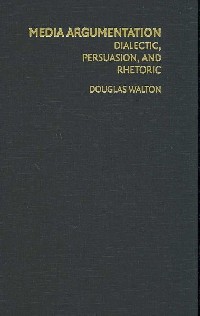
Media argumentation is a powerful force in our lives. From political speeches to television commercials to war propaganda, it can effectively mobilize political action, influence the public, and market products. This book presents a new and systematic way of thinking about the influence of mass media in our lives, showing the intersection of media sources with argumentation theory, informal logic, computational theory, and theories of persuasion. Using a variety of case studies that represent arguments that typically occur in the mass media, Douglas Walton demonstrates how tools recently developed in argumentation theory can be usefully applied to the identification, analysis, and evaluation of media arguments.
Publisher Summary 2
Presents a new and systematic way of thinking about the influence of mass media in our lives.
目录
Cover 1
Half-title 3
Title 5
Copyright 6
Dedication 7
Contents 9
Acknowledgments 13
Introduction 17
1 Logic, Dialectic, and Rhetoric 23
1 The Viewpoint of Informal Logic 24
2 The Old Dialectic of the Greeks 27
3 The Opposition between Rhetoric and Dialectic 31
4 Topics and Fallacies 35
5 Persuasion, Social Influence, and Democracy 39
6 Argumentation Schemes 42
7 Basic Practical Reasoning 46
8 Value-Based Practical Reasoning 50
9 The Star Trek Example 57
10 The Aims of Dialectical and Rhetorical Argumentation 61
2 The Speech Act of Persuasion 66
1 The Belief-Desire-Intention Approach and the Commitment Approach 67
2 Basic Components of Persuasion 73
Persuasion: The First Definition 74
First Objection 76
3 Chaining of Argumentation 76
Example of a One-Step Argument 77
Persuasion: The Second Definition 79
4 Types of Dialogue 80
5 Deliberation 84
6 Closing of the Deliberation Dialogue 86
Case 1: The No-Fault Insurance Example 87
7 Acts of Persuasion, Inducement, and Making a Threat 89
Case 2: The Truck Example 89
8 Negotiation Dialogue and Persuasion 93
Case 3: The Car Negotiation Example 95
9 Relevance and Argument Diagramming 99
10 The Cognitive Component of Persuasion 104
Hypothesis on the Cognitive Component of Persuasion (HCCP) 106
11 New Definition of the Speech Act of Persuasion 107
Persuasion: The Third Definition 107
Successful Persuasion: The Definition Based on the Third Definition 109
3 Propaganda 111
1 Negative Connotations 112
2 Public Discourse and Reason 116
3 Appeal to the People Revisited 119
4 The Dialectical Viewpoint on Propaganda 124
5 Persuasion and Propaganda 126
6 Characteristics of Propaganda 129
Case 3.1 132
Case 3.2 132
7 Is Propaganda Necessarily Dishonest or Irrational? 134
Case 3.3 134
Case 3.4 135
8 Openness to Contrary Evidence 137
Case 3.5 138
9 Deceptiveness and Relevance in Propaganda 140
10 Evaluating Argumentation in Propaganda 142
Case 3.6 144
4 Appeals to Fear and Pity 147
1 Appeals to Fear and Pity in Mass Media 148
Case 4.1 148
Case 2.2 150
2 Appeals to Fear 151
Case 4.3 152
3 Appeals to Pity 154
The World Vision Example 155
4 The Respondent-to-Dialogue Problem 158
5 Simulative Reasoning 162
6 The Dual Process Model of Persuasion 165
7 The Structure of Appeals to Fear 167
8 The Structure of Appeals to Pity 170
9 Multi-agent Structure of Both Types of Argument 173
10 When Are Appeals to Fear and Pity Fallacious? 176
5 Ad Hominem Arguments in Political Discourse 181
1 Classifying the Types of Ad Hominem Argument 183
Ethotic (Direct, Abusive) Ad Hominem Argument 184
2 The Circumstantial and Other Types 185
Circumstantial Ad Hominem Argument 186
The Sealers Example 187
3 Argument from Commitment 189
Argument from Commitment 191
4 The Gore Case 193
5 The Battalino Case 197
6 Classifying the Argument in the Battalino Case 200
Argument from Pragmatic Inconsistency 202
7 Evaluating the Argument in the Battalino Case 203
8 Implicature and Innuendo 205
9 Evaluating the Argument in the Gore Case 210
10 Evaluating Arguments Rhetorically and Dialectically 212
6 Arguments Based on Popular Opinion 218
1 Influencing the Mass Audience 219
2 Appeal to Popular Opinion as an Argument 222
3 Cases in Point 224
Case 6.1 224
Case 6.2 225
4 The Form of the Argument 227
5 Fallacious Appeals to Popular Opinion 231
6 Endoxa in Greek Dialectic 233
7 Public Opinion as Informed Deliberation 235
8 A More Careful Basis for Evaluating Cases 238
9 Viewing the Public as an Agent 242
10 Evaluating Appeal to Popular Opinion 244
7 Fallacies and Bias in Public Opinion Polling 248
1 Definitions and Sampling Surveys 249
Case 7.1 252
Case 7.2 254
Case 7.3 254
2 Question Wording and Emotive Bias in Polls 255
Case 7.4 258
3 The Structure of the Question 259
Case 7.5 261
Case 7.6 262
Case 7.7 263
4 Forcing an Answer 264
Case 7.8 268
5 Use of Polls by Advocacy Groups 269
Case 7.9 270
Case 7.10 272
6 The Advent of Deliberative Polling 274
7 Argumentation Schemes and Critical Questions 279
The Report of a Public Opinion Poll Argument 280
Critical Questions for the Report of a Public Opinion Poll Argument 280
Case 7.11 281
The Call for ActionArgument 281
Critical Questions for the Call for Action Argument 282
Appeal to Popular Opinion 282
Critical Questions for the Appeal to Popular Opinion Argument 282
8 Using Formal Dialectical Models of Argumentation 283
9 Combining Dialectical and Empirical Methods 287
10 Conclusion and Summary of Fallacies 290
8 Persuasive Definitions and Public Policy Arguments 295
1 Stevenson\u2019s Theory of Persuasive Definitions 296
Case 8.1 297
Case 8.1a 298
2 Cases of Public Redefinitions 301
Case 8.2 302
Case 8.3 304
Case 8.4 306
3 Wider Implications of These Cases 308
4 Definitions in the New Dialectic 312
Case 8.5 315
5 Proof of Legitimacy of Persuasive Definitions 317
6 Argumentation Schemes Relating to Definitions 320
The Kangaroo Argument 321
The Contract Argument 322
Argument from Verbal Classification 324
Critical questions 324
Argument from Definition to Verbal Classification 325
Critical questions 325
7 The Speech Act of Defining 328
8 Evaluating Persuasive Definitions 330
Key List for the Culture Example 331
9 What Should the Rules for Persuasive Definitions Be? 336
10 Conclusions 339
9 The Structure of Media Argumentation 343
1 Rhetoric and Dialectic Reconfigured 344
2 The Respondent-to-Dialogue Problem Revisited 347
Profile 9.1 349
3 Direct and Indirect Media Argumentation 350
4 Star Trek: The Rhetorical Dimension 354
5 Argumentation Strategies 358
6 Plan Recognition 362
Case 9.1 362
Case 9.2: The Motorist Example 365
7 The Solution to the RTD Problem 367
8 Fifteen Basic Components of Media Argumentation 370
9 The Persuasion System 373
10 Computational Dialectics for Rhetorical Invention 375
Bibliography 381
Index 393
Half-title 3
Title 5
Copyright 6
Dedication 7
Contents 9
Acknowledgments 13
Introduction 17
1 Logic, Dialectic, and Rhetoric 23
1 The Viewpoint of Informal Logic 24
2 The Old Dialectic of the Greeks 27
3 The Opposition between Rhetoric and Dialectic 31
4 Topics and Fallacies 35
5 Persuasion, Social Influence, and Democracy 39
6 Argumentation Schemes 42
7 Basic Practical Reasoning 46
8 Value-Based Practical Reasoning 50
9 The Star Trek Example 57
10 The Aims of Dialectical and Rhetorical Argumentation 61
2 The Speech Act of Persuasion 66
1 The Belief-Desire-Intention Approach and the Commitment Approach 67
2 Basic Components of Persuasion 73
Persuasion: The First Definition 74
First Objection 76
3 Chaining of Argumentation 76
Example of a One-Step Argument 77
Persuasion: The Second Definition 79
4 Types of Dialogue 80
5 Deliberation 84
6 Closing of the Deliberation Dialogue 86
Case 1: The No-Fault Insurance Example 87
7 Acts of Persuasion, Inducement, and Making a Threat 89
Case 2: The Truck Example 89
8 Negotiation Dialogue and Persuasion 93
Case 3: The Car Negotiation Example 95
9 Relevance and Argument Diagramming 99
10 The Cognitive Component of Persuasion 104
Hypothesis on the Cognitive Component of Persuasion (HCCP) 106
11 New Definition of the Speech Act of Persuasion 107
Persuasion: The Third Definition 107
Successful Persuasion: The Definition Based on the Third Definition 109
3 Propaganda 111
1 Negative Connotations 112
2 Public Discourse and Reason 116
3 Appeal to the People Revisited 119
4 The Dialectical Viewpoint on Propaganda 124
5 Persuasion and Propaganda 126
6 Characteristics of Propaganda 129
Case 3.1 132
Case 3.2 132
7 Is Propaganda Necessarily Dishonest or Irrational? 134
Case 3.3 134
Case 3.4 135
8 Openness to Contrary Evidence 137
Case 3.5 138
9 Deceptiveness and Relevance in Propaganda 140
10 Evaluating Argumentation in Propaganda 142
Case 3.6 144
4 Appeals to Fear and Pity 147
1 Appeals to Fear and Pity in Mass Media 148
Case 4.1 148
Case 2.2 150
2 Appeals to Fear 151
Case 4.3 152
3 Appeals to Pity 154
The World Vision Example 155
4 The Respondent-to-Dialogue Problem 158
5 Simulative Reasoning 162
6 The Dual Process Model of Persuasion 165
7 The Structure of Appeals to Fear 167
8 The Structure of Appeals to Pity 170
9 Multi-agent Structure of Both Types of Argument 173
10 When Are Appeals to Fear and Pity Fallacious? 176
5 Ad Hominem Arguments in Political Discourse 181
1 Classifying the Types of Ad Hominem Argument 183
Ethotic (Direct, Abusive) Ad Hominem Argument 184
2 The Circumstantial and Other Types 185
Circumstantial Ad Hominem Argument 186
The Sealers Example 187
3 Argument from Commitment 189
Argument from Commitment 191
4 The Gore Case 193
5 The Battalino Case 197
6 Classifying the Argument in the Battalino Case 200
Argument from Pragmatic Inconsistency 202
7 Evaluating the Argument in the Battalino Case 203
8 Implicature and Innuendo 205
9 Evaluating the Argument in the Gore Case 210
10 Evaluating Arguments Rhetorically and Dialectically 212
6 Arguments Based on Popular Opinion 218
1 Influencing the Mass Audience 219
2 Appeal to Popular Opinion as an Argument 222
3 Cases in Point 224
Case 6.1 224
Case 6.2 225
4 The Form of the Argument 227
5 Fallacious Appeals to Popular Opinion 231
6 Endoxa in Greek Dialectic 233
7 Public Opinion as Informed Deliberation 235
8 A More Careful Basis for Evaluating Cases 238
9 Viewing the Public as an Agent 242
10 Evaluating Appeal to Popular Opinion 244
7 Fallacies and Bias in Public Opinion Polling 248
1 Definitions and Sampling Surveys 249
Case 7.1 252
Case 7.2 254
Case 7.3 254
2 Question Wording and Emotive Bias in Polls 255
Case 7.4 258
3 The Structure of the Question 259
Case 7.5 261
Case 7.6 262
Case 7.7 263
4 Forcing an Answer 264
Case 7.8 268
5 Use of Polls by Advocacy Groups 269
Case 7.9 270
Case 7.10 272
6 The Advent of Deliberative Polling 274
7 Argumentation Schemes and Critical Questions 279
The Report of a Public Opinion Poll Argument 280
Critical Questions for the Report of a Public Opinion Poll Argument 280
Case 7.11 281
The Call for ActionArgument 281
Critical Questions for the Call for Action Argument 282
Appeal to Popular Opinion 282
Critical Questions for the Appeal to Popular Opinion Argument 282
8 Using Formal Dialectical Models of Argumentation 283
9 Combining Dialectical and Empirical Methods 287
10 Conclusion and Summary of Fallacies 290
8 Persuasive Definitions and Public Policy Arguments 295
1 Stevenson\u2019s Theory of Persuasive Definitions 296
Case 8.1 297
Case 8.1a 298
2 Cases of Public Redefinitions 301
Case 8.2 302
Case 8.3 304
Case 8.4 306
3 Wider Implications of These Cases 308
4 Definitions in the New Dialectic 312
Case 8.5 315
5 Proof of Legitimacy of Persuasive Definitions 317
6 Argumentation Schemes Relating to Definitions 320
The Kangaroo Argument 321
The Contract Argument 322
Argument from Verbal Classification 324
Critical questions 324
Argument from Definition to Verbal Classification 325
Critical questions 325
7 The Speech Act of Defining 328
8 Evaluating Persuasive Definitions 330
Key List for the Culture Example 331
9 What Should the Rules for Persuasive Definitions Be? 336
10 Conclusions 339
9 The Structure of Media Argumentation 343
1 Rhetoric and Dialectic Reconfigured 344
2 The Respondent-to-Dialogue Problem Revisited 347
Profile 9.1 349
3 Direct and Indirect Media Argumentation 350
4 Star Trek: The Rhetorical Dimension 354
5 Argumentation Strategies 358
6 Plan Recognition 362
Case 9.1 362
Case 9.2: The Motorist Example 365
7 The Solution to the RTD Problem 367
8 Fifteen Basic Components of Media Argumentation 370
9 The Persuasion System 373
10 Computational Dialectics for Rhetorical Invention 375
Bibliography 381
Index 393
- 名称
- 类型
- 大小
光盘服务联系方式: 020-38250260 客服QQ:4006604884
云图客服:
用户发送的提问,这种方式就需要有位在线客服来回答用户的问题,这种 就属于对话式的,问题是这种提问是否需要用户登录才能提问
Video Player
×
Audio Player
×
pdf Player
×
