

简介
Invention and innovation lie at the heart of problem solving in virtually every discipline, but they are not easy to come by. Divine inspiration aside, historically we have depended primarily on observation, brainstorming, and trial-and-error methods to develop the innovations that provide solutions. But these methods are neither efficient nor dependable enough for the high-quality, high-tech engineering solutions we need today.
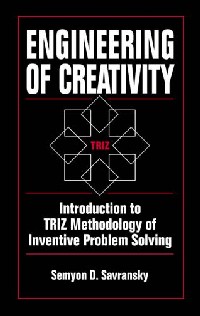
TRIZ is a unique and powerful, algorithmic approach to problem solving that demonstrated remarkable effectiveness in its native Russia, and whose popularity has now spread to organizations such as Ford, NASA, Motorola, Unisys, and Rockwell International. Until now, however, no comprehensive, comprehensible treatment, suitable for self-study or as a textbook, has been available in English.
Engineering of Creativity provides a valuable opportunity to learn and apply the concepts and techniques of TRIZ to complex engineering problems. The author-a world-renowned TRIZ expert-covers every aspect of TRIZ, from the basic concepts to the latest research and developments. He provides step-by-step guidelines, case studies from a variety of engineering disciplines, and first-hand experience in using the methodology.
Application of TRIZ can bring high-quality-even breakthrough-conceptual solutions and help remove technical obstacles. Mastering the contents of Engineering of Creativity will bring your career and your company a remarkable advantage: the ability to formulate the best possible solutions for technical systems problems and predict future developments.
目录
Table Of Contents:
PART 1: Problem-Solving Aids
How Do We Solve Problems?
Routine and Inventive Problems 3(2)
Difficulty of a Problem 5(1)
Psychological Inertia 5(2)
Trial-and-Error Method 7(1)
Methods of Creativity Activation 8(7)
Checklists and Questionnaires 9(2)
Morphological Box 11(4)
Decision Aids 15(1)
Problem Solving and Information 15(2)
Requirements 17(1)
Requirements for Inventive Problem Solving 17(1)
Necessary Qualities for the Solver of Nonroutine Problems 18(1)
Conclusion 18(3)
References 19(2)
Triz Overview
What is TRIZ? 21(1)
A Definition of TRIZ 22(2)
TRIZ Sources 24(1)
Main TRIZ Heuristics and Instruments 25(2)
TRIZ Branches 27(1)
Future of TRIZ 28(5)
References 29(4)
PART 2: Main TRIZ Concepts
Technique: A Resume
Introduction 33(1)
Inputs and Outputs---Raw Objects and Products 34(2)
Parts of a Technique 36(3)
Subsystems 36(1)
Links 37(2)
Technique: TP and TS 39(3)
Technological Processes 39(1)
Technical Systems 40(1)
Major TS Subsystems 41(1)
Attributes 42(11)
Goals 43(1)
Properties and State 44(1)
Behaviors and Functions 45(4)
Structure 49(1)
Shape 50(1)
Hierarchy and Organization 51(2)
System Gain Formation 53(1)
Design Scenario 54(2)
Conclusion 56(3)
References 57(2)
Contradictions
Introduction 59(1)
Contradictions: Ontology 59(5)
Structure of a Problem 64(5)
Conclusion 69(2)
References 69(2)
Ideality
Introduction 71(1)
Ideal Technique, Ideal Method, ..., Ideality 71(6)
Ideal Final Result 77(3)
Conclusion 80(3)
References 80(3)
Substance-Field Resources
Introduction 83(1)
Resources Overview 83(2)
Detailed Analysis of Resources 85(4)
Readily Available and Derivative Resources 85(1)
Differential Resources 86(3)
Resource Usage 89(1)
Overcoming Resource Limitations 90(3)
Conclusion 93(2)
References 93(2)
Evolution of Technique
Introduction 95(2)
Postulates and Corollaries of Technique Evolution 97(9)
Direction Postulate 98(4)
Corollaries 102(1)
Time Postulate 103(1)
Corollaries 104(2)
Paths of Evolution 106(11)
Single-Directional 106(3)
Bi-Directional and Adverse 109(1)
Expansion ⇔ Convolution 109(4)
Super-System ⇔ Micro-Level 113(2)
Rhythms Coordination ⇔ De-Coordination 115(2)
Basic Subsystem Trends 117(2)
Case Study: Altshuller's ``Ballad about a Brick'' 119(1)
Life of Technique 120(3)
Application of the Knowledge about Technique Evolution 123(4)
Conclusion 127(6)
References 128(5)
PART 3: TRIZ Information
Inventions
Introduction 133(1)
Reasons, Goals, and Kinds of Inventions 134(4)
Levels of Inventions 138(6)
Realization of Inventions 143(1)
How to Study Patents in the Framework of TRIZ 144(7)
Sources of Technical Knowledge 144(2)
Perusal of Patents 146(2)
Basic Flowchart of Patent Investigation 148(3)
Conclusion 151(2)
References 151(2)
Effects
Role of Natural Sciences in TRIZ 153(1)
Examples of Effects Applications 154(7)
PART 4: Preparations to Problem Solving
Before Starting
Introduction 161(1)
Correct Statement of the Problem 161(4)
Problem Clarification 163(2)
Information, Constraints, and Presumptions 165(3)
Conclusion 168(1)
References 168(1)
Inventiveness
Introduction 169(1)
TRIZ Slang Graphics Approach 170(2)
Multi-Screen Approach 172(5)
Fantasy 177(6)
Games 179(1)
Methods 180(3)
YES-NO Trials 183(2)
Parameters Operator 185(1)
Conclusion 186(3)
References 187(2)
Su-Fields
Introduction 189(1)
Su-Field Terms and Symbols 189(3)
Su-Field Properties 192(3)
Basic Rules of Su-Field Transformation 193(2)
Conclusion 195(4)
References 195(4)
PART 5: TRIZ Heuristics and Instruments
Resolution of Technical (Pair) Contradictions
Introduction 199(1)
Altshuller's Engineering Parameters 199(5)
Altshuller's Inventive Principles 204(21)
A Classification of the Inventive Principles 223(2)
Matrix for Removal of Typical Technical Contradictions 225(3)
A Case Study 228(1)
Conclusion 229(6)
References 234(1)
Physical Point Contradictions: Ontology and Resolution
Introduction 235(1)
Operative Zone and Period 236(2)
Short List of Opposite Characteristics 238(1)
Types of Physical Contradictions 238(2)
Heuristics for Resolution of Physical Contradictions 240(3)
Separation Heuristics 243(6)
Separation in Space 243(2)
Separation in Time 245(1)
Separation upon Condition 246(1)
Separation between Parts and Whole 247(2)
Conclusion 249(2)
References 249(2)
Standard Solutions of Invention Problems
Introduction 251(1)
Standards 251(3)
Critique of Altshuller's Standards System 252(2)
Standards as TRIZ Heuristics 254(12)
Standards System Usage Algorithm 254(4)
Table of Standards Unification 258(8)
A Case Study 266(1)
Conclusion 266(1)
Reference 266(1)
Energy Synthesis of Systems
Introduction 267(1)
Synthesis of Technical Systems--Overview 267(1)
Elementary Energy Elements 268(6)
Energy Chains 274(4)
A Case Study 278(2)
Synthesis of Technical Systems--Recommendations 280(2)
Conclusion 282(1)
References 282(1)
Agents Method
Historical Notes 283(1)
Introduction to the Agents Method 284(1)
Agents 285(2)
Preferred Sources 285(1)
Preferred Locations and Times 285(1)
Requirements of Agents 286(1)
Initiation/Termination of Agents 287(1)
Graphic Procedure 287(1)
Search of Graphical Solution 288(1)
The AND/OR Tree 288(2)
Actions and Properties of Agents 290(1)
Agent Actions 290(1)
Agent Properties 291(1)
Algorithm for Agents 291(1)
Realization of Solution(s) 292(1)
A Case Study 293(8)
Problem and Solution Concept 293(1)
Kernels Sketches 294(1)
Intermediate Sketches 295(1)
AND/OR Tree 295(1)
Agents Actions 296(1)
Agents Properties 296(1)
Agents Initiation and Termination 297(1)
Algorithm Application 298(3)
Conclusion 301(2)
References 302(1)
ARIZ
Introduction 303(1)
Short History of ARIZ Development 304(5)
Pre-ARIZ 309(2)
ARIZ-77 311(3)
ARIZ-85 314(16)
ARIZ-85 AS 314(16)
Case Studies 330(7)
Solution of a Problem with ARIZ-77 330(1)
Solution of a Problem with ARIZ-85AS 331(6)
Conclusion 337(2)
Reference 338(1)
Conclusion 339(44)
Reference 341(4)
APPENDIXES
Appendix 1. Popular Checklist and Questionnaire 345(2)
Appendix 2. Forecast of Technical Systems 347(4)
Appendix 3. Databases of Effects 351(10)
Appendix 4. Energies List 361(4)
Appendix 5. Altshuller's Standard Solutions of Invention Problems 365(4)
Appendix 6. Relations between TRIZ Heuristics 369(2)
Appendix 7. A Dozen Frequently Used Hints 371(4)
Appendix 8. Polovinkin's Heuristic Expedients for Systems Transformations 375(8)
Index 383
PART 1: Problem-Solving Aids
How Do We Solve Problems?
Routine and Inventive Problems 3(2)
Difficulty of a Problem 5(1)
Psychological Inertia 5(2)
Trial-and-Error Method 7(1)
Methods of Creativity Activation 8(7)
Checklists and Questionnaires 9(2)
Morphological Box 11(4)
Decision Aids 15(1)
Problem Solving and Information 15(2)
Requirements 17(1)
Requirements for Inventive Problem Solving 17(1)
Necessary Qualities for the Solver of Nonroutine Problems 18(1)
Conclusion 18(3)
References 19(2)
Triz Overview
What is TRIZ? 21(1)
A Definition of TRIZ 22(2)
TRIZ Sources 24(1)
Main TRIZ Heuristics and Instruments 25(2)
TRIZ Branches 27(1)
Future of TRIZ 28(5)
References 29(4)
PART 2: Main TRIZ Concepts
Technique: A Resume
Introduction 33(1)
Inputs and Outputs---Raw Objects and Products 34(2)
Parts of a Technique 36(3)
Subsystems 36(1)
Links 37(2)
Technique: TP and TS 39(3)
Technological Processes 39(1)
Technical Systems 40(1)
Major TS Subsystems 41(1)
Attributes 42(11)
Goals 43(1)
Properties and State 44(1)
Behaviors and Functions 45(4)
Structure 49(1)
Shape 50(1)
Hierarchy and Organization 51(2)
System Gain Formation 53(1)
Design Scenario 54(2)
Conclusion 56(3)
References 57(2)
Contradictions
Introduction 59(1)
Contradictions: Ontology 59(5)
Structure of a Problem 64(5)
Conclusion 69(2)
References 69(2)
Ideality
Introduction 71(1)
Ideal Technique, Ideal Method, ..., Ideality 71(6)
Ideal Final Result 77(3)
Conclusion 80(3)
References 80(3)
Substance-Field Resources
Introduction 83(1)
Resources Overview 83(2)
Detailed Analysis of Resources 85(4)
Readily Available and Derivative Resources 85(1)
Differential Resources 86(3)
Resource Usage 89(1)
Overcoming Resource Limitations 90(3)
Conclusion 93(2)
References 93(2)
Evolution of Technique
Introduction 95(2)
Postulates and Corollaries of Technique Evolution 97(9)
Direction Postulate 98(4)
Corollaries 102(1)
Time Postulate 103(1)
Corollaries 104(2)
Paths of Evolution 106(11)
Single-Directional 106(3)
Bi-Directional and Adverse 109(1)
Expansion ⇔ Convolution 109(4)
Super-System ⇔ Micro-Level 113(2)
Rhythms Coordination ⇔ De-Coordination 115(2)
Basic Subsystem Trends 117(2)
Case Study: Altshuller's ``Ballad about a Brick'' 119(1)
Life of Technique 120(3)
Application of the Knowledge about Technique Evolution 123(4)
Conclusion 127(6)
References 128(5)
PART 3: TRIZ Information
Inventions
Introduction 133(1)
Reasons, Goals, and Kinds of Inventions 134(4)
Levels of Inventions 138(6)
Realization of Inventions 143(1)
How to Study Patents in the Framework of TRIZ 144(7)
Sources of Technical Knowledge 144(2)
Perusal of Patents 146(2)
Basic Flowchart of Patent Investigation 148(3)
Conclusion 151(2)
References 151(2)
Effects
Role of Natural Sciences in TRIZ 153(1)
Examples of Effects Applications 154(7)
PART 4: Preparations to Problem Solving
Before Starting
Introduction 161(1)
Correct Statement of the Problem 161(4)
Problem Clarification 163(2)
Information, Constraints, and Presumptions 165(3)
Conclusion 168(1)
References 168(1)
Inventiveness
Introduction 169(1)
TRIZ Slang Graphics Approach 170(2)
Multi-Screen Approach 172(5)
Fantasy 177(6)
Games 179(1)
Methods 180(3)
YES-NO Trials 183(2)
Parameters Operator 185(1)
Conclusion 186(3)
References 187(2)
Su-Fields
Introduction 189(1)
Su-Field Terms and Symbols 189(3)
Su-Field Properties 192(3)
Basic Rules of Su-Field Transformation 193(2)
Conclusion 195(4)
References 195(4)
PART 5: TRIZ Heuristics and Instruments
Resolution of Technical (Pair) Contradictions
Introduction 199(1)
Altshuller's Engineering Parameters 199(5)
Altshuller's Inventive Principles 204(21)
A Classification of the Inventive Principles 223(2)
Matrix for Removal of Typical Technical Contradictions 225(3)
A Case Study 228(1)
Conclusion 229(6)
References 234(1)
Physical Point Contradictions: Ontology and Resolution
Introduction 235(1)
Operative Zone and Period 236(2)
Short List of Opposite Characteristics 238(1)
Types of Physical Contradictions 238(2)
Heuristics for Resolution of Physical Contradictions 240(3)
Separation Heuristics 243(6)
Separation in Space 243(2)
Separation in Time 245(1)
Separation upon Condition 246(1)
Separation between Parts and Whole 247(2)
Conclusion 249(2)
References 249(2)
Standard Solutions of Invention Problems
Introduction 251(1)
Standards 251(3)
Critique of Altshuller's Standards System 252(2)
Standards as TRIZ Heuristics 254(12)
Standards System Usage Algorithm 254(4)
Table of Standards Unification 258(8)
A Case Study 266(1)
Conclusion 266(1)
Reference 266(1)
Energy Synthesis of Systems
Introduction 267(1)
Synthesis of Technical Systems--Overview 267(1)
Elementary Energy Elements 268(6)
Energy Chains 274(4)
A Case Study 278(2)
Synthesis of Technical Systems--Recommendations 280(2)
Conclusion 282(1)
References 282(1)
Agents Method
Historical Notes 283(1)
Introduction to the Agents Method 284(1)
Agents 285(2)
Preferred Sources 285(1)
Preferred Locations and Times 285(1)
Requirements of Agents 286(1)
Initiation/Termination of Agents 287(1)
Graphic Procedure 287(1)
Search of Graphical Solution 288(1)
The AND/OR Tree 288(2)
Actions and Properties of Agents 290(1)
Agent Actions 290(1)
Agent Properties 291(1)
Algorithm for Agents 291(1)
Realization of Solution(s) 292(1)
A Case Study 293(8)
Problem and Solution Concept 293(1)
Kernels Sketches 294(1)
Intermediate Sketches 295(1)
AND/OR Tree 295(1)
Agents Actions 296(1)
Agents Properties 296(1)
Agents Initiation and Termination 297(1)
Algorithm Application 298(3)
Conclusion 301(2)
References 302(1)
ARIZ
Introduction 303(1)
Short History of ARIZ Development 304(5)
Pre-ARIZ 309(2)
ARIZ-77 311(3)
ARIZ-85 314(16)
ARIZ-85 AS 314(16)
Case Studies 330(7)
Solution of a Problem with ARIZ-77 330(1)
Solution of a Problem with ARIZ-85AS 331(6)
Conclusion 337(2)
Reference 338(1)
Conclusion 339(44)
Reference 341(4)
APPENDIXES
Appendix 1. Popular Checklist and Questionnaire 345(2)
Appendix 2. Forecast of Technical Systems 347(4)
Appendix 3. Databases of Effects 351(10)
Appendix 4. Energies List 361(4)
Appendix 5. Altshuller's Standard Solutions of Invention Problems 365(4)
Appendix 6. Relations between TRIZ Heuristics 369(2)
Appendix 7. A Dozen Frequently Used Hints 371(4)
Appendix 8. Polovinkin's Heuristic Expedients for Systems Transformations 375(8)
Index 383
- 名称
- 类型
- 大小
光盘服务联系方式: 020-38250260 客服QQ:4006604884
云图客服:
用户发送的提问,这种方式就需要有位在线客服来回答用户的问题,这种 就属于对话式的,问题是这种提问是否需要用户登录才能提问
Video Player
×
Audio Player
×
pdf Player
×
