

简介
Summary:
Publisher Summary 1
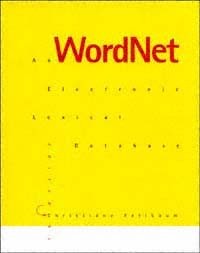
with a preface by George Miller WordNet, an electronic lexical database, is considered to be the most important resource available to researchers in computational linguistics, text analysis, and many related areas. Its design is inspired by current psycholinguistic and computational theories of human lexical memory. English nouns, verbs, adjectives, and adverbs are organized into synonym sets, each representing one underlying lexicalized concept. Different relations link the synonym sets.The purpose of this volume is twofold. First, it discusses the design of WordNet and the theoretical motivations behind it. Second, it provides a survey of representative applications, including word sense identification, information retrieval, selectional preferences of verbs, and lexical chains.Contributors : Reem Al-Halimi, Robert C. Berwick, J. F. M. Burg, Martin Chodorow, Christiane Fellbaum, Joachim Grabowski, Sanda Harabagiu, Marti A. Hearst, Graeme Hirst, Douglas A. Jones, Rick Kazman, Karen T. Kohl, Shari Landes, Claudia Leacock, George A. Miller, Katherine J. Miller, Dan Moldovan, Naoyuki Nomura, Uta Priss, Philip Resnik, David St-Onge, Randee Tengi, Reind P. van de Riet, Ellen Voorhees.
目录
Wordnet
CONTENTS
ACKNOWLEDGMENTS
CONTRIBUTORS
FOREWORD
INTRODUCTION
Computers and the Lexicon
Constructing the Lexical Database
The Contents of WordNet
The Design of WordNet
WordNet as a Thesaurus
WordNet as a Dictionary
Relations in WordNet
The Tennis Problem
New Perspectives, Enhancements, and Applications
Words and Their Contexts
Sense Disambiguation
Information Retrieval
Semantic Relations and Textual Coherence
Knowledge Engineering
Notes
References
PART I— THE LEXICAL DATABASE
Chapter 1— Nouns in WordNet
1.1— Lexical Hierarchy
1.2— Unique Beginners
1.3— Some Psycholinguistic Assumptions
1.4— Some Things Not in WordNet
1.5— Parts and Meronymy
1.6— Antonymy
1.7— Attributes and Modification
1.8— Similar Meanings of Polysemous Nouns
1.9— Conclusion
References
Chapter 2— Modifiers in WordNet
2.1— Adjectives
2.1.1— Descriptive Adjectives
2.1.1.1— Antonymy
2.1.1.2— Gradation
2.1.1.3— Markedness
2.1.1.4— Polysemy and Selectional Preferences
2.1.1.5— Color Adjectives
2.1.1.6— Quantifiers
2.1.1.7— Participial Adjectives
2.1.2— Relational Adjectives
2.2— Adverbs
2.3— The WordNet Interface
2.3.1— Descriptive Adjectives
2.3.2— Participial Adjectives
2.3.3— Relational Adjectives
2.3.4— Adverbs
2.4— Conclusion
References
Chapter 3— A Semantic Network of English Verbs
3.1— The Organization of Verbs in WordNet
3.1.1— Breaking up the Lexicon into Semantic Domains
3.1.2— Unique Beginners
3.1.3— Verb Synsets
3.1.3.1— Synonyms and Near-Synonyms
3.1.3.2— Idioms and Metaphors
3.2— Evidence for Lexical and Semantic Relations among Verbs
3.2.1— Psycholinguistic Evidence for the Organization of Semantic Memory for Verbs
3.2.2— Evidence from Typicality and Category Membership Judgments
3.2.3— Dictionary Definitions as a Heuristic for Discovering Semantic Relations
3.3— Lexical and Semantic Relations among Verbs and Synsets
3.3.1— Entailment
3.3.1.1— Hyponymy among Verbs
3.3.1.2— Troponymy and Entailment
3.3.1.3— Verb Taxonomies
3.3.2— Semantic Opposition among Verbs
3.3.3— The Cause Relation
3.4— Polysemy
3.4.1— Polysemy and Troponymy: Autohyponymy
3.4.2— Polysemy and Entailment
3.4.3— Polysemy and Opposition: Autoantonymy
3.5— Testing the Psychological Validity of the WordNet Model
3.6— Alternative Models of the Verb Lexicon
3.6.1— Semantic Fields
3.6.2— Schemata and Frame Analysis
3.6.3— Compositional Analyses
3.6.4— Lexical Subordination
3.7— Semantic Relations and Syntactic Regularities
3.7.1— Distinguishing Subtrees
3.7.2— Syntactic Reflexes of the Verb\\u0027s Position within a Tree Structure
3.7.3— Restrictions on Middle Formation
3.8— Conclusion
Notes
References
Chapter 4— Design and Implementation of the WordNet Lexical Database and Searching Software
4.1— Lexical Files
4.1.1— Word Forms and Senses
4.1.2— Relational Pointers
4.1.3— Verb Sentence Frames
4.1.4— Synset Syntax
4.2— Archive System
4.3— The WordNet Lexical Database
4.3.1— Ordering of Senses
4.3.2— Index of Familiarity
4.3.3— Index and Data Files
4.3.4— The Sense Index
4.4— Grinder Utility
4.5— Retrieving Lexical Information
4.6— X Windows Interface
4.6.1— Searching the Database
4.6.2— Search Results
4.7— Morphology
4.7.1— Single Words
4.7.2— Compounds and Phrases
4.7.3— Hyphenation
4.8— Portability and Distribution
4.8.1— Portability
4.8.2— Distribution
Notes
References
PART II— EXTENSIONS, ENHANCEMENTS, AND NEW PERSPECTIVES ON WORDNET
Chapter 5— Automated Discovery of WordNet Relations
5.1— Introduction
5.2— The Acquisition Algorithm
5.3— Lexicosyntactic Patterns for Hyponymy
5.4— Discovery of New Patterns
5.5— Parsing Issues
5.6— Some Results
5.7— Related Work
5.7.1— Hand-Coded and Knowledge-Intensive Approaches
5.7.2— Automatic Acquisition from Machine-Readable Dictionaries
5.7.3— Automatic Acquisition from Corpora
5.8— Summary
Notes
References
Chapter 6— Representing Verb Alternations in WordNet
6.1— Introduction
6.2— Enhancement of the Verb Component of WordNet
6.2.1— Overview
6.2.2— Enhancing WordNet with EVCA Syntactic Classes
6.2.2.1— Parsing Verb Class Alternations: From Sentences to Schemas
6.2.2.2— Abstract Lexical Forms
6.2.2.3— Toyworld: A Model World for Sentence Generation
6.2.2.4— The Sentence Generator
6.3— A Survey of the Word Senses in WordNet and EVCA
6.4— Future Work on EVCA WordNet
Notes
References
Chapter 7— The Formalization of WordNet by Methods of Relational Concept Analysis
7.1— Introduction
7.2— Formal Concept Analysis
7.3— WordNet as a Formal Context
7.4— Relational Concept Analysis
7.5— Meronymy
7.6— Hyponymy and Synonymy
7.7— Identifying Irregularities in WordNet
Notes
References
PART III APPLICATIONS OF WORDNET
Chapter 8— Building Semantic Concordances
8.1— Introduction
8.2— Preprocessing
8.3— Context Files
8.4— Procedure for Developing a Semantic Concordance
8.5— The Context Interface
8.6— Training
8.7— Quality Control
8.8— Sources of Error and Inconsistency
8.9— Viewing a Semantic Concordance
8.10— Conclusion
Notes
References
Chapter 9— Performance and Confidence in a Semantic Annotation Task
9.1— Introduction
9.2— The Task
9.3— Procedure
9.4— Results
9.4.1— Overall Results
9.4.2— Tagger-Expert Matches
9.4.3— Intertagger Agreement
9.4.4— First versus Subsequent Position on the List of Senses
9.5— Discussion
Appendix
Notes
References
Chapter 10— WordNet and Class-Based Probabilities
10.1— Introduction
10.2— Word Classes and Taxonomies
10.2.1— Distributionally Derived Word Classes
10.2.2— Probabilistic Models Involving a Taxonomy
10.3— Modeling Selectional Preferences
10.4— Conclusions
Notes
References
Chapter 11— Combining Local Context and WordNet Similarity for Word Sense Identification
11.1— Introduction
11.2— Training and Testing Data
11.3— Experiment 1: The Local Context Classifier
11.3.1— Local Context Results
11.3.2— Related Work
11.4— Experiment 2: Measuring Word Similarity in WordNet
11.5— Experiment 3: Combining Local Context and WordNet Similarity Measures
11.6— Conclusions
Notes
References
Chapter 12— Using WordNet for Text Retrieval
12.1— Introduction
12.2— Text Retrieval Background
12.2.1— The Vector Space Model
12.2.2— Evaluating Retrieval System Effectiveness
12.3— Concept Matching
12.3.1— Word Sense Resolution
12.3.2— Retrieval Experiments
12.4— Query Expansion
12.4.1— Expanding by Manually Selected Synsets
12.4.2— Expanding by Automatically Selected Synsets
12.5— Conclusion
References
Chapter 13— Lexical Chains as Representations of Context for the Detection and Correction of Malapro...
13.1— Introduction
13.2— Lexical Chains
13.3— WordNet as a Knowledge Source for a Lexical Chainer
13.3.1— Relations between Words
13.3.2— Creating and Managing Chains
13.3.3— Identifying Words and Relations
13.3.4— Testing the Lexical Chainer
13.4— Automatically Detecting Malapropisms
13.4.1— Spelling Checkers
13.4.2— An Algorithm for Detecting Probable Malapropisms
13.4.3— An Experiment
13.4.3.1— Creating the Experimental Text
13.4.3.2— Results
13.5— Conclusion
13.5.1— Review
13.5.2— Lexical Chains as Context
13.5.3— Related Research
Notes
References
Chapter 14— Temporal Indexing through Lexical Chaining
14.1— Introduction
14.2— Previous Work
14.3— Lexical Trees for Indexing
14.3.1— Chain Structure
14.3.2— Tree Parameterization
14.3.2.1— Relation Informativeness
14.3.2.2— Relation Type Compatibility
14.3.2.3— Word Distance
14.3.3— LexTree\\u0027s Algorithm
14.3.4— Results
14.4— Applications
14.5— Conclusions and Future Work
Notes
References
Chapter 15— COLOR-X: Using Knowledge from WordNet for Conceptual Modeling
15.1— Introduction
15.2— COLOR-X
15.2.1— COLOR-X Static Object Model
15.2.2— COLOR-X Event Model
15.3— Wordnet Supports Conceptual Modeling
15.3.1— Objects
15.3.2— User-Defined Relationships
15.3.3— Standard Relationships
15.3.4— Other Knowledge
15.3.4.1— Antonym Events
15.3.4.2— Entailment and Cause-To Relationship
15.3.5— Verification and Validation
15.3.6— Combining the Results
15.3.7— An Alternative Approach
15.4— Wordnet and a Reusable Knowledge Library
15.4.1— Kinds of Knowledge
15.4.2— Reusable Library: Models or Implementations?
15.5— WordNet Evaluated from a Conceptual Modeling Viewpoint
15.6— Conclusions and Further Research
Notes
References
Chapter 16— Knowledge Processing on an Extended WordNet
16.1— Very Large Knowledge Bases and WordNet
16.1.1— Desirable Features and What WordNet Can Offer
16.1.2— Plausible Inferences
16.1.3— Related Work
16.2— Knowledge Representation on Extended WordNet
16.2.1— Semantic Relations in WordNet
16.2.2— Synset-Defining Features
16.2.3— Microcontexts
16.3— Inference Rules
16.3.1— Combinations of Two Semantic Relations
16.3.2— Rules Formed by Pairing IS-A and ENTAIL
16.3.3— Factors Affecting Plausibility
16.4— Rule Chaining and Marker Propagations
16.4.1— Rules with More Than Two Relations
16.4.2— Marker Propagations
16.4.3— Semantic Paths
Step 0— Create and load the knowledge base.
Step 1— Place markers on knowledge base concepts.
Step 2— Propagate markers.
Step 3— Detect collisions.
Step 4— Extract inferences.
16.5— Knowledge-Processing Applications
16.5.1— An Inference Example
16.5.2— Intentions and Context
16.5.3— Text Coherence
16.5.4— Questions and Answers
16.5.5— Case Propagation
16.5.6— Reference Resolution
16.6— What Wordnet Cannot Do
References
APPENDIX— OBTAINING AND USING WORDNET
INDEX
A
B
C
D
E
F
G
H
I
J
K
L
M
N
O
P
Q
R
S
T
U
V
W
X
Y
Z
- 名称
- 类型
- 大小
光盘服务联系方式: 020-38250260 客服QQ:4006604884
云图客服:
用户发送的提问,这种方式就需要有位在线客服来回答用户的问题,这种 就属于对话式的,问题是这种提问是否需要用户登录才能提问
Video Player
×
Audio Player
×
pdf Player
×
