

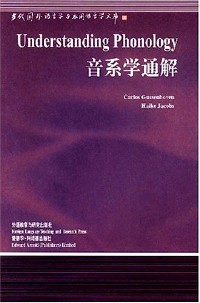
Understanding Phonology
副标题:无
作 者:(英)Carlos Gussenhoven,(英)Haike Jacobs著;李兵导读
分类号:
ISBN:9787560023755
微信扫一扫,移动浏览光盘
简介
《音系学通解》是一部音系学理论的教科书。这部教科书介绍了从以
SPE(Chomsky & Halle 1968)为代表的经典生成音系学至优选论
(Prince & Smolensky 1993;McCarthy & Prince 1993)几乎所有重要的音
系学理论,讨论了音系学领域中许多热点问题。全书每一章都附有思考
题和练习题。正文和练习题涉及一百多种语言的材料。作者精心安排,
突出重点,精选语言材料,行文简练,从而使一部二百多页的教科书包
含了如此之多的内容。
生成音系学是当代音系学的主流。这部教科书介绍的理论,基本概
念和分析方法主要取之于生成音系学的研究成果。为了更好地掌握本书
的内容,有必要对生成音系学的基本理论、重大理论建树和发展趋势做
一扼要介绍。
目录
preface by halliday
王宗炎序
preface by chomsky
沈家煊序
导读
preface
1 the production of speech
1.1 introduction
1.2 the lungs and the larynx
1.2.1 the vocal cords: the open and vibrating glottis
1.2.2 devoicing and aspiration
1.2.3 special types of phonation
1.2.4. pitch
1.2.5. the glottal stop
1.3 the vocal tract
1.3.1 the pharynx
1.3.2 the nasal cavity
1.3.3 the mouth
1.4 vowels
1.5 constrictions
. 1.5.1 places of articulation
1.5.2 types of constriction
1.6 segmental duration
1.7 complex consonants
1.7.1 secondary articulations
1.7.2 double articulations
1.7.3 manner-contour consonants
1.8 nonpulmonic consonants
1.9 stress
1.10 conclusion
2 some typology: sameness and difference
2.1 introduction
2.2 morphosyntactic structure
2.2.1 morphological structure
2.2.2 syntactic structure
2.3 a world without phonological structure
2.3.1 one phonology for all languages?
2.3.2 two kinds of structure
2.4 there's a difference
2.5 universals and implicational relations
2.5.1 plain or special?
2.5.2 avoiding complexity
2.5.3 a word of caution
2.5.4 system gaps
2.6 the aims of phonology
2.7 conclusion
3 making the form fit
3.1 introduction
3.2 hawaiian
3.3 adjustment processes
3.3.1 the process of nativization
3.3.2 adjustments in the native vocabulary
3.4 two approaches
3.4.1 rules
3.4.2 constraints
3.5 choosing between rules and constraints
3.5.1 gradient violation and unranked constraints
3.6 conclusion
4 underlying and surface representations
4.1 introduction
4.2 allophonic variation
4.3 two levels of representation
4.4 neutralization
4.5 choosing the underlying form
4.6 conclusion
5 distinctive features
5.1 introduction
5.2 motivating distinctive features
5.3 feature values
5.4 a set of distinctive features
5.4.1 major-class features
5.4.2 laryngeal features
5.4.3 manner features
5.4.4 ambiguity and nonspecification
5.5 place features
5.6 some examples
5.7 redundant vs. contrastive features
5.8 conclusion
6 ordered rules
6.1 introduction
6.2 spe representations
6.3 spe roles
6.3.1 reference to the syllable
6.3.2 the brace
6.3.3 variable feature values
6.3.4 parentheses
6.3.5 the transformational role format
6.4 linear order
6.5 extrinsic and intrinsic ordering
6.6 feeding, counterfeeding, bleeding, counterbleeding
6.6.1 feeding order
6.6.2 counterfeeding order
6.6.3 bleeding order
6.6.4 counterbleeding order
6.7 conclusion
7 a case study: the diminutive suffix in dutch
7.1 introduction
7.2 general dutch rules
7.2.1 final devoicing
7.2.2 palatalization
7.2.3 degemination
7.3 standard dutch
7.4 the dialect of sittard
7.5 conclusion
8 levels of representation
8.1 introduction
8.2 defining an intermediate level of representation
8.3 lexical phonology
8.3.1 reference to morphological labels
8.3.2 exceptions
8.3:3 structure preservation
8.3.4 native-speaker intuitions
8.3.5 application across word boundaries
8.3.6 lexical roles apply before postlexical roles
8.4 phonological information in the lexicon
8.5 controversial properties of lexical roles
8.6 beyond the surface representation
8.6.1 phonetic implementation
8.6.2 models of implementation
8.6.3 deciding between phonology and phonetic
implementation
8.7 conclusion
9 representing tone
9.1 introduction
9.2 the inadequacy of a linear model
9.3 word-based tone patterns
9.3.1 language-specific associations
9.4 stability
9.5 postlexical tone
9.6 the obligatory contour principle
9.6.1 violating the ocp
9.7 conclusion
10 between the segment and the syllable
10.1 introduction
10.2 a skeletal tier
10.3 syllabification: the maximum onset principle
10.3.1 the sonority profile
10.4 arguments for the cv tier
10.4.1 the templatic use of the cv tier
10.4.2 unfilled and unassociated slots
10.4.3 compensatory lengthening
10.5 moras
10.6 syllable-based generalizations
10.7 post-mop syllabification rules
10.7.1 ambisyllabicity in english
10.8 conclusion
11 feature geometry
11.1 introduction
11.2 two properties of assimilations
11.3 natural feature classes
11.4 building a tree
11.4.1 the place node
11.4.2 the laryngeal node
11.4.3 the supralaryngeal node
11.5 spreading and delinking
11.5.1 writing rules
11.6 implications of underspecification
11.6.1 default rules
11.7 conclusion
12 exploiting the feature tree
12.1 introduction
12.2 long-distance assimilation
12.2.1 vowel harmony
12.3 complex segments
12.3.1 evidence for complex segments
12.3.2 the representation of palatals and
palatoalveolars
12.3.3 distinguishing among palatoalveolars
12.4 conclusion
13 stress and feet
13.1 introduction
13.2 the phonological nature of stress
13.2.1 metrical feet and feet in poetry
13.3 stress as an absolute property of segments:
linear phonology
13.4 stress as relative prominence: nonlinear phonology
13.4.1 a parametric theory of relative prominence
13.4.2 four types of bounded stress system
13.5 conclusion
14 further constraining stress
14.1 introduction
14.2 iambic and trochaic rhythm
14.3 foot-based rules
14.3.1 quantitative adjustments
14.3.2 foot-based segmental rules
14.4 stress and morphology
14.5 stress and optimality theory
14.5.1 constraining stress
14.6 conclusion
15 phonology above the word
15.1 introduction
15.2 the case for prosodic constituency
15.2.1 the phonological utterance
15.2.2 the intonational phrase
15.2.3 the phonological phrase
15.2.4 the phonological word
15.3 deriving prosodic constituents
15.3.1 clitics
15.3.2 the syntactic residue
15.4 prosodic constituency below the phonological word
15.5 conclusion
epilogue
key to questions
references
language index
subject index
文库索引
王宗炎序
preface by chomsky
沈家煊序
导读
preface
1 the production of speech
1.1 introduction
1.2 the lungs and the larynx
1.2.1 the vocal cords: the open and vibrating glottis
1.2.2 devoicing and aspiration
1.2.3 special types of phonation
1.2.4. pitch
1.2.5. the glottal stop
1.3 the vocal tract
1.3.1 the pharynx
1.3.2 the nasal cavity
1.3.3 the mouth
1.4 vowels
1.5 constrictions
. 1.5.1 places of articulation
1.5.2 types of constriction
1.6 segmental duration
1.7 complex consonants
1.7.1 secondary articulations
1.7.2 double articulations
1.7.3 manner-contour consonants
1.8 nonpulmonic consonants
1.9 stress
1.10 conclusion
2 some typology: sameness and difference
2.1 introduction
2.2 morphosyntactic structure
2.2.1 morphological structure
2.2.2 syntactic structure
2.3 a world without phonological structure
2.3.1 one phonology for all languages?
2.3.2 two kinds of structure
2.4 there's a difference
2.5 universals and implicational relations
2.5.1 plain or special?
2.5.2 avoiding complexity
2.5.3 a word of caution
2.5.4 system gaps
2.6 the aims of phonology
2.7 conclusion
3 making the form fit
3.1 introduction
3.2 hawaiian
3.3 adjustment processes
3.3.1 the process of nativization
3.3.2 adjustments in the native vocabulary
3.4 two approaches
3.4.1 rules
3.4.2 constraints
3.5 choosing between rules and constraints
3.5.1 gradient violation and unranked constraints
3.6 conclusion
4 underlying and surface representations
4.1 introduction
4.2 allophonic variation
4.3 two levels of representation
4.4 neutralization
4.5 choosing the underlying form
4.6 conclusion
5 distinctive features
5.1 introduction
5.2 motivating distinctive features
5.3 feature values
5.4 a set of distinctive features
5.4.1 major-class features
5.4.2 laryngeal features
5.4.3 manner features
5.4.4 ambiguity and nonspecification
5.5 place features
5.6 some examples
5.7 redundant vs. contrastive features
5.8 conclusion
6 ordered rules
6.1 introduction
6.2 spe representations
6.3 spe roles
6.3.1 reference to the syllable
6.3.2 the brace
6.3.3 variable feature values
6.3.4 parentheses
6.3.5 the transformational role format
6.4 linear order
6.5 extrinsic and intrinsic ordering
6.6 feeding, counterfeeding, bleeding, counterbleeding
6.6.1 feeding order
6.6.2 counterfeeding order
6.6.3 bleeding order
6.6.4 counterbleeding order
6.7 conclusion
7 a case study: the diminutive suffix in dutch
7.1 introduction
7.2 general dutch rules
7.2.1 final devoicing
7.2.2 palatalization
7.2.3 degemination
7.3 standard dutch
7.4 the dialect of sittard
7.5 conclusion
8 levels of representation
8.1 introduction
8.2 defining an intermediate level of representation
8.3 lexical phonology
8.3.1 reference to morphological labels
8.3.2 exceptions
8.3:3 structure preservation
8.3.4 native-speaker intuitions
8.3.5 application across word boundaries
8.3.6 lexical roles apply before postlexical roles
8.4 phonological information in the lexicon
8.5 controversial properties of lexical roles
8.6 beyond the surface representation
8.6.1 phonetic implementation
8.6.2 models of implementation
8.6.3 deciding between phonology and phonetic
implementation
8.7 conclusion
9 representing tone
9.1 introduction
9.2 the inadequacy of a linear model
9.3 word-based tone patterns
9.3.1 language-specific associations
9.4 stability
9.5 postlexical tone
9.6 the obligatory contour principle
9.6.1 violating the ocp
9.7 conclusion
10 between the segment and the syllable
10.1 introduction
10.2 a skeletal tier
10.3 syllabification: the maximum onset principle
10.3.1 the sonority profile
10.4 arguments for the cv tier
10.4.1 the templatic use of the cv tier
10.4.2 unfilled and unassociated slots
10.4.3 compensatory lengthening
10.5 moras
10.6 syllable-based generalizations
10.7 post-mop syllabification rules
10.7.1 ambisyllabicity in english
10.8 conclusion
11 feature geometry
11.1 introduction
11.2 two properties of assimilations
11.3 natural feature classes
11.4 building a tree
11.4.1 the place node
11.4.2 the laryngeal node
11.4.3 the supralaryngeal node
11.5 spreading and delinking
11.5.1 writing rules
11.6 implications of underspecification
11.6.1 default rules
11.7 conclusion
12 exploiting the feature tree
12.1 introduction
12.2 long-distance assimilation
12.2.1 vowel harmony
12.3 complex segments
12.3.1 evidence for complex segments
12.3.2 the representation of palatals and
palatoalveolars
12.3.3 distinguishing among palatoalveolars
12.4 conclusion
13 stress and feet
13.1 introduction
13.2 the phonological nature of stress
13.2.1 metrical feet and feet in poetry
13.3 stress as an absolute property of segments:
linear phonology
13.4 stress as relative prominence: nonlinear phonology
13.4.1 a parametric theory of relative prominence
13.4.2 four types of bounded stress system
13.5 conclusion
14 further constraining stress
14.1 introduction
14.2 iambic and trochaic rhythm
14.3 foot-based rules
14.3.1 quantitative adjustments
14.3.2 foot-based segmental rules
14.4 stress and morphology
14.5 stress and optimality theory
14.5.1 constraining stress
14.6 conclusion
15 phonology above the word
15.1 introduction
15.2 the case for prosodic constituency
15.2.1 the phonological utterance
15.2.2 the intonational phrase
15.2.3 the phonological phrase
15.2.4 the phonological word
15.3 deriving prosodic constituents
15.3.1 clitics
15.3.2 the syntactic residue
15.4 prosodic constituency below the phonological word
15.5 conclusion
epilogue
key to questions
references
language index
subject index
文库索引
Understanding Phonology
- 名称
- 类型
- 大小
光盘服务联系方式: 020-38250260 客服QQ:4006604884
云图客服:
用户发送的提问,这种方式就需要有位在线客服来回答用户的问题,这种 就属于对话式的,问题是这种提问是否需要用户登录才能提问
Video Player
×
Audio Player
×
pdf Player
×
