

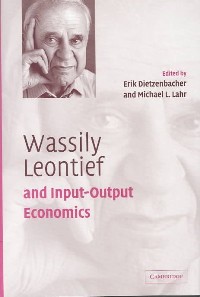
Wassily Leontief and input-output economics /
副标题:无
作 者:edited by Erik Dietzenbacher and Michael L. Lahr.
分类号:
ISBN:9780521832380
微信扫一扫,移动浏览光盘
简介
Summary:
Publisher Summary 1
A collection of papers in memory of Wassily Leontief, focusing on his contributions to economics.
Publisher Summary 2
Wassily Leontief was the founding father of input-output economics, for which he received the Nobel Prize in 1973. This book offers a collection of papers in his memory by his students and close colleagues. The first part focuses upon Leontief as an individual and scholar as well as his personal contributions to economics; the second includes new theoretical and empirical research inspired by Leontief's efforts. The collection offers a comprehensive sample of the current state of interindustry economics and is likely to appeal to a wide range of professionals.
目录
Cover 1
Half-title 3
Title 5
Copyright 6
Contents 7
Contributors 10
Figures 13
Tables 17
Preface 21
Part I Reflections on input-output economics 25
1 A portrait of the master as a young man 27
1. The Harvard background 27
2. Early teaching 28
3. Afterthoughts on input-output 30
references 31
2 Leontief\u2019s \u201cmagnificent machine\u201d and other contributions to applied economics 33
1. Introduction 33
2. Linking theory and applications 33
3. The input-output model \u2013 the \u201cmagnificent machine\u201d 35
4. Automation 37
5. Defense conversion 38
6. Environment 40
7. Foreign and interregional trade 42
8. Spatial and world models 45
9. Conclusion 49
acknowledgements 49
references 49
3 Leontief and the future of the world economy 54
1. Historical background 54
2. The model and the data 57
3. Scenarios and results 61
4. Looking backwards from 2000 65
5. A tentative research agenda 68
acknowledgements 69
references 69
4 International trade: evolution in the thought and analysis of Wassily Leontief 71
1. Introduction 71
2. The early work: Leontief as neoclassical theorist 72
3. The middle period: testing the dominant theory 73
3.1 Establishing the Leontief Paradox 73
3.2 Leamer\u2019s challenge 75
3.3 Recent analyses of factor contents 75
4. Later work: a new theoretical framework 77
4.1 Critiques of Minhas and Chipman 78
4.2 Theoretical status of bilateral trade 79
4.3 The \u201cWorld Model\u201d as the framework for a theory of trade 81
4.4 Models and theories 83
5. Looking to the future: the analysis of scenarios 85
references 86
5 Leontief\u2019s input-output table and the French Development Plan 89
1. French problems at the end of World War II 89
2. Nationalizing meant modernizing 90
3. The spirit of the National Development and Equipment Plan 93
4. The third Plan (1958\u20131961) and the use of the input-output table 95
4.1 The National Accounting System and national planning 95
4.2 The growth rates of GNP and final demand 96
4.3 The French input-output table 97
4.4 The two forecasts for 1961 100
5. A few lessons from this experiment 103
5.1 Triangulation and the democratization of planning 103
5.2 The appearance of new techniques 104
5.3 Are technology coefficients really \u201ctechnology\u201d? 104
5.4 The role of semantics 106
6. New attempts to improve the efficiency of the input-output table 107
6.1 First experiences 108
6.2 A new approach to technological forecasting 108
7. Final remarks 112
references 113
6 Leontief and dynamic regional models 114
1. Dynamics of the input-output system 114
2. Projecting technical and capital coefficients 116
2.1 The \u201cbest practice\u201d approach 116
2.2 The RAS method 117
2.3 The ex ante method 118
3. The stability of dynamic systems 119
3.1 Capital coefficients 119
3.2 The taxonomy of dynamic models 121
4. Leontief and regional input-output analysis 122
4.1 Regional and interregional theory 122
5. A final word 123
references 124
7 Experiences with input-output and isomorphic analytical tools in spatial economics 126
1. Introduction 126
2. Extending spatial input-output analysis 127
2.1 Exploration, simulation, impact 127
2.2 Spatializing input-output-based models: economies of scale and scope; externalities; non-convexities; and supply effects 130
2.3 Combining input-output analysis and spatial econometrics: five more spatial elements 132
2.4 General spatial economic equilibrium: introducing coordinates 135
3. Extensions of input-output analysis 137
3.1 Location elasticities 138
3.2 Multiregional dynamics and growth 141
4. Conclusion 142
acknowledgements 143
references 143
8 Leontief and Schumpeter: a joint heritage with surprises 147
1. Close but distant neighbors 147
2. Richard Goodwin: cycles without innovation 149
3. Eric Von Hippel: the sectoral locus of innovation 151
4. Intellectual specialization and loci of insight 154
references 157
9 Some highlights in the life of Wassily Leontief \u2013 an interview with Estelle and Wassily Leontief 159
1. The context 159
2. The interview 160
3. Epilogue 170
acknowledgements 171
Part II Perspectives of input-output economics 173
10 A neoclassical analysis of total factor productivity using input-output prices 175
1. Introduction 175
2. Earlier work 176
3. Growth accounting 177
4. Equilibrium and efficiency 177
5. Efficiency and productivity 181
6. Total factor productivity 185
7. Input-output analysis of total factor productivity 186
8. Conclusion 188
references 188
11 What has happened to the Leontief Paradox? 190
1. Introduction 190
2. Review of previous literature 191
3. Accounting framework and skill measures 193
4. Results 194
4.1 The changing make-up of US exports and imports 194
4.2 The factor content of US exports and imports 195
4.3 R&D intensity of exports and imports 201
4.4 Labor costs and labor productivity of exports and imports 202
5. Conclusion 205
6. Data appendix 207
references 209
12 The decline in labor compensation\u2019s share of GDP: a structural decomposition analysis for the United States, 1982 to 1997 212
1. Introduction 212
2. Potential causes of declining labor shares in income 213
3. Methodological aspects of structural decompositions 216
4. Decomposing labor compensation\u2019s share of value added 219
5. Description of the data used 223
6. Causes of labor\u2019s declining share of value added 226
6.1 Decomposition of the aggregate economy 226
6.2 Decomposition by major sector 229
7. Conclusion 233
references 234
13 An oligopoly model in a Leontief framework 237
1. Introduction 237
2. The rivalrous consonance approach to oligopolistic decision-making 238
3. The rivalrous consonance model in the Leontief price dual context 239
4. The model 245
5. Some illustrative simulations 245
5.1 Sector profiles 246
5.2 Case solutions 247
6. The ease of comparative statics calculations 252
7. Conclusion 254
acknowledgements 255
references 255
14 Economies of plant scale and structural change 256
1. Introduction 256
2. Data 258
3. Measurement using a cross-section approach 258
3.1 Observations 258
3.2 Estimation 259
3.3 Capital-using sectors 263
3.4 Capital-saving sectors 263
3.5 Stability over time of the technology parameters 264
3.6 Technology embodied in plants 264
3.7 Unit cost minimization: the determination of optimum plant scale 268
4. Measurement using a time-series analysis 270
5. Enlargement of plant scale and structural change 274
6. Concluding remarks 278
acknowledgements 279
references 279
15 Technological change and accumulated capital: a dynamic decomposition of Japan\u2019s growth 280
1. Introduction 280
2. Static and dynamic unit structure 282
2.1 Static structure 282
2.2 Dynamic inverse and dynamic structure 283
3. TFP and produced inputs 285
3.1 Static unit TFP 285
3.2 Dynamic unit TFP 289
4. Measurement 292
4.1 Data 292
4.2 Capital coefficients 294
4.3 Dynamic unit structure 296
5. Decomposition of Japan\u2019s economic growth 299
5.1 Static decomposition 299
5.2 Dynamic decomposition 308
6. Conclusion 316
acknowledgements 316
references 316
16 Japan\u2019s economic growth and policy-making in the context of input-output models 318
1. Introduction 318
2. Japan\u2019s medium-term planning and Leontief models 319
3. Later developments of policy guidelines 321
4. Capacity output at macro- and sectoral levels 322
4.1 Purpose of the study and database 322
4.2 The model 323
4.3 The results 324
4.4 Capacity output and the rate of operation 326
5. Concluding remarks 332
acknowledgements 333
references 333
17 Contributions of input-output analysis to the understanding of technological change: the information sector in the United States 335
1. Methodological issues 335
2. Some properties of the US input-output accounts for 1972 to 1996 338
3. KLEMI 341
4. Data 346
4.1 Gross output 346
4.2 Labor 346
4.3 Stock of capital 346
4.4 Stock of information technology capital 347
4.5 Information technology service B2B input 347
4.6 All intermediate B2B inputs, other than information technology service input 347
5. Estimation results 348
5.1 Automobiles and parts 348
5.2 Transportation equipment 356
6. Summary remarks 358
references 360
18 How much can investment change trade patterns? An application of dynamic input-output models linked by international trade to an Italian policy question 361
1. The problem and our approach to it 361
2. The Italian model 365
2.1 The accounting structure and data 365
2.2 Equations from input-output identities 366
2.3 Behavioral equations 367
3. The bilateral trade model 371
4. The base and alternative scenarios 373
5. The effects of investment stimulus 374
6. Conclusion 390
references 390
19 Social cost in the Leontief environmental model: rules and limits to policy 391
1. Introduction 391
2. The Leontief environmental model 393
2.1 Methodology 393
2.2 A numerical example 398
3. Intermediate or primary inputs? 399
4. The role of Alpha 404
5. The scope for policy 406
6. Final remarks and conclusion 407
references 409
Subject index 411
Author index 417
Half-title 3
Title 5
Copyright 6
Contents 7
Contributors 10
Figures 13
Tables 17
Preface 21
Part I Reflections on input-output economics 25
1 A portrait of the master as a young man 27
1. The Harvard background 27
2. Early teaching 28
3. Afterthoughts on input-output 30
references 31
2 Leontief\u2019s \u201cmagnificent machine\u201d and other contributions to applied economics 33
1. Introduction 33
2. Linking theory and applications 33
3. The input-output model \u2013 the \u201cmagnificent machine\u201d 35
4. Automation 37
5. Defense conversion 38
6. Environment 40
7. Foreign and interregional trade 42
8. Spatial and world models 45
9. Conclusion 49
acknowledgements 49
references 49
3 Leontief and the future of the world economy 54
1. Historical background 54
2. The model and the data 57
3. Scenarios and results 61
4. Looking backwards from 2000 65
5. A tentative research agenda 68
acknowledgements 69
references 69
4 International trade: evolution in the thought and analysis of Wassily Leontief 71
1. Introduction 71
2. The early work: Leontief as neoclassical theorist 72
3. The middle period: testing the dominant theory 73
3.1 Establishing the Leontief Paradox 73
3.2 Leamer\u2019s challenge 75
3.3 Recent analyses of factor contents 75
4. Later work: a new theoretical framework 77
4.1 Critiques of Minhas and Chipman 78
4.2 Theoretical status of bilateral trade 79
4.3 The \u201cWorld Model\u201d as the framework for a theory of trade 81
4.4 Models and theories 83
5. Looking to the future: the analysis of scenarios 85
references 86
5 Leontief\u2019s input-output table and the French Development Plan 89
1. French problems at the end of World War II 89
2. Nationalizing meant modernizing 90
3. The spirit of the National Development and Equipment Plan 93
4. The third Plan (1958\u20131961) and the use of the input-output table 95
4.1 The National Accounting System and national planning 95
4.2 The growth rates of GNP and final demand 96
4.3 The French input-output table 97
4.4 The two forecasts for 1961 100
5. A few lessons from this experiment 103
5.1 Triangulation and the democratization of planning 103
5.2 The appearance of new techniques 104
5.3 Are technology coefficients really \u201ctechnology\u201d? 104
5.4 The role of semantics 106
6. New attempts to improve the efficiency of the input-output table 107
6.1 First experiences 108
6.2 A new approach to technological forecasting 108
7. Final remarks 112
references 113
6 Leontief and dynamic regional models 114
1. Dynamics of the input-output system 114
2. Projecting technical and capital coefficients 116
2.1 The \u201cbest practice\u201d approach 116
2.2 The RAS method 117
2.3 The ex ante method 118
3. The stability of dynamic systems 119
3.1 Capital coefficients 119
3.2 The taxonomy of dynamic models 121
4. Leontief and regional input-output analysis 122
4.1 Regional and interregional theory 122
5. A final word 123
references 124
7 Experiences with input-output and isomorphic analytical tools in spatial economics 126
1. Introduction 126
2. Extending spatial input-output analysis 127
2.1 Exploration, simulation, impact 127
2.2 Spatializing input-output-based models: economies of scale and scope; externalities; non-convexities; and supply effects 130
2.3 Combining input-output analysis and spatial econometrics: five more spatial elements 132
2.4 General spatial economic equilibrium: introducing coordinates 135
3. Extensions of input-output analysis 137
3.1 Location elasticities 138
3.2 Multiregional dynamics and growth 141
4. Conclusion 142
acknowledgements 143
references 143
8 Leontief and Schumpeter: a joint heritage with surprises 147
1. Close but distant neighbors 147
2. Richard Goodwin: cycles without innovation 149
3. Eric Von Hippel: the sectoral locus of innovation 151
4. Intellectual specialization and loci of insight 154
references 157
9 Some highlights in the life of Wassily Leontief \u2013 an interview with Estelle and Wassily Leontief 159
1. The context 159
2. The interview 160
3. Epilogue 170
acknowledgements 171
Part II Perspectives of input-output economics 173
10 A neoclassical analysis of total factor productivity using input-output prices 175
1. Introduction 175
2. Earlier work 176
3. Growth accounting 177
4. Equilibrium and efficiency 177
5. Efficiency and productivity 181
6. Total factor productivity 185
7. Input-output analysis of total factor productivity 186
8. Conclusion 188
references 188
11 What has happened to the Leontief Paradox? 190
1. Introduction 190
2. Review of previous literature 191
3. Accounting framework and skill measures 193
4. Results 194
4.1 The changing make-up of US exports and imports 194
4.2 The factor content of US exports and imports 195
4.3 R&D intensity of exports and imports 201
4.4 Labor costs and labor productivity of exports and imports 202
5. Conclusion 205
6. Data appendix 207
references 209
12 The decline in labor compensation\u2019s share of GDP: a structural decomposition analysis for the United States, 1982 to 1997 212
1. Introduction 212
2. Potential causes of declining labor shares in income 213
3. Methodological aspects of structural decompositions 216
4. Decomposing labor compensation\u2019s share of value added 219
5. Description of the data used 223
6. Causes of labor\u2019s declining share of value added 226
6.1 Decomposition of the aggregate economy 226
6.2 Decomposition by major sector 229
7. Conclusion 233
references 234
13 An oligopoly model in a Leontief framework 237
1. Introduction 237
2. The rivalrous consonance approach to oligopolistic decision-making 238
3. The rivalrous consonance model in the Leontief price dual context 239
4. The model 245
5. Some illustrative simulations 245
5.1 Sector profiles 246
5.2 Case solutions 247
6. The ease of comparative statics calculations 252
7. Conclusion 254
acknowledgements 255
references 255
14 Economies of plant scale and structural change 256
1. Introduction 256
2. Data 258
3. Measurement using a cross-section approach 258
3.1 Observations 258
3.2 Estimation 259
3.3 Capital-using sectors 263
3.4 Capital-saving sectors 263
3.5 Stability over time of the technology parameters 264
3.6 Technology embodied in plants 264
3.7 Unit cost minimization: the determination of optimum plant scale 268
4. Measurement using a time-series analysis 270
5. Enlargement of plant scale and structural change 274
6. Concluding remarks 278
acknowledgements 279
references 279
15 Technological change and accumulated capital: a dynamic decomposition of Japan\u2019s growth 280
1. Introduction 280
2. Static and dynamic unit structure 282
2.1 Static structure 282
2.2 Dynamic inverse and dynamic structure 283
3. TFP and produced inputs 285
3.1 Static unit TFP 285
3.2 Dynamic unit TFP 289
4. Measurement 292
4.1 Data 292
4.2 Capital coefficients 294
4.3 Dynamic unit structure 296
5. Decomposition of Japan\u2019s economic growth 299
5.1 Static decomposition 299
5.2 Dynamic decomposition 308
6. Conclusion 316
acknowledgements 316
references 316
16 Japan\u2019s economic growth and policy-making in the context of input-output models 318
1. Introduction 318
2. Japan\u2019s medium-term planning and Leontief models 319
3. Later developments of policy guidelines 321
4. Capacity output at macro- and sectoral levels 322
4.1 Purpose of the study and database 322
4.2 The model 323
4.3 The results 324
4.4 Capacity output and the rate of operation 326
5. Concluding remarks 332
acknowledgements 333
references 333
17 Contributions of input-output analysis to the understanding of technological change: the information sector in the United States 335
1. Methodological issues 335
2. Some properties of the US input-output accounts for 1972 to 1996 338
3. KLEMI 341
4. Data 346
4.1 Gross output 346
4.2 Labor 346
4.3 Stock of capital 346
4.4 Stock of information technology capital 347
4.5 Information technology service B2B input 347
4.6 All intermediate B2B inputs, other than information technology service input 347
5. Estimation results 348
5.1 Automobiles and parts 348
5.2 Transportation equipment 356
6. Summary remarks 358
references 360
18 How much can investment change trade patterns? An application of dynamic input-output models linked by international trade to an Italian policy question 361
1. The problem and our approach to it 361
2. The Italian model 365
2.1 The accounting structure and data 365
2.2 Equations from input-output identities 366
2.3 Behavioral equations 367
3. The bilateral trade model 371
4. The base and alternative scenarios 373
5. The effects of investment stimulus 374
6. Conclusion 390
references 390
19 Social cost in the Leontief environmental model: rules and limits to policy 391
1. Introduction 391
2. The Leontief environmental model 393
2.1 Methodology 393
2.2 A numerical example 398
3. Intermediate or primary inputs? 399
4. The role of Alpha 404
5. The scope for policy 406
6. Final remarks and conclusion 407
references 409
Subject index 411
Author index 417
Wassily Leontief and input-output economics /
- 名称
- 类型
- 大小
光盘服务联系方式: 020-38250260 客服QQ:4006604884
云图客服:
用户发送的提问,这种方式就需要有位在线客服来回答用户的问题,这种 就属于对话式的,问题是这种提问是否需要用户登录才能提问
Video Player
×
Audio Player
×
pdf Player
×
