

简介
Summary:
Publisher Summary 1
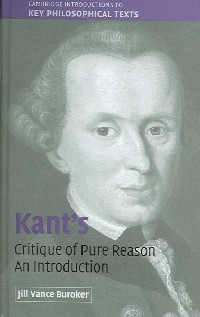
In this new introductory textbook to Kant's Critique of Pure Reason, Jill Vance Buroker explains the role of this first Critique in Kant's Critical project and offers a line-by-line reading of the major arguments in the text. She situates Kant's views in relation both to his predecessors and to contemporary debates, explaining his Critical philosophy as a response to the failure of rationalism and the challenge of skepticism. Paying special attention to Kant's notoriously difficult vocabulary, she explains the strengths and weaknesses of his arguments, while leaving the final assessment up to the reader. Intended to be read alongside the Critique (also published by Cambridge University Press as part of The Cambridge Edition of the Works of Immanuel Kant in Translation), this guide is accessible to readers with little background in the history of philosophy, but should also be a valuable resource for more advanced students.
Publisher Summary 2
Introductory textbook explaining the role of the first Critique in Kant's philosophy.
目录
Cover 1
Half-title 3
Series-title 4
Title 5
Copyright 6
Dedication 7
Contents 9
Acknowledgments 10
Abbreviations 11
Chapter 1 Introduction to the critical project 13
1. KANT\u2019S LIFE AND WORKS 13
2. THE CRITICAL PROJECT 18
3. THE STRUCTURE OF THE CRITIQUE OF PURE REASON 22
4. THE SECOND (B) EDITION VERSION 24
Chapter 2 The Prefaces and the Introduction 26
1. THE A EDITION PREFACE: THE PROBLEM OF HUMAN REASON 26
2. THE B EDITION PREFACE: KANT\u2019S COPERNICAN REVOLUTION 29
3. THE INTRODUCTION: THE PROBLEM OF SYNTHETIC A PRIORI KNOWLEDGE 39
4. THE ANALYTIC-SYNTHETIC CONTROVERSY 46
5. SUMMARY 47
Chapter 3 The Transcendental Aesthetic 48
1. THE SENSIBILITY AND THE INTELLECT 48
2. THE PURE FORMS OF INTUITION AND SYNTHETIC A PRIORI KNOWLEDGE 56
A. The metaphysical exposition 59
1. The first exposition: space and time are logically independent of the empirical data given in intuition 59
2. The second exposition: space and time are necessary conditions of experience 62
3. The third exposition: space and time are intuitions because they are particular representations 63
4. The fourth exposition: space and time are intuitions because they are given as infinite in magnitude 66
B. The transcendental exposition 68
3. SPACE AND TIME AS TRANSCENDENTALLY IDEAL AND EMPIRICALLY REAL 69
4. CRITICISMS OF KANT\u2019S THEORY OF SPACE AND TIME 76
A. NST and the unknowability of things in themselves 76
B. Is arithmetic analytic or synthetic? 80
C. Is geometry synthetic a priori? 82
5. SUMMARY 83
Chapter 4 The Metaphysical Deduction: identifying categories 85
1. THE PHILOSOPHICAL BACKGROUND 86
a. The origin of ideas 86
b. Skepticism and objective knowledge 87
c. The notion of categorial concepts 88
2. THE METAPHYSICAL DEDUCTION: DISCOVERING THE PURE CONCEPTS IN THE FORMS OF JUDGMENT 88
a. Introduction to transcendental logic (A50\u201366/B74\u201391) 89
b. Step one of the Metaphysical Deduction: the logical function of the understanding 92
c. Interlude: the table of the forms of judgment (A70\u20131/B95\u20136) 96
d. Step two of the Metaphysical Deduction: the real use of pure concepts 105
3. CONCEPTS AND SINGULAR JUDGMENTS 112
4. SUMMARY 114
Chapter 5 The Transcendental Deduction of the categories 115
1. THE IDEA OF A TRANSCENDENTAL DEDUCTION 116
2. THE A EDITION DEDUCTION 118
3. THE B EDITION DEDUCTION 128
a. Preliminary remarks 128
b. Stage one: sections 15\u201320 129
Section 15: general characterization of synthesis 129
Section 16: the original synthetic unity of apperception 130
Section 17: the relation between the t.u.a. and the notion of an object 133
Section 18: objective vs. subjective unity 135
Section 19: objective unity and judgment 136
Section 20: the categories necessarily apply to all objects of judgment 138
c. Stage two: sections 21\u20136 139
Sections 21\u20133: preliminary remarks to the second stage 139
Section 24: the transcendental synthesis of imagination 140
Section 26: link between categories and empirical intuition 142
Sections 24\u20135: the paradox of self-knowledge 143
4. KANT AND INNATE IDEAS: A NEW MODEL OF THE UNDERSTANDING 144
5. SUMMARY 147
Chapter 6 The Schematism and the Analytic of Principles I 148
1. THE SCHEMATISM 149
2. THE ANALYTIC OF PRINCIPLES: INTRODUCTION 155
3. THE AXIOMS OF INTUITION 157
4. THE ANTICIPATIONS OF PERCEPTION 161
5. SUMMARY 174
Chapter 7 The Analytic of Principles II 175
1. THE ANALOGIES OF EXPERIENCE 175
2. THE FIRST ANALOGY: THE PRINCIPLE OF SUBSTANCE 178
3. THE SECOND ANALOGY: THE PRINCIPLE OF CAUSALITY 185
4. THE THIRD ANALOGY: THE PRINCIPLE OF CAUSAL INTERACTION 195
5. THE POSTULATES OF EMPIRICAL THOUGHT 198
6. THE REFUTATION OF IDEALISM 200
A. Why enduring objects must be spatial 204
B. Why space of our experience cannot be merely imaginary 206
C. The immediacy of spatial perception 207
7. KANT\u2019S RESPONSE TO SKEPTICISM 209
8. SUMMARY 211
Chapter 8 Transcendental illusion I: rational psychology 213
1. ERRORS OF THE UNDERSTANDING 213
2. TRANSCENDENTAL ILLUSION 219
3. THE PARALOGISMS OF PURE REASON 225
4. SUMMARY 237
Chapter 9 Transcendental illusion II: rational cosmology 238
1. INTRODUCTION TO THE ANTINOMIES 238
2. THE ARGUMENTS OF THE ANTINOMIES 243
A. The First Antinomy: the composition of the world in time and space 244
B. The Second Antinomy: the nature of substance 251
C. The Third Antinomy: freedom and determinism 256
D. The Fourth Antinomy: contingency and necessity 260
3. KANT\u2019S RESOLUTIONS AND TRANSCENDENTAL IDEALISM 265
4. SUMMARY 274
Chapter 10 Transcendental illusion III: rational theology 276
1. THE IDEAL OF PURE REASON 277
2. THE ONTOLOGICAL ARGUMENT 279
3. THE COSMOLOGICAL ARGUMENT 286
4. THE ARGUMENT FROM DESIGN 290
5. SUMMARY 294
Chapter 11 Reason and the critical philosophy 296
1. THE APPENDIX: THE REGULATIVE USE OF REASON 296
2. THE DOCTRINE OF METHOD: THE DISCIPLINE OF REASON 302
3. THE DOCTRINE OF METHOD: THE CANON OF PURE REASON 310
4. SUMMARY 315
Conclusion: Kant\u2019s transcendental idealism 317
Works cited 322
BIOGRAPHIES 322
WORKS BY KANT CITED IN THE TEXT 322
OTHER WORKS CITED 323
GENERAL WORKS NOT CITED 328
ANTHOLOGIES NOT CITED 328
BIBLIOGRAPHIES 328
Index 329
Half-title 3
Series-title 4
Title 5
Copyright 6
Dedication 7
Contents 9
Acknowledgments 10
Abbreviations 11
Chapter 1 Introduction to the critical project 13
1. KANT\u2019S LIFE AND WORKS 13
2. THE CRITICAL PROJECT 18
3. THE STRUCTURE OF THE CRITIQUE OF PURE REASON 22
4. THE SECOND (B) EDITION VERSION 24
Chapter 2 The Prefaces and the Introduction 26
1. THE A EDITION PREFACE: THE PROBLEM OF HUMAN REASON 26
2. THE B EDITION PREFACE: KANT\u2019S COPERNICAN REVOLUTION 29
3. THE INTRODUCTION: THE PROBLEM OF SYNTHETIC A PRIORI KNOWLEDGE 39
4. THE ANALYTIC-SYNTHETIC CONTROVERSY 46
5. SUMMARY 47
Chapter 3 The Transcendental Aesthetic 48
1. THE SENSIBILITY AND THE INTELLECT 48
2. THE PURE FORMS OF INTUITION AND SYNTHETIC A PRIORI KNOWLEDGE 56
A. The metaphysical exposition 59
1. The first exposition: space and time are logically independent of the empirical data given in intuition 59
2. The second exposition: space and time are necessary conditions of experience 62
3. The third exposition: space and time are intuitions because they are particular representations 63
4. The fourth exposition: space and time are intuitions because they are given as infinite in magnitude 66
B. The transcendental exposition 68
3. SPACE AND TIME AS TRANSCENDENTALLY IDEAL AND EMPIRICALLY REAL 69
4. CRITICISMS OF KANT\u2019S THEORY OF SPACE AND TIME 76
A. NST and the unknowability of things in themselves 76
B. Is arithmetic analytic or synthetic? 80
C. Is geometry synthetic a priori? 82
5. SUMMARY 83
Chapter 4 The Metaphysical Deduction: identifying categories 85
1. THE PHILOSOPHICAL BACKGROUND 86
a. The origin of ideas 86
b. Skepticism and objective knowledge 87
c. The notion of categorial concepts 88
2. THE METAPHYSICAL DEDUCTION: DISCOVERING THE PURE CONCEPTS IN THE FORMS OF JUDGMENT 88
a. Introduction to transcendental logic (A50\u201366/B74\u201391) 89
b. Step one of the Metaphysical Deduction: the logical function of the understanding 92
c. Interlude: the table of the forms of judgment (A70\u20131/B95\u20136) 96
d. Step two of the Metaphysical Deduction: the real use of pure concepts 105
3. CONCEPTS AND SINGULAR JUDGMENTS 112
4. SUMMARY 114
Chapter 5 The Transcendental Deduction of the categories 115
1. THE IDEA OF A TRANSCENDENTAL DEDUCTION 116
2. THE A EDITION DEDUCTION 118
3. THE B EDITION DEDUCTION 128
a. Preliminary remarks 128
b. Stage one: sections 15\u201320 129
Section 15: general characterization of synthesis 129
Section 16: the original synthetic unity of apperception 130
Section 17: the relation between the t.u.a. and the notion of an object 133
Section 18: objective vs. subjective unity 135
Section 19: objective unity and judgment 136
Section 20: the categories necessarily apply to all objects of judgment 138
c. Stage two: sections 21\u20136 139
Sections 21\u20133: preliminary remarks to the second stage 139
Section 24: the transcendental synthesis of imagination 140
Section 26: link between categories and empirical intuition 142
Sections 24\u20135: the paradox of self-knowledge 143
4. KANT AND INNATE IDEAS: A NEW MODEL OF THE UNDERSTANDING 144
5. SUMMARY 147
Chapter 6 The Schematism and the Analytic of Principles I 148
1. THE SCHEMATISM 149
2. THE ANALYTIC OF PRINCIPLES: INTRODUCTION 155
3. THE AXIOMS OF INTUITION 157
4. THE ANTICIPATIONS OF PERCEPTION 161
5. SUMMARY 174
Chapter 7 The Analytic of Principles II 175
1. THE ANALOGIES OF EXPERIENCE 175
2. THE FIRST ANALOGY: THE PRINCIPLE OF SUBSTANCE 178
3. THE SECOND ANALOGY: THE PRINCIPLE OF CAUSALITY 185
4. THE THIRD ANALOGY: THE PRINCIPLE OF CAUSAL INTERACTION 195
5. THE POSTULATES OF EMPIRICAL THOUGHT 198
6. THE REFUTATION OF IDEALISM 200
A. Why enduring objects must be spatial 204
B. Why space of our experience cannot be merely imaginary 206
C. The immediacy of spatial perception 207
7. KANT\u2019S RESPONSE TO SKEPTICISM 209
8. SUMMARY 211
Chapter 8 Transcendental illusion I: rational psychology 213
1. ERRORS OF THE UNDERSTANDING 213
2. TRANSCENDENTAL ILLUSION 219
3. THE PARALOGISMS OF PURE REASON 225
4. SUMMARY 237
Chapter 9 Transcendental illusion II: rational cosmology 238
1. INTRODUCTION TO THE ANTINOMIES 238
2. THE ARGUMENTS OF THE ANTINOMIES 243
A. The First Antinomy: the composition of the world in time and space 244
B. The Second Antinomy: the nature of substance 251
C. The Third Antinomy: freedom and determinism 256
D. The Fourth Antinomy: contingency and necessity 260
3. KANT\u2019S RESOLUTIONS AND TRANSCENDENTAL IDEALISM 265
4. SUMMARY 274
Chapter 10 Transcendental illusion III: rational theology 276
1. THE IDEAL OF PURE REASON 277
2. THE ONTOLOGICAL ARGUMENT 279
3. THE COSMOLOGICAL ARGUMENT 286
4. THE ARGUMENT FROM DESIGN 290
5. SUMMARY 294
Chapter 11 Reason and the critical philosophy 296
1. THE APPENDIX: THE REGULATIVE USE OF REASON 296
2. THE DOCTRINE OF METHOD: THE DISCIPLINE OF REASON 302
3. THE DOCTRINE OF METHOD: THE CANON OF PURE REASON 310
4. SUMMARY 315
Conclusion: Kant\u2019s transcendental idealism 317
Works cited 322
BIOGRAPHIES 322
WORKS BY KANT CITED IN THE TEXT 322
OTHER WORKS CITED 323
GENERAL WORKS NOT CITED 328
ANTHOLOGIES NOT CITED 328
BIBLIOGRAPHIES 328
Index 329
- 名称
- 类型
- 大小
光盘服务联系方式: 020-38250260 客服QQ:4006604884
云图客服:
用户发送的提问,这种方式就需要有位在线客服来回答用户的问题,这种 就属于对话式的,问题是这种提问是否需要用户登录才能提问
Video Player
×
Audio Player
×
pdf Player
×
