

简介
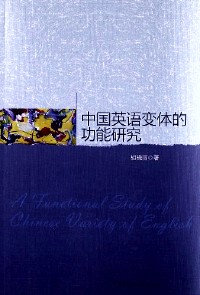
《中国英语变体的功能研究》运用社会语言学和功能语言学的理论和观点,以语言使用者有意识或无意识选择语言变异形式为切入点,提出和阐释了中国英语变体功能的分析模式,以此探究了中国英语变体的标记功能和交际策略功能。《中国英语变体的功能研究》作者胡晓丽的主要观点是:变异研究必须重视语言社会功能的研究。中国英语变体作为一种语言变体,不仅仅是语言形式的变化,识别其本土化的社会文化意义,巧妙选择和使用这种变体亦是一种重要的交际手段。这也为中国英语变体存在和发展提供了有利的依据。在国际化、全球化的时代,加强语言变异规律及其社会交际功能的研究是有必要的。
目录
序前言AcknowledgementsContentsUst of AbbreviationsList of Figures and TablesChapter One Introduction1.1 What is Chinese Variety of English?1.2 Research objectives1.3 Data and methodology1.4 Organization of the bookChapter Two Literature Review2.1 Studies on language variation2.1.1 Regional variation2.1.2 Social variation2.1.2.1 Labovian approach2.1.2.2 Post-Labovian approaches2.1.3 Stylistic variation2.2 Studies on World Englishes2.2.1 Classification of World Englishes2.2.1.1 ENL, ESL and EFL territories2.2.1.2 Use-related and user-related varieties2.2.1.3 Strevens' map-and-branch model2.2.1.4 McArthur's "wheel model"2.2.1.5 Kachru's three concentric circles of English2.2.1.6 Modifications to Kachru's model2.2.2 Diverse research perspectives2.2.2.1 Different views of English varieties2.2.2.2 The sociolinguistic approaches2.2.2.3 Applied linguistic approach2.2.2.4 Other minor approaches2.3 Studies on CVE2.3.1 Theoretical discussions2.3.1.1 Conservative voice2.3.1.2 Positive voice2.3.2 Practical studies2.3.2.1 Translation2.3.2.2 English language education2.3.2.3 Cross-cultural communication2.4 SummaryChapter Three A Functional Analysis3.1 Theoretical foundations for a functional analysis of CVE3.1.1 Theories of language functions3.1.1.1 Halliday's metafunctions3.1.1.2 The Holmes's model3.1.1.3 Kirkpatrick's model of functions of English varieties3.1.1.4 Contributions to the proposed model3.1.2 Theories of context3.1.2.1 Malinowski's view of context3.1.2.2 Firth's context of situation3.1.2.3 Halliday's view of context3.1.2.4 Contextual approaches to World Englishes3.1.2.5 Contributions to the present study3.1.3 Theories of language variation and change3.1.3.1 Labov's mechanism of language change3.1.3.2 The cline of bilingualism3.2 A proposed framework for CVE3.2.1 A diagram of CVE development3.2.2 A functional framework of CVE3.2.3 Illustration of the framework employed in analysis ofCVE3.3 SummaryChapter Four The Marking Functions of CVE4.1 CVE as a marker of Chinese language4.1.1 Lexical aspects of marking4.1.1.1 Phonetic form4.1.1.2 Semantic form4.1.1.3 Semantic modification4.1.2 Syntactic aspects of marking4.1.2.1 Noun phrase structure4.1.2.2 Verb phrase structure4.1.2.3 Sentence structure variation4.1.2.4 Other syntactic variations4.2 CVE as a marker of Chinese culture4.2.1 Reflecting the Chinese cultural thought patterns4.2.1.1 Holistic thinking4.2.1.2 Dialectic thinking4.2.1.3 Intuitive thinking4.2.1.4 Imagery thinking4.2.2 Reflecting the national personality4.2.2.1 Collectivism4.2.2.2 Modesty4.2.2.3 Indirectness (a reserved nature)4.2.2.4 Saving-face4.2.3 Reflecting Chinese customs4.2.3.1 Traditional festival customs4.2.3.2 Marriage customs4.2.3.3 Worship customs4.3 CVE as a marker of social change in China4.3.1 Introduction4.3.2 First period( 1911--1948 ) ( post 1911 Revolution)4.3.2.1 English language education4.3.2.2 Chinese Pidgin English (CPE)4.3.2.3 Nativization in Chinese bilingual writers' works4.3.3 Second period (1949--1976) ( post foundation of PRC )4.3.3.1 English language education4.3.3.2 Politicalized expressions4.3.4 Third period ( 1977 onwards) (post Opening-up policy)4.3.4.1 English language education4.3.4.2 Catchwords in the CVE lexicon4.3.4.3 Shift of semantic connotations4.4 SummaryChapter Five The Facilitating Functions of CVE5.1 CVE and Chinese reference5.1.1 Introduction5.1.2 In China's English media5.1.2.1 Related to daily life5.1.2.2 In the economic-political domain5.1.3 In Chinese English literature5.1.3.1 Figures of speech5.1.3.2 Personal names5.2 CVE and expression of emotion5.2.1 Introduction5.2.2 Making fun5.2.3 Euphemistical usage5.2.4 Impressing with exoticism5.2.5 Expressing good wishes5.2.6 Expressing hatred5.3 CVE and identity construction5.3.1 Introduction5.3.2 National identity5.3.3 Social identity5.3.3.1 Power relationship5.3.3.2 Solidarity relationship5.4 SummaryChapter Six Conclusion6.1 Summary6.2 Implications6.3 Limitations and further research directionsAppendix: Data sourcesBibliography
中国英语变体的功能研究
- 名称
- 类型
- 大小
光盘服务联系方式: 020-38250260 客服QQ:4006604884
云图客服:
用户发送的提问,这种方式就需要有位在线客服来回答用户的问题,这种 就属于对话式的,问题是这种提问是否需要用户登录才能提问
Video Player
×
Audio Player
×
pdf Player
×
