

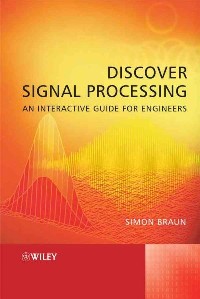
Discover signal processing : an interactive guide for engineers /
副标题:无
作 者:Simon Braun.
分类号:
ISBN:9780470519707
微信扫一扫,移动浏览光盘
简介
Summary:
Publisher Summary 1
Braun (Israel Institute of Technology) discusses the applications of signal processing in such diverse areas as science, engineering, medicine, finance and even the behavioral sciences. This textbook, which is designed primarily for engineering students, adopts a "learning by doing" attitude by concentrating on exercises that stress practical applications, as opposed to theoretical ones. A precise explanation of the various tools, software and testing is also explained in detail. Annotation 漏2008 Book News, Inc., Portland, OR (booknews.com)
Publisher Summary 2
Signal processing is now a multidisciplinary topic, and one that has applications in many fields including, but not limited to, science, engineering, medicine, finance and the behavioural sciences. Modern software libraries that include dedicated languages and packages designed to simplify the development and application of signal processing techniques are now readily available; however this ease of application means that an understanding of the various techniques is imperative. It is critical that the student or practitioner is able to choose an appropriate processing technique, be aware of potential errors involved and understand how to control them.Discover Signal Processingexploits the rationale of 鈥渓earning by doing鈥? actually attempting and performing a task is the most effective way to remember and understand. It presents the reader with a diverse range of exercises; some intended to recall or practice simple concepts, others more complex & aimed at developing a real understanding of the issues involved. These are accompanied by step-by-step explanations of the tools and techniques required.Provides systematic, organized and accessible instruction in a complex and mathematical subject.Stresses the understanding, selection and application of available signal processing techniques, as well as identification and control of error mechanisms;Includes more than 60 exercises covering major aspects of signal processing tools & geared at performing or testing specific tasks;Uses MATLAB as a platform, utilizing its extensive GUI capabilities enabling exercises to be performed using graphical elements only.Discover Signal Processingprovides an excellent & accessible guide to signal processing for mechanical, aeronautical, civil and electronic engineers in their senior/ graduate year. It will also be of interest to those attending CPD courses as well as to practicing engineers.
目录
DISCOVER SIGNAL PROCESSING AN INTERACTIVE GUIDE FOR ENGINEERS 1
Contents 7
Preface 13
About the Author 17
Notation 19
Part A The Exercises 21
1 Introduction 23
Overview 23
The Exercises 23
Exercise 1.1 23
Exercise 1.2 25
Solutions and Summaries 27
2 Signals 31
Overview 31
The Exercises 31
Exercise 2.1 31
Exercise 2.2 33
Exercise 2.3 34
Exercise 2.4 36
Solutions and Summaries 38
3 Fourier Methods 43
Overview 43
The Exercises 43
Exercise 3.1 43
Exercise 3.2 45
Exercise 3.3 46
Exercise 3.4 48
Exercise 3.5 49
Exercise 3.6 50
Exercise 3.7 52
Exercise 3.8 53
Exercise 3.9 55
Exercise 3.10 56
Exercise 3.11 58
Exercise 3.12 59
Solutions and Summaries 61
4 Linear Systems 73
Overview 73
The Exercises 73
Exercise 4.1 73
Exercise 4.2 75
Exercise 4.3 77
Solutions and Summaries 79
5 Filters 85
Overview 85
The Exercises 85
Exercise 5.1 85
Exercise 5.2 86
Exercise 5.3 88
Exercise 5.4 90
Solutions and Summaries 93
6 Time Domain Averaging (TDA) 103
Overview 103
The Exercises 103
Exercise 6.1 103
Exercise 6.2 104
Exercise 6.3 106
Exercise 6.4 107
Solutions and Summaries 109
7 Spectral Analysis 117
Overview 117
The Exercises 117
Exercise 7.1(a) 117
Exercise 7.1(b) 118
Exercise 7.2 120
Exercise 7.3 121
Exercise 7.4 123
Exercise 7.5 124
Exercise 7.6 126
Exercise 7.7 128
Exercise 7.8 129
Exercise 7.9 131
Solutions and Summaries 133
8 Envelope Detection 149
Overview 149
The Exercises 149
Exercise 8.1 149
Solutions and Summaries 151
9 The Spectrogram 155
Overview 155
The Exercises 155
Exercise 9.1 155
Exercise 9.2 156
Solutions and Summaries 159
10 Sampling 165
Overview 165
The Exercises 165
Exercise 10.1 165
Exercise 10.2 166
Exercise 10.3 168
Exercise 10.4 169
Solutions and Summaries 172
11 Identification \u2013 Transfer Functions 181
Overview 181
The Exercises 181
Exercise 11.1 181
Exercise 11.2 183
Exercise 11.3 184
Exercise 11.4 185
Solutions and Summaries 187
12 Model-based Signal Processing 197
Overview 197
The Exercises 197
Exercise 12.1 197
Exercise 12.2 199
Exercise 12.3 200
Solutions and Summaries 202
13 Diagnostic Applications for Rotating Machines 209
Overview 209
The Exercises 209
Exercise 13.1 209
Exercise 13.2 211
Exercise 13.3 212
Exercise 13.4 214
Exercise 13.5 216
Solutions and Summaries 218
14 Systems with Delays 231
Overview 231
The Exercises 231
Exercise 14.1 231
Exercise 14.2 233
Exercise 14.3 235
Solutions and Summaries 237
Part B 245
1 Introduction 247
1.1 General Objectives 247
1.2 Basic Processing 247
1.3 Why the Frequency Domain? 248
1.4 An Introductory Example 249
2 Introduction to Signals 251
2.1 Signal Classification 251
2.2 Signal Descriptions 251
2.3 Correlation Functions 254
2.4 Estimation and Errors 255
3 Fourier Methods 257
3.1 Fourier Series 257
3.2 Fourier (Integral) Transform 260
3.3 The Uncertainty Principle 261
3.4 The Discrete Fourier Transform (DFT) 262
3.5 The DFT and the Fast Fourier Transform (FFT) 264
3.6 Discontinuities and Windows 266
4 Linear Systems 267
4.1 Continuous Systems 267
4.2 Discrete Systems 268
4.3 A Specific Case of a Continuous Linear Systems \u2013 Accelerometers 270
Appendix 4.A The Lightly Damped SDOF System 271
5 Filters 273
5.1 Preliminaries 273
5.2 Analog and Digital Filters 273
5.3 Filter Classification and Specifications 277
5.4 IIR Filters 280
5.5 FIR Filters 280
5.6 The Importance of Linear Phase Filters 283
5.7 Design Tools 284
6 Time Domain Averaging (Synchronous Averaging) 285
6.1 Principle 285
6.2 Rejection of Nonsynchronous Components 288
6.3 TDA with Decaying Memory Process 289
7 Spectral Analysis 291
7.1 Introduction 291
7.2 Representation of Signals in the Frequency Domain 292
7.3 Errors and their Control 298
7.4 Spectral Analysis: Practical Considerations 308
8 Envelopes 311
8.1 Introduction 311
8.2 The Hilbert Transform (HT) 311
8.3 Analytic Signals 312
8.4 Narrow Band (NB) Signals and their Envelope 312
9 The Spectrogram 315
9.1 Introduction 315
9.2 Time Frequency Methods 315
9.3 The Short Time Fourier Transform (STFT) and the Spectrogram 316
10 Data Acquisition 319
10.1 Data Acquisition and Signal Processing Systems 319
10.2 Amplitude Quantization 319
10.3 Quantization in Time: The Sampling Theorem 321
10.4 Antialiasing Filters 323
11 Input/Output Identification 325
11.1 Objectives and Overview 325
11.2 Frequency Domain Identification: The Noiseless Case 326
11.3 Identification with Noise Corrupted Signals 327
11.4 Error Mechanisms and their Control in the Identification Process 331
11.5 Estimation Errors for the Coherence Function 334
12 Model-based Signal Processing 335
12.1 General 335
12.2 Signal Models 335
12.3 Modeling of Signals 337
12.4 Model-based Spectral Analysis 341
12.5 Model or Selection 342
12.6 Model-based Diagnostics 344
Appendix 12.A The Correlation Matrix 344
13 Machinery Diagnostics: Bearings and Gears 347
13.1 Diagnostics and Rotating Machinery 347
13.2 Structural Effects 347
13.3 Rotating Imbalance 348
13.4 Modeling of Roller Bearing Vibration Signals 348
13.5 Bearing Vibrations: Structural Effects and Envelopes 350
13.6 Modeling of Gear Vibration Signals 354
14 Delays and Echoes 357
14.1 System with Pure Delays 357
14.2 Correlation Functions 358
14.3 Cepstral Analysis 358
References 361
Index 365
Contents 7
Preface 13
About the Author 17
Notation 19
Part A The Exercises 21
1 Introduction 23
Overview 23
The Exercises 23
Exercise 1.1 23
Exercise 1.2 25
Solutions and Summaries 27
2 Signals 31
Overview 31
The Exercises 31
Exercise 2.1 31
Exercise 2.2 33
Exercise 2.3 34
Exercise 2.4 36
Solutions and Summaries 38
3 Fourier Methods 43
Overview 43
The Exercises 43
Exercise 3.1 43
Exercise 3.2 45
Exercise 3.3 46
Exercise 3.4 48
Exercise 3.5 49
Exercise 3.6 50
Exercise 3.7 52
Exercise 3.8 53
Exercise 3.9 55
Exercise 3.10 56
Exercise 3.11 58
Exercise 3.12 59
Solutions and Summaries 61
4 Linear Systems 73
Overview 73
The Exercises 73
Exercise 4.1 73
Exercise 4.2 75
Exercise 4.3 77
Solutions and Summaries 79
5 Filters 85
Overview 85
The Exercises 85
Exercise 5.1 85
Exercise 5.2 86
Exercise 5.3 88
Exercise 5.4 90
Solutions and Summaries 93
6 Time Domain Averaging (TDA) 103
Overview 103
The Exercises 103
Exercise 6.1 103
Exercise 6.2 104
Exercise 6.3 106
Exercise 6.4 107
Solutions and Summaries 109
7 Spectral Analysis 117
Overview 117
The Exercises 117
Exercise 7.1(a) 117
Exercise 7.1(b) 118
Exercise 7.2 120
Exercise 7.3 121
Exercise 7.4 123
Exercise 7.5 124
Exercise 7.6 126
Exercise 7.7 128
Exercise 7.8 129
Exercise 7.9 131
Solutions and Summaries 133
8 Envelope Detection 149
Overview 149
The Exercises 149
Exercise 8.1 149
Solutions and Summaries 151
9 The Spectrogram 155
Overview 155
The Exercises 155
Exercise 9.1 155
Exercise 9.2 156
Solutions and Summaries 159
10 Sampling 165
Overview 165
The Exercises 165
Exercise 10.1 165
Exercise 10.2 166
Exercise 10.3 168
Exercise 10.4 169
Solutions and Summaries 172
11 Identification \u2013 Transfer Functions 181
Overview 181
The Exercises 181
Exercise 11.1 181
Exercise 11.2 183
Exercise 11.3 184
Exercise 11.4 185
Solutions and Summaries 187
12 Model-based Signal Processing 197
Overview 197
The Exercises 197
Exercise 12.1 197
Exercise 12.2 199
Exercise 12.3 200
Solutions and Summaries 202
13 Diagnostic Applications for Rotating Machines 209
Overview 209
The Exercises 209
Exercise 13.1 209
Exercise 13.2 211
Exercise 13.3 212
Exercise 13.4 214
Exercise 13.5 216
Solutions and Summaries 218
14 Systems with Delays 231
Overview 231
The Exercises 231
Exercise 14.1 231
Exercise 14.2 233
Exercise 14.3 235
Solutions and Summaries 237
Part B 245
1 Introduction 247
1.1 General Objectives 247
1.2 Basic Processing 247
1.3 Why the Frequency Domain? 248
1.4 An Introductory Example 249
2 Introduction to Signals 251
2.1 Signal Classification 251
2.2 Signal Descriptions 251
2.3 Correlation Functions 254
2.4 Estimation and Errors 255
3 Fourier Methods 257
3.1 Fourier Series 257
3.2 Fourier (Integral) Transform 260
3.3 The Uncertainty Principle 261
3.4 The Discrete Fourier Transform (DFT) 262
3.5 The DFT and the Fast Fourier Transform (FFT) 264
3.6 Discontinuities and Windows 266
4 Linear Systems 267
4.1 Continuous Systems 267
4.2 Discrete Systems 268
4.3 A Specific Case of a Continuous Linear Systems \u2013 Accelerometers 270
Appendix 4.A The Lightly Damped SDOF System 271
5 Filters 273
5.1 Preliminaries 273
5.2 Analog and Digital Filters 273
5.3 Filter Classification and Specifications 277
5.4 IIR Filters 280
5.5 FIR Filters 280
5.6 The Importance of Linear Phase Filters 283
5.7 Design Tools 284
6 Time Domain Averaging (Synchronous Averaging) 285
6.1 Principle 285
6.2 Rejection of Nonsynchronous Components 288
6.3 TDA with Decaying Memory Process 289
7 Spectral Analysis 291
7.1 Introduction 291
7.2 Representation of Signals in the Frequency Domain 292
7.3 Errors and their Control 298
7.4 Spectral Analysis: Practical Considerations 308
8 Envelopes 311
8.1 Introduction 311
8.2 The Hilbert Transform (HT) 311
8.3 Analytic Signals 312
8.4 Narrow Band (NB) Signals and their Envelope 312
9 The Spectrogram 315
9.1 Introduction 315
9.2 Time Frequency Methods 315
9.3 The Short Time Fourier Transform (STFT) and the Spectrogram 316
10 Data Acquisition 319
10.1 Data Acquisition and Signal Processing Systems 319
10.2 Amplitude Quantization 319
10.3 Quantization in Time: The Sampling Theorem 321
10.4 Antialiasing Filters 323
11 Input/Output Identification 325
11.1 Objectives and Overview 325
11.2 Frequency Domain Identification: The Noiseless Case 326
11.3 Identification with Noise Corrupted Signals 327
11.4 Error Mechanisms and their Control in the Identification Process 331
11.5 Estimation Errors for the Coherence Function 334
12 Model-based Signal Processing 335
12.1 General 335
12.2 Signal Models 335
12.3 Modeling of Signals 337
12.4 Model-based Spectral Analysis 341
12.5 Model or Selection 342
12.6 Model-based Diagnostics 344
Appendix 12.A The Correlation Matrix 344
13 Machinery Diagnostics: Bearings and Gears 347
13.1 Diagnostics and Rotating Machinery 347
13.2 Structural Effects 347
13.3 Rotating Imbalance 348
13.4 Modeling of Roller Bearing Vibration Signals 348
13.5 Bearing Vibrations: Structural Effects and Envelopes 350
13.6 Modeling of Gear Vibration Signals 354
14 Delays and Echoes 357
14.1 System with Pure Delays 357
14.2 Correlation Functions 358
14.3 Cepstral Analysis 358
References 361
Index 365
Discover signal processing : an interactive guide for engineers /
- 名称
- 类型
- 大小
光盘服务联系方式: 020-38250260 客服QQ:4006604884
云图客服:
用户发送的提问,这种方式就需要有位在线客服来回答用户的问题,这种 就属于对话式的,问题是这种提问是否需要用户登录才能提问
Video Player
×
Audio Player
×
pdf Player
×
亲爱的云图用户,
光盘内的文件都可以直接点击浏览哦
无需下载,在线查阅资料!
