

简介
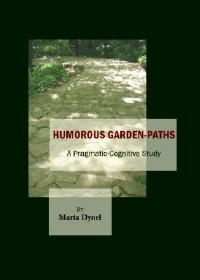
Surprising as it may seem, sometimes humans like being led up the garden path, which is thanks to the pleasurable feeling of surprise entwined with a humorous effect deception tends to afford.The central issue under investigation is the nature of short humorous texts in the form of one-liners and witticisms based on the 脙垄芒聜卢脜聯garden-path mechanism脙垄芒聜卢楼. The monograph provides a survey of relevant linguistic research, recapitulating and assessing other authors' theses in the context of their applicability in the analysis of garden-path humour. Discussions are conducted in the light of not only humour studies but also cognitive and pragmatic literature on human communication in general, with a view to presenting a meticulous description of short garden-path texts.The book should be of interest to anybody who finds humour research appealing, whether or not already familiar with this field. No background knowledge is necessary on the reader's part, given that all relevant postulates and theories are revisited. Also, the author steers a clear course through many terminological and conceptual obstacles that can be encountered in the study of humour (e.g. verbal/non-verbal humour, ambiguity types, punning, etc.).脙垄芒聜卢脜聯Humor is a challenging issue, and Marta Dynel faces it admirably. Her investigation into garden path humor is a well documented and highly stimulating piece of research. The approach is soundly and competently linguistic, but the perspective is broad, and it is of interest and appeal also for other disciplines, psychology in the first place.脙垄芒聜卢楼 Prof. Giovannantonio Forabosco脙垄芒聜卢脜聯This thoroughly researched volume represents a convincing amalgamation of linguistics and humor theory. Garden-path humor provides a perfect testing ground for Marta Dynel's semantic, cognitive and pragmatic perspectives.脙垄芒聜卢楼 Prof. Neal Norrick
目录
Chapter One
Methodology and Introduction to Garden-Paths ..................................... 4
1. Methodology and exemplification ........................ ....... ....... 4
1.1.Humorousness and funniness ....................... ....... ....... 7
2. Jokes vs. conversational humour .................................. 8
2.1. (C anned) jokes .................................... . ................................ 9
2.2. Conversational humour: any verbal humour but jokes .............. 11
3. Witticisms and one-liners ...................................... 13
4. Humorous keying .............................. ....... ............... 16
5. On-line processing of language .............................. 17
6. Garden-path sentences vs. garden-path humour .................................... 18
7. What the GP mechanism is not................................. ..... ........ 24
7.1. The red-light mechanism ...................... ......... 25
7.2. The crossroads mechanism ..................... ....... 29
8. The structure of GP jokes, witticisms and one-liners ............................ 32
Chapter Two
Theoretical Approaches to Humour: Incongruity
and Incongruity-Resolution ...................................... .......... 41
1. Families of humour theories ....................... . .... .................. 41
2. Philosophical incongruity theories ..................... ...... 42
3. Incongruity in contemporary studies ................................. 45
4. B isociation........................... ........ ...................... 48
5. Incongruity model or incongruity-resolution model ........................... 51
6. The I-R model: Queries and problems..................................... 54
7. Novelty and surprise ................................................ 61
8. Defeated expectations.............................................. 64
Chapter Three
Humour Proposals ....................................................... 69
1. Shultz's and Suls's two-stage models: The incongruity-resolution
m odel ........................................ .. ..................... 69
2. A catastrophe theory model ....................................... 73
3. The SSTH and the GTVH ............................................... 76
3.1. The SSTH ............................................................. 76
3.1.1. Script ............................................................ 77
3.1.2. Script opposition/overlap....................... ................ 78
3.2. The GTVH ....................................................... 81
3.2.1. Script opposition and logical mechanism ....................... 84
3.3. The SSTH and the GTVH vs. I-R theories ................................ 86
3.4. Script enforcement: The trigger and on-line processing ............... 88
4. Bisociation as schema conflict............................. ................... 93
5. Isotopy-disjunction model ........................................................... 96
6. The frame-structuring model ........................................ 101
7. Graded salience and Marked Informativeness Requirement .............. 108
8. Forced reinterpretation ............................................. 113
9. Conclusion and comments on GPs ......................................... 116
Chapter Four
Ambiguity-Based Types of GPs ........................................................... 117
1. (Non-)verbal and (non-)linguistic humour ..................................... 117
1.1. Criteria for the linguistic vs. non-linguistic distinction............... 120
2. Ambiguity................................ 123
2.1. Ambiguity vis-A-vis other phenomena ..................................... 124
3. Ambiguity types .............................................. 125
4. Syntactic ambiguity and GPs......................................... 129
5. Lexical ambiguity and punning GPs................................... 131
5.1. Puns..................................... 131
5.2. The basic mechanism of garden-path puns .............................. 132
5.3. Polysemy and homonymy ..................................... 133
5.4. Literalisation of phrasemes: phrasemic polysemies ................ 139
6. Pragmatic ambiguity and GPs .............................. .......... 143
6.1. GPs based on purely inferential ambiguity .............................. 145
6.2. GPs based on linguistically-motivated inferential ambiguity ..... 146
6.3. GPs based on presuppositional ambiguity ............................... 150
7. Final comments ..................................................... 154
Chapter Five
Grice's Philosophy and Garden-Path Humour ...................................... 155
1. Humour and the CP ......................................................... 156
2. The Gricean model ..................................... 157
2.1. Maxim nonfulfillment and inferences .................. 157
2.1.1. M axim violations ..................................................... 161
2.1.2. M axim flouts ................................................................ 162
2.2. Rationality and intentionality at the heart of cooperation ........... 164
2.2.1. Intentionality, i.e. the speaker's meaning ..................... 165
2.2.2. Rationality, reasoning and mutual observance of the CP .. 166
2.3. The purpose of communication ...................... ..................... 168
2.4. Can the CP be violated? .............. ........................................ 170
3. The Gricean model and humor ........................................ 173
3.1. Other discussions of the Gricean model and humour interface... 174
3.2. Non-bona-fide mode? ........................ .................... 178
3.3. Hum our-CP? ........................ ................ 184
3.4. Maxim violation? ........................................ 185
3.5. CP violation?: Rationality and cooperative goals .................... 187
4. Concluding remarks: the CP and maxim flouts in humour............... 192
5. Generalised conversational implicatures in GPs............................... 196
6. Meaning.............................. ......................... 197
6.1. W hat is said ................................ .. ......... ... ................ . 198
6.2. Implicature types and their features ........................................ 200
6.2.1. Conventional implicature ....................... ............. 201
6.2.2. Conversational implicatures .................... .................... 202
6.2.3. Features of im plicatures... ............................................... 206
7. A m biguity................................ 208
7.1. Disambiguation before determining what is said ........................ 209
7.2. Manner maxim flouts - the level of PCIs ................................ 211
8. Conventional meanings vs. GCIs exploited in GPs .......................... 213
9. Conclusion: Defeasible GCls conducive to GPs .............................. 217
Chapter Six
Default and Salient Meanings in GPs.......................... .................... 222
1. Neo-Gricean and post-Gricean studies .................................... 222
1.1. Default reasoning and meanings ........................................ 224
2. B ach's im plicitures ...................................................................... 227
3. Levinson's Presumptive M eanings ....................................................... 230
3.1. Heuristics and the resultant implicatures ................................. 237
3.2. The I-heuristic............................ ........... ..... 240
3.3. Criticism of the model ....................... ............. 244
3.4. G CIs and am biguity resolution ................................................... 24
3.5. GPs and presumptive meanings' cancellation.......................... 247
4. Giora's salient meanings ..... ......... . ....... ..............25
4.1. Competitive models of lexical processing ................ 252
4.2. Salience ..... ...................... .......... 257
4.3. Salience, priming and predictive prior co-text ............................ 259
4.4. Equibiased am biguities ............................... ...............................264
4.5. GPs and salient meanings' cancellation .................. ........ 267
5. Conclusion................................................271
Final Comments...................... .................. 273
A p p en d ix .................................................................................................2 7 5
- 名称
- 类型
- 大小
光盘服务联系方式: 020-38250260 客服QQ:4006604884
云图客服:
用户发送的提问,这种方式就需要有位在线客服来回答用户的问题,这种 就属于对话式的,问题是这种提问是否需要用户登录才能提问
Video Player
×
Audio Player
×
pdf Player
×
