

简介
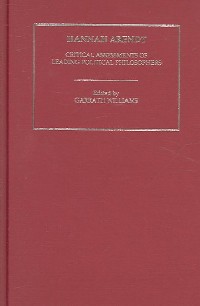
Hannah Arendt is increasingly recognised as one of the most important political thinkers of the twentieth century. She gained fame for her historical study of totalitarianism, notoriety for her reportage of Adolf Eichman’s trial, and philosophical recognition for her explorations of (political) action and her critique of the Western tradition of political thought from Plato to Marx. As such, she is likely to be the first woman to join the canon of the great philosophers.
Arendt’s work has attracted a huge volume of scholarship in the USA, as well as in Germany, France and the UK, where further scholarly work is emerging at an increasing pace. Given that there was vigorous debate of her work during her lifetime, that there have since been several waves of evaluation and re-evaluation, and that a new generation of scholars is now coming to her work, a systematic collection of the critical assessments of her thought is extremely timely.
This four-volume set brings together the most important assessments of Arendt’s contributions to political science, political theory and philosophy. Thorough and incisive, the collection also includes an editor’s introduction that sets out the main currents of Hannah Arendt’s work and analyses the responses it has attracted – thus providing both student and scholar with an invaluable research resource.
目录
Table Of Contents:
Acknowledgements xv
Chronological Table of Reprinted Articles and Chapters xvii
General Introduction 1(22)
Introduction 23(4)
PART 1 Personal Encounters 27(24)
Personal memorial in `The Talk of the Town': notes and comment 29(2)
Anonymous
William Shawn
Saying goodbye to Hannah 31(6)
Mary Mccarthy
Hannah Arendt 37(4)
Robert Lowell
Hannah Arendt's storytelling 41(6)
Elisabeth Young-Bruehl
The alacrity of Hannah Arendt 47(4)
Jerome Kohn
PART 2 Jewish Identity and Politics 51(236)
The Jew as pariah: the case of Hannah Arendt 53(32)
Ron H. Feldman
Society, parvenu and pariah: the life story of a German Jewess 85(46)
Dagmar Barnouw
PART 3 The Origins of Totalitarianism
Original reviews 129(2)
Review of The Origins of Totalitarianism and Arendt's reply 131(14)
Eric Voegelin
Hannah Arendt
The essence of totalitarianism according to Hannah Arendt 145(14)
Raymond Aron
PART 4 The Origins of Totalitarianism
Later assessments 157(2)
On rereading The Origins of Totalitarianism 159(15)
Bernard Crick
Hannah Arendt: anti-semitism in the Nazi system 174(21)
Claude Lefort
The three phases of Arendt's theory of totalitarianism 195(29)
Roy Tsao
Identifying the unprecedented: Hannah Arendt, totalitarianism and the critique of sociology 224(41)
Peter Baehr
Hannah Arendt's The Origins of Totalitarianism in its original context 265(22)
Alfons Sollner
PART 5 Methodology 287
Hannah Arendt and the method of political thinking 289(17)
Ernst Vollrath
Rethinking the past 306(8)
Judith N. Shklar
Thinking without a ground: Hannah Arendt and the contemporary situation of understanding 314(12)
Stan Spyros Draenos
Hannah Arendt and the redemptive power of narrative 326
Seyla Benhabib
Acknowledgements ix
Introduction 1(4)
PART 6 Zionism, Nationalism and Republicanism 5(38)
Hannah Arendt: Jerusalem or America? The foundation of political community 7(23)
Cristina Sanchez Munoz
Hannah Arendt's way to America 30(13)
Wolfgang Heuer
PART 7 Rights and States 43(50)
Is there an Arendtian case for the nation state? 45(20)
Margaret Canovan
A new guarantee on earth: human dignity and the politics of human rights 65(28)
Jeffrey C. Isaac
PART 8 Democracy 93(78)
Arendt and representative democracy 95(35)
George Kateb
Oases in the desert: Hannah Arendt on democratic politics 130(25)
Jeffrey C. Isaac
Hannah Arendt: democracy and the political 155(16)
Sheldon S. Wolin
PART 9 Revolution 171(54)
Hannah Arendt on revolution 173(7)
E. J. Hobsbawn
The pathos of novelty: Hannah Arendt's image of freedom in the modern world 180(22)
James Miller
Declarations of independence: Arendt and Derrida on the problem of founding a republic 202(23)
Bonnie Honig
PART 10 Controversies: Little Rock and Eichmann in Jerusalem 225(104)
American dilemmas, European experiences 227(17)
Richard H. King
Hannah Arendt and the Eichmann trial 244(29)
Hans Mommsen
Between justice and politics: the competition of storytellers in the Eichmann trial 273(26)
Leora Bilsky
Eichmann in Jerusalem: an interview with Peter Wyss on the book by Hannah Arendt 299(9)
Karl Jaspers
Crimes against humanity: Hannah Arendt and the Nuremburg debates 308(21)
Robert Fine
PART 11 Feminist Reflections 329
Excerpts from `Conditions for work': the common world of women 331(6)
Adrienne Rich
The feminism of Hannah Arendt 337(11)
Ann M. Lane
Hannah Arendt: feminini generis 348(10)
Ursula Ludz
Toward an agonistic feminism: Hannah Arendt and the politics of identity 358(27)
Bonnie Honig
Refiguring the Jewish question: Arendt, Proust, and the politics of sexuality 385
Morris B. Kaplan
Acknowledgements ix
Introduction 1(4)
PART 12 Original Reviews 5(14)
Thinking what we are doing 7(8)
W. H. Auden
Review of Between Past and Future 15(4)
Michael Oakeshott
PART 13 Assessments of The Human Condition 19(170)
The status of man and the status of his objects: a reading of The Human Condition 21(22)
Kenneth Frampton
Action, story and history: on re reading The Human Condition 43(11)
Paul Ricoeur
Excerpts from `Hannah Arendt's conception of modernity' 54(34)
Maurizio Passerin D'Entreves
Arendt, Aristotle and action 88(47)
Dana R. Villa
Arendt's constitutional politics 135(19)
Jeremy Waldron
Arendt's messianism: The Human Condition 154(35)
Susannah Young-Ah Gottlieb
PART 14 Modernity and Social Justice 189(68)
The political existentialism of Hannah Arendt 191(23)
Martin Jay
Justice: on relating private and public 214(23)
Hanna Fenichel Pitkin
Rethinking the social and the political 237(20)
Richard J. Bernstein
PART 15 The Habermasian Critique 257(30)
Hannah Arendt's communications concept of power 259(16)
Jurgen Habermas
A case of distorted communication: a note on Habermas and Arendt 275(12)
Margaret Canovan
PART 16 Political Action: Instrumental and Moral Concerns 287(44)
Motive and goal in Hannah Arendt's concept of political action 289(24)
James T. Knauer
Love and responsibility: a political ethic for Hannah Arendt 313(18)
Garrath Williams
PART 17 Greece and Rome 331(56)
Hannah Arendt and Roman political thought: the practice of theory 333(26)
Dean Hammer
Arendt against Athens: rereading The Human Condition 359(28)
Roy T. Tsao
PART 18 Power and Violence 387
Power and violence 389(19)
Paul Ricoeur
Biopolitics and the dissemination of violence: the Arendtian critique of the present 408
Andre Duarte
Acknowledgements ix
Introduction 1(4)
PART 19 Dialogues with Other Philosophers 5(116)
In Heidegger's shadow: Hannah Arendt's phenomenological humanism 7(25)
Lewis P. Hinchman
Sandra K. Hinchman
The anxiety of influence: on Arendt's relationship to Heidegger 32(26)
Dana R. Villa
Existentialism politicized: Arendt's debt to Jaspers 58(29)
Lewis P. Hinchman
Sandra K. Hinchman
Love and worldliness: Hannah Arendt's reading of Saint Augustine 87(13)
Ronald Beiner
The guilt of the tradition: Arendt's critique of Hegel and Marx 100(21)
Simona Forti
PART 20 The Life of the Mind 121(72)
Acting, knowing, thinking: gleanings from Hannah Arendt's philosophical work 123(14)
Hans Jonas
Stopping to think 137(12)
Sheldon Wolin
Reflections on Hannah Arendt's The Life of the Mind 149(26)
Elisabeth Young-Bruehl
Time and the inner conflicts of the mind 175(18)
Jacques Taminiaux
PART 21 Judgement 193(124)
The privilege of ourselves: Hannah Arendt on judgment 195(22)
Michael Denneny
Hannah Arendt on judgment: the unwritten doctrine of reason 217(17)
Albrecht Wellmer
Judgment and the moral foundations of politics in Arendt's thought 234(20)
Seyla Benhabib
Rereading Hannah Arendt's Kant Lectures 254(11)
Ronald Beiner
The judgment of Arendt 265(18)
George Kateb
The odor of judgment: exemplarity, propriety and politics in the company of Hannah Arendt 283(29)
Kirstie M. McClure
Excerpt from `Propriety and provocation in Arendt's political aesthetic' 312(5)
Susan Bickford
PART 22 Reflections on Evil 317(60)
Socrates or Heidegger? Hannah Arendt's reflections on philosophy and politics 319(23)
Margaret Canovan
Did Hannah Arendt change her mind? From radical evil to the banality of evil 342(19)
Richard J. Bernstein
Introduction to Responsibility and Judgment 361(16)
Jerome Kohn
PART 23 Foreign Language Bibliographies 377
Foreign language bibliographies: French, German, Italian, Portuguese and Spanish 379
Acknowledgements xv
Chronological Table of Reprinted Articles and Chapters xvii
General Introduction 1(22)
Introduction 23(4)
PART 1 Personal Encounters 27(24)
Personal memorial in `The Talk of the Town': notes and comment 29(2)
Anonymous
William Shawn
Saying goodbye to Hannah 31(6)
Mary Mccarthy
Hannah Arendt 37(4)
Robert Lowell
Hannah Arendt's storytelling 41(6)
Elisabeth Young-Bruehl
The alacrity of Hannah Arendt 47(4)
Jerome Kohn
PART 2 Jewish Identity and Politics 51(236)
The Jew as pariah: the case of Hannah Arendt 53(32)
Ron H. Feldman
Society, parvenu and pariah: the life story of a German Jewess 85(46)
Dagmar Barnouw
PART 3 The Origins of Totalitarianism
Original reviews 129(2)
Review of The Origins of Totalitarianism and Arendt's reply 131(14)
Eric Voegelin
Hannah Arendt
The essence of totalitarianism according to Hannah Arendt 145(14)
Raymond Aron
PART 4 The Origins of Totalitarianism
Later assessments 157(2)
On rereading The Origins of Totalitarianism 159(15)
Bernard Crick
Hannah Arendt: anti-semitism in the Nazi system 174(21)
Claude Lefort
The three phases of Arendt's theory of totalitarianism 195(29)
Roy Tsao
Identifying the unprecedented: Hannah Arendt, totalitarianism and the critique of sociology 224(41)
Peter Baehr
Hannah Arendt's The Origins of Totalitarianism in its original context 265(22)
Alfons Sollner
PART 5 Methodology 287
Hannah Arendt and the method of political thinking 289(17)
Ernst Vollrath
Rethinking the past 306(8)
Judith N. Shklar
Thinking without a ground: Hannah Arendt and the contemporary situation of understanding 314(12)
Stan Spyros Draenos
Hannah Arendt and the redemptive power of narrative 326
Seyla Benhabib
Acknowledgements ix
Introduction 1(4)
PART 6 Zionism, Nationalism and Republicanism 5(38)
Hannah Arendt: Jerusalem or America? The foundation of political community 7(23)
Cristina Sanchez Munoz
Hannah Arendt's way to America 30(13)
Wolfgang Heuer
PART 7 Rights and States 43(50)
Is there an Arendtian case for the nation state? 45(20)
Margaret Canovan
A new guarantee on earth: human dignity and the politics of human rights 65(28)
Jeffrey C. Isaac
PART 8 Democracy 93(78)
Arendt and representative democracy 95(35)
George Kateb
Oases in the desert: Hannah Arendt on democratic politics 130(25)
Jeffrey C. Isaac
Hannah Arendt: democracy and the political 155(16)
Sheldon S. Wolin
PART 9 Revolution 171(54)
Hannah Arendt on revolution 173(7)
E. J. Hobsbawn
The pathos of novelty: Hannah Arendt's image of freedom in the modern world 180(22)
James Miller
Declarations of independence: Arendt and Derrida on the problem of founding a republic 202(23)
Bonnie Honig
PART 10 Controversies: Little Rock and Eichmann in Jerusalem 225(104)
American dilemmas, European experiences 227(17)
Richard H. King
Hannah Arendt and the Eichmann trial 244(29)
Hans Mommsen
Between justice and politics: the competition of storytellers in the Eichmann trial 273(26)
Leora Bilsky
Eichmann in Jerusalem: an interview with Peter Wyss on the book by Hannah Arendt 299(9)
Karl Jaspers
Crimes against humanity: Hannah Arendt and the Nuremburg debates 308(21)
Robert Fine
PART 11 Feminist Reflections 329
Excerpts from `Conditions for work': the common world of women 331(6)
Adrienne Rich
The feminism of Hannah Arendt 337(11)
Ann M. Lane
Hannah Arendt: feminini generis 348(10)
Ursula Ludz
Toward an agonistic feminism: Hannah Arendt and the politics of identity 358(27)
Bonnie Honig
Refiguring the Jewish question: Arendt, Proust, and the politics of sexuality 385
Morris B. Kaplan
Acknowledgements ix
Introduction 1(4)
PART 12 Original Reviews 5(14)
Thinking what we are doing 7(8)
W. H. Auden
Review of Between Past and Future 15(4)
Michael Oakeshott
PART 13 Assessments of The Human Condition 19(170)
The status of man and the status of his objects: a reading of The Human Condition 21(22)
Kenneth Frampton
Action, story and history: on re reading The Human Condition 43(11)
Paul Ricoeur
Excerpts from `Hannah Arendt's conception of modernity' 54(34)
Maurizio Passerin D'Entreves
Arendt, Aristotle and action 88(47)
Dana R. Villa
Arendt's constitutional politics 135(19)
Jeremy Waldron
Arendt's messianism: The Human Condition 154(35)
Susannah Young-Ah Gottlieb
PART 14 Modernity and Social Justice 189(68)
The political existentialism of Hannah Arendt 191(23)
Martin Jay
Justice: on relating private and public 214(23)
Hanna Fenichel Pitkin
Rethinking the social and the political 237(20)
Richard J. Bernstein
PART 15 The Habermasian Critique 257(30)
Hannah Arendt's communications concept of power 259(16)
Jurgen Habermas
A case of distorted communication: a note on Habermas and Arendt 275(12)
Margaret Canovan
PART 16 Political Action: Instrumental and Moral Concerns 287(44)
Motive and goal in Hannah Arendt's concept of political action 289(24)
James T. Knauer
Love and responsibility: a political ethic for Hannah Arendt 313(18)
Garrath Williams
PART 17 Greece and Rome 331(56)
Hannah Arendt and Roman political thought: the practice of theory 333(26)
Dean Hammer
Arendt against Athens: rereading The Human Condition 359(28)
Roy T. Tsao
PART 18 Power and Violence 387
Power and violence 389(19)
Paul Ricoeur
Biopolitics and the dissemination of violence: the Arendtian critique of the present 408
Andre Duarte
Acknowledgements ix
Introduction 1(4)
PART 19 Dialogues with Other Philosophers 5(116)
In Heidegger's shadow: Hannah Arendt's phenomenological humanism 7(25)
Lewis P. Hinchman
Sandra K. Hinchman
The anxiety of influence: on Arendt's relationship to Heidegger 32(26)
Dana R. Villa
Existentialism politicized: Arendt's debt to Jaspers 58(29)
Lewis P. Hinchman
Sandra K. Hinchman
Love and worldliness: Hannah Arendt's reading of Saint Augustine 87(13)
Ronald Beiner
The guilt of the tradition: Arendt's critique of Hegel and Marx 100(21)
Simona Forti
PART 20 The Life of the Mind 121(72)
Acting, knowing, thinking: gleanings from Hannah Arendt's philosophical work 123(14)
Hans Jonas
Stopping to think 137(12)
Sheldon Wolin
Reflections on Hannah Arendt's The Life of the Mind 149(26)
Elisabeth Young-Bruehl
Time and the inner conflicts of the mind 175(18)
Jacques Taminiaux
PART 21 Judgement 193(124)
The privilege of ourselves: Hannah Arendt on judgment 195(22)
Michael Denneny
Hannah Arendt on judgment: the unwritten doctrine of reason 217(17)
Albrecht Wellmer
Judgment and the moral foundations of politics in Arendt's thought 234(20)
Seyla Benhabib
Rereading Hannah Arendt's Kant Lectures 254(11)
Ronald Beiner
The judgment of Arendt 265(18)
George Kateb
The odor of judgment: exemplarity, propriety and politics in the company of Hannah Arendt 283(29)
Kirstie M. McClure
Excerpt from `Propriety and provocation in Arendt's political aesthetic' 312(5)
Susan Bickford
PART 22 Reflections on Evil 317(60)
Socrates or Heidegger? Hannah Arendt's reflections on philosophy and politics 319(23)
Margaret Canovan
Did Hannah Arendt change her mind? From radical evil to the banality of evil 342(19)
Richard J. Bernstein
Introduction to Responsibility and Judgment 361(16)
Jerome Kohn
PART 23 Foreign Language Bibliographies 377
Foreign language bibliographies: French, German, Italian, Portuguese and Spanish 379
- 名称
- 类型
- 大小
光盘服务联系方式: 020-38250260 客服QQ:4006604884
云图客服:
用户发送的提问,这种方式就需要有位在线客服来回答用户的问题,这种 就属于对话式的,问题是这种提问是否需要用户登录才能提问
Video Player
×
Audio Player
×
pdf Player
×
