

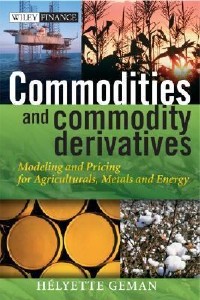
Commodities and commodity derivatives : modelling and pricing for agriculturals, metals, and ener...
副标题:无
作 者:Hélyette Geman.
分类号:
ISBN:9780470012185
微信扫一扫,移动浏览光盘
简介
The last few years have been a watershed for the commodities, cash and derivatives industry. New regulations and products have led to an explosion in the commodities markets, creating a new asset for investors that includes hedge funds as well as University endowments, and has resulted in a spectacular growth in spot and derivative trading. This book covers hard and soft commodities (energy, agriculture and metals) and analyses: Economic and geopolitical issues in commodities markets Commodity price and volume risk Stochastic modelling of commodity spot prices and forward curves Real options valuation and hedging of physical assets in the energy industry It is required reading for energy companies and utilities practitioners, commodity cash and derivatives traders in investment banks, the Agrifood business, Commodity Trading Advisors (CTAs) and Hedge Funds. In Commodities and Commodity Derivatives , Hélyette Geman shows her powerful command of the subject by combining a rigorous development of its mathematical modelling with a compact institutional presentation of the arcane characteristics of commodities that makes the complex analysis of commodities derivative securities accessible to both the academic and practitioner who wants a deep foundation and a breadth of different market applications. It is destined to be a "must have" on the subject.”
—Robert Merton, Professor, Harvard Business School "A marvelously comprehensive book of interest to academics and practitioners alike, by one of the world's foremost experts in the field."
—Oldrich Vasicek, founder, KMV
目录
Contents 9
Foreword by Nassim Nicholas Taleb 13
Preface 17
Acknowledgements 21
1 Fundamentals of Commodity Spot and Futures Markets: Instruments, Exchanges and Strategies 23
1.1 The importance of commodity spot trading 23
1.2 Forward and Futures contracts 26
1.3 The actors in Futures markets 28
1.4 The structure of Futures markets 31
1.5 Shipping and freight: Spot and forward markets 38
1.6 Volume, liquidity and open interest in Futures markets 41
2 Equilibrium Relationships between Spot Prices and Forward Prices 45
2.1 Price discovery in Futures markets 45
2.2 Theory of storage, inventory and convenience yield 46
2.3 Scarcity, reserves and price volatility 50
2.4 Futures prices and expectations of future spot prices 53
2.5 Spot\u2013forward relationship in commodity markets under no-arbitrage 57
2.6 Price of a Futures contract and market value of a Futures position 61
2.7 Relationship between forward and Futures prices 64
2.8 The benefits of indexes in commodity markets 67
3 Stochastic Modeling of Commodity Price Processes 71
3.1 Randomness and commodity prices 71
3.2 The distribution of commodity prices and their first four moments 74
3.3 The geometric Brownian motion as a central model in finance 82
3.4 Mean-reversion in financial modeling: From interest rates to commodities 86
3.5 Introducing stochastic volatility and jumps in price trajectories 90
3.6 State variable models for commodity prices 91
3.7 Commodity forward curve dynamics 93
4 Plain-vanilla Option Pricing and Hedging: From Stocks to Commodities 97
4.1 General definitions 97
4.2 Classical strategies involving European calls and puts 100
4.3 Put\u2013call parity 103
4.4 Valuation of European calls: The Black\u2013Scholes formula and the Greeks 105
4.5 Merton (1973) formula and its application to options on commodity spot prices 112
4.6 Options on commodity spot prices 114
4.7 Options on commodity Futures and the Black (1976) formula 115
5 Risk-neutral Valuation of Plain-vanilla Options 117
5.1 Second proof of the Black\u2013Scholes\u2013Merton formula 117
5.2 Risk-neutral dynamics of commodity prices 120
5.3 Commodity Futures dynamics under the pricing measure 121
5.4 Implied volatility in equity options and leverage effect 123
5.5 Implied volatility in energy option prices and inverse leverage effect 127
5.6 Binomial trees and option pricing 131
5.7 Introducing stochastic interest rates in the valuation of commodity options 139
6 Monte Carlo Simulations and Analytical Formulae for Asian, Barrier and Quanto Options 145
6.1 Monte Carlo methods for European options 145
6.2 Asian (arithmetic average) options as key instruments in commodity markets 149
6.3 Trading the shape of the forward curve through floating strike Asian options 157
6.4 Barrier options 157
6.5 Commodity quanto options 160
7 Agricultural Commodity Markets 165
7.1 Introduction 165
7.2 The grain markets 166
7.3 Soft commodities: Coffee, cotton and sugar 175
7.4 Citrus and orange juice 180
7.5 Livestock markets 182
7.6 Technical analysis in agricultural commodity markets 183
8 The Structure of Metal Markets and Metal Prices 191
8.1 Introduction 191
8.2 About metals 191
8.3 Overview of metal markets and their operation 193
8.4 Characterizing general price movements 197
8.5 Characterizing metal price movements 198
8.6 Conclusion 222
9 The Oil Market as a World Market 223
9.1 Why oil is traded and its relationship with worldwide energy prices 223
9.2 Crude oil markets 225
9.3 Refined products markets 239
9.4 Conclusion 246
10 The Gas Market as the Energy Market of the Next Decades 249
10.1 The world gas outlook 249
10.2 The gas-producing countries 253
10.3 Gas spot markets 255
10.4 Natural gas Futures and options 262
10.5 The growing interest in LNG 268
11 Spot and Forward Electricity Markets 273
11.1 Introduction 273
11.2 Structure of the electricity industry: From vertically integrated utilities to unbundling and restructured oligopolies 274
11.3 Spot power markets and issues in market design 276
11.4 The adjustment market and reserves capacity 288
11.5 Electricity derivatives markets 291
11.6 Modeling electricity spot prices: From mean-reversion and jump-diffusion to jump-reversion 298
12 Commodity Swaptions, Swing Contracts and Real Options in the Energy Industry 305
12.1 Commodity swap and swaptions 305
12.2 Exchange options 308
12.3 Commodity spread options 309
12.4 Options involving optimal strategies: American, swing and take-or-pay contracts 316
12.5 Discounted cash flows versus real options for the valuation of physical assets: The example of a fuel-fired plant 320
12.6 Valuation of a gas storage facility 326
13 Coal, Emissions and Weather 331
13.1 The coal market 331
13.2 Emissions 342
13.3 Weather and commodity markets 347
14 Commodities as a New Asset Class 355
14.1 Introduction 355
14.2 The different ways of investing in commodities 358
14.3 Commodity indexes and commodity-related funds 361
14.4 Conclusion 379
Appendix: Glossary 381
References 397
Index 403
Foreword by Nassim Nicholas Taleb 13
Preface 17
Acknowledgements 21
1 Fundamentals of Commodity Spot and Futures Markets: Instruments, Exchanges and Strategies 23
1.1 The importance of commodity spot trading 23
1.2 Forward and Futures contracts 26
1.3 The actors in Futures markets 28
1.4 The structure of Futures markets 31
1.5 Shipping and freight: Spot and forward markets 38
1.6 Volume, liquidity and open interest in Futures markets 41
2 Equilibrium Relationships between Spot Prices and Forward Prices 45
2.1 Price discovery in Futures markets 45
2.2 Theory of storage, inventory and convenience yield 46
2.3 Scarcity, reserves and price volatility 50
2.4 Futures prices and expectations of future spot prices 53
2.5 Spot\u2013forward relationship in commodity markets under no-arbitrage 57
2.6 Price of a Futures contract and market value of a Futures position 61
2.7 Relationship between forward and Futures prices 64
2.8 The benefits of indexes in commodity markets 67
3 Stochastic Modeling of Commodity Price Processes 71
3.1 Randomness and commodity prices 71
3.2 The distribution of commodity prices and their first four moments 74
3.3 The geometric Brownian motion as a central model in finance 82
3.4 Mean-reversion in financial modeling: From interest rates to commodities 86
3.5 Introducing stochastic volatility and jumps in price trajectories 90
3.6 State variable models for commodity prices 91
3.7 Commodity forward curve dynamics 93
4 Plain-vanilla Option Pricing and Hedging: From Stocks to Commodities 97
4.1 General definitions 97
4.2 Classical strategies involving European calls and puts 100
4.3 Put\u2013call parity 103
4.4 Valuation of European calls: The Black\u2013Scholes formula and the Greeks 105
4.5 Merton (1973) formula and its application to options on commodity spot prices 112
4.6 Options on commodity spot prices 114
4.7 Options on commodity Futures and the Black (1976) formula 115
5 Risk-neutral Valuation of Plain-vanilla Options 117
5.1 Second proof of the Black\u2013Scholes\u2013Merton formula 117
5.2 Risk-neutral dynamics of commodity prices 120
5.3 Commodity Futures dynamics under the pricing measure 121
5.4 Implied volatility in equity options and leverage effect 123
5.5 Implied volatility in energy option prices and inverse leverage effect 127
5.6 Binomial trees and option pricing 131
5.7 Introducing stochastic interest rates in the valuation of commodity options 139
6 Monte Carlo Simulations and Analytical Formulae for Asian, Barrier and Quanto Options 145
6.1 Monte Carlo methods for European options 145
6.2 Asian (arithmetic average) options as key instruments in commodity markets 149
6.3 Trading the shape of the forward curve through floating strike Asian options 157
6.4 Barrier options 157
6.5 Commodity quanto options 160
7 Agricultural Commodity Markets 165
7.1 Introduction 165
7.2 The grain markets 166
7.3 Soft commodities: Coffee, cotton and sugar 175
7.4 Citrus and orange juice 180
7.5 Livestock markets 182
7.6 Technical analysis in agricultural commodity markets 183
8 The Structure of Metal Markets and Metal Prices 191
8.1 Introduction 191
8.2 About metals 191
8.3 Overview of metal markets and their operation 193
8.4 Characterizing general price movements 197
8.5 Characterizing metal price movements 198
8.6 Conclusion 222
9 The Oil Market as a World Market 223
9.1 Why oil is traded and its relationship with worldwide energy prices 223
9.2 Crude oil markets 225
9.3 Refined products markets 239
9.4 Conclusion 246
10 The Gas Market as the Energy Market of the Next Decades 249
10.1 The world gas outlook 249
10.2 The gas-producing countries 253
10.3 Gas spot markets 255
10.4 Natural gas Futures and options 262
10.5 The growing interest in LNG 268
11 Spot and Forward Electricity Markets 273
11.1 Introduction 273
11.2 Structure of the electricity industry: From vertically integrated utilities to unbundling and restructured oligopolies 274
11.3 Spot power markets and issues in market design 276
11.4 The adjustment market and reserves capacity 288
11.5 Electricity derivatives markets 291
11.6 Modeling electricity spot prices: From mean-reversion and jump-diffusion to jump-reversion 298
12 Commodity Swaptions, Swing Contracts and Real Options in the Energy Industry 305
12.1 Commodity swap and swaptions 305
12.2 Exchange options 308
12.3 Commodity spread options 309
12.4 Options involving optimal strategies: American, swing and take-or-pay contracts 316
12.5 Discounted cash flows versus real options for the valuation of physical assets: The example of a fuel-fired plant 320
12.6 Valuation of a gas storage facility 326
13 Coal, Emissions and Weather 331
13.1 The coal market 331
13.2 Emissions 342
13.3 Weather and commodity markets 347
14 Commodities as a New Asset Class 355
14.1 Introduction 355
14.2 The different ways of investing in commodities 358
14.3 Commodity indexes and commodity-related funds 361
14.4 Conclusion 379
Appendix: Glossary 381
References 397
Index 403
Commodities and commodity derivatives : modelling and pricing for agriculturals, metals, and ener...
- 名称
- 类型
- 大小
光盘服务联系方式: 020-38250260 客服QQ:4006604884
云图客服:
用户发送的提问,这种方式就需要有位在线客服来回答用户的问题,这种 就属于对话式的,问题是这种提问是否需要用户登录才能提问
Video Player
×
Audio Player
×
pdf Player
×
