

简介
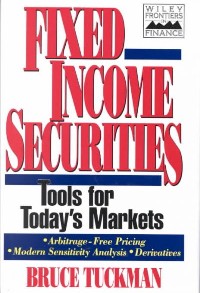
A volatile new breed of fixed income securities have taken the market by storm over the past few years. Offering profit-hungry money managers and institutional investors the promise of far greater rewards than traditional fixed securities, these fickle instruments also entail far greater risk. Due, in great part, to the sometimes violent ways in which these new fixed securities respond to changes in interest rates, old imprecise rules of thumb that worked so well in traditional markets only lead to disaster when applied to the likes of forward contracts, floating rate bonds, inverse floaters, IOs, interest rate swaps, and swaptions. Of course researchers have developed sophisticated tools for analyzing and applying these new instruments, but most of these, unfortunately, are over the heads of average practitioners . . . or are they? In this highly readable, applications-oriented guide to one of today''s hottest financial topics, Bruce Tuckman clearly, methodically, and with a bare minimum of difficult math, describes today''s vast and growing array of new fixed income securities and schools you in cutting-edge techniques for fixed income application and risk control. Using easy-to-follow charts and tables that simplify the most complex subject matter, he walks you through the basic principles and procedures used in pricing today''s fixed income choices-from securities and fixed cash flows to embedded options in corporate bonds and mortgage-backed securities. Working in a methodical, step-wise fashion, Tuckman begins with an in-depth review of the basic concepts and tools for traditional fixed income securities. From there he introduces modern arbitrage-free techniques for pricing more complex fixed income securities and their derivatives. He next acquaints readers with measures of price sensitivity crucial to portfolio risk assessment, asset/liability management, and hedging. And finally, by focusing in turn on futures, floaters, swaps, corporates, and mortgages, he clearly illustrates how to apply the ideas and tools developed in the rest of the book. The most timely, practical, and, above all, the most accessible guide to the subject now available, Fixed Income Securities is a must read for all fixed income professionals, institutional investors, money managers, financial analysts, traders, and other financial professionals. The practical and accessible guide to today''s new wave of fixed income tools and products In the most practical and accessible guide written on the subject, Bruce Tuckman schools readers in an array of cutting-edge techniques for mastering today''s challenging fixed income markets. Using easy-to-follow charts and tables that simplify even the most complex subject matter, Tuckman clearly describes the new generation of models for pricing and hedging and applies them to a wide range of fixed income securities-futures, swaps, mortgage strips, and more. "A wonderful mix of academic theory and institutional practice. This is essential reading for any thinking person with an eye towards a successful career in the fixed income financial markets." -Mark Grinblatt Assoc. Professor of Finance Anderson Graduate School of Management, UCLA Member, Board of Directors Salomon Swapco, Inc. "Tuckman combines intuition with precision in this first rate presentation of fixed income securities." -William Silber, Professor Leonard N. Stern School of Business New York University "This book not only presents a firm theoretical basis for understanding and valuing bonds, it also presents a framework that is rich enough to capture the institutional details that make debt markets so fascinating. This book should be read by both practitioners and academics with an interest in debt instruments." -Martin J. Gruber Nomura Professor of Finance Leonard N. Stern School of Business New York University "Tuckman manages to simplify the complex in this well-written book. I recommend this book to anyone studying the valuation of fixed income securities." -John D. Finnerty McFarland, Dewey & Co. Editor, Financial Management
目录
Introduction
Acknowledgments
The Relative Pricing of Fixed Income Securities with Fixed Cash Flows
Bond Prices, Discount Factors, and Arbitrage
The Time Value of Money
Treasury Bond Quotations
Discount Factors The Law of One Price
Arbitrage and the Law of One Price.Treasury STRIPS
Deriving the Replicating Portfolio
Application: Treasury Triplets and High Coupon Bonds
Bond Prices, Spot Rates, and Forward Rates
Semiannual Compounding
Spot Rates
Forward Rates
Maturity and Bond Price Maturity and Bond return
Treasury STRIPS, Continued
The Relation between Spot and Forward Rates and the Slope of the Term Structure
Yield-to-Maturity
Definition and Interpretation
Yield-to-Maturity and Spot Rates
Yield-to-Maturity and Relative Value: The Coupon Effect
Yield-to-Maturity and Realized return
Generalizations and Curve Fitting
Accrued Interest
Compounding Conventions
Yield and Compounding Conventions
Bad Days
Introduction to Curve Fitting
Piecewise Cubics
Application: Fitting the Term Structure in the U.S. Treasury Market on February 15, 2001
Trading Case Study: A 7s-8s-9s Butterfly
Continuous Compounding
A Simple Cubic Spline
Measures of Price Sensitivity and Hedging
One-Factor Measures of Price Sensitivity DV01
A Hedging Example, Part I: Hedging a Call Option
Duration
Convexity
A Hedging Example, Part II: A Short Convexity Position
Estimating Price Changes and Returns with DV01, Duration, and Convexity
Convexity in the Investment and Asset-Liability Management Contexts
Measuring the Price Sensitivity of Portfolios
A Hedging Example, Part III: The Negative Convexity of Callable Bonds
Measures of Price Sensitivity Based on Parallel Yield Shifts
Yield-Based DV01
Modified and Macaulay Duration
Zero Coupon Bonds and a Reinterpretation of Duration
Par Bonds and Perpetuities
Duration, DV01, Maturity, and Coupon: A Graphical Analysis
Duration, DV01, and Yield
Yield-Based Convexity
Yield-Based Convexity of Zero Coupon Bonds
The Barbell versus the Bullet
Key Rate and Bucket Exposures
Key Rate Shifts
Key Rate 01s and Key Rate Durations
Hedging with Key Rate Exposures
Choosing Key Rates
Bucket Shifts and Exposures
Immunization
Multi-Factor Exposures and Risk Management
Regression-Based Hedging
Volatility-Weighted Hedging
One-Variable Regression-Based Hedging
Two-Variable Regression-Based Hedging
Trading Case Study: The Pricing of the 20-Year U.S. Treasury Sector
A Comment on Level Regressions
Term Structure Models
The Science of Term Structure Models
Rate and Price Trees
Arbitrage Pricing of Derivatives
Risk-Neutral Pricing
Arbitrage Pricing in a Multi-Period Setting
Example: Pricing a CMT Swap
Reducing the Time Step
Fixed Income versus Equity Derivatives
The Short-Rate Process and the Shape of the Term Structure
Expectations
Volatility and Convexity
Risk Premium
A Mathematical Description of Expectations, Convexity, and Risk Premium
Application: Expectations, Convexity, and Risk Premium in the U.S. Treasury Market on February 15, 2001
Proofs of Equations (10.19) and (10.25)
The Art of Term Structure Models: Drift
Normally Distributed Rates, Zero Drift: Model 1
Drift and Risk Premium: Model 2
Time-Dependent Drift: The Ho-Lee Model
Desirability of Fitting to the Term Structure
Mean Reversion: The Vasicek (1977) Model
The Art of Term Structure Models: Volatility and Distribution
Time-Dependent Volatility: Model 3
Volatility as a Function of the Short Rate: The Cox-Ingersoll-Ross and Lognormal Models
Tree for the Original Salomon Brothers Model
A Lognormal Model with Mean Reversion: The Black-Karasinski Model
Selected List of One-Factor Term Structure Models
Closed-Form Solutions for Spot Rates
Multi-Factor Term Structure Models
Motivation from Principal Components
A Two-Factor Model
Tree Implementation
Properties of the Two-Factor Model
Other Two-Factor and Multi-Factor Modeling Approaches
Closed-Form Solution for Spot Rates in the Two-Factor Model
Trading with Term Structure Models
Example Revisited: Pricing a CMT Swap
Option-Adjusted Spread
Profit and Loss (P&L) Attribution
P&L Attributions for a Position in the CMT Swap
Trading Case Study: Trading 2s-5s-10s in Swaps with a Two-Factor Model
Fitting Model Parameters
Hedging to the Model versus Hedging to the Market
Selected Securities
Repo
Repurchase Agreements and Cash Management
Repurchase Agreements and Financing Long Positions
Reverse Repurchase Agreements and Short Positions Carry
General Collateral and Specials
Special Repo Rates and the Auction Cycle
Liquidity Premiums of Recent Issues
Application: Valuing a Bond Trading Special in Repo
Application: Disruption in the Specials Market after September 11, 2001
Forward Contracts
Definitions
Forward Price of a Deposit or a Zero Coupon Bond
Using Forwards to Hedge Borrowing Costs or Loan Proceeds
Forward Price of a Coupon Bond
Forward Yield and Forward DV01
Forward Prices with Intermediate Coupon Payments
Value of a Forward Contract
Forward Prices in a Term Structure Model
Eurodollar and Fed Funds Futures
LIBOR and Eurodollar Futures
Hedging with Eurodollar Futures
Tails: A Closer Look at Hedging with Futures
Futures on Prices in a Term Structure Model
Futures on Rates in a Term Structure Model
The Futures-Forward Difference
TED Spreads
Application: Trading TED Spreads
Fed Funds
Fed Funds Futures
Application: Fed Funds Contracts and Predicted Fed Action
Hedging to Dates Not Matching Fed Funds and Eurodollar Futures Expirations
Interest Rate Swaps
Swap Cash Flows
Valuation of Swaps
Floating Rate Notes
Valuation of Swaps, Continued
Note on the Measurement of Fixed and Floating Interest Rate Risk
Swap Spreads
Major Uses of Interest Rate Swaps
Asset Swap Spreads and Asset Swaps
Trading Case Study: 30-Year FNMA Asset Swap Spreads
On the Credit Risk of Swap Agreements
Trading Case Study: Five-Year On-the-Run/Off-the-Run Spread of Spreads
Fixed Income Options
Definitions and Review
Pricing American and Bermudan Bond Options in a Term Structure Model
Application: FNMA 6.25s of July 19, 2011, and the Pricing of Callable Bonds
Graphical Analysis of Callable Bond Pricing
A Note on Yield-to-Call
Swaptions, Caps, and Floors
Quoting Prices with Volatility Measures in Fixed Income Options Markets
Smile and Skew
Note and Bond Futures
Mechanics
Cost of Delivery and the Determination of the Final Settlement Price
Motivations for a Delivery Basket and Conversion Factors
Imperfection of Conversion Factors and the Delivery Option at Expiration
Gross and Net Basis
Quality Option before Delivery
Some Notes on Pricing the Quality Option in Term Structure Models
Measures of Rate Sensitivity
Timing Option
End-of-Month Option
Trading Case Study: November '08 Basis into TYM0
Mortgage-Backed Securities
Basic Mortgage Mathematics
Prepayment Option
Overview of Mortgage Pricing Models
Implementing Prepayment Models
Price-Rate Curve of a Mortgage Pass-Through
Application: Mortgage Hedging and the Directionality of Swap Spreads
Mortgage Derivatives, IOs, and Pos
Exercises
References And Suggestions For Further Reading
Index
Acknowledgments
The Relative Pricing of Fixed Income Securities with Fixed Cash Flows
Bond Prices, Discount Factors, and Arbitrage
The Time Value of Money
Treasury Bond Quotations
Discount Factors The Law of One Price
Arbitrage and the Law of One Price.Treasury STRIPS
Deriving the Replicating Portfolio
Application: Treasury Triplets and High Coupon Bonds
Bond Prices, Spot Rates, and Forward Rates
Semiannual Compounding
Spot Rates
Forward Rates
Maturity and Bond Price Maturity and Bond return
Treasury STRIPS, Continued
The Relation between Spot and Forward Rates and the Slope of the Term Structure
Yield-to-Maturity
Definition and Interpretation
Yield-to-Maturity and Spot Rates
Yield-to-Maturity and Relative Value: The Coupon Effect
Yield-to-Maturity and Realized return
Generalizations and Curve Fitting
Accrued Interest
Compounding Conventions
Yield and Compounding Conventions
Bad Days
Introduction to Curve Fitting
Piecewise Cubics
Application: Fitting the Term Structure in the U.S. Treasury Market on February 15, 2001
Trading Case Study: A 7s-8s-9s Butterfly
Continuous Compounding
A Simple Cubic Spline
Measures of Price Sensitivity and Hedging
One-Factor Measures of Price Sensitivity DV01
A Hedging Example, Part I: Hedging a Call Option
Duration
Convexity
A Hedging Example, Part II: A Short Convexity Position
Estimating Price Changes and Returns with DV01, Duration, and Convexity
Convexity in the Investment and Asset-Liability Management Contexts
Measuring the Price Sensitivity of Portfolios
A Hedging Example, Part III: The Negative Convexity of Callable Bonds
Measures of Price Sensitivity Based on Parallel Yield Shifts
Yield-Based DV01
Modified and Macaulay Duration
Zero Coupon Bonds and a Reinterpretation of Duration
Par Bonds and Perpetuities
Duration, DV01, Maturity, and Coupon: A Graphical Analysis
Duration, DV01, and Yield
Yield-Based Convexity
Yield-Based Convexity of Zero Coupon Bonds
The Barbell versus the Bullet
Key Rate and Bucket Exposures
Key Rate Shifts
Key Rate 01s and Key Rate Durations
Hedging with Key Rate Exposures
Choosing Key Rates
Bucket Shifts and Exposures
Immunization
Multi-Factor Exposures and Risk Management
Regression-Based Hedging
Volatility-Weighted Hedging
One-Variable Regression-Based Hedging
Two-Variable Regression-Based Hedging
Trading Case Study: The Pricing of the 20-Year U.S. Treasury Sector
A Comment on Level Regressions
Term Structure Models
The Science of Term Structure Models
Rate and Price Trees
Arbitrage Pricing of Derivatives
Risk-Neutral Pricing
Arbitrage Pricing in a Multi-Period Setting
Example: Pricing a CMT Swap
Reducing the Time Step
Fixed Income versus Equity Derivatives
The Short-Rate Process and the Shape of the Term Structure
Expectations
Volatility and Convexity
Risk Premium
A Mathematical Description of Expectations, Convexity, and Risk Premium
Application: Expectations, Convexity, and Risk Premium in the U.S. Treasury Market on February 15, 2001
Proofs of Equations (10.19) and (10.25)
The Art of Term Structure Models: Drift
Normally Distributed Rates, Zero Drift: Model 1
Drift and Risk Premium: Model 2
Time-Dependent Drift: The Ho-Lee Model
Desirability of Fitting to the Term Structure
Mean Reversion: The Vasicek (1977) Model
The Art of Term Structure Models: Volatility and Distribution
Time-Dependent Volatility: Model 3
Volatility as a Function of the Short Rate: The Cox-Ingersoll-Ross and Lognormal Models
Tree for the Original Salomon Brothers Model
A Lognormal Model with Mean Reversion: The Black-Karasinski Model
Selected List of One-Factor Term Structure Models
Closed-Form Solutions for Spot Rates
Multi-Factor Term Structure Models
Motivation from Principal Components
A Two-Factor Model
Tree Implementation
Properties of the Two-Factor Model
Other Two-Factor and Multi-Factor Modeling Approaches
Closed-Form Solution for Spot Rates in the Two-Factor Model
Trading with Term Structure Models
Example Revisited: Pricing a CMT Swap
Option-Adjusted Spread
Profit and Loss (P&L) Attribution
P&L Attributions for a Position in the CMT Swap
Trading Case Study: Trading 2s-5s-10s in Swaps with a Two-Factor Model
Fitting Model Parameters
Hedging to the Model versus Hedging to the Market
Selected Securities
Repo
Repurchase Agreements and Cash Management
Repurchase Agreements and Financing Long Positions
Reverse Repurchase Agreements and Short Positions Carry
General Collateral and Specials
Special Repo Rates and the Auction Cycle
Liquidity Premiums of Recent Issues
Application: Valuing a Bond Trading Special in Repo
Application: Disruption in the Specials Market after September 11, 2001
Forward Contracts
Definitions
Forward Price of a Deposit or a Zero Coupon Bond
Using Forwards to Hedge Borrowing Costs or Loan Proceeds
Forward Price of a Coupon Bond
Forward Yield and Forward DV01
Forward Prices with Intermediate Coupon Payments
Value of a Forward Contract
Forward Prices in a Term Structure Model
Eurodollar and Fed Funds Futures
LIBOR and Eurodollar Futures
Hedging with Eurodollar Futures
Tails: A Closer Look at Hedging with Futures
Futures on Prices in a Term Structure Model
Futures on Rates in a Term Structure Model
The Futures-Forward Difference
TED Spreads
Application: Trading TED Spreads
Fed Funds
Fed Funds Futures
Application: Fed Funds Contracts and Predicted Fed Action
Hedging to Dates Not Matching Fed Funds and Eurodollar Futures Expirations
Interest Rate Swaps
Swap Cash Flows
Valuation of Swaps
Floating Rate Notes
Valuation of Swaps, Continued
Note on the Measurement of Fixed and Floating Interest Rate Risk
Swap Spreads
Major Uses of Interest Rate Swaps
Asset Swap Spreads and Asset Swaps
Trading Case Study: 30-Year FNMA Asset Swap Spreads
On the Credit Risk of Swap Agreements
Trading Case Study: Five-Year On-the-Run/Off-the-Run Spread of Spreads
Fixed Income Options
Definitions and Review
Pricing American and Bermudan Bond Options in a Term Structure Model
Application: FNMA 6.25s of July 19, 2011, and the Pricing of Callable Bonds
Graphical Analysis of Callable Bond Pricing
A Note on Yield-to-Call
Swaptions, Caps, and Floors
Quoting Prices with Volatility Measures in Fixed Income Options Markets
Smile and Skew
Note and Bond Futures
Mechanics
Cost of Delivery and the Determination of the Final Settlement Price
Motivations for a Delivery Basket and Conversion Factors
Imperfection of Conversion Factors and the Delivery Option at Expiration
Gross and Net Basis
Quality Option before Delivery
Some Notes on Pricing the Quality Option in Term Structure Models
Measures of Rate Sensitivity
Timing Option
End-of-Month Option
Trading Case Study: November '08 Basis into TYM0
Mortgage-Backed Securities
Basic Mortgage Mathematics
Prepayment Option
Overview of Mortgage Pricing Models
Implementing Prepayment Models
Price-Rate Curve of a Mortgage Pass-Through
Application: Mortgage Hedging and the Directionality of Swap Spreads
Mortgage Derivatives, IOs, and Pos
Exercises
References And Suggestions For Further Reading
Index
- 名称
- 类型
- 大小
光盘服务联系方式: 020-38250260 客服QQ:4006604884
云图客服:
用户发送的提问,这种方式就需要有位在线客服来回答用户的问题,这种 就属于对话式的,问题是这种提问是否需要用户登录才能提问
Video Player
×
Audio Player
×
pdf Player
×
