

简介
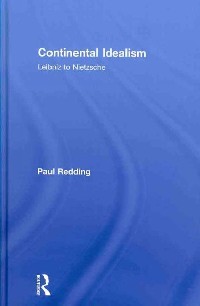
Standard accounts of nineteenth-century German philosophy often begin with Kant and assess philosophers after him in light of their responses to Kantian idealism. In Continental Idealism, Paul Redding argues that the story of German idealism begins with Leibniz. Redding begins by examining Leibniz's dispute with Newton over the nature of space, time and God, and stresses the way in which Leibniz incorporated Platonic and Aristotelian elements in his distinctive brand of idealism. Redding shows how Kant's interpretation of Leibniz's views of space and time consequently shaped his own 'transcendental' version of idealism. Far from ending here, however, Redding argues that post-Kantian idealists such as Fichte, Schelling and Hegel on the one hand and metaphysical sceptics such as Schopenhauer and Nietzsche on the other continued to wrestle with a form of idealism ultimately derived from Leibniz. Continental Idealism offers not only a new picture of one of the most important philosophical movements in the history of philosophy, but also a valuable and clear introduction to the origins of Continental and European philosophy. - Back cover.
目录
Acknowledgments p. viii
Introduction p. 1
1 The Seventeenth-Century Background to the Emergence of Continental Idealism p. 6
1.1 Early-modern theology and natural philosophy p. 6
1.2 Henry More and Newtonian "spiritualism" p. 9
1.3 Leibniz, Clarke and Berkeley on space and God p. 12
2 The Monadological World of Gottfried Wilhelm Leibniz p. 20
2.1 Leibniz's .monadological world p. 20
2.2 Leibniz, the new physics, and the divine orderliness of the universe p. 22
2.3 Leibniz's conception of the moral order p. 25
2.4 The monadological conception of the soul and its capacities p. 28
2.5 Leibniz and mystico-religious Neoplatonism p. 32
3 Kant's Development from Physical to Moral Monadologist p. 36
3.1 Kant's pre-critical physical monadology and the mind-body problem p. 37
3.2 The role of Swedenborg in the transformation of Kant's pre-critical thought p. 39
3.3 The role of Leibniz in the transformation of Kant's pre-critical thought p. 40
3.4 The role of Rousseau in the transformation of Kant's pre-critical thought p. 43
3.5 Kant's "semi-transcendental turn" in the Inaugural Dissertation of 1770 p. 44
4 Kant and the "Copernican" Conception of Transcendental Philosophy p. 52
4.1 The Copernican reversal of perspective and its consequences for metaphysics p. 54
4.2 The aporia of traditional metaphysics p. 59
4.3 Kant's modernism p. 61
4.4 Kant on Aristotle's "categories" and Plato's "ideas" p. 63
4.5 Kant's "Plato" p. 66
5 The Moral Framework of Metaphysics p. 70
5.1 The primacy of practical reason in Kant's critical philosophy p. 73
5.2 The object of "pure practical reason"-the moral law-can only be grounded in the form, rather than the empirical content, of the will p. 76
5.3 Kant's political theory p. 80
5.4 Concerns with Kant's practical philosophy p. 83
6 The Later Kant as a "Post-Kantian" Philosopher? p. 88
6.1 From empirical to transcendental accounts of Hutchesonian moral sense p. 88
6.2 The ethical infrastructure of aesthetic judgment in the Critique of Judgment p. 90
6.3 The symbolic dimension of beauty p. 95
6.4 The teleology of the world considered as a whole p. 97
7 Jena Post-Kantianism: Reinhold and Fichte p. 103
7.1 Reinhold's "proposition of consciousness" and Schulze's critique p. 103
7.2 Fichte's reconceptualizing of the mind as self-positing process p. 106
7.3 Fichte's project of the Wissenschaftslehre p. 108
7.4 Intersubjective recognition as a condition of self-consciousness p. 113
8 The Jena Romanticism of Friedrich Schlegel and Friedrich Schelling p. 116
8.1 Friedrich Schlegel: Transcendental poetry and the unpresentable absolute p. 118
8.2 Schlegel and the critique of foundationalism p. 122
8.3 Schelling and Plato's world soul p. 125
8.4 Schelling's philosophy of nature p. 127
8.5 Art and mythology p. 131
9 Hegel's Idealist Metaphysics of Spirit p. 135
9.1 The puzzle of Hegel's attitude to religion and metaphysics p. 136
9.2 Hegel's critique of Kant's idea of God p. 138
9.3 The project of a "phenomenology of spirit" p. 140
9.4 Self-negating shapes of consciousness p. 143
9.5 Self-consciousness and the recognitive theory of spirit p. 146
9.6 Phenomenology, logic and metaphysics p. 150
10 Schopenhauer, Nietzsche and the Ambiguous End of the Idealist Tradition p. 155
10.1 Schopenhauer's metaphysics of the will p. 156
10.2 The task of transcending the will: Morality and art p. 158
10.3 Schopenhauer and Fichte's transcendental idealism p. 160
10.4 The early Nietzsche: Schopenhauer, Wagner and The Birth of Tragedy p. 162
10.5 The later Nietzsche: Life after the deaths of tragedy and God p. 165
Postscript: Idealism after the End of (Its) History p. 175
Notes p. 180
Bibliography p. 204
Index p. 221
Introduction p. 1
1 The Seventeenth-Century Background to the Emergence of Continental Idealism p. 6
1.1 Early-modern theology and natural philosophy p. 6
1.2 Henry More and Newtonian "spiritualism" p. 9
1.3 Leibniz, Clarke and Berkeley on space and God p. 12
2 The Monadological World of Gottfried Wilhelm Leibniz p. 20
2.1 Leibniz's .monadological world p. 20
2.2 Leibniz, the new physics, and the divine orderliness of the universe p. 22
2.3 Leibniz's conception of the moral order p. 25
2.4 The monadological conception of the soul and its capacities p. 28
2.5 Leibniz and mystico-religious Neoplatonism p. 32
3 Kant's Development from Physical to Moral Monadologist p. 36
3.1 Kant's pre-critical physical monadology and the mind-body problem p. 37
3.2 The role of Swedenborg in the transformation of Kant's pre-critical thought p. 39
3.3 The role of Leibniz in the transformation of Kant's pre-critical thought p. 40
3.4 The role of Rousseau in the transformation of Kant's pre-critical thought p. 43
3.5 Kant's "semi-transcendental turn" in the Inaugural Dissertation of 1770 p. 44
4 Kant and the "Copernican" Conception of Transcendental Philosophy p. 52
4.1 The Copernican reversal of perspective and its consequences for metaphysics p. 54
4.2 The aporia of traditional metaphysics p. 59
4.3 Kant's modernism p. 61
4.4 Kant on Aristotle's "categories" and Plato's "ideas" p. 63
4.5 Kant's "Plato" p. 66
5 The Moral Framework of Metaphysics p. 70
5.1 The primacy of practical reason in Kant's critical philosophy p. 73
5.2 The object of "pure practical reason"-the moral law-can only be grounded in the form, rather than the empirical content, of the will p. 76
5.3 Kant's political theory p. 80
5.4 Concerns with Kant's practical philosophy p. 83
6 The Later Kant as a "Post-Kantian" Philosopher? p. 88
6.1 From empirical to transcendental accounts of Hutchesonian moral sense p. 88
6.2 The ethical infrastructure of aesthetic judgment in the Critique of Judgment p. 90
6.3 The symbolic dimension of beauty p. 95
6.4 The teleology of the world considered as a whole p. 97
7 Jena Post-Kantianism: Reinhold and Fichte p. 103
7.1 Reinhold's "proposition of consciousness" and Schulze's critique p. 103
7.2 Fichte's reconceptualizing of the mind as self-positing process p. 106
7.3 Fichte's project of the Wissenschaftslehre p. 108
7.4 Intersubjective recognition as a condition of self-consciousness p. 113
8 The Jena Romanticism of Friedrich Schlegel and Friedrich Schelling p. 116
8.1 Friedrich Schlegel: Transcendental poetry and the unpresentable absolute p. 118
8.2 Schlegel and the critique of foundationalism p. 122
8.3 Schelling and Plato's world soul p. 125
8.4 Schelling's philosophy of nature p. 127
8.5 Art and mythology p. 131
9 Hegel's Idealist Metaphysics of Spirit p. 135
9.1 The puzzle of Hegel's attitude to religion and metaphysics p. 136
9.2 Hegel's critique of Kant's idea of God p. 138
9.3 The project of a "phenomenology of spirit" p. 140
9.4 Self-negating shapes of consciousness p. 143
9.5 Self-consciousness and the recognitive theory of spirit p. 146
9.6 Phenomenology, logic and metaphysics p. 150
10 Schopenhauer, Nietzsche and the Ambiguous End of the Idealist Tradition p. 155
10.1 Schopenhauer's metaphysics of the will p. 156
10.2 The task of transcending the will: Morality and art p. 158
10.3 Schopenhauer and Fichte's transcendental idealism p. 160
10.4 The early Nietzsche: Schopenhauer, Wagner and The Birth of Tragedy p. 162
10.5 The later Nietzsche: Life after the deaths of tragedy and God p. 165
Postscript: Idealism after the End of (Its) History p. 175
Notes p. 180
Bibliography p. 204
Index p. 221
- 名称
- 类型
- 大小
光盘服务联系方式: 020-38250260 客服QQ:4006604884
云图客服:
用户发送的提问,这种方式就需要有位在线客服来回答用户的问题,这种 就属于对话式的,问题是这种提问是否需要用户登录才能提问
Video Player
×
Audio Player
×
pdf Player
×
