

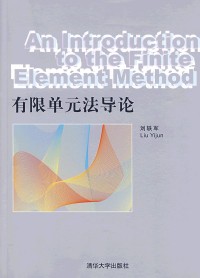
简介
本书是一本讲述有限单元法的入门教材。全书共有8章。第1章以简单
的力学问题为例介绍了有限单元法的基本原理。第2章至第6章分别讲述了
杆、梁、板、壳以及一般三维物体结构问题的有限单元方法,其中讨论了
应用有限单元法的各种模拟技术问题,例如,如何评估有限单元法计算的
结果。第7章是对结构振动以及动力学分析问题的有限单元法的简介。第8
章介绍了有限单元法对结构进行热力学分析的基础知识。在各章的最后还
提供了利用有限单元法软件的练习题。本书内容密切结合工程实际问题,
简明易懂,特点鲜明。
读者对象为高等院校机械、土木、水利、航空等工程专业的本科生以
及相应专业领域的工程设计技术人员。
目录
Chapter 1 Introduction
1.1 Some Basic Concepts
1.2 Review of Matrix Algebra
1.3 Spring Element
1.4 Summary
1.5 Problems
Chapter 2 Bar and Beam Elements
2.1 Linear Static Analysis
2.2 Bar Element
2.3 Beam Element
2.4 Summary
2.5 Problems
Chapter 3 Two-Dimensional Elasticity Problems
3.1 Stress State in Structures
3.2 2-D (Plane) Elasticity Problems
3.3 Finite Elements for 2-D Problems
3.4 Summary
3.5 Problems
Chapter 4 Modeling and Solution Techniques
4.1 Symmetry
4.2 Substructures (Superelements)
4.3 Equation Solving
4.4 Nature of Finite Element Solutions
4.5 Convergence of FEA Solutions
4.6 Adaptivity (h-, p-, and hp-Methods)
4.7 Summary
4.8 Problems
Chapter 5 Plate and Shell Elements
5.1 Plate Theory
5.2 Plate Elements
5.3 Shells and Shell Elements
5.4 Summary
5.5 Problems
Chapter 6 Three-Dimensional Elasticity Problems
6.1 3-D Elasticity Theory
6.2 Finite Element Formulation
6.3 Typical 3-D Solid Elements
6.4 Solids of Revolution (Axisymmetric Analysis)
6.5 Summary
6.6 Problems
Chapter 7 Structural Vibration and Dynamics
7.1 Basic Equations
7.2 Free Vibration of Multiple DOF Systems
7.3 Damping
7.4 Modal Equations
7.5 Frequency Response Analysis
7.6 Transient Response Analysis
7.7 Summary
7.8 Problems
Chapter 8 Thermal Analysis
8.1 Temperature Field
8.2 Thermal Stress Analysis
8.3 Summary
8.4 Problems
References
1.1 Some Basic Concepts
1.2 Review of Matrix Algebra
1.3 Spring Element
1.4 Summary
1.5 Problems
Chapter 2 Bar and Beam Elements
2.1 Linear Static Analysis
2.2 Bar Element
2.3 Beam Element
2.4 Summary
2.5 Problems
Chapter 3 Two-Dimensional Elasticity Problems
3.1 Stress State in Structures
3.2 2-D (Plane) Elasticity Problems
3.3 Finite Elements for 2-D Problems
3.4 Summary
3.5 Problems
Chapter 4 Modeling and Solution Techniques
4.1 Symmetry
4.2 Substructures (Superelements)
4.3 Equation Solving
4.4 Nature of Finite Element Solutions
4.5 Convergence of FEA Solutions
4.6 Adaptivity (h-, p-, and hp-Methods)
4.7 Summary
4.8 Problems
Chapter 5 Plate and Shell Elements
5.1 Plate Theory
5.2 Plate Elements
5.3 Shells and Shell Elements
5.4 Summary
5.5 Problems
Chapter 6 Three-Dimensional Elasticity Problems
6.1 3-D Elasticity Theory
6.2 Finite Element Formulation
6.3 Typical 3-D Solid Elements
6.4 Solids of Revolution (Axisymmetric Analysis)
6.5 Summary
6.6 Problems
Chapter 7 Structural Vibration and Dynamics
7.1 Basic Equations
7.2 Free Vibration of Multiple DOF Systems
7.3 Damping
7.4 Modal Equations
7.5 Frequency Response Analysis
7.6 Transient Response Analysis
7.7 Summary
7.8 Problems
Chapter 8 Thermal Analysis
8.1 Temperature Field
8.2 Thermal Stress Analysis
8.3 Summary
8.4 Problems
References
Introduction to the finite element method
- 名称
- 类型
- 大小
光盘服务联系方式: 020-38250260 客服QQ:4006604884
云图客服:
用户发送的提问,这种方式就需要有位在线客服来回答用户的问题,这种 就属于对话式的,问题是这种提问是否需要用户登录才能提问
Video Player
×
Audio Player
×
pdf Player
×
