

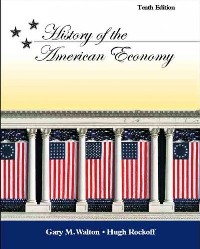
简介
Arranged in chronological order, this textbook examines the institutions and economic activity that led the colonies to their independence, then chronicles the changes in agriculture, transportation, product markets, conditions of labor, and money that took place during each subsequent period. Walton (U. of California-Davis) and Rockoff (Rutgers University) highlight the role of government, the quest for security, and the demographic forces at work. The tenth edition adds boxed discussions that draw explicit analogies between current issues and past experiences. Annotation 漏2004 Book News, Inc., Portland, OR (booknews.com)
目录
Table Of Contents:
Preface xiii
Growth, Welfare, and the American Economy 1(23)
Americans 1900--2000 1(9)
A Study with a Purpose 10(14)
Part One The Colonial Era: 1607--1776 24(98)
Founding the Colonies 26(24)
European Background to the Voyages of Discovery 26(1)
Portugal and the First Discoveries 27(1)
Portugal and Spain: Expanding Empires 28(2)
The Latecomers: Holland, France, and England 30(1)
First British Settlements in North America 31(1)
Early Reforms 32(6)
Demographic Change 38(12)
Colonial Economic Activities 50(18)
Land and Natural Resource Abundance, Labor Scarcity 50(1)
Capital Scarcity 51(1)
The Dominance of Agriculture 51(6)
The Extractive Industries 57(3)
The Manufacturing Industries 60(4)
Occupational Groups 64(4)
The Economic Relations of the Colonies 68(19)
English Mercantilism and the Colonies 68(2)
Exports, Imports, and Markets 70(1)
Overseas Shipping and Trade 71(4)
Intercolonial Commerce 75(1)
Money and Trade 76(2)
Money, Debts, and Creditors 78(1)
Trade Deficits with England 79(8)
Economic Progress and Wealth 87(19)
Growth and Change in the Colonial Economy 87(8)
Technological Change and Productivity 95(4)
Speculations on Early Growth Rates 99(1)
Per Capita Wealth and Income, 1774 100(1)
The Distribution of Income and Wealth 101(5)
Three Crises and Revolt 106(16)
The Old Colonial Policy 106(3)
The New Colonial Policy and the First Crisis 109(2)
More Changes and the Second Crisis 111(1)
The Third Crisis and Rebellion 111(11)
Part Two The Revolutionary, Early National, and Antebellum Eras: 1776--1860 122(140)
Hard Realities for a New Nation 124(16)
The War and Economy 124(3)
The Constitution 127(3)
American Independence and Economic Change 130(1)
A Quantitative Analysis of Economic Change 131(2)
War, Neutrality, and Economic Resurgence 133(7)
Land and the Early Western Movements 140(22)
The Acquisition of the Public Domain 140(7)
The Migrations to the West 147(6)
The Southwestern Migration and Cotton 153(4)
The Far Western Migration 157(5)
Transportation and Market Growth 162(22)
The Antebellum Transportation Revolution 162(2)
The Routes of Western Commerce 164(1)
Steamboats and the Natural Waterways 165(5)
Public Versus Private Initiative on the Natural Waterways 170(1)
The Canal Era 170(4)
The Iron Horse 174(1)
Roads 175(2)
The Antebellum Interregional Growth Hypothesis 177(1)
Ocean Transport 178(6)
Market Expansion and Industry in First Transition 184(19)
Early Changes in U.S. Manufacturing 184(7)
Prerequisites to Factory Production 191(4)
Productivity Advances in Manufactures 195(1)
Protection From Foreign Competition 196(7)
Labor During the Early Industrial Period 203(19)
The Growth of the Population and the Labor Force 203(1)
The Changing Labor Force Distribution and Composition 204(4)
The Impact of Immigration 208(1)
The Wages of Male Labor in Manufacturing 209(3)
Growing Inequality of Income 212(1)
The Early Union Movement 213(4)
Political Gains for Common Working People 217(5)
Money and Banking in the Developing Economy 222(19)
The American Monetary Unit 222(1)
The Bimetallic Standard 223(1)
Bank Notes as Paper Money 224(1)
The First Bank of the United States 225(3)
The Second Bank of the United States 228(4)
Economic Fluctuations and the Second Bank 232(2)
Experiments in State Banking Controls 234(2)
The Economic Consequences of the Gold Rush 236(5)
The Entrenchment of Slavery and Regional Conflict 241(21)
African Slavery in the Western Hemisphere 241(1)
First U.S. Constraints on Slavery 242(4)
Plantation Efficiency 246(6)
Economic Exploitation 252(2)
Economic Entrenchment and Regional Incomes 254(1)
Political Compromises and Regional Conflict 255(7)
Part Three The Reunification Era: 1860--1920 262(152)
War, Recovery, and Regional Divergence 264(21)
The Economics of War 265(3)
The Civil War and Northern Industrialization 268(2)
Economic Retardation in the South 270(5)
The Legacy of Slavery 275(10)
Agriculture's Western Advance 285(22)
The Expansion of Land under Cultivation 286(1)
Federal Land Policy 286(2)
The Impact of Federal Land Policy 288(2)
Growth and Change in Agriculture 290(3)
Hard Times on the Farm, 1864--1896 293(5)
Agrarian Political Organizations 298(3)
The Beginnings of Federal Assistance to Agriculture 301(1)
Natural Resource Conservation: The First Stages 302(5)
Railroads and Economic Change 307(19)
The Transcontinentals 308(1)
Total Construction: Page and Patterns 309(3)
Railroad Building and Railroad Demand 312(1)
Land Grants, Financial Assistance, and Private Capital 313(2)
Unscrupulous Financial Practices 315(1)
Rate Setting and Regulation in Railroad Markets 315(6)
Railroads and Economic Growth 321(5)
Industrial Expansion and Concentration 326(22)
Structural Change and Industry Composition 326(9)
Economies of Scale and Industry Concentration 335(2)
The Two Phases of the Concentration Movement 337(4)
Legislation and Legal Actions 341(7)
The Emergence of America's Labor Consciousness 348(21)
Demographic Change and the Supply of Labor 348(3)
Immigration, Politics, and Economic Effect 351(3)
Gains for Workers in the Postbellum Period 354(6)
Unions, Employers, and Conflict, 1860--1914 360(5)
Labor's Gains and the Unions 365(4)
Money, Prices and Finance in the Postbellum Era 369(22)
New Forms of Currency 370(4)
Gold, Greenbacks, or Bimetallism? 374(9)
Financial Capital, Investment Banking, and the National Debt 383(2)
Bank Panics and the Establishment of the Federal Reserve System 385(6)
Commerce at Home and Abroad 391(23)
Urbanization 391(2)
Marketing and Selling 393(6)
Product Differentiation and Advertising 399(1)
The First Steps Toward Consumer Protection 399(4)
Foreign Trade 403(3)
The Acceptance of Protectionist Doctrines 406(2)
The United States in an Imperialist World 408(6)
Part Four War, Depression, and War Again: 1914--1946 414(104)
World War I, 1914--1918 416(14)
The Origins of War 416(1)
U.S. Involvement 417(4)
Replacement of the Market with a Command System 421(3)
Labor during the War 424(2)
The Legacies of World War I 426(4)
The Roaring Twenties 430(22)
Social Changes in the Aftermath of War 430(1)
New Goods and the Rise of the Middle Class 431(5)
The Labor Force in the Twenties 436(4)
On the Land 440(2)
Were the Rich Getting Richer While the Poor Got Poorer? 442(1)
Macroeconomic Policies 443(2)
International Developments 445(1)
The Great Bull Market 446(6)
The Great Depression 452(21)
Dimensions of the Depression 453(1)
Causes of the Great Depression 454(6)
The Role of the Financial Crisis 460(3)
Why Didn't the Federal Reserve Save the Banking System? 463(2)
Fiscal Policy in the 1930s 465(1)
Partial Recovery and then a New Downturn 466(3)
Can It Happen Again? 469(1)
What Does the Depression Tell Us about Capitalism? 469(4)
The New Deal 473(21)
The First New Deal: Relief and Recovery 474(5)
Agriculture and the New Deal 479(6)
Labor and the New Deal 485(3)
The Supreme Court and the New Deal 488(1)
The Second New Deal: The Welfare State 489(1)
The Critics of the New Deal 490(1)
The Legacy of the New Deal 491(3)
World War II 494(24)
Mobilizing for War 494(5)
Fiscal and Monetary Policy 499(4)
Wage and Price Controls 503(2)
Wartime Prosperity? 505(1)
Labor Relations during the War 506(2)
Wartime Minority Experiences 508(1)
Agriculture during the War 509(3)
Demobilization and Reconversion 512(6)
Part Five The Postwar Era: 1946 to the Present 518(89)
The Changing Role of the U.S. Government 520(24)
The Size of Government in the Postwar Era 520(4)
The Liberal Era, 1945--1976: Continued Expansion 524(4)
The Conservative Era, 1976--2000 528(2)
Agriculture 530(5)
The Environment and the Legacy of the Conservation Movement 535(3)
Can the Principles of Economics Explain the Growth of the Government? 538(6)
Growth and the Business Cycle after World War II 544(21)
The Keynesian Era 545(9)
Monetarism and Its Descendants 554(8)
Was the Economy More Stable after World War II Than before the Depression? 562(3)
Manufacturing, Productivity, and Labor 565(27)
Employment Patterns 565(1)
Gales of Creative Destruction 566(6)
Changes in the Organization of Industry 572(3)
The Rise of the Service Sector 575(1)
The Changing Role of Women in the Labor Force 576(4)
Minorities 580(4)
The New Immigration 584(2)
Unions 586(1)
Real Wage 587(5)
Achievements of the Past, Challenges for the Future 592(15)
The Achievements of the Past 592(1)
Real Income Has Grown Rapidly 592(7)
Challenges for the Future 599(4)
Prophets of Decline 603(4)
Subject Index 607(9)
Name Index 616
Preface xiii
Growth, Welfare, and the American Economy 1(23)
Americans 1900--2000 1(9)
A Study with a Purpose 10(14)
Part One The Colonial Era: 1607--1776 24(98)
Founding the Colonies 26(24)
European Background to the Voyages of Discovery 26(1)
Portugal and the First Discoveries 27(1)
Portugal and Spain: Expanding Empires 28(2)
The Latecomers: Holland, France, and England 30(1)
First British Settlements in North America 31(1)
Early Reforms 32(6)
Demographic Change 38(12)
Colonial Economic Activities 50(18)
Land and Natural Resource Abundance, Labor Scarcity 50(1)
Capital Scarcity 51(1)
The Dominance of Agriculture 51(6)
The Extractive Industries 57(3)
The Manufacturing Industries 60(4)
Occupational Groups 64(4)
The Economic Relations of the Colonies 68(19)
English Mercantilism and the Colonies 68(2)
Exports, Imports, and Markets 70(1)
Overseas Shipping and Trade 71(4)
Intercolonial Commerce 75(1)
Money and Trade 76(2)
Money, Debts, and Creditors 78(1)
Trade Deficits with England 79(8)
Economic Progress and Wealth 87(19)
Growth and Change in the Colonial Economy 87(8)
Technological Change and Productivity 95(4)
Speculations on Early Growth Rates 99(1)
Per Capita Wealth and Income, 1774 100(1)
The Distribution of Income and Wealth 101(5)
Three Crises and Revolt 106(16)
The Old Colonial Policy 106(3)
The New Colonial Policy and the First Crisis 109(2)
More Changes and the Second Crisis 111(1)
The Third Crisis and Rebellion 111(11)
Part Two The Revolutionary, Early National, and Antebellum Eras: 1776--1860 122(140)
Hard Realities for a New Nation 124(16)
The War and Economy 124(3)
The Constitution 127(3)
American Independence and Economic Change 130(1)
A Quantitative Analysis of Economic Change 131(2)
War, Neutrality, and Economic Resurgence 133(7)
Land and the Early Western Movements 140(22)
The Acquisition of the Public Domain 140(7)
The Migrations to the West 147(6)
The Southwestern Migration and Cotton 153(4)
The Far Western Migration 157(5)
Transportation and Market Growth 162(22)
The Antebellum Transportation Revolution 162(2)
The Routes of Western Commerce 164(1)
Steamboats and the Natural Waterways 165(5)
Public Versus Private Initiative on the Natural Waterways 170(1)
The Canal Era 170(4)
The Iron Horse 174(1)
Roads 175(2)
The Antebellum Interregional Growth Hypothesis 177(1)
Ocean Transport 178(6)
Market Expansion and Industry in First Transition 184(19)
Early Changes in U.S. Manufacturing 184(7)
Prerequisites to Factory Production 191(4)
Productivity Advances in Manufactures 195(1)
Protection From Foreign Competition 196(7)
Labor During the Early Industrial Period 203(19)
The Growth of the Population and the Labor Force 203(1)
The Changing Labor Force Distribution and Composition 204(4)
The Impact of Immigration 208(1)
The Wages of Male Labor in Manufacturing 209(3)
Growing Inequality of Income 212(1)
The Early Union Movement 213(4)
Political Gains for Common Working People 217(5)
Money and Banking in the Developing Economy 222(19)
The American Monetary Unit 222(1)
The Bimetallic Standard 223(1)
Bank Notes as Paper Money 224(1)
The First Bank of the United States 225(3)
The Second Bank of the United States 228(4)
Economic Fluctuations and the Second Bank 232(2)
Experiments in State Banking Controls 234(2)
The Economic Consequences of the Gold Rush 236(5)
The Entrenchment of Slavery and Regional Conflict 241(21)
African Slavery in the Western Hemisphere 241(1)
First U.S. Constraints on Slavery 242(4)
Plantation Efficiency 246(6)
Economic Exploitation 252(2)
Economic Entrenchment and Regional Incomes 254(1)
Political Compromises and Regional Conflict 255(7)
Part Three The Reunification Era: 1860--1920 262(152)
War, Recovery, and Regional Divergence 264(21)
The Economics of War 265(3)
The Civil War and Northern Industrialization 268(2)
Economic Retardation in the South 270(5)
The Legacy of Slavery 275(10)
Agriculture's Western Advance 285(22)
The Expansion of Land under Cultivation 286(1)
Federal Land Policy 286(2)
The Impact of Federal Land Policy 288(2)
Growth and Change in Agriculture 290(3)
Hard Times on the Farm, 1864--1896 293(5)
Agrarian Political Organizations 298(3)
The Beginnings of Federal Assistance to Agriculture 301(1)
Natural Resource Conservation: The First Stages 302(5)
Railroads and Economic Change 307(19)
The Transcontinentals 308(1)
Total Construction: Page and Patterns 309(3)
Railroad Building and Railroad Demand 312(1)
Land Grants, Financial Assistance, and Private Capital 313(2)
Unscrupulous Financial Practices 315(1)
Rate Setting and Regulation in Railroad Markets 315(6)
Railroads and Economic Growth 321(5)
Industrial Expansion and Concentration 326(22)
Structural Change and Industry Composition 326(9)
Economies of Scale and Industry Concentration 335(2)
The Two Phases of the Concentration Movement 337(4)
Legislation and Legal Actions 341(7)
The Emergence of America's Labor Consciousness 348(21)
Demographic Change and the Supply of Labor 348(3)
Immigration, Politics, and Economic Effect 351(3)
Gains for Workers in the Postbellum Period 354(6)
Unions, Employers, and Conflict, 1860--1914 360(5)
Labor's Gains and the Unions 365(4)
Money, Prices and Finance in the Postbellum Era 369(22)
New Forms of Currency 370(4)
Gold, Greenbacks, or Bimetallism? 374(9)
Financial Capital, Investment Banking, and the National Debt 383(2)
Bank Panics and the Establishment of the Federal Reserve System 385(6)
Commerce at Home and Abroad 391(23)
Urbanization 391(2)
Marketing and Selling 393(6)
Product Differentiation and Advertising 399(1)
The First Steps Toward Consumer Protection 399(4)
Foreign Trade 403(3)
The Acceptance of Protectionist Doctrines 406(2)
The United States in an Imperialist World 408(6)
Part Four War, Depression, and War Again: 1914--1946 414(104)
World War I, 1914--1918 416(14)
The Origins of War 416(1)
U.S. Involvement 417(4)
Replacement of the Market with a Command System 421(3)
Labor during the War 424(2)
The Legacies of World War I 426(4)
The Roaring Twenties 430(22)
Social Changes in the Aftermath of War 430(1)
New Goods and the Rise of the Middle Class 431(5)
The Labor Force in the Twenties 436(4)
On the Land 440(2)
Were the Rich Getting Richer While the Poor Got Poorer? 442(1)
Macroeconomic Policies 443(2)
International Developments 445(1)
The Great Bull Market 446(6)
The Great Depression 452(21)
Dimensions of the Depression 453(1)
Causes of the Great Depression 454(6)
The Role of the Financial Crisis 460(3)
Why Didn't the Federal Reserve Save the Banking System? 463(2)
Fiscal Policy in the 1930s 465(1)
Partial Recovery and then a New Downturn 466(3)
Can It Happen Again? 469(1)
What Does the Depression Tell Us about Capitalism? 469(4)
The New Deal 473(21)
The First New Deal: Relief and Recovery 474(5)
Agriculture and the New Deal 479(6)
Labor and the New Deal 485(3)
The Supreme Court and the New Deal 488(1)
The Second New Deal: The Welfare State 489(1)
The Critics of the New Deal 490(1)
The Legacy of the New Deal 491(3)
World War II 494(24)
Mobilizing for War 494(5)
Fiscal and Monetary Policy 499(4)
Wage and Price Controls 503(2)
Wartime Prosperity? 505(1)
Labor Relations during the War 506(2)
Wartime Minority Experiences 508(1)
Agriculture during the War 509(3)
Demobilization and Reconversion 512(6)
Part Five The Postwar Era: 1946 to the Present 518(89)
The Changing Role of the U.S. Government 520(24)
The Size of Government in the Postwar Era 520(4)
The Liberal Era, 1945--1976: Continued Expansion 524(4)
The Conservative Era, 1976--2000 528(2)
Agriculture 530(5)
The Environment and the Legacy of the Conservation Movement 535(3)
Can the Principles of Economics Explain the Growth of the Government? 538(6)
Growth and the Business Cycle after World War II 544(21)
The Keynesian Era 545(9)
Monetarism and Its Descendants 554(8)
Was the Economy More Stable after World War II Than before the Depression? 562(3)
Manufacturing, Productivity, and Labor 565(27)
Employment Patterns 565(1)
Gales of Creative Destruction 566(6)
Changes in the Organization of Industry 572(3)
The Rise of the Service Sector 575(1)
The Changing Role of Women in the Labor Force 576(4)
Minorities 580(4)
The New Immigration 584(2)
Unions 586(1)
Real Wage 587(5)
Achievements of the Past, Challenges for the Future 592(15)
The Achievements of the Past 592(1)
Real Income Has Grown Rapidly 592(7)
Challenges for the Future 599(4)
Prophets of Decline 603(4)
Subject Index 607(9)
Name Index 616
- 名称
- 类型
- 大小
光盘服务联系方式: 020-38250260 客服QQ:4006604884
云图客服:
用户发送的提问,这种方式就需要有位在线客服来回答用户的问题,这种 就属于对话式的,问题是这种提问是否需要用户登录才能提问
Video Player
×
Audio Player
×
pdf Player
×
