

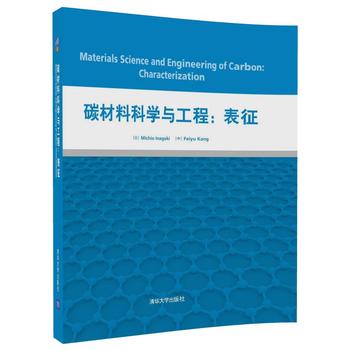
Materials Science and Engineering of Carbon: Characterization 碳材料科学与工程:表征
副标题:无
作 者:Michio
分类号:
ISBN:9787302471585
微信扫一扫,移动浏览光盘
简介
碳材料由于其结构多样性,导致其性能多样化,因而应用领域广阔,碳材料研究已受到全球材料科学界、物理学界、化学界的广泛关注。本书系统介绍了碳材料表征技术及应用,包括 X射线粉末衍射、小角X射线散射、透射电镜、扫描电子显微镜、图像分析、拉曼光谱、X射线光电子能谱、磁电阻、电化学性能、气体吸附/解吸等温线、热分析、表面官能团滴定测定、程序升温脱附技术。本书读者对象为材料领域的科技人员、研究生和高校教师。本书以英文著述,并与 Elsevier出版集团合作已在海外出版。
目录
List of Contributors.................................................................................
Preface ...............................................................................................
Acknowledgments ................................................................................
CHAPTER 1 Introduction............................................................ 1
Michio Inagaki, Feiyu Kang
1.1 Carbon Materials............................................................... 1
1.2 Characterization of Carbon Materials.................................... 3
1.3 Structure of the Present Book.............................................. 5
References.............................................................................. 6
CHAPTER 2 X-ray Powder Diffraction ......................................... 7
Norio Iwashita
2.1 Introduction...................................................................... 7
2.2 X-ray Diffraction Pattern of Carbon Materials........................ 8
2.3 Parameters Determined by X-ray Diffraction.........................10
2.4 Instrumentation ................................................................11
2.5 Specifications for Measurement ..........................................14
2.5.1 Preparation of Sample for X-ray Measurements............ 14
2.5.2 Measurement and Intensity Correction of Diffraction
Profiles.................................................................. 14
2.5.3 Correction of Diffraction Angle With Internal
Standard ................................................................ 16
2.5.4 Determination of Full Width at Half Maximum
Intensity ................................................................ 17
2.5.5 Accuracy of the Values Determined............................ 18
2.6 Degree of Graphitization ...................................................18
2.7 Key Issues for Measurement...............................................21
2.7.1 Diffraction Pattern................................................... 21
2.7.2 Use of Internal Standard........................................... 21
2.7.3 Use of Thin Sample Holder....................................... 22
2.7.4 Indexing the Diffraction Line .................................... 23
2.7.5 Separation into Component Profiles............................ 23
2.8 Concluding Remarks.........................................................24
References.............................................................................24
CHAPTER 3 Small-Angle X-ray Scattering..................................27
Katsuya Fukuyama, Yoshikiyo Hatakeyama
3.1 Introduction.....................................................................27
3.2 Fundamentals ..................................................................28
3.3 Key Issues for the Measurements ........................................33
3.4 Applications for Carbon Materials.......................................35
3.4.1 Porous Carbon Fibers............................................... 35
3.4.2 Glass-Like Carbons ................................................. 36
3.4.3 Mesocellular Foam Carbons (Silica-Templated
Carbons)................................................................ 38
3.4.4 Open Pores Formed by Air Oxidation......................... 40
3.5 Concluding Remarks.........................................................42
References.............................................................................42
CHAPTER 4 Transmission Electron Microscopy..........................45
Sylvie Bonnamy, Agne`s Oberlin
4.1 Introduction.....................................................................45
4.2 Modes of Transmission Electron Microscopy ........................46
4.2.1 Diffracting Mode..................................................... 47
4.2.2 Imaging Modes....................................................... 47
4.3 Key Issues for Observation ................................................48
4.3.1 Object Thickness (Weak Phase Object) ....................... 48
4.3.2 Contrast Transfer Function of the Transmission
Electron Microscope................................................ 49
4.3.3 Diffusion Contrasts.................................................. 54
4.3.4 Fresnel Fringes, ie, Edge Fringes ............................... 54
4.5 Applications for Carbon Materials.......................................56
4.5.1 Transmission Electron Microscopy Modes to Study
Crystallinity of Carbon Materials ............................... 56
4.5.2 Transmission Electron Microscopy Modes in
the Study of Carbonization and Graphitization ............. 62
4.6 Conclusions.....................................................................69
References.............................................................................69
Further Reading......................................................................70
CHAPTER 5 Scanning Electron Microscopy ...............................71
Akira Yoshida, Yutaka Kaburagi, Yoshihiro Hishiyama
5.1 Introduction.....................................................................71
5.2 Instrumentation and Resolving Power ..................................72
5.2.1 Instrumentation....................................................... 73
5.2.2 Magnification and Resolving Power of the
Scanning Electron Microscope................................... 75
5.2.3 Edge Effects Appearing in SE Mode Images................ 76
5.3 Specimen Preparation........................................................77
5.4 Observation With the Out-Lens Objective Lens System ..........79
5.5 Observation With the Snorkel Objective Lens System.............81
5.6 Observation With the In-Lens System..................................82
5.7 Electron Channeling Effect ................................................83
5.7.1 Electron Channeling Effect for Kish Graphite .............. 83
5.7.2 Electron Channeling Pattern for Kish Graphite
and HOPG Specimens.............................................. 86
5.7.3 Mapping and Crystal Grain Size Evaluation................. 88
5.8 Concluding Remarks.........................................................91
References.............................................................................92
CHAPTER 6 Image Analysis ......................................................95
Kyoichi Oshida
6.1 Introduction.....................................................................95
6.2 Image Analysis Methods ...................................................96
6.2.1 Process of Image Analysis ........................................ 96
6.2.2 Analysis of Space Frequency..................................... 97
6.2.3 Three-Dimensional Transmission Electron
Microscopy ...........................................................100
6.2.4 Software for the Analysis ........................................100
6.3 Structure Analysis Through Transmission Electron
Microscopy ................................................................... 101
6.3.1 Cup-Stacked Type Carbon Nanotubes ........................101
6.3.2 Carbon Nanotubes Loaded With Metal Particles ..........104
6.3.3 Thin Graphite ........................................................108
6.3.4 Disordered Carbon .................................................108
6.4 Texture Analysis Through Scanning Electron
Micrographs .................................................................. 113
6.5 Texture Analysis Through Optical Micrographs................... 116
6.6 Concluding Remarks....................................................... 120
References........................................................................... 121
CHAPTER 7 Raman Spectroscopy............................................ 125
Yutaka Kaburagi, Akira Yoshida, Yoshihiro Hishiyama
7.1 Introduction................................................................... 126
7.2 Fundamentals ................................................................ 126
7.3 Key Issues for the Measurements ...................................... 129
7.3.1 Laser Probe Sampling Depth....................................129
7.3.2 Polarization of Laser Light ......................................129
7.3.3 Sampling Area.......................................................131
7.3.4 Temperature ..........................................................132
7.3.5 Elimination of Background Intensity .........................132
7.3.6 Excitation Energy Dependence of D Band..................133
7.3.7 Calibration of Raman Frequency...............................134
7.3.8 Equipment ............................................................136
7.4 As a Measure for Structure Characterization ....................... 138
7.4.1 G Band.................................................................138
7.4.2 D and D0 Bands .....................................................141
7.5 Concluding Remarks....................................................... 149
References........................................................................... 150
CHAPTER 8 X-ray Photoelectron Spectroscopy ........................ 153
Hidetaka Konno
8.1 Introduction................................................................... 153
8.2 Practical Side of Measurements ........................................ 154
8.3 State Analysis................................................................ 156
8.3.1 Determination of Binding Energy..............................156
8.3.2 Background Subtraction ..........................................158
8.3.3 Peak Separation .....................................................159
8.3.4 State Analysis Using Chemical Shift .........................164
8.4 Semiquantitative Analysis................................................ 166
8.5 Concluding Remarks....................................................... 168
References........................................................................... 169
CHAPTER 9 Magnetoresistance............................................... 173
Yoshihiro Hishiyama, Yutaka Kaburagi, Michio Inagaki
9.1 Introduction................................................................... 174
9.2 General Scheme of Dr/r0 Change With Graphitization ......... 174
9.3 Measurement of Magnetoresistance ................................... 178
9.3.1 Specimen Shape.....................................................178
9.3.2 Magnetic Field Orientation Schemes .........................179
9.3.3 Instruments ...........................................................182
9.4 Magnetoresistance Parameters for Coke ............................. 185
9.4.1 Coke B and Gilsonite Coke......................................185
9.4.2 Coke Prepared From Hydrogenated Ethylene
Tar Pitch...............................................................186
9.5 Magnetoresistance Parameters for Carbon Fibers
and Extruded Coke......................................................... 189
9.5.1 Benzene-Derived Vapor-Grown Carbon Fiber
and Extruded Coke.................................................189
9.5.2 Other Carbon Fibers ...............................................191
9.6 Magnetoresistance Parameters for Highly Crystallized
Graphite Materials.......................................................... 192
9.7 Concluding Remarks....................................................... 194
Supplement: Background of the Characterization of Carbon
Materials With Dr/r0 ............................................................ 195
S-1 Origin of the Sign of Dr/r0............................................... 195
S-2 Microtexture .................................................................. 197
S-3 Relationship Between Microtexture and Magnetoresistance.... 199
References........................................................................... 203
CHAPTER 10 Electrochemical Performance............................. 205
Soshi Shiraishi
10.1 Introduction................................................................. 205
10.2 Fundamentals............................................................... 206
10.2.1 Capacitance .......................................................206
10.2.2 Construction of Measurement Cell.........................208
10.2.3 Electrochemically Analytical Mode .......................209
10.2.4 Differential Capacitance and Integral
Capacitance .......................................................211
10.2.5 Definition of Specific Capacitance.........................212
10.3 Measurement Procedure................................................. 214
10.3.1 Measurement Cell...............................................214
10.3.2 Preparation of Carbon Electrode............................216
10.3.3 Aqueous Acid Electrolyte System
(by Three-Electrode Cell).....................................218
10.3.4 Organic Electrolyte System
(by Three-Electrode Cell).....................................219
10.3.5 Organic Electrolyte System
(by Two-Electrode Cell) ......................................221
10.4 Concluding Remarks..................................................... 224
References........................................................................... 224
CHAPTER 11 Gas Adsorption/Desorption Isotherm
for Pore Structure Characterization..................... 227
Yoko Nishi, Michio Inagaki
11.1 Introduction................................................................. 228
11.2 Fundamentals............................................................... 229
11.3 Key Issues for the Measurements and Analyses ................. 232
11.3.1 Sample Amount for the Measurement ....................232
11.3.2 Pretreatment of Sample........................................232
11.3.3 BrunauereEmmetteTeller Method ........................233
11.3.4 as Plot ..............................................................234
11.3.5 BarretteJoynereHalenda Method..........................235
11.3.6 DubinineRadushkevich Method............................237
11.3.7 Density Functional Theory Method........................238
11.4 Application to Carbon Materials ..................................... 239
11.4.1 Microporous Carbons ..........................................239
11.4.2 Mesoporous Carbons...........................................241
11.4.3 Measurements Using Various Gases as Adsorbate ....243
11.4.4 Gravimetric Measurement of Adsorption/
Desorption of CO2 ..............................................244
11.5 Concluding Remarks..................................................... 245
References........................................................................... 246
CHAPTER 12 Thermal Analysis ............................................... 249
Ming-ming Chen
12.1 Introduction................................................................. 249
12.2 Fundamentals in Thermal Analyses ................................. 250
12.3 Key Issues for the Measurements .................................... 252
12.4 Applications of TG and DTG for Carbon Materials ............ 256
12.4.1 Biomasses .........................................................256
12.4.2 Pitches..............................................................258
12.4.3 Organic Polymers ...............................................258
12.4.4 Measurements in Oxygen.....................................263
12.5 Applications of DTA and DSC for Carbon Materials .......... 265
12.5.1 Pitches..............................................................265
12.5.2 Organic Polymers ...............................................267
12.5.3 Intercalation Reactions ........................................269
12.6 Concluding Remarks..................................................... 269
References........................................................................... 270
CHAPTER 13 Titration Method for the Identification
of Surface Functional Groups.............................. 273
Yern Seung Kim, Chong Rae Park
13.1 Introduction................................................................. 273
13.2 Basic Concept of Titration Method.................................. 276
13.3 Instrumentation ............................................................ 279
13.4 Specification for the Methodology................................... 279
13.4.1 Reaction Step.....................................................280
13.4.2 Filtration Step ....................................................281
13.4.3 Titration Step.....................................................281
13.5 Analysis of the Titration Results ..................................... 281
13.6 Key Points for the Titration Measurements ....................... 284
13.6.1 Preparation of the Reaction Mixture for the Reaction
Step..................................................................284
13.6.2 Agitation Method and Period................................284
13.6.3 Titration Condition and End Point Determination.....285
13.7 Concluding Remarks..................................................... 285
References........................................................................... 285
CHAPTER 14 Temperature Programmed Desorption.................. 287
Takafumi Ishii, Takashi Kyotani
14.1 Introduction................................................................. 287
14.2 TPD Experimental Conditions and Apparatus.................... 288
14.3 Assignment of TPD Peaks to Surface Functional
Groups........................................................................ 291
14.4 Secondary Reactions During a TPD Run .......................... 296
14.5 Effect of Air Exposure on TPD Patterns ........................... 299
14.6 Effect of Inorganic Matter in Carbons.............................. 300
14.7 Concluding Remarks..................................................... 302
References........................................................................... 302
Index...................................................................................................307
- 名称
- 类型
- 大小
光盘服务联系方式: 020-38250260 客服QQ:4006604884
云图客服:
用户发送的提问,这种方式就需要有位在线客服来回答用户的问题,这种 就属于对话式的,问题是这种提问是否需要用户登录才能提问
