

简介
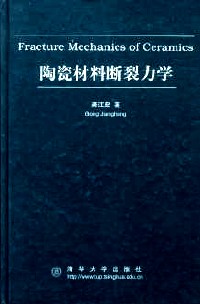
断裂是各类工程材料在设计、生产、使用过程中都必须加以慎重考虑的基本问题。本书主要讨论陶瓷材料的断裂问题,全面介绍适用于陶瓷材料力学行为研究的断裂力学基本理论、测试方法以及陶瓷材料中具体的断裂行为。全书共分六章,前三章重点介绍了与陶瓷材料断裂行为有关的断裂力学理论及测试技术,后三章主要讨论材料的断裂力学行为。内容包括:基本概念、基本理论、断裂韧性测试方法、陶瓷材料的压痕微开裂行为、断裂强度及其统计性质、裂纹缓慢扩展及寿命预测、显微结构对裂纹扩展行为的影响等。
目录
引言 17页
第1章基本概念和基本理论 20页
1.1断裂强度的微裂纹理论 21页
1.1.1固体材料的理论断裂强度 21页
1.1.2Inglis应力集中理论 25页
1.1.3Griffith能量平衡理论 28页
1.1.4Obreimoff实验 32页
1.1.5断裂强度的微裂纹理论 34页
1.2断裂力学参数 35页
1.2.1裂纹系统的机械能释放率 36页
1.2.2裂纹尖端处的应力场强度 38页
1.2.3机械能释放率与应力场强度的等效性 42页
1.2.4裂纹扩展判据 44页
1.3特殊裂纹系统的应力场强度 45页
1.3.1均匀承载裂纹系统 46页
1.3.2非均匀承载裂纹系统 48页
1.3.3表面半椭圆形裂纹系统 49页
1.4含裂纹体的断裂判据 52页
1.5裂纹尖端附近的非线性区 55页
1.5.1Irwin-Orowan非线性裂纹尖端模型 57页
1.5.2Dugdale-Barenblatt裂纹尖端模型 60页
1.6J积分概念 62页
1.7结束语 64页
参考文献 64页
第2章平面应变断裂韧性及其测试 66页
2.1平面应变断裂韧性 66页
2.1.1平面应变与平面应力的比较 67页
2.1.2应力场强度的塑性区修正 70页
2.2断裂韧性常规测试方法 71页
2.2.1单边切口梁技术 72页
2.2.2山形切口技术 74页
2.2.3其他形状切口试样 77页
2.3切口钝化效应 81页
2.4测定断裂韧性的压痕弯曲梁技术 85页
2.4.1Vickers压痕弯曲梁法 86页
2.4.2Knoop压痕弯曲梁法 90页
2.4.3压痕预开裂弯曲梁技术 93页
2.5结束语 95页
参考文献 96页
第3章陶瓷材料压痕断裂力学 99页
3.1压痕裂纹的分类 100页
3.1.1按几何特征分类 100页
3.1.2按压头形状分类 101页
3.2压痕应力场 104页
3.2.1压痕应力场的弹性组元 104页
3.2.2压痕应力场的残余组元 106页
3.2.3压痕裂纹的成核位置 108页
3.3压痕过程中裂纹的成核 111页
3.3.1Lawn-Evans中位裂纹成核模型 111页
3.3.2压痕裂纹成核的位错塞积模型 116页
3.4半饼状压痕裂纹系统的应力场强度 118页
3.4.1压痕裂纹系统应力场强度的点力近似解 118页
3.4.2半饼状裂纹的生长及其平衡条件 122页
3.4.3点力近似解对Knoop裂纹系统的适用性 123页
3.5压痕裂纹尺寸与断裂韧性的关系 127页
3.5.1Evans-Charles方程及其理论修正 127页
3.5.2Niihara方程 131页
3.5.3Lankford经验公式 132页
3.5.4其他经验公式 134页
3.6结束语 138页
参考文献 139页
第4章断裂强度及其统计性质 142页
4.1影响断裂强度的材料参数 143页
4.1.1弹性模量及其对显微结构的依赖性 144页
4.1.2显微结构对断裂表面能的影响 147页
4.1.3裂纹尺寸与显微结构的关系 152页
4.2工艺缺陷及其对外力作用的响应 155页
4.2.1气孔/微裂纹系统 155页
4.2.2夹杂导致的微开裂现象 158页
4.2.3其他工艺缺陷 163页
4.2.4表面接触损伤模型及机加工损伤 164页
4.3弯曲断裂强度测试 169页
4.4断裂强度的统计性质 172页
4.4.1Weibull分布的统计学特征 173页
4.4.2Weibull模数估计值的统计性质 177页
4.4.3断裂强度的体积效应 179页
4.5多重裂纹分布问题 182页
4.5.1并存型裂纹分布 183页
4.5.2排他型裂纹分布 185页
4.5.3部分并存型裂纹分布 186页
4.6结束语 187页
参考文献 189页
第5章裂纹缓慢扩展与延迟破坏 192页
5.1断裂的滞后效应及其研究方法 193页
5.1.1Wiederhorn实验 193页
5.1.2裂纹缓慢扩展v~KⅠ曲线 196页
5.1.3研究裂纹缓慢扩展行为的直接方法 197页
5.1.4研究裂纹缓慢扩展行为的间接方法 200页
5.1.5实验技术的对比分析 204页
5.2室温裂纹缓慢扩展行为 206页
5.2.1应力腐蚀裂纹扩展及其理论分析 206页
5.2.2低应力作用下的裂纹缓慢扩展 211页
5.2.3裂纹缓慢扩展现象的断裂力学分析 215页
5.3高温裂纹缓慢扩展行为 216页
5.3.1高温裂纹缓慢扩展及其对强度的影响 217页
5.3.2低应力作用下的高温延迟断裂 223页
5.3.3寿命预测 226页
5.4陶瓷材料的蠕变断裂 228页
5.4.1蠕变损伤的发育过程 228页
5.4.2蠕变裂纹缓慢扩展机理 231页
5.5循环应力作用下的疲劳断裂 236页
参考文献 239页
第6章显微结构与断裂韧性 244页
6.1裂纹扩展路径与裂纹偏转增韧 245页
6.1.1均匀连续介质中裂纹的扩展路径 245页
6.1.2显微结构对裂纹扩展路径的影响 248页
6.1.3裂纹偏转的断裂力学分析 252页
6.2离散介质主导型断裂行为 255页
6.2.1两个典型的强度实验 255页
6.2.2断裂韧性是一个材料常数吗 262页
6.3裂纹尖端处的屏蔽效应 264页
6.3.1Knehans-Steinbrech实验 264页
6.3.2裂纹面间的晶粒桥接行为 267页
6.3.3裂纹扩展阻力曲线 269页
6.3.4裂纹尖端处的过程区与桥接区 273页
6.4过程区增韧及其理论模型 276页
6.4.1相变增韧的理论模型 278页
6.4.2相变增韧机制的实验研究 280页
6.4.3微裂纹增韧的理论模型 282页
6.5晶须(纤维)增韧及其理论分析 285页
6.5.1晶须(纤维)增韧效果的理论预测 285页
6.5.2晶须增韧原理的实际应用 290页
6.6颗粒桥接增韧---应用实例 293页
6.6.1脆性颗粒导致的裂纹桥接 294页
6.6.2板状粒子增韧 295页
6.6.3延性相对陶瓷基体的增韧作用 295页
6.7结束语 296页
参考文献 297页
Introduction 17页
Chapter 1Conception and Theoretical Background 20页
1.1 M icrocrack Theory forFracture Strength 21页
1.1.1 Theoreticalfracture strength ofsolids 21页
1.1.2 Stressconcentration atcracks 25页
1.1.3 Griffith energy-balance concept 28页
1.1.4 Obreimoff'sexperiment 32页
1.1.5 Microcrack theory forfracture strength 34页
1.2 Fracture M echanics Param eters 35页
1.2.1 Mechanicalenergy release rate foracrack system 36页
1.2.2 Stressfield intensity atcrack tip 38页
1.2.3 Equivalence ofmechanicalenergy release rateand stressfield intensity 42页
1.2.4 Criterion forcrack propagation 44页
1.3 Stress Field Intensity forSpecific Crack System s 45页
1.3.1 Crack systemsin uniform applied loading 46页
1.3.2 Crack systemsin non-uniform applied loading 48页
1.3.3 Surface semi-ellipticalcrack system 49页
1.4 Fracture Criterion 52页
1.5 Non-LinearCrack-Tip Field 55页
1.5.1 Irwin-Orowan model 57页
1.5.2 Dugdale-Barenblattmodel 60页
1.6 J-Integral 62页
1.7 Closing Rem arks 64页
References 64页
Chapter 2 Plane Strain Fracture Toughness 66页
2.1 Plane Strain Fracture Toughness 66页
2.1.1 Plane strain and plane stress 67页
2.1.2 Plastic zone correction forstressfieldintensity 70页
2.2 ConventionalM ethods forM easuring FractureToughness 71页
2.2.1 Single-edge-notched beam method 72页
2.2.2 Techniquesusing chevron-notches 74页
2.2.3 Otherspecimenswith notches 77页
2.3 Notch Blunting Effect 81页
2.4 Indentation Bending M ethods forM easuringFracture Toughness 85页
2.4.1 Vickersindented bending beam method 86页
2.4.2 Knoop indented bending beam method 90页
2.4.3 Indentation-precracked bending beam method 93页
2.5 Closing Rem arks 95页
References 96页
Chapter 3 Indentation Fracture Mechanics of Ceramics 99页
3.1 Categories ofIndentation-Induced Cracks 100页
3.1.1 According to crack geometries 100页
3.1.2 According to indentergeometries 101页
3.2 Stress Field Around the Indentation 104页
3.2.1 Elastic componentofthe stressfield 104页
3.2.2 Residualcomponentofthe stressfield 106页
3.2.3 Locationsforthe nucleation ofdifferentcracks 108页
3.3 Crack Nucleation during Indentation 111页
3.3.1 Lawn-Evansmodelfornucleation ofmediancracks 111页
3.3.2 Dislocation pillup model 116页
3.4 Stress Field Intensity forHalf-Penny Crack SystemIntroduced by Indentation 118页
3.4.1 Solution forstressfield intensity based onpoint-force approximation 118页
3.4.2 Evolution and equilibrium ofa half-pennycrack system 122页
3.4.3 Applicability ofpoint-force approximation toKnoop indentation-induced crack system 123页
3.5 Relation between Length ofIndentation-Induced Crackand Toughness 127页
3.5.1 Evans-Charlesequation 127页
3.5.2 Niihara equation 131页
3.5.3 Lankford'sempiricalequation 132页
3.5.4 Otherempiricalequations 134页
3.6 Closing Rem arks 138页
References 139页
Chapter 4 Fracture Strength and Its Statistical Properties 142页
4.1 M aterialParam eters Relating to Fracture Strength 143页
4.1.1 Elastic modulusand itsmicrostructure-dependence 144页
4.1.2 Effectofmicrostructure on fracturesurface energy 147页
4.1.3 Relation between crack size andmicrostructure 152页
4.2 Processing-Related Flaws and TheirResponse toApplied Stresses 155页
4.2.1 Pore/microcrack system 155页
4.2.2 Microcracking associated with inclusions 158页
4.2.3 Otherkindsofprocessing-related flaws 163页
4.2.4 Modelforsurface contactdamagesandmachining damages 164页
4.3 Bending TestofFracture Strength 169页
4.4 StatisticalProperties ofFracture Strength 172页
4.4.1 StatisticalfeaturesofW eibulldistribution 173页
4.4.2 Statisticalpropertiesofthe estimatedW eibullparameters 177页
4.4.3 Volume effectin fracture strength 179页
4.5 M ultiple Flaws Distributions 182页
4.5.1 Concurrentflaw distribution 183页
4.5.2 Exclusive flaw distribution 185页
4.5.3 Partially concurrentflaw distributions 186页
4.6 Closing Rem arks 187页
References 189页
Chapter 5 Slow Crack Growth and Delayed Failure 192页
5.1 Approaches to Study Delayed Failure 193页
5.1.1 W iederhorn'sexperiments 193页
5.1.2 v~ KⅠcurvesforslow crack growth 196页
5.1.3 Directmethod to study SCG 197页
5.1.4 Indirectmethod to study SCG 200页
5.1.5 Comparisonsbetween differentexperimentalmethods 204页
5.2 SCG BehavioratRoom Tem perature 206页
5.2.1 Stresscorrosion crack growth 206页
5.2.2 Slow crack growth in low load region 211页
5.2.3 Fracture mechanicsanalysisforSCG 215页
5.3 SCG BehavioratHigh Tem peratures 216页
5.3.1 EffectofSCG on strength athightemperatures 217页
5.3.2 High-temperature SCG in low load region 223页
5.3.3 Lifetime prediction 226页
5.4 Creep Rupture ofCeram ics 228页
5.4.1 Evolution ofcreep damages 228页
5.4.2 Mechanismsforcrack growth due to creep 231页
5.5 Fatigue and Failure underCyclic Loading 236页
References 239页
Chapter 6 Microstructure and Fracture Toughness 244页
6.1 Crack Paths and Toughening due to Crack Deflection 245页
6.1.1 Crack path in an isotropic homogenoussolid 245页
6.1.2 Effectofmicrostructure on crack path 248页
6.1.3 Fracture mechanicsanalysisforcrackdeflection 252页
6.2 Discrete to Continuum Behavior 255页
6.2.1 Two typicalstrength experiments 255页
6.2.2 Isfracture toughnessa constant 262页
6.3 Shielding Effects Around the Crack Tips 264页
6.3.1 Knehans-Steinbrech experiment 264页
6.3.2 Grain-bridging behind crack tip 267页
6.3.3 R Curves 269页
6.3.4 Processzone and bridging zone aroundcrack tips 273页
6.4 Process Zone Toughening 276页
6.4.1 Theoreticalmodelfortransformationtoughening 278页
6.4.2 Experimentalstudieson transformationtoughening 280页
6.4.3 Theoreticalmodelformicrocrackingtoughening 282页
6.5 Fiber/W hiskerToughening 285页
6.5.1 Theoreticalprediction forthe tougheningdue to fiber/whisker 285页
6.5.2 Applicationsofwhiskertoughening 290页
6.6 Toughening due to Particle Bridging:Exam ples 293页
6.6.1 Crack bridging assiciated with brittleparticles 294页
6.6.2 Toughening using platelets 295页
6.6.3 Toughening ceramic matrix byductile phases 295页
6.7 Closing Rem arks 296页
References 297页
第1章基本概念和基本理论 20页
1.1断裂强度的微裂纹理论 21页
1.1.1固体材料的理论断裂强度 21页
1.1.2Inglis应力集中理论 25页
1.1.3Griffith能量平衡理论 28页
1.1.4Obreimoff实验 32页
1.1.5断裂强度的微裂纹理论 34页
1.2断裂力学参数 35页
1.2.1裂纹系统的机械能释放率 36页
1.2.2裂纹尖端处的应力场强度 38页
1.2.3机械能释放率与应力场强度的等效性 42页
1.2.4裂纹扩展判据 44页
1.3特殊裂纹系统的应力场强度 45页
1.3.1均匀承载裂纹系统 46页
1.3.2非均匀承载裂纹系统 48页
1.3.3表面半椭圆形裂纹系统 49页
1.4含裂纹体的断裂判据 52页
1.5裂纹尖端附近的非线性区 55页
1.5.1Irwin-Orowan非线性裂纹尖端模型 57页
1.5.2Dugdale-Barenblatt裂纹尖端模型 60页
1.6J积分概念 62页
1.7结束语 64页
参考文献 64页
第2章平面应变断裂韧性及其测试 66页
2.1平面应变断裂韧性 66页
2.1.1平面应变与平面应力的比较 67页
2.1.2应力场强度的塑性区修正 70页
2.2断裂韧性常规测试方法 71页
2.2.1单边切口梁技术 72页
2.2.2山形切口技术 74页
2.2.3其他形状切口试样 77页
2.3切口钝化效应 81页
2.4测定断裂韧性的压痕弯曲梁技术 85页
2.4.1Vickers压痕弯曲梁法 86页
2.4.2Knoop压痕弯曲梁法 90页
2.4.3压痕预开裂弯曲梁技术 93页
2.5结束语 95页
参考文献 96页
第3章陶瓷材料压痕断裂力学 99页
3.1压痕裂纹的分类 100页
3.1.1按几何特征分类 100页
3.1.2按压头形状分类 101页
3.2压痕应力场 104页
3.2.1压痕应力场的弹性组元 104页
3.2.2压痕应力场的残余组元 106页
3.2.3压痕裂纹的成核位置 108页
3.3压痕过程中裂纹的成核 111页
3.3.1Lawn-Evans中位裂纹成核模型 111页
3.3.2压痕裂纹成核的位错塞积模型 116页
3.4半饼状压痕裂纹系统的应力场强度 118页
3.4.1压痕裂纹系统应力场强度的点力近似解 118页
3.4.2半饼状裂纹的生长及其平衡条件 122页
3.4.3点力近似解对Knoop裂纹系统的适用性 123页
3.5压痕裂纹尺寸与断裂韧性的关系 127页
3.5.1Evans-Charles方程及其理论修正 127页
3.5.2Niihara方程 131页
3.5.3Lankford经验公式 132页
3.5.4其他经验公式 134页
3.6结束语 138页
参考文献 139页
第4章断裂强度及其统计性质 142页
4.1影响断裂强度的材料参数 143页
4.1.1弹性模量及其对显微结构的依赖性 144页
4.1.2显微结构对断裂表面能的影响 147页
4.1.3裂纹尺寸与显微结构的关系 152页
4.2工艺缺陷及其对外力作用的响应 155页
4.2.1气孔/微裂纹系统 155页
4.2.2夹杂导致的微开裂现象 158页
4.2.3其他工艺缺陷 163页
4.2.4表面接触损伤模型及机加工损伤 164页
4.3弯曲断裂强度测试 169页
4.4断裂强度的统计性质 172页
4.4.1Weibull分布的统计学特征 173页
4.4.2Weibull模数估计值的统计性质 177页
4.4.3断裂强度的体积效应 179页
4.5多重裂纹分布问题 182页
4.5.1并存型裂纹分布 183页
4.5.2排他型裂纹分布 185页
4.5.3部分并存型裂纹分布 186页
4.6结束语 187页
参考文献 189页
第5章裂纹缓慢扩展与延迟破坏 192页
5.1断裂的滞后效应及其研究方法 193页
5.1.1Wiederhorn实验 193页
5.1.2裂纹缓慢扩展v~KⅠ曲线 196页
5.1.3研究裂纹缓慢扩展行为的直接方法 197页
5.1.4研究裂纹缓慢扩展行为的间接方法 200页
5.1.5实验技术的对比分析 204页
5.2室温裂纹缓慢扩展行为 206页
5.2.1应力腐蚀裂纹扩展及其理论分析 206页
5.2.2低应力作用下的裂纹缓慢扩展 211页
5.2.3裂纹缓慢扩展现象的断裂力学分析 215页
5.3高温裂纹缓慢扩展行为 216页
5.3.1高温裂纹缓慢扩展及其对强度的影响 217页
5.3.2低应力作用下的高温延迟断裂 223页
5.3.3寿命预测 226页
5.4陶瓷材料的蠕变断裂 228页
5.4.1蠕变损伤的发育过程 228页
5.4.2蠕变裂纹缓慢扩展机理 231页
5.5循环应力作用下的疲劳断裂 236页
参考文献 239页
第6章显微结构与断裂韧性 244页
6.1裂纹扩展路径与裂纹偏转增韧 245页
6.1.1均匀连续介质中裂纹的扩展路径 245页
6.1.2显微结构对裂纹扩展路径的影响 248页
6.1.3裂纹偏转的断裂力学分析 252页
6.2离散介质主导型断裂行为 255页
6.2.1两个典型的强度实验 255页
6.2.2断裂韧性是一个材料常数吗 262页
6.3裂纹尖端处的屏蔽效应 264页
6.3.1Knehans-Steinbrech实验 264页
6.3.2裂纹面间的晶粒桥接行为 267页
6.3.3裂纹扩展阻力曲线 269页
6.3.4裂纹尖端处的过程区与桥接区 273页
6.4过程区增韧及其理论模型 276页
6.4.1相变增韧的理论模型 278页
6.4.2相变增韧机制的实验研究 280页
6.4.3微裂纹增韧的理论模型 282页
6.5晶须(纤维)增韧及其理论分析 285页
6.5.1晶须(纤维)增韧效果的理论预测 285页
6.5.2晶须增韧原理的实际应用 290页
6.6颗粒桥接增韧---应用实例 293页
6.6.1脆性颗粒导致的裂纹桥接 294页
6.6.2板状粒子增韧 295页
6.6.3延性相对陶瓷基体的增韧作用 295页
6.7结束语 296页
参考文献 297页
Introduction 17页
Chapter 1Conception and Theoretical Background 20页
1.1 M icrocrack Theory forFracture Strength 21页
1.1.1 Theoreticalfracture strength ofsolids 21页
1.1.2 Stressconcentration atcracks 25页
1.1.3 Griffith energy-balance concept 28页
1.1.4 Obreimoff'sexperiment 32页
1.1.5 Microcrack theory forfracture strength 34页
1.2 Fracture M echanics Param eters 35页
1.2.1 Mechanicalenergy release rate foracrack system 36页
1.2.2 Stressfield intensity atcrack tip 38页
1.2.3 Equivalence ofmechanicalenergy release rateand stressfield intensity 42页
1.2.4 Criterion forcrack propagation 44页
1.3 Stress Field Intensity forSpecific Crack System s 45页
1.3.1 Crack systemsin uniform applied loading 46页
1.3.2 Crack systemsin non-uniform applied loading 48页
1.3.3 Surface semi-ellipticalcrack system 49页
1.4 Fracture Criterion 52页
1.5 Non-LinearCrack-Tip Field 55页
1.5.1 Irwin-Orowan model 57页
1.5.2 Dugdale-Barenblattmodel 60页
1.6 J-Integral 62页
1.7 Closing Rem arks 64页
References 64页
Chapter 2 Plane Strain Fracture Toughness 66页
2.1 Plane Strain Fracture Toughness 66页
2.1.1 Plane strain and plane stress 67页
2.1.2 Plastic zone correction forstressfieldintensity 70页
2.2 ConventionalM ethods forM easuring FractureToughness 71页
2.2.1 Single-edge-notched beam method 72页
2.2.2 Techniquesusing chevron-notches 74页
2.2.3 Otherspecimenswith notches 77页
2.3 Notch Blunting Effect 81页
2.4 Indentation Bending M ethods forM easuringFracture Toughness 85页
2.4.1 Vickersindented bending beam method 86页
2.4.2 Knoop indented bending beam method 90页
2.4.3 Indentation-precracked bending beam method 93页
2.5 Closing Rem arks 95页
References 96页
Chapter 3 Indentation Fracture Mechanics of Ceramics 99页
3.1 Categories ofIndentation-Induced Cracks 100页
3.1.1 According to crack geometries 100页
3.1.2 According to indentergeometries 101页
3.2 Stress Field Around the Indentation 104页
3.2.1 Elastic componentofthe stressfield 104页
3.2.2 Residualcomponentofthe stressfield 106页
3.2.3 Locationsforthe nucleation ofdifferentcracks 108页
3.3 Crack Nucleation during Indentation 111页
3.3.1 Lawn-Evansmodelfornucleation ofmediancracks 111页
3.3.2 Dislocation pillup model 116页
3.4 Stress Field Intensity forHalf-Penny Crack SystemIntroduced by Indentation 118页
3.4.1 Solution forstressfield intensity based onpoint-force approximation 118页
3.4.2 Evolution and equilibrium ofa half-pennycrack system 122页
3.4.3 Applicability ofpoint-force approximation toKnoop indentation-induced crack system 123页
3.5 Relation between Length ofIndentation-Induced Crackand Toughness 127页
3.5.1 Evans-Charlesequation 127页
3.5.2 Niihara equation 131页
3.5.3 Lankford'sempiricalequation 132页
3.5.4 Otherempiricalequations 134页
3.6 Closing Rem arks 138页
References 139页
Chapter 4 Fracture Strength and Its Statistical Properties 142页
4.1 M aterialParam eters Relating to Fracture Strength 143页
4.1.1 Elastic modulusand itsmicrostructure-dependence 144页
4.1.2 Effectofmicrostructure on fracturesurface energy 147页
4.1.3 Relation between crack size andmicrostructure 152页
4.2 Processing-Related Flaws and TheirResponse toApplied Stresses 155页
4.2.1 Pore/microcrack system 155页
4.2.2 Microcracking associated with inclusions 158页
4.2.3 Otherkindsofprocessing-related flaws 163页
4.2.4 Modelforsurface contactdamagesandmachining damages 164页
4.3 Bending TestofFracture Strength 169页
4.4 StatisticalProperties ofFracture Strength 172页
4.4.1 StatisticalfeaturesofW eibulldistribution 173页
4.4.2 Statisticalpropertiesofthe estimatedW eibullparameters 177页
4.4.3 Volume effectin fracture strength 179页
4.5 M ultiple Flaws Distributions 182页
4.5.1 Concurrentflaw distribution 183页
4.5.2 Exclusive flaw distribution 185页
4.5.3 Partially concurrentflaw distributions 186页
4.6 Closing Rem arks 187页
References 189页
Chapter 5 Slow Crack Growth and Delayed Failure 192页
5.1 Approaches to Study Delayed Failure 193页
5.1.1 W iederhorn'sexperiments 193页
5.1.2 v~ KⅠcurvesforslow crack growth 196页
5.1.3 Directmethod to study SCG 197页
5.1.4 Indirectmethod to study SCG 200页
5.1.5 Comparisonsbetween differentexperimentalmethods 204页
5.2 SCG BehavioratRoom Tem perature 206页
5.2.1 Stresscorrosion crack growth 206页
5.2.2 Slow crack growth in low load region 211页
5.2.3 Fracture mechanicsanalysisforSCG 215页
5.3 SCG BehavioratHigh Tem peratures 216页
5.3.1 EffectofSCG on strength athightemperatures 217页
5.3.2 High-temperature SCG in low load region 223页
5.3.3 Lifetime prediction 226页
5.4 Creep Rupture ofCeram ics 228页
5.4.1 Evolution ofcreep damages 228页
5.4.2 Mechanismsforcrack growth due to creep 231页
5.5 Fatigue and Failure underCyclic Loading 236页
References 239页
Chapter 6 Microstructure and Fracture Toughness 244页
6.1 Crack Paths and Toughening due to Crack Deflection 245页
6.1.1 Crack path in an isotropic homogenoussolid 245页
6.1.2 Effectofmicrostructure on crack path 248页
6.1.3 Fracture mechanicsanalysisforcrackdeflection 252页
6.2 Discrete to Continuum Behavior 255页
6.2.1 Two typicalstrength experiments 255页
6.2.2 Isfracture toughnessa constant 262页
6.3 Shielding Effects Around the Crack Tips 264页
6.3.1 Knehans-Steinbrech experiment 264页
6.3.2 Grain-bridging behind crack tip 267页
6.3.3 R Curves 269页
6.3.4 Processzone and bridging zone aroundcrack tips 273页
6.4 Process Zone Toughening 276页
6.4.1 Theoreticalmodelfortransformationtoughening 278页
6.4.2 Experimentalstudieson transformationtoughening 280页
6.4.3 Theoreticalmodelformicrocrackingtoughening 282页
6.5 Fiber/W hiskerToughening 285页
6.5.1 Theoreticalprediction forthe tougheningdue to fiber/whisker 285页
6.5.2 Applicationsofwhiskertoughening 290页
6.6 Toughening due to Particle Bridging:Exam ples 293页
6.6.1 Crack bridging assiciated with brittleparticles 294页
6.6.2 Toughening using platelets 295页
6.6.3 Toughening ceramic matrix byductile phases 295页
6.7 Closing Rem arks 296页
References 297页
Fracture Mechanics of Ceramics
- 名称
- 类型
- 大小
光盘服务联系方式: 020-38250260 客服QQ:4006604884
云图客服:
用户发送的提问,这种方式就需要有位在线客服来回答用户的问题,这种 就属于对话式的,问题是这种提问是否需要用户登录才能提问
Video Player
×
Audio Player
×
pdf Player
×
