

简介
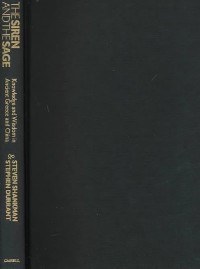
A comparative study of what the most influential writers of Ancient Greece and China thought it meant to have knowledge and whether they distinguished knowledge from other forms of wisdom. It surveys selected works of poetry, history and philosophy from the period of roughly the eighth through to the second century BCE, including Homer's "Odyssey," the ancient Chinese "Classic of Poetry," Thucydides' "History of the Peloponnesian War," Sima Qian's "Records of the Historian," Plato's "Symposium," and Laozi's "Dao de Jing and the writings of Zhuangzi." The intention, through such juxtaposition, is to introduce the foundational texts of each tradition which continue to influence the majority of the world's population.
目录
Acknowledgments p. vii
Introduction p. 1
Preamble p. 1
Previous comparative studies of ancient Greece and China p. 4
The sage p. 8
The siren p. 12
Intimations of intentionality: the Classic of Poetry and the Odyssey p. 19
Poetry and the experience of participation p. 24
Participation in family and in society p. 25
China p. 25
Greece p. 33
Intentionality and personal responsibility p. 35
Fathers: Odysseus' testing of Laertes p. 35
Mothers: Antikleia and Odysseus in the underworld p. 45
Participation in the natural world p. 48
Nature and nature imagery in the Classic of Poetry p. 49
A simile from the Odyssey and Classic of Poetry 23: views of nature p. 60
Nature and nature imagery in the Odyssey: between meadows p. 61
Nature and the feminine: the Odyssey p. 64
Nature and the feminine: the Classic of Poetry p. 66
Summary and conclusion p. 69
Before and after philosophy: Thucydides and Sima Qian p. 79
History and tradition p. 81
Sima Qian and his predecessors p. 81
Homer, Herodotus, and Thucydides p. 91
The structures of written history p. 101
Records of the Historian p. 101
The tragic structure of Thucydides' report p. 110
The tempest of participation: Sima Qian's portrayal of his own era p. 116
Thucydides' tragic quest for objectivity and the historian's irrepressible "I" p. 137
Summary and conclusion p. 145
The philosopher, the sage, and the experience of participation p. 157
Contexts for the emergence of the sage and the philosopher p. 159
The emergence of the sage p. 159
The emergence of the philosopher p. 164
From poetry to philosophy p. 170
Confucius and the Classic of Poetry p. 170
The reduction of poetry to depicting the "ten thousand things" and Plato's critique p. 175
The sage, the philosopher, and the recovery of the participatory dimension p. 178
Confucius and participation in society p. 178
Laozi's return to the Dao p. 183
Zhuangzi's participationist response to Huizi's intentionalism p. 189
Plato's Symposium, Euripides' Bacchae, and noetic participation p. 193
Summary and conclusion p. 212
Afterwords p. 225
Bibliography p. 234
Index p. 249
Introduction p. 1
Preamble p. 1
Previous comparative studies of ancient Greece and China p. 4
The sage p. 8
The siren p. 12
Intimations of intentionality: the Classic of Poetry and the Odyssey p. 19
Poetry and the experience of participation p. 24
Participation in family and in society p. 25
China p. 25
Greece p. 33
Intentionality and personal responsibility p. 35
Fathers: Odysseus' testing of Laertes p. 35
Mothers: Antikleia and Odysseus in the underworld p. 45
Participation in the natural world p. 48
Nature and nature imagery in the Classic of Poetry p. 49
A simile from the Odyssey and Classic of Poetry 23: views of nature p. 60
Nature and nature imagery in the Odyssey: between meadows p. 61
Nature and the feminine: the Odyssey p. 64
Nature and the feminine: the Classic of Poetry p. 66
Summary and conclusion p. 69
Before and after philosophy: Thucydides and Sima Qian p. 79
History and tradition p. 81
Sima Qian and his predecessors p. 81
Homer, Herodotus, and Thucydides p. 91
The structures of written history p. 101
Records of the Historian p. 101
The tragic structure of Thucydides' report p. 110
The tempest of participation: Sima Qian's portrayal of his own era p. 116
Thucydides' tragic quest for objectivity and the historian's irrepressible "I" p. 137
Summary and conclusion p. 145
The philosopher, the sage, and the experience of participation p. 157
Contexts for the emergence of the sage and the philosopher p. 159
The emergence of the sage p. 159
The emergence of the philosopher p. 164
From poetry to philosophy p. 170
Confucius and the Classic of Poetry p. 170
The reduction of poetry to depicting the "ten thousand things" and Plato's critique p. 175
The sage, the philosopher, and the recovery of the participatory dimension p. 178
Confucius and participation in society p. 178
Laozi's return to the Dao p. 183
Zhuangzi's participationist response to Huizi's intentionalism p. 189
Plato's Symposium, Euripides' Bacchae, and noetic participation p. 193
Summary and conclusion p. 212
Afterwords p. 225
Bibliography p. 234
Index p. 249
- 名称
- 类型
- 大小
光盘服务联系方式: 020-38250260 客服QQ:4006604884
云图客服:
用户发送的提问,这种方式就需要有位在线客服来回答用户的问题,这种 就属于对话式的,问题是这种提问是否需要用户登录才能提问
Video Player
×
Audio Player
×
pdf Player
×
