

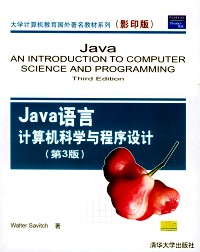
简介
《Java语言:计算机科学与程序设计》是由著名作者Walter Savitch编写的,主要介绍了Java 程序设计,对Java语言的主要特点和应用编程进行了全面讲述。《Java语言:计算机科学与程序设计》最显著的特点是,作者采用通俗易懂的方式,结合Java语方,介绍了各种基本编程技术,阐述了面向对象编程技术与计算机科学的各种概念。《Java语言:计算机科学与程序设计》每章后附本章小结,并提供了测试题和答案、编程项止练习,以帮助学生对所学知识的掌握,提高学生的实际编程能力。《Java语言:计算机科学与程序设计》配套光盘包含了范例程序代码和相应软件。
《Java语言:计算机科学与程序设计》可作为计算机科学及相关专业的Java程序设计教材,也是Java开发人员的很好参考书。
目录
chapter 1 introduction to computers and java 3
objectives 4
prerequisites 4
1.1 computer basics 4
hardware and memory 5
programs 7
programming languages and compilers 8
java byte-code 9
linking 12
1.2 designing programs 12
object-oriented programming 13
encapsulation 14
polymorphism 15
inheritance 16
if you know some other programming language 17
ngorithms 17
reusable components 18
testing and debugging 18
6otcha: coping with "gotchas" 19
6otcha: hidden errors 20
.1.3 a sip of java 20
history of the java language 20
applets 21
a first java application program 22
compiling a java program or class 28
running a java program 29
preview examples of applets (optional) 30
chapter summary 33
answers to self-test questions 34
programming projects 36
chapter 2 primitive types, strings, and console i/o 39
objectives 40
prerequisites 40
2.1 primitive types and expressions 40
variables 41
java identifiers 44
6otcha: java is case-sensitive 46
primitive types 46
assignment statements 47
specialized assignment operators 49
simple input and output 49
number constants 51
assignment compatibilities 52
type casting 53
java tip: type casting a character to an integer 55
programming tip: initialize variables 56
gotcha: imprecision in floating-point numbers 57
arithmetic operators 58
parentheses and precedence rules 60
case study: vending machine change 62
increment and decrement operators 66
more about the increment and decrement operators 67
2.2 the class string 68
string constants and variables 68
concatenation of strings 69
classes 70
string methods 71
string processing 75
escape characters 75
the unicode character set 77
2.3 keyboard and screen i/o 79
screen output 79
input using savitchin 82
more input methods 85
gotcha: readint and readdoub3 e 86
programming tip: echo input 87
2.4 documentation and style 88
programming tip: use meaningful names for variables 88
documentation and comments 89
indenting 90
named constants 92
chapter summary 95
answers to self-test questions 96
programming projects 99
chapter 3 flow of control 103
objectives 104
prerequisites 104
3.1 branching statements 104
the if-else statement 104
introduction to boolean expressions 108
gotcha: using==with strings 111
programming tip: alphabetical order 113
nested statements and compound statements 115
java tip: matching else and if 117
multibranch if-el se statements 118
programming example: assigning letter grades 119
the switch statement 122
gotcha: omitting a break statement 126
the conditional operator (optional) 126
3.2 java loop statements 128
while statements 129
java tip: a while loop can perform zero iterations 133
the do-while statement 133
programming example: bug infestation 137
gotcha: infinite loops 139
the for statement 141
the camma in for statements (optional)145
gotcha: extra semicolon in a loop statement 146
java tip: choosing a loop statement 148
the break statement in loops 148
gotcha: misuse of break statements 150
the exit method 150
3.3 programming with loops 152
the loop body 152
initializing statements 154
ending a loop 155
programming example: nested loops 156
programming tip: avoid declaring variables in a loop body 157
loop bugs 157
tracing variables 161
3.4 the type boolean 162
boolean expressions and boolean variables 163
programming tip: naming boolean variables 164
precedence rules 165
input and output of boolean values 168
case study: using a boolean variable to end a loop 168
chapter summary 172
answers to self-test questions 172
programming projects 177
chapter 4 defining classes and methods 181
objectives 182
prerequisites 182
4.1 class and method definitions 182
class files and separate compilation 184
instance variables 185
using methods 168
void method definitions 191
methods that return a value 193
java tip: use of return in void methods 196
the this parameter 198
local variables 200
blocks 202
gotcha:variables declared in a block 202
java tip: declaring variables in a for statement 203
parameters of a primitive type 203
gotcha: use of the terms parameter and argument 209
summary of class and method definition syntax 209
4.2 information hiding and encapsulation 210
information hiding 210
programming tip: parameter names are local to the method 211
precondition and postcondition comments 211
java tip: assertion checks 212
the publ i c and private modifiers 214
programming tip: instance variables should be private 217
programming example: a purchase class 221
encapsulation 225
automatic documentation with javadoc 228
uml class diagrams 228
4.3 objects and reference 230
variables of a class type and objects 230
gotcha: use of = and == with variables of a class type 235
java tip: define an equal s method for your classes 235
programming example: a species class 239
boolean-valued methods 242
class parameters 244
comparing class parameters and primitive-type parameters 247
chapter summary 251
answers to self-test questions 251
programming projects 257
chapter 5 more about objects and methods 261
objectives 262
prerequisites 262
5.1 programming with methods 263
methods calling methods 263
programming tip: make helping methods private 268
java tip: make the compiler happy 268
gotcha: null pointer exception 269
5.2 static methods and static variables 271
static methods 271
gotcha: invoking a nonstatic method within a static method 273
java tip: you can put a main in any class 275
static variables (optional) 277
the math class 279
integer, double, and other wrapper classes 282
5.3 designing methods 286
case study: formatting output 287
top-down design 291
testing methods 293
5.4 overloading 295
overloading basics 295
programming example: a pet class 298
gotcha: overloading and automatic type conversion 298
gotcha: you cannot overload on the basis of the returned type 303
programming example: a class for money 305
5.5 constructors 312
defining constructors 312
programming tip: you can use other methods in a constructor 320
gotcha: omitting the default constructor 321
gotcha: many wrapper classes have no default constructor 321
5.6 information hiding revisited 322
gotcha: privacy leaks 322
5.7 packages 326
packages and importing 326
package names and directodes 326
gotcha: not including the current directory in your class path 329
name clashes 330
chapter summary 331
answers to self-test questions 332
programming projects 337
chapter 6 arrays 341
objectives 342
prerequisites 342
6.1 array basics 343
creating and accessing arrays 343
array details 344
programming tip: use singular array names 348
the length instance variable 349
java tip: array indices start with zero 349
programming tip: use a for loop to step through an array 351
gotcha: array index out of bounds 351
initializing arrays 352
6.2 arrays in classes and methods 354
case study: sales report 354
indexed vadablas as method arguments 361
entire arrays as method arguments 364
arguments for the method mai n 364
gotcha: use of = and == with arrays 366
methods that return arrays 369
6.3 progrannning with arrays and classes 372
programming example: a specialized list class 373
partially filled arrays 380
searching an array 380
gotcha: returning an array instance variable 381
6.4 sorting arrays 383
selection sort 383
other sorting algorithms 388
6.5 multidimensional arrays 388
multidimensional-array basics 390
multidimensional-array parameters and returned values 392
implementation of multidimensional arrays 394
bagged arrays (opuonal) 397
programming example: employee time records 398
chapter summary 404
answers to self-test questions 405
programming projects 410
chapter 7 inheritance 415
objectives 416
prerequisites 416
7.1 inheritance basics 416
programming example: a person class 417
derived classes 418
overriding method definitions 421
overriding versus overloading 422
the final modifier 422
gotcha: use of private instance variables from the base class 423
programming tip: assume that your coworkers are malicious 424
gotcha: private methods are not inherited 424
uml inheritance diagrams 424
7.2 programming with inheritance 427
constructors in derived classes 427
the this method (opuonal)428
call to an overridden method 429
programming example: multilevel derived classes 430
a subtle point about overloading and overriding (optional) 435
java tip: you cannot use multiple supers 435
programming tip: an object can have more than one type 436
programming tip: "is a" and "has a" relations 439
the class object 440
case study: character graphics 442
abstract classes 452
interlaces (optional) 456
7.3 dynamic binding and polymorphism 458
dynamic binding 458
type checking and dynamic binding 460
dynamic binding with tostring 451
polymorphism 462
java tip: a better equal s method (optional)463
chapter summary 465
answers to self-test questions 466
programming projects 471
chapter 8 exception handling 475
objectives 476
prerequisites 476
8.1 basic exception handling 477
exceptions in java 477
predefined exception classes 489
arrayindexoutofboundsexception (alternative ordering) 490
8.2 defining exception classes 491
defining your own exception classes 491
java tip: preserve getmessage when you define exception classes 496
programming tip: when to define an exception class 497
8.3 using exception classes 502
declaring exceptions (passing the buck) 502
exceptions that de not need to be caught 506
the assertion error class (optional) 507
multiple throws and catches 507
java tip: catch the more specific exception first 510
programming tip: exception handling and information hiding 511
gotcha: overuse of exceptions 513
programming tip: when to throw an exception 513
gotcha: nested try-catch blocks 515
the finally block (optional)515
rethrowing an exception (optional) 516
case study' a line-oriented calculator 517
chapter summary 531
answers to self-test questions 532
programming projects 536
chapter 9 streams and file i/o 541
objectives 542
prerequisites 542
9.1 an overview of streams and file i/o 543
the concept of a stream 543
why use files for i/o? 543
differences between text files and binary files 543
9.2 text-file i/o 545
text-file output with printwriter 545
gotcha: a try block is a block 550
gotcha: overwriting a file 551
java tip: appending to a text file 551
java tip: use tostring for text-file output 553
text-file input with bufferedreader 556
programming example: reading a file name from the keyboard 560
java tip: using path names 562
the stringtokeni zer class 563
java tip: testing for the end of a text file 565
the classes filereader and fileoutputstream 567
unwrapping the class savi tchin 569
9.3 the file class 570
using the file class 570
9.4 basic binary-file i/o 573
output to binary files, using objectoutputstream 574
some details about writeutf (optional)579
reading input from a binary file, using objectinputstream 580
gotcha: using objectinputstream with a text file 584
gotcha: defining a method to open a stream 585
the eofexcepti on class 586
gotcha: forgetting to check for the end of a file 588
gotcha: checking for the end of a file in the wrong way 589
the classes fi i einputst ream and file0utputstream 589
programming example: processing a file of binary data 590
9.5 object i/o with object streams 594
binary i/0 of class objects 594
gotcha: exceptions, exceptions, exceptions 599
the serializable interface 599
gotcha: mixing class types in the same file 599
array objects in binary files 600
chapter summary 602
answers to self-test questions 603
programming projects 608
chapter 10 dynamic data structures 611
objectives 612
prerequisites 612
10.1 vectors 613
using vectors 613
programming tip: adding to a vector 619
gotcha: vector elements are of type object 620
comparing vectors and arrays 622
gotcha: using capacity instead of size 622
java tip: use trimtosize to save memory 624
gotcha: using the method clone 625
java tip: newer collection classes (optional)626
10.2 linked data structures 627
linked lists 627
gotcha: null pointer exception 636
gotcha: privacy leaks 637
inner classes 638
node inner classes 639
iterators 639
programming tip: internal and external iterators 652
exception handling with linked lists 652
variations on a linked list 656
other linked data structures 658
chapter summary 658
answers to self-test questions 659
programming projects 665
chapter 11 recursion 669
objectives 670
prerequisites 670
11.1 the basics of recursion 670
case study: digits to words 671
how recursion works 675
gotcha: infinite recursion 679
recursive versus iterative definitions 682
recursive methods that return a value 682
11.2 programming with recursion 687
programming tip: ask until the user gets it right 687
case study: binary search 689
programming tip: generalize the problem 693
programming example: merge sort--a recursive sorting method 697
chapter summary 702
answers to self-test questions 702
programming projects 705
chapter 12 window interfaces using swing 709
objectives 710
prerequisites 710
12.1 background 711
guis---graphical user interfaces 711
event-driven programming 711
12.2 basic swing details 713
gotcha: save all your work before running a swing program 714
programming example: a simple window 714
java tip: ending a swing program 719
gotcha: forgetting to program the close-window button 720
gotcha: forgetting to use getcontentpane 720
more about window listeners 720
size units for screen objects 722
more on setvisible 723
programming example: a better version of our first swing program 725
programming example: a window with color 728
some methods of the class jframe 732
layout managers 735
12.3 buttons and action listeners 742
programming example: adding buttons 742
buttons 744
action listeners and action events 746
gotcha: changing the parameter list for actionperformed 750
interfaces 751
java tip: code a gui's look and actions separately 752
the model-view--controller pattern 753
java tip: use the method setactioncommand 753
12.4 container classes 756
the jpanel class 756
the eontainer class 759
java tip: guide for creating simple window interfaces 762
12.5 text i/o for guis 764
text areas and text fields 764
programming example: labeling a text field 770
inputting and outputting numbers 772
programming example: a gui adding machine 775
catching a numberformatexcepti on 779
chapter summary 782
answers to self-test questions 783
programming projects 791
chapter 13 applets and html 795
objectives 796
prerequisites 796
13.1 applets 797
applet basics 797
running an applet 800
programming example: an adder applet 800
java tip: converting a swing application to an applet 803
adding icons to an applet 803
13.2 introduction to html 806
html basics 806
programming tip: a simple html-document outline 808
inserting hyperlinks 808
gotcha: not using your reload (refresh) button 812
chapter summary 886
answers to self-test questions 886
programming projects 890
appendix 1 keywords 892
appendix 2 precedence rules 893
appendix 3 unicode character set 894
appendix 4 savitchin 895
appendix 5 protected and package modifiers 908
appendix 6 the decimal format class 909
percent notation 909
scientific notation (e-notation) 911
appendix 7 the iterator interface 912
appendix 8 cloning 913
appendix 9 javadoc 916
commenting classes for use with javadoc 916
running javadoc 917
appendix 10 the joptionpane class 918
a sample program using joptionpane 918
multiline output windows 923
appendix 11 differences between c++ and java 924
primitive types 924
strings 924
flow of control 924
testing for equality 925
main method (function) and other methods 925
files and including files 925
class and method (function) definitions 925
no pointers in java 925
method (function) parameters 926
arrays 926
garbage collection 926
other comparisons 926
index 927
objectives 4
prerequisites 4
1.1 computer basics 4
hardware and memory 5
programs 7
programming languages and compilers 8
java byte-code 9
linking 12
1.2 designing programs 12
object-oriented programming 13
encapsulation 14
polymorphism 15
inheritance 16
if you know some other programming language 17
ngorithms 17
reusable components 18
testing and debugging 18
6otcha: coping with "gotchas" 19
6otcha: hidden errors 20
.1.3 a sip of java 20
history of the java language 20
applets 21
a first java application program 22
compiling a java program or class 28
running a java program 29
preview examples of applets (optional) 30
chapter summary 33
answers to self-test questions 34
programming projects 36
chapter 2 primitive types, strings, and console i/o 39
objectives 40
prerequisites 40
2.1 primitive types and expressions 40
variables 41
java identifiers 44
6otcha: java is case-sensitive 46
primitive types 46
assignment statements 47
specialized assignment operators 49
simple input and output 49
number constants 51
assignment compatibilities 52
type casting 53
java tip: type casting a character to an integer 55
programming tip: initialize variables 56
gotcha: imprecision in floating-point numbers 57
arithmetic operators 58
parentheses and precedence rules 60
case study: vending machine change 62
increment and decrement operators 66
more about the increment and decrement operators 67
2.2 the class string 68
string constants and variables 68
concatenation of strings 69
classes 70
string methods 71
string processing 75
escape characters 75
the unicode character set 77
2.3 keyboard and screen i/o 79
screen output 79
input using savitchin 82
more input methods 85
gotcha: readint and readdoub3 e 86
programming tip: echo input 87
2.4 documentation and style 88
programming tip: use meaningful names for variables 88
documentation and comments 89
indenting 90
named constants 92
chapter summary 95
answers to self-test questions 96
programming projects 99
chapter 3 flow of control 103
objectives 104
prerequisites 104
3.1 branching statements 104
the if-else statement 104
introduction to boolean expressions 108
gotcha: using==with strings 111
programming tip: alphabetical order 113
nested statements and compound statements 115
java tip: matching else and if 117
multibranch if-el se statements 118
programming example: assigning letter grades 119
the switch statement 122
gotcha: omitting a break statement 126
the conditional operator (optional) 126
3.2 java loop statements 128
while statements 129
java tip: a while loop can perform zero iterations 133
the do-while statement 133
programming example: bug infestation 137
gotcha: infinite loops 139
the for statement 141
the camma in for statements (optional)145
gotcha: extra semicolon in a loop statement 146
java tip: choosing a loop statement 148
the break statement in loops 148
gotcha: misuse of break statements 150
the exit method 150
3.3 programming with loops 152
the loop body 152
initializing statements 154
ending a loop 155
programming example: nested loops 156
programming tip: avoid declaring variables in a loop body 157
loop bugs 157
tracing variables 161
3.4 the type boolean 162
boolean expressions and boolean variables 163
programming tip: naming boolean variables 164
precedence rules 165
input and output of boolean values 168
case study: using a boolean variable to end a loop 168
chapter summary 172
answers to self-test questions 172
programming projects 177
chapter 4 defining classes and methods 181
objectives 182
prerequisites 182
4.1 class and method definitions 182
class files and separate compilation 184
instance variables 185
using methods 168
void method definitions 191
methods that return a value 193
java tip: use of return in void methods 196
the this parameter 198
local variables 200
blocks 202
gotcha:variables declared in a block 202
java tip: declaring variables in a for statement 203
parameters of a primitive type 203
gotcha: use of the terms parameter and argument 209
summary of class and method definition syntax 209
4.2 information hiding and encapsulation 210
information hiding 210
programming tip: parameter names are local to the method 211
precondition and postcondition comments 211
java tip: assertion checks 212
the publ i c and private modifiers 214
programming tip: instance variables should be private 217
programming example: a purchase class 221
encapsulation 225
automatic documentation with javadoc 228
uml class diagrams 228
4.3 objects and reference 230
variables of a class type and objects 230
gotcha: use of = and == with variables of a class type 235
java tip: define an equal s method for your classes 235
programming example: a species class 239
boolean-valued methods 242
class parameters 244
comparing class parameters and primitive-type parameters 247
chapter summary 251
answers to self-test questions 251
programming projects 257
chapter 5 more about objects and methods 261
objectives 262
prerequisites 262
5.1 programming with methods 263
methods calling methods 263
programming tip: make helping methods private 268
java tip: make the compiler happy 268
gotcha: null pointer exception 269
5.2 static methods and static variables 271
static methods 271
gotcha: invoking a nonstatic method within a static method 273
java tip: you can put a main in any class 275
static variables (optional) 277
the math class 279
integer, double, and other wrapper classes 282
5.3 designing methods 286
case study: formatting output 287
top-down design 291
testing methods 293
5.4 overloading 295
overloading basics 295
programming example: a pet class 298
gotcha: overloading and automatic type conversion 298
gotcha: you cannot overload on the basis of the returned type 303
programming example: a class for money 305
5.5 constructors 312
defining constructors 312
programming tip: you can use other methods in a constructor 320
gotcha: omitting the default constructor 321
gotcha: many wrapper classes have no default constructor 321
5.6 information hiding revisited 322
gotcha: privacy leaks 322
5.7 packages 326
packages and importing 326
package names and directodes 326
gotcha: not including the current directory in your class path 329
name clashes 330
chapter summary 331
answers to self-test questions 332
programming projects 337
chapter 6 arrays 341
objectives 342
prerequisites 342
6.1 array basics 343
creating and accessing arrays 343
array details 344
programming tip: use singular array names 348
the length instance variable 349
java tip: array indices start with zero 349
programming tip: use a for loop to step through an array 351
gotcha: array index out of bounds 351
initializing arrays 352
6.2 arrays in classes and methods 354
case study: sales report 354
indexed vadablas as method arguments 361
entire arrays as method arguments 364
arguments for the method mai n 364
gotcha: use of = and == with arrays 366
methods that return arrays 369
6.3 progrannning with arrays and classes 372
programming example: a specialized list class 373
partially filled arrays 380
searching an array 380
gotcha: returning an array instance variable 381
6.4 sorting arrays 383
selection sort 383
other sorting algorithms 388
6.5 multidimensional arrays 388
multidimensional-array basics 390
multidimensional-array parameters and returned values 392
implementation of multidimensional arrays 394
bagged arrays (opuonal) 397
programming example: employee time records 398
chapter summary 404
answers to self-test questions 405
programming projects 410
chapter 7 inheritance 415
objectives 416
prerequisites 416
7.1 inheritance basics 416
programming example: a person class 417
derived classes 418
overriding method definitions 421
overriding versus overloading 422
the final modifier 422
gotcha: use of private instance variables from the base class 423
programming tip: assume that your coworkers are malicious 424
gotcha: private methods are not inherited 424
uml inheritance diagrams 424
7.2 programming with inheritance 427
constructors in derived classes 427
the this method (opuonal)428
call to an overridden method 429
programming example: multilevel derived classes 430
a subtle point about overloading and overriding (optional) 435
java tip: you cannot use multiple supers 435
programming tip: an object can have more than one type 436
programming tip: "is a" and "has a" relations 439
the class object 440
case study: character graphics 442
abstract classes 452
interlaces (optional) 456
7.3 dynamic binding and polymorphism 458
dynamic binding 458
type checking and dynamic binding 460
dynamic binding with tostring 451
polymorphism 462
java tip: a better equal s method (optional)463
chapter summary 465
answers to self-test questions 466
programming projects 471
chapter 8 exception handling 475
objectives 476
prerequisites 476
8.1 basic exception handling 477
exceptions in java 477
predefined exception classes 489
arrayindexoutofboundsexception (alternative ordering) 490
8.2 defining exception classes 491
defining your own exception classes 491
java tip: preserve getmessage when you define exception classes 496
programming tip: when to define an exception class 497
8.3 using exception classes 502
declaring exceptions (passing the buck) 502
exceptions that de not need to be caught 506
the assertion error class (optional) 507
multiple throws and catches 507
java tip: catch the more specific exception first 510
programming tip: exception handling and information hiding 511
gotcha: overuse of exceptions 513
programming tip: when to throw an exception 513
gotcha: nested try-catch blocks 515
the finally block (optional)515
rethrowing an exception (optional) 516
case study' a line-oriented calculator 517
chapter summary 531
answers to self-test questions 532
programming projects 536
chapter 9 streams and file i/o 541
objectives 542
prerequisites 542
9.1 an overview of streams and file i/o 543
the concept of a stream 543
why use files for i/o? 543
differences between text files and binary files 543
9.2 text-file i/o 545
text-file output with printwriter 545
gotcha: a try block is a block 550
gotcha: overwriting a file 551
java tip: appending to a text file 551
java tip: use tostring for text-file output 553
text-file input with bufferedreader 556
programming example: reading a file name from the keyboard 560
java tip: using path names 562
the stringtokeni zer class 563
java tip: testing for the end of a text file 565
the classes filereader and fileoutputstream 567
unwrapping the class savi tchin 569
9.3 the file class 570
using the file class 570
9.4 basic binary-file i/o 573
output to binary files, using objectoutputstream 574
some details about writeutf (optional)579
reading input from a binary file, using objectinputstream 580
gotcha: using objectinputstream with a text file 584
gotcha: defining a method to open a stream 585
the eofexcepti on class 586
gotcha: forgetting to check for the end of a file 588
gotcha: checking for the end of a file in the wrong way 589
the classes fi i einputst ream and file0utputstream 589
programming example: processing a file of binary data 590
9.5 object i/o with object streams 594
binary i/0 of class objects 594
gotcha: exceptions, exceptions, exceptions 599
the serializable interface 599
gotcha: mixing class types in the same file 599
array objects in binary files 600
chapter summary 602
answers to self-test questions 603
programming projects 608
chapter 10 dynamic data structures 611
objectives 612
prerequisites 612
10.1 vectors 613
using vectors 613
programming tip: adding to a vector 619
gotcha: vector elements are of type object 620
comparing vectors and arrays 622
gotcha: using capacity instead of size 622
java tip: use trimtosize to save memory 624
gotcha: using the method clone 625
java tip: newer collection classes (optional)626
10.2 linked data structures 627
linked lists 627
gotcha: null pointer exception 636
gotcha: privacy leaks 637
inner classes 638
node inner classes 639
iterators 639
programming tip: internal and external iterators 652
exception handling with linked lists 652
variations on a linked list 656
other linked data structures 658
chapter summary 658
answers to self-test questions 659
programming projects 665
chapter 11 recursion 669
objectives 670
prerequisites 670
11.1 the basics of recursion 670
case study: digits to words 671
how recursion works 675
gotcha: infinite recursion 679
recursive versus iterative definitions 682
recursive methods that return a value 682
11.2 programming with recursion 687
programming tip: ask until the user gets it right 687
case study: binary search 689
programming tip: generalize the problem 693
programming example: merge sort--a recursive sorting method 697
chapter summary 702
answers to self-test questions 702
programming projects 705
chapter 12 window interfaces using swing 709
objectives 710
prerequisites 710
12.1 background 711
guis---graphical user interfaces 711
event-driven programming 711
12.2 basic swing details 713
gotcha: save all your work before running a swing program 714
programming example: a simple window 714
java tip: ending a swing program 719
gotcha: forgetting to program the close-window button 720
gotcha: forgetting to use getcontentpane 720
more about window listeners 720
size units for screen objects 722
more on setvisible 723
programming example: a better version of our first swing program 725
programming example: a window with color 728
some methods of the class jframe 732
layout managers 735
12.3 buttons and action listeners 742
programming example: adding buttons 742
buttons 744
action listeners and action events 746
gotcha: changing the parameter list for actionperformed 750
interfaces 751
java tip: code a gui's look and actions separately 752
the model-view--controller pattern 753
java tip: use the method setactioncommand 753
12.4 container classes 756
the jpanel class 756
the eontainer class 759
java tip: guide for creating simple window interfaces 762
12.5 text i/o for guis 764
text areas and text fields 764
programming example: labeling a text field 770
inputting and outputting numbers 772
programming example: a gui adding machine 775
catching a numberformatexcepti on 779
chapter summary 782
answers to self-test questions 783
programming projects 791
chapter 13 applets and html 795
objectives 796
prerequisites 796
13.1 applets 797
applet basics 797
running an applet 800
programming example: an adder applet 800
java tip: converting a swing application to an applet 803
adding icons to an applet 803
13.2 introduction to html 806
html basics 806
programming tip: a simple html-document outline 808
inserting hyperlinks 808
gotcha: not using your reload (refresh) button 812
chapter summary 886
answers to self-test questions 886
programming projects 890
appendix 1 keywords 892
appendix 2 precedence rules 893
appendix 3 unicode character set 894
appendix 4 savitchin 895
appendix 5 protected and package modifiers 908
appendix 6 the decimal format class 909
percent notation 909
scientific notation (e-notation) 911
appendix 7 the iterator interface 912
appendix 8 cloning 913
appendix 9 javadoc 916
commenting classes for use with javadoc 916
running javadoc 917
appendix 10 the joptionpane class 918
a sample program using joptionpane 918
multiline output windows 923
appendix 11 differences between c++ and java 924
primitive types 924
strings 924
flow of control 924
testing for equality 925
main method (function) and other methods 925
files and including files 925
class and method (function) definitions 925
no pointers in java 925
method (function) parameters 926
arrays 926
garbage collection 926
other comparisons 926
index 927
- 名称
- 类型
- 大小
光盘服务联系方式: 020-38250260 客服QQ:4006604884
云图客服:
用户发送的提问,这种方式就需要有位在线客服来回答用户的问题,这种 就属于对话式的,问题是这种提问是否需要用户登录才能提问
Video Player
×
Audio Player
×
pdf Player
×
亲爱的云图用户,
光盘内的文件都可以直接点击浏览哦
无需下载,在线查阅资料!
