

简介
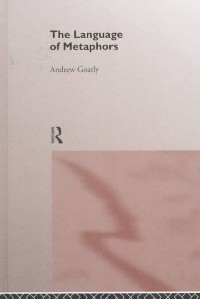
In this ambitious and wide-ranging text, Andrew Goatly explores the language of metaphor. Combining insights from relevance theory and functional linguistics, he provides a powerful model for understanding how metaphors work in real communicative situations, how we use them to communicate meaning as well as how we process them. Examining the distinction between literal and metaphorical language, Goatly surveys the means by which metaphors are realized in texts and locates the interpretation of metaphor in its social context.The Languageof Metaphorsis enlivened by the choice, variety and humor of its real examples which are taken from a wide variety of genres including conversation, popular science, advertising, news reports, novels and poetry. Supplemented with exercises and a suggested reading list, this book will provide students of language, psychology and literature with an invaluable guide to understanding precisely how metaphors function.
目录
BOOK COVER 1
HALF-TITLE 2
TITLE 3
COPYRIGHT 4
CONTENTS 5
ILLUSTRATIONS 10
TABLES 11
ACKNOWLEDGEMENTS 12
TYPOGRAPHICAL CONVENTIONS 14
ABBREVIATIONS 16
INTRODUCTION 18
WHY IS METAPHOR IMPORTANT? 18
WHO IS THIS BOOK FOR? 20
BUT WHY ANOTHER BOOK ON METAPHOR? 21
AN OUTLINE OF THE BOOK 22
TERMS AND A DEFINITION 25
AN EXTENDED EXAMPLE: QUESTIONS ABOUT METAPHOR 26
1 METAPHORICAL AND LITERAL LANGUAGE 30
1.1. INTRODUCTION 30
1.2. MATCHING AND SIMILARITY 32
1.3. METAPHOR, APPROXIMATION AND PROTOTYPICALITY 33
1.4. THE FUZZINESS AND VAGUENESS OF SEMANTIC CONCEPTS 36
1.5. SUMMARY 38
1.6. TEXT MEANINGS AND NEGOTIATION 39
1.7. ACQUISITION OF WORD-MEANINGS 42
1.7.1. Ostensive reference 43
1.7.2. Accommodation and assimilation 44
1.8. MEANING CHANGE IN THE LEXIS OF A LANGUAGE 45
1.8.1. Categories of inactive metaphors 47
1.8.2. Degrees of conventionality: semantics or pragmatics 50
1.8.3. Summary 53
1.9. CLINES OF METAPHORICITY 53
1.9.1. From explicit comparison to open-ended metaphor 54
2 METAPHOR AND THE DICTIONARY 56
2.1. INTRODUCTION 56
2.2. METAPHORICAL PATTERNS IN THE ENGLISH LEXICON 61
2.2.1. General Reifying (Figure 2.1, row A) 61
2.2.1.1. Create, Destroy, Transform 61
2.2.1.2. Transfer, Handle, Possess, Impact 62
2.2.1.3. Place/Space, Proximity 64
2.2.1.4. Dimension/Shape/Parts 65
2.2.1.5. Perception/Seeing 65
2.2.2. Specific Reifying (Figure 2.1, row B) 66
2.2.3. Animizing and Personifying metaphors (Figure 2.1, row C) 67
2.2.3.1. Life, Survival 67
2.2.3.2. Relationships, Control 67
2.2.4. Materializing Abstract Process (Figure 2.1, row D) 68
2.2.5. Process=Process (Figure 2.1, row E) 70
2.2.6. Object/Substance=Object/Substance (Figure 2.1, row F) 71
2.2.7. Categories of Root Analogy and preconceptual experience 71
2.3. COMMENTARY ON THE MAP 72
2.3.1. Metonymy and metaphor 72
2.3.2. Interplay: multiple determination 74
2.3.3. Interplay: extensions 75
2.3.4. Interplay: oppositions 77
2.3.5. Interplay: reversal 80
2.3.6. Metaphorical lexis and diverse structuring of concepts 81
2.3.7. Influence of phonology/submorphemery as part of langue 91
2.4. SUMMARY AND AFTERTHOUGHT 93
3 METAPHOR AND THE DICTIONARY 95
3.1. WORD-CLASS AND METAPHOR 95
3.1.1. Nouns 96
3.1.2. Nouns referring to processes 98
3.1.3. Verbs 99
3.1.3.1. Process types 100
3.1.3.2. Representing the Mental as Material 100
3.1.3.3. \u2018Please\u2019/\u2018like\u2019 and Mental processes 101
3.1.3.4. Representing the Verbal as Material 101
3.1.3.5. Specificity of the conventional colligate 102
3.1.4. Adjectives 103
3.1.5. Adverbs and prepositions 103
3.1.6. Summary 105
3.2. WORD-FORMATION 106
3.2.1. Derivation and resemblance: resemblance incorporated in derivation 106
3.2.2. Derivation and resemblance: resemblance associated with derivation 107
3.2.3. Conclusion on derivation and metaphor 108
3.2.4. The effects of derivation on metaphor: two hypotheses 110
3.2.4.1. Conversion: nouns and verbs 110
3.2.4.2. Suffixation 113
3.2.4.3. Phrasal verbs 116
3.2.4.4. Prefixes 118
3.2.5. Word-formation and the delicate grammar of metaphorical lexis 119
3.2.6. Summary 120
4 HOW DIFFERENT KINDS OF METAPHORS WORK 121
4.1. INTRODUCTION 121
4.1.1. Conventionality as a cline 121
4.2. AN IMPROVED DEFINITION 122
4.2.1. Unit of discourse and the scope of the metaphor 123
4.2.2. Reference and the pragmatic nature of metaphor 124
4.2.3. The referent of the unit of discourse: Topic and Vehicle 124
4.2.4. Colligational and Referential interpretations 125
4.2.5. The pathways through the definition: seven kinds of metaphor 126
4.2.5.1. Pathway 1 126
4.2.5.2. Pathway 2 126
4.2.5.3. Pathway 3 127
4.2.5.4. Pathway 4 127
4.2.5.5. Pathway 5 127
4.2.5.6. Pathway 6 129
4.2.5.7. Pathway 7 129
4.3. INTERPRETATIVE THEORIES 130
4.3.1. Substitution Theory 130
4.3.2. Interaction, Tension and Controversion Theories3 131
4.3.3. Comparison Theory 132
4.4. SIMILARITY AND/OR ANALOGY 133
4.4.1. A definition of Similarity 133
4.4.2. Antecedent and attributional Similarity 135
4.4.3. Analogy 137
4.4.4. Colligations, analogies and schemas 138
4.5. LESS CENTRAL VARIETIES OF METAPHOR 141
4.5.1. Symbolism: superordinate substitution, and analogical metonymy 141
4.5.2. Asymmetric interpretation 142
4.5.3. Subjective interpretation 145
4.5.4. Illusion 148
4.5.5. Mimetic and Phenomenalistic interpretation 149
4.6. SUMMARY 151
5 RELEVANCE THEORY AND THE FUNCTIONS OF METAPHOR 152
5.1. METAPHOR AND RELEVANCE THEORY 152
5.1.1. What is Relevance? Contextual effects and processing effort 152
5.1.2. Relevance and implicature 154
5.1.3. Metaphor and Relevance 156
5.1.4. Irony: echoic utterances 162
5.1.5. A critical look at Sperber and Wilson 163
5.2. FUNCTIONAL VARIETIES 165
5.2.1. Filling lexical gaps 165
5.2.2. Explanation and modelling 166
5.2.3. Reconceptualization 168
5.2.4. Argument by analogy and/or false(?) reasoning 169
5.2.5. Ideology, the latent function 172
5.2.6. Expressing emotional attitude 174
5.2.7. Decoration, disguise and hyperbole 175
5.2.8. Cultivating intimacy 177
5.2.9. Humour and games 178
5.2.10. Metaphorical calls to action or problem-solving 179
5.2.11. Textual structuring 180
5.2.12. Fiction 180
5.2.13. Enhancing Memorability, Foregrounding and Informativeness 181
5.2.14. Summary: metaphoric purposes and the functions of language 183
5.2.15. Functions of metaphors and familiarity of the Vehicle 183
6 THE SIGNALLING OF METAPHOR 185
6.1. INTRODUCTION 185
6.2. WHICH METAPHORS DO WE NEED TO MARK? 187
6.3. DOMAIN SIGNALLERS OR TOPIC INDICATORS 188
6.4. CO-TEXTUAL MARKERS 189
6.4.1. Explicit markers 190
6.4.2. Literally and other intensifiers 190
6.4.3. Hedges or Downtoners 193
6.4.4. Semantic metalanguage 194
6.4.5. Artefacts and Mimetic markers 195
6.4.6. Symbolism terms 195
6.4.7. Superordinate terms 196
6.4.7.1. Marking metaphorical Transfer 196
6.4.7.2. Lexical Gap-filling 197
6.4.7.3. Marking Subjective metaphors 200
6.4.8. Similes and comparisons 201
6.4.8.1. Similes as metaphorical frameworks 202
6.4.8.2. Precision similes and other comparisons 203
6.4.9. Foregrounding consciousness and attitude: Mental and Verbal processes 204
6.4.9.1. Similes and Mental processes of perception 204
6.4.9.2. Misperception terms 205
6.4.9.3. Mental processes of cognition 205
6.4.9.4. Reporting or Verbal process verbs 206
6.4.9.5. So to speak/in a manner of speaking 206
6.4.10. Orthographic devices 207
6.4.11. Modals and conditionals 209
6.4.11.1. As it were 211
6.5. FACTIVITY AND THE EFFECTS OF MARKERS: AN AMBIGUITY IN PROPOSITIONAL ATTITUDE 212
6.6. SUBJECTIVE METAPHORS AND FANTASTIC LITERATURE 214
6.7. PROMISCUITY OF THE MARKERS 215
7 THE SPECIFICATION OF TOPICS 217
7.1. INTRODUCTION 217
7.1.1. Ferris\u2019 Meaning of Syntax 218
7.1.2. Equation, Ascription, Interaction and Substitution 219
7.1.3. The applicability of the term Topic: specification and Indication 220
7.2. COPULA CONSTRUCTIONS 221
7.2.1. Equatives 223
7.2.2. Ascriptives 224
7.2.3. Abstractness of Topic and Vehicle and Ascription/Equation 226
7.2.4. Other statives/Relational processes 228
7.3. APPOSITION AND OTHER PARALLELISM 229
7.3.1. Appellation/Identification 231
7.3.2. Designation 232
7.3.3. Reformulation 233
7.3.4. Attribution 234
7.3.5. Inclusion 234
7.3.6. Other appositions 235
7.3.6.1. Verb Apposition 235
7.3.6.2. Adjectival Apposition 235
7.3.6.3. Clauses and sentences 235
7.3.7. Recognizing Apposition: schemes for tropes 236
7.3.8. Conjunctions 236
7.4. GENITIVES 237
7.4.1. Appositive Genitives 238
7.4.2. (Partitive of) shape/measure 239
7.4.3. Partitive Genitives 240
7.4.4. Analogic genitives 240
7.4.5. Subjective and Objective Genitives 241
7.4.6. Genitives of Origin 241
7.5. PREMODIFICATION 242
7.6. COMPOUNDS 245
7.7. BLENDS/PORTMANTEAUX 245
7.8. TOPIC SPECIFICATION ACROSS DIFFERENT PARTS OF SPEECH 246
7.9. CONCLUSION AND SUMMARY ON TOPIC SPECIFICATION/INDICATION 246
7.9.1. The cline of Contradictoriness 247
7.9.2. Summary: lexical metaphor and ambiguity in syntactic meanings 249
8 THE SPECIFICATION OF GROUNDS 251
8.1. INTRODUCTION 251
8.1.1. The applicability of the concept of Grounds 251
8.1.2. The degrees of association of Grounds with Topic and Vehicle 252
8.1.3. Preposed and postposed Grounds 253
8.2. PREPOSED GROUNDS 254
8.2.1. Premodification 254
8.2.1.1. Column X 254
8.2.1.2. Column Y 257
8.2.1.3. Column Z 257
8.2.2. Like-similes: adverbial and prepositional phrases 258
8.2.3. As-similes: prepositional phrases and conjunctions 260
8.2.4. Phenomenalistic and Subjective Grounds 261
8.2.5. Of-genitives 262
8.3. POSTPOSED GROUNDS 263
8.3.1. V-term premodifiers with G-term heads 263
8.3.2. Verbless clauses 264
8.3.3. Non-finite clauses 265
8.3.4. Relative clauses 265
8.3.5. Specification by verb phrase (predicate) 267
8.3.6. Prepositional phrases 268
8.3.7. Grounds of verb V-terms 268
8.4. PSEUDO-GROUNDS 270
8.5. GROUNDS AT GREATER DISTANCES 271
8.6. SUMMARY: THE POSITIONING OF G-TERMS 274
8.7. OVERVIEW OF THE CLINES OF METAPHORIC FORCE 276
9 THE INTERPLAY OF METAPHORS 279
9.1. INTRODUCTION: OVERVIEW OF THE FRAMEWORK 279
9.2. REPETITION 280
9.3. MULTIVALENCY 282
9.4. DIVERSIFICATION 284
9.5. MODIFICATION 286
9.5.1 Lexical relations 286
9.5.2 Lexical sets 287
9.5.3 Scale and axis Modification 288
9.6. EXTENSION 288
9.6.1. Allegory 289
9.6.2. Quasi-allegory 291
9.7. MIXING 294
9.8. COMPOUNDING OF METAPHORS 296
9.9. LITERALIZATION OF VEHICLES 297
9.9.1. Means of Literalization 297
9.9.2. Effects of Literalization 301
9.9.2.1. Revitalizing 301
9.9.2.2. Blurring the literal-metaphorical distinction 302
9.9.2.3 Symbolism 303
9.10. OVERDESCRIPTION 304
9.11. SYMBOLISM AND THE COMPLICATIONS OF METAPHORIC INTERPLAY 305
10 METAPHOR IN ITS SOCIAL CONTEXT 308
10.1. INTRODUCTION 308
10.2. DEVELOPMENT OF RELEVANCE THEORY: THE NEED FOR A SOCIAL DIMENSION 308
10.3. HALLIDAY\u2019S SOCIAL DIMENSION: A THEORY OF CONTEXTS AND PURPOSES 310
10.4. RELEVANCE AND SOCIAL SEMIOTICS IN FAIRCLOUGH\u2019S MODEL OF TEXT INTERPRETATION 312
10.4.1. A sample analysis of metaphor using the model 314
10.4.2. Integrating a Relevance-based model with Fairclough\u2019s 318
10.5. CONTEXT AND THE INTERPRETATION OF METAPHOR 318
10.5.1. The contribution of Field to metaphorical interpretation 321
10.5.2. The contribution of Field/Tenor purpose to metaphor interpretation 324
10.5.2.1. Conversation 325
10.5.2.2. National News Reports 327
10.5.2.3. Popular Science 327
10.5.2.4. Magazine Advertising 328
10.5.2.5. Modern Novels 329
10.5.2.6. Modern English Lyric Poetry 331
10.5.3. Genre and adequate Relevance 331
10.5.4. Processing Effort and processing time 335
10.6. ASPECTS OF METAPHORICAL EXPRESSIONS IN DIFFERENT GENRES: A SURVEY AND SUMMARY 337
10.7. POSTSCRIPT: FURTHER RESEARCH 344
10.8. SUGGESTIONS FOR FURTHER WORK 344
10.8.1. Conversation 344
10.8.2. National News Reports 345
10.8.3. Popular Science 346
10.8.4. Magazine Advertising 348
10.8.5. Modern Novels 349
10.8.6. Modern English Lyric Poetry 351
10.9. ENVOI 353
NOTES 354
REFERENCES 361
TEXTS USED FOR EXAMPLES AND ANALYSIS (AND ABBREVIATIONS USED IN REFERENCES) 368
TEXTS USED FOR STATISTICS IN TABLE 10.2 371
INDEX 374
HALF-TITLE 2
TITLE 3
COPYRIGHT 4
CONTENTS 5
ILLUSTRATIONS 10
TABLES 11
ACKNOWLEDGEMENTS 12
TYPOGRAPHICAL CONVENTIONS 14
ABBREVIATIONS 16
INTRODUCTION 18
WHY IS METAPHOR IMPORTANT? 18
WHO IS THIS BOOK FOR? 20
BUT WHY ANOTHER BOOK ON METAPHOR? 21
AN OUTLINE OF THE BOOK 22
TERMS AND A DEFINITION 25
AN EXTENDED EXAMPLE: QUESTIONS ABOUT METAPHOR 26
1 METAPHORICAL AND LITERAL LANGUAGE 30
1.1. INTRODUCTION 30
1.2. MATCHING AND SIMILARITY 32
1.3. METAPHOR, APPROXIMATION AND PROTOTYPICALITY 33
1.4. THE FUZZINESS AND VAGUENESS OF SEMANTIC CONCEPTS 36
1.5. SUMMARY 38
1.6. TEXT MEANINGS AND NEGOTIATION 39
1.7. ACQUISITION OF WORD-MEANINGS 42
1.7.1. Ostensive reference 43
1.7.2. Accommodation and assimilation 44
1.8. MEANING CHANGE IN THE LEXIS OF A LANGUAGE 45
1.8.1. Categories of inactive metaphors 47
1.8.2. Degrees of conventionality: semantics or pragmatics 50
1.8.3. Summary 53
1.9. CLINES OF METAPHORICITY 53
1.9.1. From explicit comparison to open-ended metaphor 54
2 METAPHOR AND THE DICTIONARY 56
2.1. INTRODUCTION 56
2.2. METAPHORICAL PATTERNS IN THE ENGLISH LEXICON 61
2.2.1. General Reifying (Figure 2.1, row A) 61
2.2.1.1. Create, Destroy, Transform 61
2.2.1.2. Transfer, Handle, Possess, Impact 62
2.2.1.3. Place/Space, Proximity 64
2.2.1.4. Dimension/Shape/Parts 65
2.2.1.5. Perception/Seeing 65
2.2.2. Specific Reifying (Figure 2.1, row B) 66
2.2.3. Animizing and Personifying metaphors (Figure 2.1, row C) 67
2.2.3.1. Life, Survival 67
2.2.3.2. Relationships, Control 67
2.2.4. Materializing Abstract Process (Figure 2.1, row D) 68
2.2.5. Process=Process (Figure 2.1, row E) 70
2.2.6. Object/Substance=Object/Substance (Figure 2.1, row F) 71
2.2.7. Categories of Root Analogy and preconceptual experience 71
2.3. COMMENTARY ON THE MAP 72
2.3.1. Metonymy and metaphor 72
2.3.2. Interplay: multiple determination 74
2.3.3. Interplay: extensions 75
2.3.4. Interplay: oppositions 77
2.3.5. Interplay: reversal 80
2.3.6. Metaphorical lexis and diverse structuring of concepts 81
2.3.7. Influence of phonology/submorphemery as part of langue 91
2.4. SUMMARY AND AFTERTHOUGHT 93
3 METAPHOR AND THE DICTIONARY 95
3.1. WORD-CLASS AND METAPHOR 95
3.1.1. Nouns 96
3.1.2. Nouns referring to processes 98
3.1.3. Verbs 99
3.1.3.1. Process types 100
3.1.3.2. Representing the Mental as Material 100
3.1.3.3. \u2018Please\u2019/\u2018like\u2019 and Mental processes 101
3.1.3.4. Representing the Verbal as Material 101
3.1.3.5. Specificity of the conventional colligate 102
3.1.4. Adjectives 103
3.1.5. Adverbs and prepositions 103
3.1.6. Summary 105
3.2. WORD-FORMATION 106
3.2.1. Derivation and resemblance: resemblance incorporated in derivation 106
3.2.2. Derivation and resemblance: resemblance associated with derivation 107
3.2.3. Conclusion on derivation and metaphor 108
3.2.4. The effects of derivation on metaphor: two hypotheses 110
3.2.4.1. Conversion: nouns and verbs 110
3.2.4.2. Suffixation 113
3.2.4.3. Phrasal verbs 116
3.2.4.4. Prefixes 118
3.2.5. Word-formation and the delicate grammar of metaphorical lexis 119
3.2.6. Summary 120
4 HOW DIFFERENT KINDS OF METAPHORS WORK 121
4.1. INTRODUCTION 121
4.1.1. Conventionality as a cline 121
4.2. AN IMPROVED DEFINITION 122
4.2.1. Unit of discourse and the scope of the metaphor 123
4.2.2. Reference and the pragmatic nature of metaphor 124
4.2.3. The referent of the unit of discourse: Topic and Vehicle 124
4.2.4. Colligational and Referential interpretations 125
4.2.5. The pathways through the definition: seven kinds of metaphor 126
4.2.5.1. Pathway 1 126
4.2.5.2. Pathway 2 126
4.2.5.3. Pathway 3 127
4.2.5.4. Pathway 4 127
4.2.5.5. Pathway 5 127
4.2.5.6. Pathway 6 129
4.2.5.7. Pathway 7 129
4.3. INTERPRETATIVE THEORIES 130
4.3.1. Substitution Theory 130
4.3.2. Interaction, Tension and Controversion Theories3 131
4.3.3. Comparison Theory 132
4.4. SIMILARITY AND/OR ANALOGY 133
4.4.1. A definition of Similarity 133
4.4.2. Antecedent and attributional Similarity 135
4.4.3. Analogy 137
4.4.4. Colligations, analogies and schemas 138
4.5. LESS CENTRAL VARIETIES OF METAPHOR 141
4.5.1. Symbolism: superordinate substitution, and analogical metonymy 141
4.5.2. Asymmetric interpretation 142
4.5.3. Subjective interpretation 145
4.5.4. Illusion 148
4.5.5. Mimetic and Phenomenalistic interpretation 149
4.6. SUMMARY 151
5 RELEVANCE THEORY AND THE FUNCTIONS OF METAPHOR 152
5.1. METAPHOR AND RELEVANCE THEORY 152
5.1.1. What is Relevance? Contextual effects and processing effort 152
5.1.2. Relevance and implicature 154
5.1.3. Metaphor and Relevance 156
5.1.4. Irony: echoic utterances 162
5.1.5. A critical look at Sperber and Wilson 163
5.2. FUNCTIONAL VARIETIES 165
5.2.1. Filling lexical gaps 165
5.2.2. Explanation and modelling 166
5.2.3. Reconceptualization 168
5.2.4. Argument by analogy and/or false(?) reasoning 169
5.2.5. Ideology, the latent function 172
5.2.6. Expressing emotional attitude 174
5.2.7. Decoration, disguise and hyperbole 175
5.2.8. Cultivating intimacy 177
5.2.9. Humour and games 178
5.2.10. Metaphorical calls to action or problem-solving 179
5.2.11. Textual structuring 180
5.2.12. Fiction 180
5.2.13. Enhancing Memorability, Foregrounding and Informativeness 181
5.2.14. Summary: metaphoric purposes and the functions of language 183
5.2.15. Functions of metaphors and familiarity of the Vehicle 183
6 THE SIGNALLING OF METAPHOR 185
6.1. INTRODUCTION 185
6.2. WHICH METAPHORS DO WE NEED TO MARK? 187
6.3. DOMAIN SIGNALLERS OR TOPIC INDICATORS 188
6.4. CO-TEXTUAL MARKERS 189
6.4.1. Explicit markers 190
6.4.2. Literally and other intensifiers 190
6.4.3. Hedges or Downtoners 193
6.4.4. Semantic metalanguage 194
6.4.5. Artefacts and Mimetic markers 195
6.4.6. Symbolism terms 195
6.4.7. Superordinate terms 196
6.4.7.1. Marking metaphorical Transfer 196
6.4.7.2. Lexical Gap-filling 197
6.4.7.3. Marking Subjective metaphors 200
6.4.8. Similes and comparisons 201
6.4.8.1. Similes as metaphorical frameworks 202
6.4.8.2. Precision similes and other comparisons 203
6.4.9. Foregrounding consciousness and attitude: Mental and Verbal processes 204
6.4.9.1. Similes and Mental processes of perception 204
6.4.9.2. Misperception terms 205
6.4.9.3. Mental processes of cognition 205
6.4.9.4. Reporting or Verbal process verbs 206
6.4.9.5. So to speak/in a manner of speaking 206
6.4.10. Orthographic devices 207
6.4.11. Modals and conditionals 209
6.4.11.1. As it were 211
6.5. FACTIVITY AND THE EFFECTS OF MARKERS: AN AMBIGUITY IN PROPOSITIONAL ATTITUDE 212
6.6. SUBJECTIVE METAPHORS AND FANTASTIC LITERATURE 214
6.7. PROMISCUITY OF THE MARKERS 215
7 THE SPECIFICATION OF TOPICS 217
7.1. INTRODUCTION 217
7.1.1. Ferris\u2019 Meaning of Syntax 218
7.1.2. Equation, Ascription, Interaction and Substitution 219
7.1.3. The applicability of the term Topic: specification and Indication 220
7.2. COPULA CONSTRUCTIONS 221
7.2.1. Equatives 223
7.2.2. Ascriptives 224
7.2.3. Abstractness of Topic and Vehicle and Ascription/Equation 226
7.2.4. Other statives/Relational processes 228
7.3. APPOSITION AND OTHER PARALLELISM 229
7.3.1. Appellation/Identification 231
7.3.2. Designation 232
7.3.3. Reformulation 233
7.3.4. Attribution 234
7.3.5. Inclusion 234
7.3.6. Other appositions 235
7.3.6.1. Verb Apposition 235
7.3.6.2. Adjectival Apposition 235
7.3.6.3. Clauses and sentences 235
7.3.7. Recognizing Apposition: schemes for tropes 236
7.3.8. Conjunctions 236
7.4. GENITIVES 237
7.4.1. Appositive Genitives 238
7.4.2. (Partitive of) shape/measure 239
7.4.3. Partitive Genitives 240
7.4.4. Analogic genitives 240
7.4.5. Subjective and Objective Genitives 241
7.4.6. Genitives of Origin 241
7.5. PREMODIFICATION 242
7.6. COMPOUNDS 245
7.7. BLENDS/PORTMANTEAUX 245
7.8. TOPIC SPECIFICATION ACROSS DIFFERENT PARTS OF SPEECH 246
7.9. CONCLUSION AND SUMMARY ON TOPIC SPECIFICATION/INDICATION 246
7.9.1. The cline of Contradictoriness 247
7.9.2. Summary: lexical metaphor and ambiguity in syntactic meanings 249
8 THE SPECIFICATION OF GROUNDS 251
8.1. INTRODUCTION 251
8.1.1. The applicability of the concept of Grounds 251
8.1.2. The degrees of association of Grounds with Topic and Vehicle 252
8.1.3. Preposed and postposed Grounds 253
8.2. PREPOSED GROUNDS 254
8.2.1. Premodification 254
8.2.1.1. Column X 254
8.2.1.2. Column Y 257
8.2.1.3. Column Z 257
8.2.2. Like-similes: adverbial and prepositional phrases 258
8.2.3. As-similes: prepositional phrases and conjunctions 260
8.2.4. Phenomenalistic and Subjective Grounds 261
8.2.5. Of-genitives 262
8.3. POSTPOSED GROUNDS 263
8.3.1. V-term premodifiers with G-term heads 263
8.3.2. Verbless clauses 264
8.3.3. Non-finite clauses 265
8.3.4. Relative clauses 265
8.3.5. Specification by verb phrase (predicate) 267
8.3.6. Prepositional phrases 268
8.3.7. Grounds of verb V-terms 268
8.4. PSEUDO-GROUNDS 270
8.5. GROUNDS AT GREATER DISTANCES 271
8.6. SUMMARY: THE POSITIONING OF G-TERMS 274
8.7. OVERVIEW OF THE CLINES OF METAPHORIC FORCE 276
9 THE INTERPLAY OF METAPHORS 279
9.1. INTRODUCTION: OVERVIEW OF THE FRAMEWORK 279
9.2. REPETITION 280
9.3. MULTIVALENCY 282
9.4. DIVERSIFICATION 284
9.5. MODIFICATION 286
9.5.1 Lexical relations 286
9.5.2 Lexical sets 287
9.5.3 Scale and axis Modification 288
9.6. EXTENSION 288
9.6.1. Allegory 289
9.6.2. Quasi-allegory 291
9.7. MIXING 294
9.8. COMPOUNDING OF METAPHORS 296
9.9. LITERALIZATION OF VEHICLES 297
9.9.1. Means of Literalization 297
9.9.2. Effects of Literalization 301
9.9.2.1. Revitalizing 301
9.9.2.2. Blurring the literal-metaphorical distinction 302
9.9.2.3 Symbolism 303
9.10. OVERDESCRIPTION 304
9.11. SYMBOLISM AND THE COMPLICATIONS OF METAPHORIC INTERPLAY 305
10 METAPHOR IN ITS SOCIAL CONTEXT 308
10.1. INTRODUCTION 308
10.2. DEVELOPMENT OF RELEVANCE THEORY: THE NEED FOR A SOCIAL DIMENSION 308
10.3. HALLIDAY\u2019S SOCIAL DIMENSION: A THEORY OF CONTEXTS AND PURPOSES 310
10.4. RELEVANCE AND SOCIAL SEMIOTICS IN FAIRCLOUGH\u2019S MODEL OF TEXT INTERPRETATION 312
10.4.1. A sample analysis of metaphor using the model 314
10.4.2. Integrating a Relevance-based model with Fairclough\u2019s 318
10.5. CONTEXT AND THE INTERPRETATION OF METAPHOR 318
10.5.1. The contribution of Field to metaphorical interpretation 321
10.5.2. The contribution of Field/Tenor purpose to metaphor interpretation 324
10.5.2.1. Conversation 325
10.5.2.2. National News Reports 327
10.5.2.3. Popular Science 327
10.5.2.4. Magazine Advertising 328
10.5.2.5. Modern Novels 329
10.5.2.6. Modern English Lyric Poetry 331
10.5.3. Genre and adequate Relevance 331
10.5.4. Processing Effort and processing time 335
10.6. ASPECTS OF METAPHORICAL EXPRESSIONS IN DIFFERENT GENRES: A SURVEY AND SUMMARY 337
10.7. POSTSCRIPT: FURTHER RESEARCH 344
10.8. SUGGESTIONS FOR FURTHER WORK 344
10.8.1. Conversation 344
10.8.2. National News Reports 345
10.8.3. Popular Science 346
10.8.4. Magazine Advertising 348
10.8.5. Modern Novels 349
10.8.6. Modern English Lyric Poetry 351
10.9. ENVOI 353
NOTES 354
REFERENCES 361
TEXTS USED FOR EXAMPLES AND ANALYSIS (AND ABBREVIATIONS USED IN REFERENCES) 368
TEXTS USED FOR STATISTICS IN TABLE 10.2 371
INDEX 374
- 名称
- 类型
- 大小
光盘服务联系方式: 020-38250260 客服QQ:4006604884
云图客服:
用户发送的提问,这种方式就需要有位在线客服来回答用户的问题,这种 就属于对话式的,问题是这种提问是否需要用户登录才能提问
Video Player
×
Audio Player
×
pdf Player
×
