

简介
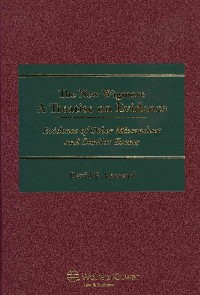
The New Wigmore: A Treatise on Evidenceis an authoritative guide with answers to evolving questions in civil and criminal litigation. The series presents the same quality of research, thought, and analysis as the original Wigmore, creating a genuine present-day counterpart to the seminal evidence treatise.
Selected Rules of Limited Admissibility, by David Leonard, provides a sophisticated framework for lawyers and judges to understand and apply the rules that exclude evidence for policy reasons. Included are extensive discussions of:
The latest amendments to Federal Rule 408 Party-oriented limited admissibility in criminal cases The types of agreements that qualify as “Mary Carter” agreements Evidence of nolo contendere pleas when the party who entered the plea brings a civil action based on the same event Admissibility of evidence of investigations conducted by a party Remedial measures taken before the event giving rise to the action or taken by a third party, or required by a government authority The use of limiting instructions and proper timing The use the doctrine of “detrimental reliance” to enforce a plea agreement the government seeks to abolish The admissibility of settlement agreements that, if not disclosed, might lead to distorted fact-finding The propriety of informing the jury that there has been a settlement of claims involving a part
Evidentiary Privileges, by Edward J. Imwinkelried, offers unique analysis of recent evidentiary problems including application of the attorney-client privilegeto government agencies and corporate entities, and the difficulty of determining exactly who holds the privilege. In these two volumes, you’ll find also a practical framework for evaluating the existence or scope of new privileges, as well as coverage of issues like these:
The common interest or joint defense privilege Skirmishes over the DOJ’s policies regarding corporate waiver of attorney-client privilegePrivilege for mediation proceedings Burns v. Commonwealth, where the Virginia Supreme Court sharply limited the protection for confidential spousal communications The latest cases recognizing a constitutional right to informational privacy Protections for journalists and who qualifies The governmentalattorney-client privilegeThe First Circuit decision holding that in certain circumstances, even when an individual corporate officer has a personal attorney-client privilegewith corporate counsel, the corporation may unilaterally waive the privilege The latest cases on the waiver consequences of inadvertent production during pretrial discovery
Expert Evidence, by David H. Kaye, David E. Bernstein and Jennifer L. Mnookin, provides in depth coverage of the topics that lawyers and judges must know when dealing with expert testimony about medicine, engineering, psychology, economics, and forensic science, among other areas. It covers the topics common to all such testimony and focuses on scientific and statistical evidence, providing sophisticated and up-to-date explanations and analyses of:
The principles and policies underlying all the approaches to admitting scientific evidence, from the traditional relevance standard to the most restrictive interpretations of the Supreme Court's watershed opinion in Daubert v. Merrell Dow Pharmaceuticals. An in-depth look at the continuing importance and practical operation of the Frye standard. Qualifications for expert witnesses. Permissible subject matter and allowable bases for expert testimony. The learned treatise exception to the hearsay rule. The impact of evidence-based medicine and more rigorous legal standards for proof of causation in product liability and medical malpractice cases. The logic of statistical proof in both civil and criminal cases, including survey evidence, econometric proof, and Bayes’ rule and the “prosecutor’s fallacy” discussed by the Supreme Court in McDaniel v. Brown. The findings of the National Academy of Sciences on the limitations on forensic science evidence and the need to reform the system for producing this evidence. The range of permissible ways—both qualitative and quantitative—to present pattern and impression identification evidence of identity, such as fingerprints, handwriting exemplars, and ballistic and other toolmarks, so as to satisfy both scientific and legal precepts The type of opinions on mental states barred by Rule 704, and the interplay between Rule 703 and the Confrontation Clause. The future of the hearsay rule and Confrontation Clause as they apply to laboratory reports following the Crawford revolution and its development in Melendez-Diaz v. Massachusetts.
The lastest volume, Evidence of Other Misconduct and Similar Events,by David P. Leonard, is a comprehensive, scholarly analysis of when evidence of crimes, wrongs, or acts other than those at issue in a trial may be admitted into evidence. The author analyzes the history of the prohibition on character evidence in England and the United States and the development of exceptions to the rule, discusses how courts should analyze questions of character evidence, and treats in detail the various exceptions such as motive, opportunity, preparation, plan, modus operandi, and identity.
目录
Table Of Contents:
General Editor's Introduction to the Treatise xxv
Preface xxxv
Chapter 1 The Natureand Scope of the Character Prohibition 1(16)
1.1 Introduction 1(1)
1.2 The Character Evidence Rule: Rationales 2(8)
1.3 The Character Evidence Rule: Scope 10(7)
Chapter 2 Origins of the Rules Governing the Use of Uncharged Misconduct Evidence for Non-character Purposes: Great Britain 17(56)
2.1 Introduction 18(1)
2.2 Early Commentators 19(10)
2.3 Early Cases 29(6)
2.4 Nineteenth Century Case Law; Two Types of Classifications 35(1)
2.4.1 Classification by Type of Action 36(1)
a Poisoning Cases 36(2)
b Fraud and False Pretenses Cases 38(6)
c Receiving Stolen Goods and Similar Cases 44(7)
d Forgery and Uttering Cases 51(6)
e Other Types of Cases 57(1)
(1) Arson Cases 57(3)
(2) Robbery and Burglary Cases 60(2)
(3) Rape and Related Prosecutions 62(1)
(4) Prosecutions for Inducing Abortion 63(1)
2.4.2 Classification by Purpose for Which Evidence Is Offered 64(1)
a Admissibility to Prove Guilty Knowledge 65(2)
b Admissibility to Prove Intent (Generally by Proving Lack of Mistake or Accident) 67(2)
c Admissibility to Prove an Act or Event in Question Occurred or to Explain the Nature of a Given Act or Event 69(1)
d Admissibility to Explain the Meaning of Otherwise Equivocal Conduct 70(1)
2.4.3 Summary and Perspective: Nineteenth Century English Case Law 71(2)
Chapter 3 Origins of the Rules Governing The Use of Uncharged Misconduct Evidence for Non-character Purposes: United States 73(124)
3.1 Introduction 74(1)
3.2 Early Commentators 75(26)
3.2.1 Phillipps 76(4)
3.2.2 Peake 80(2)
3.2.3 Starkie 82(3)
3.2.4 Greenleaf; The Emergence of Wigmore 85(8)
3.2.5 Wharton 93(3)
3.2.6 Jones 96(2)
3.2.7 Other Late Nineteenth Century Commentators 98(3)
3.3 Early Cases 101(94)
3.3.1 Poisoning Cases 104(7)
3.3.2 Other Types of Murder Cases 111(10)
3.3.3 Fraud and False Pretenses Cases 121(10)
3.3.4 Receiving Stolen Goods and Similar Cases 131(9)
3.3.5 Forgery and Uttering Cases 140(5)
3.3.6 Sexual Offenses Where the Victim Is an Acquaintance 145(6)
a Statutory Rape and Incest Cases 151(1)
(1) Uncharged Misconduct Evidence Offered to Prove the Charged Conduct Occurred 151(4)
(2) Uncharged Misconduct Evidence Offered to Prove Defendant Possessed the Required Criminal Intent 155(2)
b Adultery Cases 157(6)
c Admissibility of Acts Occurring Subsequent to Charged Conduct 163(7)
3.3.7 Other Types of Cases 170(1)
a Arson Cases 170(10)
b Robbery, Burglary, and Similar Cases 180(10)
c Abortion-Related Homicide Prosecutions 190(5)
3.4 Summary and Perspective: Nineteenth Century American Law 195(2)
Chapter 4 Determining Admissibility of Uncharged Misconduct Evidence: Standards and Procedures 197(120)
4.1 Introduction 198(1)
4.2 Is There a Need for a Specific Rule? 199(7)
4.3 Is the Rule "Inclusionary" or "Exclusionary"? 206(23)
4.3.1 Historical Overview: Late Eighteenth and Nineteenth Century Evidence Treatises 207(12)
4.3.2 The Rule Today 219(10)
4.4 Permissible Uses of Uncharged Misconduct Evidence Characterized as "Exceptions" to the Character Rule 229(3)
4.5 Standards for Admissibility of Uncharged Misconduct Evidence 232(38)
4.5.1 The Huddleston Rule 232(1)
a The Standard for Determining Whether the Opponent Committed the Uncharged Misconduct or Acted with the Required State of Mind 233(10)
b Level of Persuasion Required Once Initial Burden Has Been Satisfied 243(2)
c Protecting the Adverse Party Against the Dangers of Uncharged Misconduct Evidence 245(1)
(1) The Evidence Must Be Offered for a "Proper Purpose" 245(1)
(2) The Evidence Must Be Relevant for the "Proper Purpose" for Which It Is Offered 246(2)
(3) The Probative Value of the Evidence Must Not Be Substantially Outweighed by the Danger of Unfair Prejudice 248(14)
(4) On Request, the Court Must Issue a Limiting Instruction 262(5)
4.5.2 Importance of On-the-Record Balancing 267(3)
4.6 Interpretation of Phrase "Crimes, Wrongs, or Acts" 270(7)
4.7 Specific Standards for Admissibility: Federal Courts 277(10)
4.8 Specific Standards for Admissibility: State Courts 287(12)
4.9 Requirement of Notice of Intent to Present Uncharged Misconduct Evidence 299(4)
4.10 Appellate Review of Trial Court Rulings on Admissibility of Uncharged Misconduct Evidence 303(9)
4.11 Summary and Perspective: The Fundamental Backbone of Tests for Admissibility of Uncharged Misconduct Evidence 312(5)
Chapter 5 "Inextricably Intertwined" or "Intrinsic" Evidence 317(50)
5.1 Introduction 317(3)
5.2 General Theory; "Intrinsic" vs. "Extrinsic" Evidence 320(10)
5.3 Categories of Cases to Which Courts Have Applied the Concept 330(35)
5.3.1 Acts That Are Part of the Same Course of Conduct as the Charged Crime or Event 330(10)
5.3.2 Conduct That "Completes the Story" of the Charged Crime or Event 340(15)
5.3.3 Evidence That Provides Background Information Such as Showing the Relationships Among Persons Involved in the Charged Crime or Event 355(10)
5.4 Perspective: The Admission of Uncharged Misconduct Evidence as "Intrinsic" to the Charged Conduct 365(2)
Chapter 6 Knowledge 367(58)
6.1 Introduction 367(3)
6.2 The Historical Record 370(2)
6.3 The Relevance of Knowledge 372(27)
6.3.1 Two Ways to Reason from Uncharged Misconduct Evidence to Knowledge 380(1)
a Reasoning from Knowledge on Another Occasion to Knowledge on the Occasion at Issue 380(11)
b Reasoning from a Combination of the Uncharged and Charged Events to Prove Knowledge: The Doctrine of Chances 391(8)
6.4 Using Uncharged Misconduct Evidence to Prove Knowledge or Another Mental State That Is an Essential Element of a Charge or Claim 399(21)
6.4.1 Uncharged Misconduct Evidence Offered in Drug Prosecutions to Prove a Mental Element of the Prima Facie Case 403(12)
6.4.2 Uncharged Misconduct Evidence Offered to Rebut a "Mere Presence" Defense 415(5)
6.5 Evidence of Knowledge to Prove a Fact or Issue Other Than a Required Mental State 420(5)
Chapter 7 Intent; Absence of Mistake or Accident 425(62)
7.1 Introduction 426(1)
7.2 "Intent" Compared to Other State of Mind Uses of Uncharged Misconduct Evidence 427(5)
7.2.1 The Meaning of "Intent" in the Present Context 428(1)
7.2.2 The Relationship of "Intent" to "Absence of Mistake or Accident" 429(2)
7.2.3 The Relationship Between "Intent" and "Knowledge" 431(1)
7.3 The Relevance of Uncharged Misconduct Evidence to Prove Intent 432(10)
7.3.1 The Usual Necessity for an Intermediate Inference 432(3)
7.3.2 The Doctrine of Chances and Its Implications 435(7)
7.4 The Necessity Rationale for Admission of Uncharged Misconduct Evidence to Prove a Required Mental State 442(3)
7.5 Determining the Admissibility of Uncharged Misconduct Evidence Offered to Prove Intent 445(42)
7.5.1 Determining the Probative Value of Uncharged Misconduct Evidence to Prove Intent; In General 445(6)
7.5.2 The Degree of Required Similarity Between the Uncharged and the Charged Misconduct 451(1)
a Disfavored Test: A Requirement That the Physical Elements of the Charged and Uncharged Offenses Be Identical 452(4)
b Requiring That the State of Mind for the Charged and Uncharged Offenses Be Identical 456(2)
c The Necessity for Case-by-Case Analysis of Multiple Factors 458(5)
d Drug Conspiracy and Distribution Prosecutions as Models of Confused Thinking 463(6)
7.5.3 The "Material Issue" Requirement: Must Intent Be in Issue for Uncharged Misconduct Evidence to Be Admissible to Prove Intent? 469(18)
Chapter 8 Motive 487(68)
8.1 Introduction 488(1)
8.2 The Meaning and Uses of Motive 489(4)
8.3 The Distinction Between the Motive Inference and the Character Inference 493(14)
8.4 General Admissibility Issues 507(4)
8.4.1 The Unimportance of the Degree of Similarity Between the Charged and Uncharged Misconduct 507(1)
8.4.2 The Importance of the Strength of and Need for the Evidence to Prove the Existence of the Motive 508(3)
8.5 Ultimate Issues for Which Motive Evidence May Be Offered 511(44)
8.5.1 Evidence of Motive to Prove the Identity of the Person Who Committed the Charged Act 512(1)
a Evidence of Uncharged Misconduct Suggesting Enmity Toward the Victim of the Charged Act 512(2)
b Evidence of Uncharged Misconduct Suggesting a Motive of Greed 514(2)
c Evidence of Uncharged Misconduct Suggesting the Need for Money or a Related Motive 516(2)
d Evidence of Misconduct Subsequent to the Charged Act Suggesting a Reason to Commit the Charged Act 518(1)
e Evidence of Uncharged Misconduct Suggesting a Motive to Prevent Discovery of Witnesses to the Charged Offense or to Silence Those Witnesses 519(6)
f Evidence of Prior Assaults on the Same Victim Suggesting a Motive to Commit the Charged Act 525(1)
g Miscellaneous Uses of Motive Evidence to Prove Identity 526(1)
h Perspective: The Motive-to-Identity Theory 527(1)
8.5.2 Evidence of Motive to Prove the Person Acted with a Required Mental State 528(1)
a Evidence of Uncharged Misconduct Tending to Show a Financial Motive to Commit the Charged Act 528(4)
b Evidence of Uncharged Misconduct Tending to Show Enmity Toward the Victim of the Charged Act 532(5)
c Evidence of Uncharged Misconduct Tending to Show Intent by Way of Motive in Employment Discrimination Cases 537(1)
d Evidence of Uncharged Misconduct Tending to Show the Need for or Motive to Obtain Money 538(2)
e Evidence of Uncharged Misconduct to Complete the Factual Story and to Prove That Criminal Intent Accompanied the Charged Conduct 540(2)
8.5.3 Evidence of Motive to Prove That a Charged Act Occurred 542(13)
Chapter 9 Plan; Common Scheme or Plan 555(74)
9.1 Introduction 555(4)
9.2 The Meaning and Uses of "Plan" 559(21)
9.2.1 "Linked" Plans 561(1)
a The Sequential Pattern 562(5)
b The Chain Pattern 567(4)
9.2.2 "Unlinked" Plans; Acts Committed Pursuant to a "Common Scheme" 571(9)
9.3 Use of the "Plan" Theory to Prove Identity 580(12)
9.4 Use of the "Plan" Theory to Prove That the Act at Issue Occurred 592(20)
9.4.1 Linked Plan Cases 592(2)
9.4.2 Unlinked Plan Cases: Two Kinds of Reasoning 594(1)
a "Common Scheme or Plan" Reasoning 594(12)
b Doctrine of Chances Reasoning 606(6)
9.5 Use of the "Plan" Theory to Prove That the Person Acted with a Required Mental State 612(17)
9.5.1 Linked Plans 612(5)
9.5.2 Unlinked Plans 617(12)
Chapter 10 Preparation 629(32)
10.1 Introduction 629(2)
10.2 The Relevance of "Preparation" 631(5)
10.3 Brief Historical Overview 636(3)
10.4 Overlap with Other Theories 639(6)
10.5 Degree of Similarity Required Between Uncharged and Charged Acts 645(2)
10.6 Applicability of Preparation Theory When the Uncharged Acts Are an Intrinsic Part of the Charged Act or Provide Important "Background" 647(3)
10.7 Ultimate Issues on Which "Preparation" Evidence May Be Offered 650(11)
10.7.1 Evidence of Preparation to Prove the Identity of the Person Who Committed the Charged Act 651(6)
10.7.2 Evidence of Preparation to Prove That the Charged Act Occurred 657(1)
10.7.3 Evidence of Preparation to Prove a Required Mental State 658(3)
Chapter 11 Opportunity 661(26)
11.1 Introduction 661(2)
11.2 The Relevance of "Opportunity" 663(2)
11.3 Importance of "Wrongful" Nature of Uncharged Act 665(1)
11.4 Purposes for Which "Opportunity" Evidence May Be Offered 666(2)
11.5 Required Degree of Similarity Between Uncharged and Charged Acts 668(1)
11.6 "Capacity" as a Subset of "Opportunity" 669(7)
11.7 Common "Opportunity" Fact Patterns 676(11)
11.7.1 Uncharged Misconduct Showing Access to or Possession of Weapons or Tools Used to Commit the Charged Act 677(5)
11.7.2 Uncharged Misconduct Showing Presence Near the Place Where the Charged Act Occurred at the Relevant Time 682(1)
11.7.3 Uncharged Misconduct Showing Prior Possession of Contraband or Familiarity with Supplier of Contraband 683(4)
Chapter 12 Identity 687(16)
12.1 Introduction 687(3)
12.2 Reasoning to Identity Without Using One of the Common Intermediate Inferences 690(4)
12.3 Invalid Use of Uncharged Misconduct Evidence to Prove Identity 694(7)
12.4 Admissibility When Identity Is Not Contested 701(2)
Chapter 13 Modus Operandi 703(64)
13.1 Introduction 703(2)
13.2 Modus Operandi Reasoning 705(6)
13.3 Purposes for Which Modus Operandi Evidence May Be Offered 711(6)
13.4 Brief Historical Overview of the Use of Modus Operandi Reasoning 717(3)
13.5 Modus Operandi Compared with "Common Scheme or Plan" 720(4)
13.6 Specific Tests for Admission of Uncharged Misconduct Evidence Under Modus Operandi Reasoning 724(8)
13.7 Application of the Modus Operandi Tests 732(23)
13.7.1 Standard of Review 732(2)
13.7.2 Cases in Which the Trial Court's Admission of the Evidence Was Justified 734(6)
13.7.3 Cases in Which the Trial Court's Admission of the Evidence Was Held to Be Error 740(9)
13.7.4 Cases in Which the Appellate Court Should Have Held That Admission of the Evidence Was Error 749(4)
13.7.5 Cases in Which the Trial Court Excluded but Should Have Admitted the Evidence 753(2)
13.8 Bases for Courts' Conclusions About the Distinctiveness of the Evidence; Admissibility of Expert Testimony 755(12)
13.8.1 Cases in Which Burial of Victims in a Shallow Grave Is Common to the Uncharged and Charged Crimes 756(2)
13.8.2 The Role of Experts 758(9)
Chapter 14 Similar Occurrences 767(28)
14.1 Introduction 767(1)
14.2 The Relevance of Similar Occurrences Evidence 768(7)
14.3 The Probative Value and Potential Dangers of Similar Occurrences Evidence 775(11)
14.4 Comparing the Value and Risks of Similar Occurrences Evidence and Uncharged Misconduct Evidence 786(1)
14.5 Admissibility of Evidence of the Absence of Similar Occurrences 787(8)
Appendix: A State and Territorial Codification of the "Crimes, Wrongs, or Acts" Rule 795(14)
Table of Cases 809(16)
Table of Federal Rules of Evidence 825(2)
Table of Uniform Laws and Rules and Model Code of Evidence 827(2)
Table of Other Statutes and Rules 829(4)
Table of Authorities 833(16)
Index 849
General Editor's Introduction to the Treatise xxv
Preface xxxv
Chapter 1 The Natureand Scope of the Character Prohibition 1(16)
1.1 Introduction 1(1)
1.2 The Character Evidence Rule: Rationales 2(8)
1.3 The Character Evidence Rule: Scope 10(7)
Chapter 2 Origins of the Rules Governing the Use of Uncharged Misconduct Evidence for Non-character Purposes: Great Britain 17(56)
2.1 Introduction 18(1)
2.2 Early Commentators 19(10)
2.3 Early Cases 29(6)
2.4 Nineteenth Century Case Law; Two Types of Classifications 35(1)
2.4.1 Classification by Type of Action 36(1)
a Poisoning Cases 36(2)
b Fraud and False Pretenses Cases 38(6)
c Receiving Stolen Goods and Similar Cases 44(7)
d Forgery and Uttering Cases 51(6)
e Other Types of Cases 57(1)
(1) Arson Cases 57(3)
(2) Robbery and Burglary Cases 60(2)
(3) Rape and Related Prosecutions 62(1)
(4) Prosecutions for Inducing Abortion 63(1)
2.4.2 Classification by Purpose for Which Evidence Is Offered 64(1)
a Admissibility to Prove Guilty Knowledge 65(2)
b Admissibility to Prove Intent (Generally by Proving Lack of Mistake or Accident) 67(2)
c Admissibility to Prove an Act or Event in Question Occurred or to Explain the Nature of a Given Act or Event 69(1)
d Admissibility to Explain the Meaning of Otherwise Equivocal Conduct 70(1)
2.4.3 Summary and Perspective: Nineteenth Century English Case Law 71(2)
Chapter 3 Origins of the Rules Governing The Use of Uncharged Misconduct Evidence for Non-character Purposes: United States 73(124)
3.1 Introduction 74(1)
3.2 Early Commentators 75(26)
3.2.1 Phillipps 76(4)
3.2.2 Peake 80(2)
3.2.3 Starkie 82(3)
3.2.4 Greenleaf; The Emergence of Wigmore 85(8)
3.2.5 Wharton 93(3)
3.2.6 Jones 96(2)
3.2.7 Other Late Nineteenth Century Commentators 98(3)
3.3 Early Cases 101(94)
3.3.1 Poisoning Cases 104(7)
3.3.2 Other Types of Murder Cases 111(10)
3.3.3 Fraud and False Pretenses Cases 121(10)
3.3.4 Receiving Stolen Goods and Similar Cases 131(9)
3.3.5 Forgery and Uttering Cases 140(5)
3.3.6 Sexual Offenses Where the Victim Is an Acquaintance 145(6)
a Statutory Rape and Incest Cases 151(1)
(1) Uncharged Misconduct Evidence Offered to Prove the Charged Conduct Occurred 151(4)
(2) Uncharged Misconduct Evidence Offered to Prove Defendant Possessed the Required Criminal Intent 155(2)
b Adultery Cases 157(6)
c Admissibility of Acts Occurring Subsequent to Charged Conduct 163(7)
3.3.7 Other Types of Cases 170(1)
a Arson Cases 170(10)
b Robbery, Burglary, and Similar Cases 180(10)
c Abortion-Related Homicide Prosecutions 190(5)
3.4 Summary and Perspective: Nineteenth Century American Law 195(2)
Chapter 4 Determining Admissibility of Uncharged Misconduct Evidence: Standards and Procedures 197(120)
4.1 Introduction 198(1)
4.2 Is There a Need for a Specific Rule? 199(7)
4.3 Is the Rule "Inclusionary" or "Exclusionary"? 206(23)
4.3.1 Historical Overview: Late Eighteenth and Nineteenth Century Evidence Treatises 207(12)
4.3.2 The Rule Today 219(10)
4.4 Permissible Uses of Uncharged Misconduct Evidence Characterized as "Exceptions" to the Character Rule 229(3)
4.5 Standards for Admissibility of Uncharged Misconduct Evidence 232(38)
4.5.1 The Huddleston Rule 232(1)
a The Standard for Determining Whether the Opponent Committed the Uncharged Misconduct or Acted with the Required State of Mind 233(10)
b Level of Persuasion Required Once Initial Burden Has Been Satisfied 243(2)
c Protecting the Adverse Party Against the Dangers of Uncharged Misconduct Evidence 245(1)
(1) The Evidence Must Be Offered for a "Proper Purpose" 245(1)
(2) The Evidence Must Be Relevant for the "Proper Purpose" for Which It Is Offered 246(2)
(3) The Probative Value of the Evidence Must Not Be Substantially Outweighed by the Danger of Unfair Prejudice 248(14)
(4) On Request, the Court Must Issue a Limiting Instruction 262(5)
4.5.2 Importance of On-the-Record Balancing 267(3)
4.6 Interpretation of Phrase "Crimes, Wrongs, or Acts" 270(7)
4.7 Specific Standards for Admissibility: Federal Courts 277(10)
4.8 Specific Standards for Admissibility: State Courts 287(12)
4.9 Requirement of Notice of Intent to Present Uncharged Misconduct Evidence 299(4)
4.10 Appellate Review of Trial Court Rulings on Admissibility of Uncharged Misconduct Evidence 303(9)
4.11 Summary and Perspective: The Fundamental Backbone of Tests for Admissibility of Uncharged Misconduct Evidence 312(5)
Chapter 5 "Inextricably Intertwined" or "Intrinsic" Evidence 317(50)
5.1 Introduction 317(3)
5.2 General Theory; "Intrinsic" vs. "Extrinsic" Evidence 320(10)
5.3 Categories of Cases to Which Courts Have Applied the Concept 330(35)
5.3.1 Acts That Are Part of the Same Course of Conduct as the Charged Crime or Event 330(10)
5.3.2 Conduct That "Completes the Story" of the Charged Crime or Event 340(15)
5.3.3 Evidence That Provides Background Information Such as Showing the Relationships Among Persons Involved in the Charged Crime or Event 355(10)
5.4 Perspective: The Admission of Uncharged Misconduct Evidence as "Intrinsic" to the Charged Conduct 365(2)
Chapter 6 Knowledge 367(58)
6.1 Introduction 367(3)
6.2 The Historical Record 370(2)
6.3 The Relevance of Knowledge 372(27)
6.3.1 Two Ways to Reason from Uncharged Misconduct Evidence to Knowledge 380(1)
a Reasoning from Knowledge on Another Occasion to Knowledge on the Occasion at Issue 380(11)
b Reasoning from a Combination of the Uncharged and Charged Events to Prove Knowledge: The Doctrine of Chances 391(8)
6.4 Using Uncharged Misconduct Evidence to Prove Knowledge or Another Mental State That Is an Essential Element of a Charge or Claim 399(21)
6.4.1 Uncharged Misconduct Evidence Offered in Drug Prosecutions to Prove a Mental Element of the Prima Facie Case 403(12)
6.4.2 Uncharged Misconduct Evidence Offered to Rebut a "Mere Presence" Defense 415(5)
6.5 Evidence of Knowledge to Prove a Fact or Issue Other Than a Required Mental State 420(5)
Chapter 7 Intent; Absence of Mistake or Accident 425(62)
7.1 Introduction 426(1)
7.2 "Intent" Compared to Other State of Mind Uses of Uncharged Misconduct Evidence 427(5)
7.2.1 The Meaning of "Intent" in the Present Context 428(1)
7.2.2 The Relationship of "Intent" to "Absence of Mistake or Accident" 429(2)
7.2.3 The Relationship Between "Intent" and "Knowledge" 431(1)
7.3 The Relevance of Uncharged Misconduct Evidence to Prove Intent 432(10)
7.3.1 The Usual Necessity for an Intermediate Inference 432(3)
7.3.2 The Doctrine of Chances and Its Implications 435(7)
7.4 The Necessity Rationale for Admission of Uncharged Misconduct Evidence to Prove a Required Mental State 442(3)
7.5 Determining the Admissibility of Uncharged Misconduct Evidence Offered to Prove Intent 445(42)
7.5.1 Determining the Probative Value of Uncharged Misconduct Evidence to Prove Intent; In General 445(6)
7.5.2 The Degree of Required Similarity Between the Uncharged and the Charged Misconduct 451(1)
a Disfavored Test: A Requirement That the Physical Elements of the Charged and Uncharged Offenses Be Identical 452(4)
b Requiring That the State of Mind for the Charged and Uncharged Offenses Be Identical 456(2)
c The Necessity for Case-by-Case Analysis of Multiple Factors 458(5)
d Drug Conspiracy and Distribution Prosecutions as Models of Confused Thinking 463(6)
7.5.3 The "Material Issue" Requirement: Must Intent Be in Issue for Uncharged Misconduct Evidence to Be Admissible to Prove Intent? 469(18)
Chapter 8 Motive 487(68)
8.1 Introduction 488(1)
8.2 The Meaning and Uses of Motive 489(4)
8.3 The Distinction Between the Motive Inference and the Character Inference 493(14)
8.4 General Admissibility Issues 507(4)
8.4.1 The Unimportance of the Degree of Similarity Between the Charged and Uncharged Misconduct 507(1)
8.4.2 The Importance of the Strength of and Need for the Evidence to Prove the Existence of the Motive 508(3)
8.5 Ultimate Issues for Which Motive Evidence May Be Offered 511(44)
8.5.1 Evidence of Motive to Prove the Identity of the Person Who Committed the Charged Act 512(1)
a Evidence of Uncharged Misconduct Suggesting Enmity Toward the Victim of the Charged Act 512(2)
b Evidence of Uncharged Misconduct Suggesting a Motive of Greed 514(2)
c Evidence of Uncharged Misconduct Suggesting the Need for Money or a Related Motive 516(2)
d Evidence of Misconduct Subsequent to the Charged Act Suggesting a Reason to Commit the Charged Act 518(1)
e Evidence of Uncharged Misconduct Suggesting a Motive to Prevent Discovery of Witnesses to the Charged Offense or to Silence Those Witnesses 519(6)
f Evidence of Prior Assaults on the Same Victim Suggesting a Motive to Commit the Charged Act 525(1)
g Miscellaneous Uses of Motive Evidence to Prove Identity 526(1)
h Perspective: The Motive-to-Identity Theory 527(1)
8.5.2 Evidence of Motive to Prove the Person Acted with a Required Mental State 528(1)
a Evidence of Uncharged Misconduct Tending to Show a Financial Motive to Commit the Charged Act 528(4)
b Evidence of Uncharged Misconduct Tending to Show Enmity Toward the Victim of the Charged Act 532(5)
c Evidence of Uncharged Misconduct Tending to Show Intent by Way of Motive in Employment Discrimination Cases 537(1)
d Evidence of Uncharged Misconduct Tending to Show the Need for or Motive to Obtain Money 538(2)
e Evidence of Uncharged Misconduct to Complete the Factual Story and to Prove That Criminal Intent Accompanied the Charged Conduct 540(2)
8.5.3 Evidence of Motive to Prove That a Charged Act Occurred 542(13)
Chapter 9 Plan; Common Scheme or Plan 555(74)
9.1 Introduction 555(4)
9.2 The Meaning and Uses of "Plan" 559(21)
9.2.1 "Linked" Plans 561(1)
a The Sequential Pattern 562(5)
b The Chain Pattern 567(4)
9.2.2 "Unlinked" Plans; Acts Committed Pursuant to a "Common Scheme" 571(9)
9.3 Use of the "Plan" Theory to Prove Identity 580(12)
9.4 Use of the "Plan" Theory to Prove That the Act at Issue Occurred 592(20)
9.4.1 Linked Plan Cases 592(2)
9.4.2 Unlinked Plan Cases: Two Kinds of Reasoning 594(1)
a "Common Scheme or Plan" Reasoning 594(12)
b Doctrine of Chances Reasoning 606(6)
9.5 Use of the "Plan" Theory to Prove That the Person Acted with a Required Mental State 612(17)
9.5.1 Linked Plans 612(5)
9.5.2 Unlinked Plans 617(12)
Chapter 10 Preparation 629(32)
10.1 Introduction 629(2)
10.2 The Relevance of "Preparation" 631(5)
10.3 Brief Historical Overview 636(3)
10.4 Overlap with Other Theories 639(6)
10.5 Degree of Similarity Required Between Uncharged and Charged Acts 645(2)
10.6 Applicability of Preparation Theory When the Uncharged Acts Are an Intrinsic Part of the Charged Act or Provide Important "Background" 647(3)
10.7 Ultimate Issues on Which "Preparation" Evidence May Be Offered 650(11)
10.7.1 Evidence of Preparation to Prove the Identity of the Person Who Committed the Charged Act 651(6)
10.7.2 Evidence of Preparation to Prove That the Charged Act Occurred 657(1)
10.7.3 Evidence of Preparation to Prove a Required Mental State 658(3)
Chapter 11 Opportunity 661(26)
11.1 Introduction 661(2)
11.2 The Relevance of "Opportunity" 663(2)
11.3 Importance of "Wrongful" Nature of Uncharged Act 665(1)
11.4 Purposes for Which "Opportunity" Evidence May Be Offered 666(2)
11.5 Required Degree of Similarity Between Uncharged and Charged Acts 668(1)
11.6 "Capacity" as a Subset of "Opportunity" 669(7)
11.7 Common "Opportunity" Fact Patterns 676(11)
11.7.1 Uncharged Misconduct Showing Access to or Possession of Weapons or Tools Used to Commit the Charged Act 677(5)
11.7.2 Uncharged Misconduct Showing Presence Near the Place Where the Charged Act Occurred at the Relevant Time 682(1)
11.7.3 Uncharged Misconduct Showing Prior Possession of Contraband or Familiarity with Supplier of Contraband 683(4)
Chapter 12 Identity 687(16)
12.1 Introduction 687(3)
12.2 Reasoning to Identity Without Using One of the Common Intermediate Inferences 690(4)
12.3 Invalid Use of Uncharged Misconduct Evidence to Prove Identity 694(7)
12.4 Admissibility When Identity Is Not Contested 701(2)
Chapter 13 Modus Operandi 703(64)
13.1 Introduction 703(2)
13.2 Modus Operandi Reasoning 705(6)
13.3 Purposes for Which Modus Operandi Evidence May Be Offered 711(6)
13.4 Brief Historical Overview of the Use of Modus Operandi Reasoning 717(3)
13.5 Modus Operandi Compared with "Common Scheme or Plan" 720(4)
13.6 Specific Tests for Admission of Uncharged Misconduct Evidence Under Modus Operandi Reasoning 724(8)
13.7 Application of the Modus Operandi Tests 732(23)
13.7.1 Standard of Review 732(2)
13.7.2 Cases in Which the Trial Court's Admission of the Evidence Was Justified 734(6)
13.7.3 Cases in Which the Trial Court's Admission of the Evidence Was Held to Be Error 740(9)
13.7.4 Cases in Which the Appellate Court Should Have Held That Admission of the Evidence Was Error 749(4)
13.7.5 Cases in Which the Trial Court Excluded but Should Have Admitted the Evidence 753(2)
13.8 Bases for Courts' Conclusions About the Distinctiveness of the Evidence; Admissibility of Expert Testimony 755(12)
13.8.1 Cases in Which Burial of Victims in a Shallow Grave Is Common to the Uncharged and Charged Crimes 756(2)
13.8.2 The Role of Experts 758(9)
Chapter 14 Similar Occurrences 767(28)
14.1 Introduction 767(1)
14.2 The Relevance of Similar Occurrences Evidence 768(7)
14.3 The Probative Value and Potential Dangers of Similar Occurrences Evidence 775(11)
14.4 Comparing the Value and Risks of Similar Occurrences Evidence and Uncharged Misconduct Evidence 786(1)
14.5 Admissibility of Evidence of the Absence of Similar Occurrences 787(8)
Appendix: A State and Territorial Codification of the "Crimes, Wrongs, or Acts" Rule 795(14)
Table of Cases 809(16)
Table of Federal Rules of Evidence 825(2)
Table of Uniform Laws and Rules and Model Code of Evidence 827(2)
Table of Other Statutes and Rules 829(4)
Table of Authorities 833(16)
Index 849
- 名称
- 类型
- 大小
光盘服务联系方式: 020-38250260 客服QQ:4006604884
云图客服:
用户发送的提问,这种方式就需要有位在线客服来回答用户的问题,这种 就属于对话式的,问题是这种提问是否需要用户登录才能提问
Video Player
×
Audio Player
×
pdf Player
×
