

简介
Summary:
Publisher Summary 1
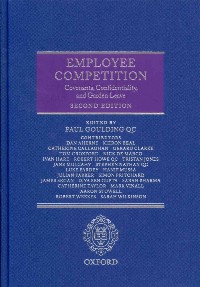
Employee Competition: Covenants, Confidentiality, and Garden Leaveis a comprehensive and practical text for solicitors, barristers and in-house lawyers practicing in employment law, and human resource professionals. It provides detailed analysis of the full range of issues that are encountered in contentious and non-contentious work concerning all forms of competition by employees, directors, partners, LLP members, and others.
Written by a team of leading practitioners from Blackstone Chambers and Olswang, the book combines an authoritative account of the substantive law with an overview of the relevant procedural issues. Topics covered include good faith and related duties, fiduciary duties, confidential information, garden leave, and restrictive covenants. Comprehensive coverage of available remedies (including injunctions, damages, and account of profits) ensures that the book is of real, practical value to practitioners.
This new edition has been substantially revised to take into account a wealth of case-law that has emerged since the previous edition was published. A notable development is in the area of economic torts and the liabilities of third parties, in light of the House of Lords' decision in MainstreamProperties v Young. This involved a fundamental review of the nature of economic torts and the role of intention in relation to third party liability. The section on team moves has been substantially revised to take account of recent case law including Tullett Prebon v BGC.
There is also a new chapter on the international dimension, reflecting the increasing importance of this issue, which includes examination of common law jurisdictional rules, European measures (such as the Judgments Regulation and Rome I Regulation), and important recent cases such as Samengo-Turnerv Marshand Duarte v Black & Decker.
Containing checklists, material on drafting, and sample clauses at the end of chapters, as well as appendices identifying key decisions in the field, the work provides a practical and user-friendly guide to employment covenants.
目录
Table Of Contents:
Table of Cases xxviii
Table of Legislation liv
List of Abbreviations lxiii
1 Introduction
Paul Goulding
Ivan Hare
A Aim 1(8)
B Structure of the book 9(19)
Substantive law (Chapters 1 to 8) 10(8)
Pre-action steps (Chapter 9) 18(1)
Remedies (Chapters 10 to 12) 19(4)
Appendices 23(5)
C Restraint of trade 28
Public policy 28(6)
Defining the doctrine 34(1)
Applying the doctrine 35(6)
The temporal extent of the doctrine 41(4)
Conclusion 45
2 Duties
Tom Croxford
James Segan
Mark Vinall
Dan Aherne
Luke Pardey
A Sources of duties 1(36)
Contract 5(1)
Express 5(18)
Implied 23(6)
Equity 29(5)
Statute 34(3)
B Who owes duties? 37(35)
Employees 37(1)
Contractual duties 37(2)
Fiduciary duties 39(20)
Directors 59(5)
Others 64(1)
Consultants 64(1)
Agents 65(4)
Partners 69(3)
C Good faith and fidelity 72(109)
Good faith as a fiduciary duty 72(1)
Overarching obligation 72(3)
No profit rule 75(5)
No conflict rule 80(18)
Disclosure rule 98(26)
Disclosing wider matters of interest to the employer 124(3)
Exceptions 127(12)
Good faith as a contractual duty 139(1)
Introduction 139(1)
Fact sensitivity 140(1)
Related duties 141(2)
Particular incidents of the duty 143(37)
Termination of the duty 180(1)
D Diverting business opportunities 181(41)
Introduction 181(4)
The development of the law 185(1)
Regal (Hastings) v Gulliver 185(3)
Industrial Development Consultants Ltd v Cooley 188(4)
Island Export Finance Ltd v Umunna 192(6)
Framlington v Anderson 198(3)
Brown v Bennett 201(2)
CMS Dolphin Ltd v Simonet 203(7)
Three `no conflict' decisions 210(3)
Ultraframe (UK) Ltd v Fielding 213(1)
Foster Bryant Surveying Ltd v Bryant 214(4)
The present state of the law 218(1)
Contractual liability 219(3)
E Companies Act 2006 222(11)
F Economic torts and the liabilities of third parties 233(27)
Introduction 233(1)
Inducing breach of contract 234(1)
Breach of contract 235(1)
Inducement 236(1)
The mental element 237(9)
Justification 246(1)
Causing loss by unlawful means 247(5)
Conspiracy 252(8)
G Team moves 260(39)
Introduction 260(2)
The current state of the law 262(13)
Issues for the employer 275(12)
Issues for the competitor 287(12)
H Checklist 299
Drafting issues 300(1)
Consider the status of the employee 300(2)
Employee 302(7)
Senior employees and directors 309(16)
Restrictions during employment 325(6)
Impact of the Companies Act 2006 331(2)
Economic torts and the liabilities of third parties 333(1)
Inducing breach of contract 333(5)
Causing loss by unlawful means 338(3)
Lawful means conspiracy 341(1)
Unlawful means conspiracy 342(3)
Team moves 345
3 Confidential Information and the Database Right
Robert Howe
Diya Sen Gupta
Sarah Wilkinson
Simon Pritchard
Dan Aherne
Luke Pardey
A The duty of confidence: an overview 1(25)
Origins 1(2)
The nature of the right 3(5)
Elements of the cause of action 8(2)
First element The necessary quality of confidence 10(3)
Second element Circumstances importing an obligation of confidence 13(5)
Third element Disclosure to the detriment of the claimant 18(2)
Impact of the Human Rights Act 1998 20(6)
B What is confidential information? 26(39)
The spectrum of confidence and the different means to obtain protection 26(5)
Attempts at defining classes of confidential information 31(4)
Distinguishing between the classes of information 35(3)
`Objective' versus `subjective' knowledge 38(2)
The `honesty' test 40(2)
The `harm' test 42(4)
Summary 46(6)
The confidential information must be capable of being precisely defined 52(5)
Relevance of efforts by the employer to make clear the information was confidential 57(4)
Rights of third parties 61(4)
C Express confidentiality clauses 65(19)
General 65(15)
The effect of dismissal on obligations of confidence 80(4)
D Defences 84(65)
Introduction 84(3)
Development of the public interest principle underlying defences 87(12)
The emphasis on reasonableness and proportionality 99(16)
Difference between the `public interest' and `what the public is interested in' 115(2)
Burden and standard of proof 117(3)
Types of public interest 120(1)
Iniquity 120(7)
Disclosure required by law 127(2)
Health 129(3)
Prevention of public harm, Convention Rights, and miscellaneous interests 132(5)
Protection of the confidant's legitimate interests 137(5)
Decay or loss of confidentiality 142(4)
Consent 146(3)
E Remedies 149(15)
The range of remedies available 149(1)
Damages 150(4)
Accounts and/or restitutionary damages 154(6)
Proprietary claims 160(1)
Negative injunctions 161(2)
Mandatory injunctions 163(1)
F Database protection 164(24)
Introduction and overview 164(3)
What is a `database' under the Regulations? 167(2)
When does the Database Right arise? 169(4)
Who owns the right? 173(3)
How is the Database Right infringed? 176(5)
The position of third parties who acquire information (for example, from an employee) 181(2)
Advantages over common law `confidential information' claims 183(3)
Procedural issues: should a database claim be brought in the Chancery Division? 186(2)
G Checklist 188
Is there a duty of confidence? 188(6)
What is confidential information? 194(5)
Distinguishing between the classes of information 199(3)
Can the confidential information be precisely defined? 202(1)
Liabilities of third parties 203(1)
Express confidentiality clauses 204(4)
The effect of dismissal on obligations of confidence 208(1)
Defences to a claim of breach of confidence 209(5)
Remedies 214(1)
Database protection 215
4 Garden Leave
Paul Goulding
Jane Mulcahy
Dan Aherne
Luke Pardey
A Introduction 1(6)
B The rule against specific performance of contracts of personal service 7(25)
The rule stated 7(6)
Early cases 13(1)
Lumley v Wagner 13(1)
Whitwood Chemical Co v Hardman 14(1)
Warner Bros v Nelson 15(3)
Later cases 18(1)
Page One Records Ltd v Britton 19(1)
Nichols v de Angelis 20(3)
Lotus v Jaguar 23(1)
Warren v Mendy 24(1)
The facts in Warren v Mendy 24(1)
The issue in Warren v Mendy 25(1)
Reconciling the earlier cases 26(2)
Principles stated in Warren v Mendy 28(3)
Subsequent developments 31(1)
C The emergence of garden leave 32(40)
Evening Standard Co Ltd v Henderson 34(1)
The facts of Evening Standard v Henderson 34(1)
The claimants' undertakings 35(1)
The Court of Appeal's decision 36(1)
Lessons of Evening Standard v Henderson 37(5)
Provident Financial Group plc v Hayward 42(1)
The facts of Provident v Hayward 43(3)
The Court of Appeal's decision 46(5)
Lessons of Provident v Hayward 51(4)
GFI Group Inc v Eaglestone 55(1)
The facts of GFI v Eaglestone 56(2)
The decision of Holland J 58(2)
Some concepts defined 60(1)
Garden leave 61(5)
Garden leave clause 66(1)
Garden leave injunction 67(4)
Garden leave undertakings 71(1)
D Garden leave clauses 72(31)
The right to work 72(3)
William Hill Organisation Ltd v Tucker 75(1)
The facts in William Hill v Tucker 75(3)
The approach of the Court of Appeal 78(6)
The importance of a garden leave clause 84(3)
Placing an employee on garden leave without a garden leave clause 87(1)
SG&R Valuation Service Co LLC v Boudrais 88(6)
Standard Life Health Care Ltd v Gorman 94(6)
The relationship between a garden leave clause and the notice period 100(2)
The relationship between a garden leave clause and restrictive covenants 102(1)
E Imposition of garden leave by the employer 103(58)
Keeping the contract alive 103(5)
Trust and confidence 108(4)
When is an employee on garden leave? 112(3)
The effect of garden leave on the contract of employment 115(2)
Balston Ltd v Headline Filters Ltd 117(4)
Symbian v Christensen 121(4)
RDF Media Group plc v Clements 125(6)
The employer's rights during garden leave 131(1)
Preventing the employee from working elsewhere 131(4)
Allocating different duties 135(1)
Requiring the employee to stay at home 136(5)
Contact with clients and other employees 141(2)
Return of property 143(2)
The employer's duties during garden leave 145(1)
Remuneration 145(8)
Holiday 153(4)
The employee's duties during garden leave 157(1)
Duty of good faith 157(1)
Express duties 158(1)
Directorships 159(2)
F Enforcement of garden leave by the court 161(71)
The general approach 161(2)
The need for justification 163(6)
Flexibility 169(4)
Discretion 173(1)
Making the application 174(2)
The more stringent test 176(1)
Speedy trial 177(2)
Evidence 179(5)
The course of proceedings 184(3)
Construction 187(4)
Legitimate business interests 191(2)
Confidential information 193(4)
Customer connection 197(8)
Stability of the workforce 205(3)
Assisting a competitor 208(4)
Company in administration 212(6)
Discretionary considerations 218(1)
The period of garden leave 219(8)
Threatened damage to the employer 227(3)
Harm to the employee 230(2)
G Checklist 232
Drafting 232(5)
Other related clauses 237(1)
Enforcing a garden leave provision 238
5 Restrictive Covenants
Paul Goulding
Gerard Clarke
Tristan Jones
Catherine Taylor
A The general approach to restrictive covenants 1(15)
The value of restrictive covenants 1(3)
The court's approach to enforcing restrictive covenants 4(7)
Restrictive covenants in settlement agreements and consent orders 11(5)
B Incorporating and changing restrictive covenants 16(39)
Incorporating restrictive covenants 17(10)
Changing restrictive covenants 27(1)
Variation by consent 28(6)
Dismissal and re-appointment 34(17)
Special case: changes following transfers of undertakings 51(1)
Special case: compromise agreements 52(3)
C Is it a restraint? 55(32)
The importance of the question 55(6)
The test 61(1)
Practical effect not form 61(3)
Application of the test in practice 64(15)
Consequences of a finding of unreasonable restraint of trade 79(8)
D Repudiation 87(74)
The importance of repudiation 87(9)
Repudiation and acceptance 96(2)
Is there a repudiation of the employment contract by the employer? 98(12)
Has the employee accepted the repudiation or affirmed the contract? 110(7)
The relevance of the employee's own breach 117(8)
The effect of repudiation 125(1)
The General Billposting rule 126(3)
Developments in the law after General Billposting v Atkinson 129(5)
Attempts to circumvent the General Billposting rule (`howsoever caused') 134(5)
Roek Refrigeration v Jones 139(10)
Developments in the law after Rock Refrigeration v Jones 149(6)
Context in which the General Billposting rule may be relied upon 155(5)
Conclusion on the effect of repudiation 160(1)
E Construction 161(27)
What construction involves 161(4)
General principles of construction 165(1)
Common sense principles 165(3)
Defects of drafting 168(11)
Alternative meanings 179(5)
Construction and breach 184(4)
F Legitimate interests 188(34)
The requirement of a legitimate business interest 188(3)
The categories of interests are not closed 191(2)
Trade secrets and confidential information 193(8)
Customer connection 201(6)
Stability of the workforce 207(4)
Introductory words identifying the legitimate interests 211(4)
Covenants for the benefit of group companies 215(7)
G Reasonableness 222(73)
The court's general approach to reasonableness 222(11)
Confidential information covenants 233(1)
Area covenants 234(1)
Nature of area covenants 234(2)
Suitability of area covenants 236(5)
Nature of the business 241(1)
Temporal and spatial limits 242(3)
Non-competition covenants 245(1)
Protection of trade secrets and confidential information 245(6)
Protection of customer connection 251(1)
Defining the type of business 252(1)
Reasonableness factors 253(1)
Client non-solicitation covenants 254(1)
Meaning of solicitation 255(1)
Contact with the customers 256(4)
Prospective customers 260(5)
Duration 265(1)
Client non-dealing covenants 266(2)
Employee non-poaching covenants 268(5)
Employee non-employment covenants 273(5)
Miscellaneous post-termination restrictions 278(1)
Association 278(1)
Disparagement 279(2)
Ancillary clauses 281(1)
Provisions permitting consent 281(2)
Provisions requiring notification 283(4)
Provisions permitting rewriting 287(1)
Interrelationship between garden leave and restrictive covenants 288(7)
H Severance 295(16)
Severance principles 295(9)
Application of severance principles 304(7)
I Discretion 311(8)
Discretionary considerations 313(1)
Illustrations of the exercise of discretion 314(5)
J Restrictive covenants and TUPE 319(19)
Introduction 319(4)
Construction issues 323(5)
Incorporation issues 328(6)
Issues related to refusal to transfer 334(4)
K Checklist 338
Enforcing restrictive covenants 339(15)
Introducing changes to covenants 354
6 Vendor-Purchaser, Partnership, and Other Commercial Agreements
Paul Goulding
Robert Weekes
Dan Aherne
Luke Pardey
A Introduction 1(2)
B Vendor-purchaser agreements 3(38)
Overview 3(1)
Distinction between vendor-purchaser and employment covenants 3(1)
Identity of the covenantor and the covenantee in vendor-purchaser covenants 4(3)
Meaning of goodwill 7(3)
Basis for the distinction between vendor-purchaser and employment covenants 10(5)
Categorizing the covenants 15(10)
Reasonableness of covenants in vendor-purchaser agreements 25(13)
Implied covenants in the vendor-purchaser context 38(3)
C Partnerships 41(56)
Introduction 41(1)
Partnerships and restraint of trade 41(2)
Sources of partnership law 43(1)
Types of partnership 44(4)
Categories of partner 48(3)
Duty of good faith 51(1)
Garden leave 52(5)
Implied restriction after retirement 57(2)
Express restrictions after retirement 59(3)
Equity partners 62(17)
Salaried partners 79(6)
Solicitors 85(1)
A special case? 85(5)
Enforcing restrictive covenants against employed solicitors 90(7)
D Other commercial agreements 97(14)
Introduction 97(1)
Joint venture agreements 98(1)
Dawnay, Day v D'Alphen 98(5)
Dranez Anstalt v Hayek 103(5)
Franchise agreements 108(3)
E Checklist 111
Vendor-purchaser agreements 111(15)
Partnership agreements 126(11)
Joint ventures and other commercial agreements 137
7 The International Dimension
Catherine Taylor
Mark Vinall
A Introduction 1(4)
B The rules applicable to the relationship between employer and employee 5(53)
Jurisdiction---which court should hear the claim? 5(2)
The Judgments Regulation 7(6)
Samengo- Turner v Marsh & McLennan 13(2)
The common law rules 15(7)
Applicable law 22(3)
`Chosen' applicable law 25(5)
No chosen applicable law 30(4)
Qualifications to the choice of law rules 34(6)
Duarte v Black & Decker Corp 40(4)
Non-contractual relationships 44(5)
Enforcement 49(9)
C The international dimension and the recruiting employer 58(298)
D Flow charts 356
Jurisdiction---the Judgments Regulation---individual contract of employment 356(1)
Jurisdiction---the common law rules---individual contract of employment 357(1)
Applicable law of an individual contract of employment 358
8 Competition, Sport, Human Rights, and Intellectual Property Law
Kieron Beal
Nick De Marco
Hanif Mussa
Sarah Sharma
A Introduction 1(5)
B Competition law 6(68)
Introduction 6(5)
The relevance of competition law to employers and employees 11(6)
The interaction between competition law and restraint of trade 17(16)
Article 101(1) TFEU and the Chapter I prohibition: general principles 33(1)
Agreements, decisions, and practices 33(5)
Object or effect 38(5)
Prevention, restriction, or distortion of competition 43(4)
Restrictions necessary for the promotion of competition or to protect legitimate business interests 47(12)
Effect on trade between member states and the de minimis doctrine 59(3)
Article 101 (2)and section 2(4) of the Competition Act 1998 62(2)
Exemption 64(4)
The potential application of Article 102 TFEU and the Chapter II prohibition 68(6)
C Sports cases 74(29)
Introduction 74(4)
Restraint of trade 78(25)
D Human rights concepts 103(18)
The European Convention on Human Rights 104(13)
The Charter 117(4)
E Intellectual property 121
Introduction 121(1)
Copyright 122(1)
The nature of copyright 122(3)
Former employees and copyright infringement 125(7)
Designs 132(4)
Databases 136(1)
The database right 136(2)
Inventions and patents 138(6)
Registered trade marks and passing off 144(1)
Registered trade marks 145(2)
Passing off 147(2)
Conduct amounting to trade mark infringement and passing off 149(10)
Remedies and procedure 159
9 Pre-Action Steps
Catherine Taylor
A Introduction 1(9)
B The claimant employer 10(96)
The contract of employment---a business asset 10(2)
Other practical preventative steps 12(2)
Departing employees---the danger signs 14(2)
How to deal with resignations 16(1)
Resignation on notice 17(9)
Resignation in breach 26(4)
Resignation and claim for constructive dismissal 30(3)
Termination of employment by the claimant employer 33(3)
Fiduciary duties 36(2)
The new employer 38(3)
Team moves 41(5)
Investigations 46(2)
General points in relation to evidence collection 48(5)
Paper and other physical evidence 53(1)
Computers 54(4)
Telephony 58(2)
Surveillance 60(6)
Disciplinary processes 66(11)
Other miscellaneous investigations 77(3)
Pre-action court orders 80(1)
Letters before action 81(1)
Who should correspond? 82(3)
The addressees of the letters 85(3)
Structure of the letters 88(1)
The threat 89(10)
Enclosures 99(2)
Means of delivery 101(2)
Potential for settlement 103(3)
C The defendant employee 106(42)
The defendant employee's obligations 106(1)
Contract of employment 107(12)
Other obligations 119(2)
Constructive dismissal 121(1)
Agreement with the new employer 122(8)
Dos and don'ts during employment 130(1)
Single employee leaving 131(4)
Competitive start-up 135(5)
Team moves 140(6)
Response to letter before action 146(2)
D The defendant employer 148
Potential liabilities 148(1)
The economic torts 148(6)
Indemnities 154(1)
Analysis of the employees' obligations 155(3)
Terms of the contracts and indemnities for the defendant employees 158(2)
Tactics 160(1)
Representation 160(2)
Privilege 162(1)
Team moves 163(13)
Response to the letter before action 176
10 Injunctions and Other Interm Remedies
Paul Goulding
Tom Croxford
Ivan Hare
Stephen Nathan
Catherine Taylor
A Introduction 1(20)
Remedies in general 1(4)
Injunctions: the basics 5(1)
Jurisdiction to grant an injunction 6(2)
Prohibitory, springboard, and mandatory injunctions 8(4)
Interim and final injunctions 12(4)
Discretionary considerations 16(5)
B Interim injunctions 21(99)
A typical scenario 21(3)
Prohibitory injunctions 24(2)
The Lawrence David v Ashton approach 26(4)
The American Cyanamid principles 30(22)
Exceptions to the American Cyanamid principles 52(5)
Springboard injunctions 57(1)
Roxburgh J's classic statement in the Terrapin case 58(2)
Limited duration of springboard relief 60(10)
Springboard relief is not confined to confidential information cases 70(7)
Applying the brakes to the springboard doctrine? 77(9)
Mandatory injunctions 86(1)
Undertaking in damages 87(1)
Preliminary 87(4)
Defendant who is a respondent to an application for an injunction 91(5)
Defendant who is not a respondent to the application for an injunction 96(4)
Defendant who is added after the undertaking has been given 100(3)
Person who has been served with the order or who is given notice of it 103(6)
Other persons 109(4)
Security may be required 113(3)
The basis on which compensation is assessed 116(4)
C Other interim orders 120(81)
Search orders 120(2)
Nature of a search order 122(2)
Standard form of search order 124(3)
Conditions for the grant of a search order 127(6)
Search orders in employee competition cases 133(2)
Application for a search order 135(5)
Execution of a search order 140(8)
Undertaking in damages 148(2)
Doorstep pillers 150(5)
Delivery up orders 155(7)
Destruction orders 162(3)
Detention, preservation, and inspection orders 165(2)
Disclosure orders 167(12)
Norwich Pharmacal orders 179(9)
Freezing orders 188(8)
Interim declarations 196(5)
D Final injunctions 201(7)
E Contempt of court 208(16)
Introduction 208(2)
Safeguards 210(1)
Establishing the breach 211(1)
Considering alternatives 212(2)
Procedural requirements 214(4)
Procedure generally 218(6)
F Checklist 224
Interim injunctions---general considerations 224(7)
Springboard injunctions 231(4)
Undertaking in damages 235(1)
Search orders 236(6)
Freezing order 242(1)
Interim declaration 243(1)
Final injunction 244(1)
Contempt of court 245
11 Damages and Other Remedies
Stephen Nathan
Catherine Taylor
A Introduction 1(7)
B Compensatory damages for breach of contract 8(30)
Causation 9(4)
The standard of proof required of a claimant 13(1)
Past and future loss 14(6)
The loss must not be too remote 20(10)
Quantum of recoverable losses 30(1)
Unreasonable acts by the employer 31(1)
Claimant's duty to mitigate 32(4)
The relevance of the date of assessment and its impact on claims 36(2)
C Restitutionary or gain-based damages for breach of contract 38(28)
General 38(6)
A-G v Blake 44(7)
The new remedy of gain-based damages for a breach of contract after A-G v Blake 51(12)
Three important features 63(2)
Conclusion 65(1)
D Contractual damages for breach of confidence 66(4)
E Exemplary damages 70(12)
General 70(2)
Lord Devlin's second category 72(1)
Time for review by the court? 73(5)
Conclusion on contractual position 78(3)
Breach of confidence and exemplary damages 81(1)
F Liquidated damages 82(12)
General 82(4)
Liquidated damages or a penalty? 86(8)
G An account of profits and equitable damages 94(38)
Preliminary 94(2)
Procedure 96(1)
The first category---breach of fiduciary duties 97(6)
The second category---misuse of confidential information 103(4)
The third category---an account of profits as a remedy for breach of contract 107(4)
Taking an account and the alternative remedy of damages 111(2)
Damages as an alternative 113(6)
Misuse of confidential information 119(2)
Douglas v Hello! Ltd (No 3)---a problem or not? 121(7)
Exemplary damages 128(1)
Articles 8 and 10 of the European Convention on Human Rights---the tension between them 129(3)
H Delivery up and destruction orders 132(5)
I Tracing 137(5)
J Declarations 142(2)
K Alternative remedies---making an election 144(7)
L Remedies against a third party 151(15)
Remedies against a third party for inducing a breach of the employment contract 151(1)
General 151(5)
Can the claimant obtain restitutionary or gain-based damages? 156(1)
Exemplary damages 157(3)
Remedies against a third party for assisting in a breach of fiduciary duty 160(2)
Remedies against a third party for breach of confidence 162(1)
General 162(3)
Exemplary damages 165(1)
M Interim payment 166(8)
N Checklist 174
General 174(3)
Compensatory damages 177(2)
Restitutionary or gain-based damages 179(3)
Exemplary or punitive damages 182(3)
Liquidated damages 185(1)
Account of profits and equitable damages 186
12 Practice and Procedure
Catherine Callaghan
Robert Weekes
A The Civil Procedure Rules 1(7)
Background 1(1)
Structure and content 2(3)
The overriding objective 5(2)
The main relevant rules 7(1)
B Statements of case 8(14)
General 8(1)
The claim form 9(1)
The content of the claim form 10(2)
Service of the claim form 12(1)
Pre-claim applications 13(1)
Particulars of claim 14(1)
Service of the particulars of claim 15(1)
The content of the particulars of claim 16(1)
Defence 17(1)
The content of the defence 18(2)
Service of the defence 20(1)
Reply 21(1)
C Applications for interim relief 22(35)
General 22(3)
Notice of an application 25(1)
Whether or not to make an application on notice 25(2)
Applications with notice 27(2)
Applications without notice 29(12)
Documents required for application 41(1)
Application notice 42(3)
Claim form 45(1)
Supporting evidence 46(5)
Draft order 51(4)
Where to make the application 55(2)
D Disclosure 57(21)
Introduction 57(1)
Pre-action disclosure 58(7)
Disclosure during proceedings 65(1)
Standard disclosure 66(4)
Specific disclosure 70(2)
Non-party disclosure 72(6)
E Evidence 78(19)
Witness evidence 78(1)
Witness statements 79(5)
Oral evidence at trial 84(4)
Expert evidence 88(1)
The court's power to control expert evidence 88(3)
The expert's duty 91(6)
F Trial 97(18)
Speedy trial 99(8)
Guidelines for trial preparation 107(8)
G Judgments and orders 115(16)
General rules 115(7)
Tomlin orders 122(9)
H Appeals 131(12)
Obstacles to appeal of interim orders 132(5)
Appeal procedure 137(6)
I Costs 143(36)
General costs rules 143(1)
The court's discretion on costs 143(4)
Basis of assessment 147(2)
Procedure for assessing costs 149(3)
Costs against non-parties 152(3)
Costs on interim applications 155(2)
Part 36 157(1)
General 157(3)
The form and content of a Part 36 offer or payment 160(3)
Acceptance of Part 36 offers 163(2)
The costs consequences 165(14)
J Mediation and settlement 179(426)
Advantages of settlement 179(10)
Obligation to consider settlement 189(3)
Costs of settlement 192(1)
Costs of refusing to seek to settle 193(7)
Costs of successful settlement 200(405)
APPENDICES
Appendix 1 Computer Forensic Investigations 605(16)
Julian Parker
Aaron Stowell
Appendix 2 Sample Employee Duties Clauses 621(3)
Dan Aherne
Luke Pardey
Appendix 3 Sample Confidential Information Clauses 624(2)
Dan Aherne
Luke Pardey
Appendix 4 Sample Garden Leave Clauses 626(2)
Catherine Taylor
Appendix 5 Sample Particulars of Claim and Interim Injunction in Garden Leave Case 628(5)
Jane Mulcahy
Appendix 6 Drafting Restrictive Covenants: A Note 633(4)
Catherine Taylor
Appendix 7 Sample Restrictive Covenants (Employment) 637(6)
Catherine Taylor
Appendix 8 Sample Restrictive Covenants (Share and Business Sale and Partnership) 643(13)
Dan Aherney Luke Pardey
Appendix 9 Sample Pre-Action Letters 656(8)
Catherine Taylor
Appendix 10 Sample Witness Statement in Support of Application for Interim Injunction to Restrain Breach of Restrictive Covenant 664(2)
Robert Weekes
Appendix 11 Sample Prayer for Relief for Inclusion in Particulars of Claim 666(1)
Stephen Nathan
Appendix 12 Summaries of Cases on Restrictive Covenants 667(34)
Catherine Taylor
Index 701
Table of Cases xxviii
Table of Legislation liv
List of Abbreviations lxiii
1 Introduction
Paul Goulding
Ivan Hare
A Aim 1(8)
B Structure of the book 9(19)
Substantive law (Chapters 1 to 8) 10(8)
Pre-action steps (Chapter 9) 18(1)
Remedies (Chapters 10 to 12) 19(4)
Appendices 23(5)
C Restraint of trade 28
Public policy 28(6)
Defining the doctrine 34(1)
Applying the doctrine 35(6)
The temporal extent of the doctrine 41(4)
Conclusion 45
2 Duties
Tom Croxford
James Segan
Mark Vinall
Dan Aherne
Luke Pardey
A Sources of duties 1(36)
Contract 5(1)
Express 5(18)
Implied 23(6)
Equity 29(5)
Statute 34(3)
B Who owes duties? 37(35)
Employees 37(1)
Contractual duties 37(2)
Fiduciary duties 39(20)
Directors 59(5)
Others 64(1)
Consultants 64(1)
Agents 65(4)
Partners 69(3)
C Good faith and fidelity 72(109)
Good faith as a fiduciary duty 72(1)
Overarching obligation 72(3)
No profit rule 75(5)
No conflict rule 80(18)
Disclosure rule 98(26)
Disclosing wider matters of interest to the employer 124(3)
Exceptions 127(12)
Good faith as a contractual duty 139(1)
Introduction 139(1)
Fact sensitivity 140(1)
Related duties 141(2)
Particular incidents of the duty 143(37)
Termination of the duty 180(1)
D Diverting business opportunities 181(41)
Introduction 181(4)
The development of the law 185(1)
Regal (Hastings) v Gulliver 185(3)
Industrial Development Consultants Ltd v Cooley 188(4)
Island Export Finance Ltd v Umunna 192(6)
Framlington v Anderson 198(3)
Brown v Bennett 201(2)
CMS Dolphin Ltd v Simonet 203(7)
Three `no conflict' decisions 210(3)
Ultraframe (UK) Ltd v Fielding 213(1)
Foster Bryant Surveying Ltd v Bryant 214(4)
The present state of the law 218(1)
Contractual liability 219(3)
E Companies Act 2006 222(11)
F Economic torts and the liabilities of third parties 233(27)
Introduction 233(1)
Inducing breach of contract 234(1)
Breach of contract 235(1)
Inducement 236(1)
The mental element 237(9)
Justification 246(1)
Causing loss by unlawful means 247(5)
Conspiracy 252(8)
G Team moves 260(39)
Introduction 260(2)
The current state of the law 262(13)
Issues for the employer 275(12)
Issues for the competitor 287(12)
H Checklist 299
Drafting issues 300(1)
Consider the status of the employee 300(2)
Employee 302(7)
Senior employees and directors 309(16)
Restrictions during employment 325(6)
Impact of the Companies Act 2006 331(2)
Economic torts and the liabilities of third parties 333(1)
Inducing breach of contract 333(5)
Causing loss by unlawful means 338(3)
Lawful means conspiracy 341(1)
Unlawful means conspiracy 342(3)
Team moves 345
3 Confidential Information and the Database Right
Robert Howe
Diya Sen Gupta
Sarah Wilkinson
Simon Pritchard
Dan Aherne
Luke Pardey
A The duty of confidence: an overview 1(25)
Origins 1(2)
The nature of the right 3(5)
Elements of the cause of action 8(2)
First element The necessary quality of confidence 10(3)
Second element Circumstances importing an obligation of confidence 13(5)
Third element Disclosure to the detriment of the claimant 18(2)
Impact of the Human Rights Act 1998 20(6)
B What is confidential information? 26(39)
The spectrum of confidence and the different means to obtain protection 26(5)
Attempts at defining classes of confidential information 31(4)
Distinguishing between the classes of information 35(3)
`Objective' versus `subjective' knowledge 38(2)
The `honesty' test 40(2)
The `harm' test 42(4)
Summary 46(6)
The confidential information must be capable of being precisely defined 52(5)
Relevance of efforts by the employer to make clear the information was confidential 57(4)
Rights of third parties 61(4)
C Express confidentiality clauses 65(19)
General 65(15)
The effect of dismissal on obligations of confidence 80(4)
D Defences 84(65)
Introduction 84(3)
Development of the public interest principle underlying defences 87(12)
The emphasis on reasonableness and proportionality 99(16)
Difference between the `public interest' and `what the public is interested in' 115(2)
Burden and standard of proof 117(3)
Types of public interest 120(1)
Iniquity 120(7)
Disclosure required by law 127(2)
Health 129(3)
Prevention of public harm, Convention Rights, and miscellaneous interests 132(5)
Protection of the confidant's legitimate interests 137(5)
Decay or loss of confidentiality 142(4)
Consent 146(3)
E Remedies 149(15)
The range of remedies available 149(1)
Damages 150(4)
Accounts and/or restitutionary damages 154(6)
Proprietary claims 160(1)
Negative injunctions 161(2)
Mandatory injunctions 163(1)
F Database protection 164(24)
Introduction and overview 164(3)
What is a `database' under the Regulations? 167(2)
When does the Database Right arise? 169(4)
Who owns the right? 173(3)
How is the Database Right infringed? 176(5)
The position of third parties who acquire information (for example, from an employee) 181(2)
Advantages over common law `confidential information' claims 183(3)
Procedural issues: should a database claim be brought in the Chancery Division? 186(2)
G Checklist 188
Is there a duty of confidence? 188(6)
What is confidential information? 194(5)
Distinguishing between the classes of information 199(3)
Can the confidential information be precisely defined? 202(1)
Liabilities of third parties 203(1)
Express confidentiality clauses 204(4)
The effect of dismissal on obligations of confidence 208(1)
Defences to a claim of breach of confidence 209(5)
Remedies 214(1)
Database protection 215
4 Garden Leave
Paul Goulding
Jane Mulcahy
Dan Aherne
Luke Pardey
A Introduction 1(6)
B The rule against specific performance of contracts of personal service 7(25)
The rule stated 7(6)
Early cases 13(1)
Lumley v Wagner 13(1)
Whitwood Chemical Co v Hardman 14(1)
Warner Bros v Nelson 15(3)
Later cases 18(1)
Page One Records Ltd v Britton 19(1)
Nichols v de Angelis 20(3)
Lotus v Jaguar 23(1)
Warren v Mendy 24(1)
The facts in Warren v Mendy 24(1)
The issue in Warren v Mendy 25(1)
Reconciling the earlier cases 26(2)
Principles stated in Warren v Mendy 28(3)
Subsequent developments 31(1)
C The emergence of garden leave 32(40)
Evening Standard Co Ltd v Henderson 34(1)
The facts of Evening Standard v Henderson 34(1)
The claimants' undertakings 35(1)
The Court of Appeal's decision 36(1)
Lessons of Evening Standard v Henderson 37(5)
Provident Financial Group plc v Hayward 42(1)
The facts of Provident v Hayward 43(3)
The Court of Appeal's decision 46(5)
Lessons of Provident v Hayward 51(4)
GFI Group Inc v Eaglestone 55(1)
The facts of GFI v Eaglestone 56(2)
The decision of Holland J 58(2)
Some concepts defined 60(1)
Garden leave 61(5)
Garden leave clause 66(1)
Garden leave injunction 67(4)
Garden leave undertakings 71(1)
D Garden leave clauses 72(31)
The right to work 72(3)
William Hill Organisation Ltd v Tucker 75(1)
The facts in William Hill v Tucker 75(3)
The approach of the Court of Appeal 78(6)
The importance of a garden leave clause 84(3)
Placing an employee on garden leave without a garden leave clause 87(1)
SG&R Valuation Service Co LLC v Boudrais 88(6)
Standard Life Health Care Ltd v Gorman 94(6)
The relationship between a garden leave clause and the notice period 100(2)
The relationship between a garden leave clause and restrictive covenants 102(1)
E Imposition of garden leave by the employer 103(58)
Keeping the contract alive 103(5)
Trust and confidence 108(4)
When is an employee on garden leave? 112(3)
The effect of garden leave on the contract of employment 115(2)
Balston Ltd v Headline Filters Ltd 117(4)
Symbian v Christensen 121(4)
RDF Media Group plc v Clements 125(6)
The employer's rights during garden leave 131(1)
Preventing the employee from working elsewhere 131(4)
Allocating different duties 135(1)
Requiring the employee to stay at home 136(5)
Contact with clients and other employees 141(2)
Return of property 143(2)
The employer's duties during garden leave 145(1)
Remuneration 145(8)
Holiday 153(4)
The employee's duties during garden leave 157(1)
Duty of good faith 157(1)
Express duties 158(1)
Directorships 159(2)
F Enforcement of garden leave by the court 161(71)
The general approach 161(2)
The need for justification 163(6)
Flexibility 169(4)
Discretion 173(1)
Making the application 174(2)
The more stringent test 176(1)
Speedy trial 177(2)
Evidence 179(5)
The course of proceedings 184(3)
Construction 187(4)
Legitimate business interests 191(2)
Confidential information 193(4)
Customer connection 197(8)
Stability of the workforce 205(3)
Assisting a competitor 208(4)
Company in administration 212(6)
Discretionary considerations 218(1)
The period of garden leave 219(8)
Threatened damage to the employer 227(3)
Harm to the employee 230(2)
G Checklist 232
Drafting 232(5)
Other related clauses 237(1)
Enforcing a garden leave provision 238
5 Restrictive Covenants
Paul Goulding
Gerard Clarke
Tristan Jones
Catherine Taylor
A The general approach to restrictive covenants 1(15)
The value of restrictive covenants 1(3)
The court's approach to enforcing restrictive covenants 4(7)
Restrictive covenants in settlement agreements and consent orders 11(5)
B Incorporating and changing restrictive covenants 16(39)
Incorporating restrictive covenants 17(10)
Changing restrictive covenants 27(1)
Variation by consent 28(6)
Dismissal and re-appointment 34(17)
Special case: changes following transfers of undertakings 51(1)
Special case: compromise agreements 52(3)
C Is it a restraint? 55(32)
The importance of the question 55(6)
The test 61(1)
Practical effect not form 61(3)
Application of the test in practice 64(15)
Consequences of a finding of unreasonable restraint of trade 79(8)
D Repudiation 87(74)
The importance of repudiation 87(9)
Repudiation and acceptance 96(2)
Is there a repudiation of the employment contract by the employer? 98(12)
Has the employee accepted the repudiation or affirmed the contract? 110(7)
The relevance of the employee's own breach 117(8)
The effect of repudiation 125(1)
The General Billposting rule 126(3)
Developments in the law after General Billposting v Atkinson 129(5)
Attempts to circumvent the General Billposting rule (`howsoever caused') 134(5)
Roek Refrigeration v Jones 139(10)
Developments in the law after Rock Refrigeration v Jones 149(6)
Context in which the General Billposting rule may be relied upon 155(5)
Conclusion on the effect of repudiation 160(1)
E Construction 161(27)
What construction involves 161(4)
General principles of construction 165(1)
Common sense principles 165(3)
Defects of drafting 168(11)
Alternative meanings 179(5)
Construction and breach 184(4)
F Legitimate interests 188(34)
The requirement of a legitimate business interest 188(3)
The categories of interests are not closed 191(2)
Trade secrets and confidential information 193(8)
Customer connection 201(6)
Stability of the workforce 207(4)
Introductory words identifying the legitimate interests 211(4)
Covenants for the benefit of group companies 215(7)
G Reasonableness 222(73)
The court's general approach to reasonableness 222(11)
Confidential information covenants 233(1)
Area covenants 234(1)
Nature of area covenants 234(2)
Suitability of area covenants 236(5)
Nature of the business 241(1)
Temporal and spatial limits 242(3)
Non-competition covenants 245(1)
Protection of trade secrets and confidential information 245(6)
Protection of customer connection 251(1)
Defining the type of business 252(1)
Reasonableness factors 253(1)
Client non-solicitation covenants 254(1)
Meaning of solicitation 255(1)
Contact with the customers 256(4)
Prospective customers 260(5)
Duration 265(1)
Client non-dealing covenants 266(2)
Employee non-poaching covenants 268(5)
Employee non-employment covenants 273(5)
Miscellaneous post-termination restrictions 278(1)
Association 278(1)
Disparagement 279(2)
Ancillary clauses 281(1)
Provisions permitting consent 281(2)
Provisions requiring notification 283(4)
Provisions permitting rewriting 287(1)
Interrelationship between garden leave and restrictive covenants 288(7)
H Severance 295(16)
Severance principles 295(9)
Application of severance principles 304(7)
I Discretion 311(8)
Discretionary considerations 313(1)
Illustrations of the exercise of discretion 314(5)
J Restrictive covenants and TUPE 319(19)
Introduction 319(4)
Construction issues 323(5)
Incorporation issues 328(6)
Issues related to refusal to transfer 334(4)
K Checklist 338
Enforcing restrictive covenants 339(15)
Introducing changes to covenants 354
6 Vendor-Purchaser, Partnership, and Other Commercial Agreements
Paul Goulding
Robert Weekes
Dan Aherne
Luke Pardey
A Introduction 1(2)
B Vendor-purchaser agreements 3(38)
Overview 3(1)
Distinction between vendor-purchaser and employment covenants 3(1)
Identity of the covenantor and the covenantee in vendor-purchaser covenants 4(3)
Meaning of goodwill 7(3)
Basis for the distinction between vendor-purchaser and employment covenants 10(5)
Categorizing the covenants 15(10)
Reasonableness of covenants in vendor-purchaser agreements 25(13)
Implied covenants in the vendor-purchaser context 38(3)
C Partnerships 41(56)
Introduction 41(1)
Partnerships and restraint of trade 41(2)
Sources of partnership law 43(1)
Types of partnership 44(4)
Categories of partner 48(3)
Duty of good faith 51(1)
Garden leave 52(5)
Implied restriction after retirement 57(2)
Express restrictions after retirement 59(3)
Equity partners 62(17)
Salaried partners 79(6)
Solicitors 85(1)
A special case? 85(5)
Enforcing restrictive covenants against employed solicitors 90(7)
D Other commercial agreements 97(14)
Introduction 97(1)
Joint venture agreements 98(1)
Dawnay, Day v D'Alphen 98(5)
Dranez Anstalt v Hayek 103(5)
Franchise agreements 108(3)
E Checklist 111
Vendor-purchaser agreements 111(15)
Partnership agreements 126(11)
Joint ventures and other commercial agreements 137
7 The International Dimension
Catherine Taylor
Mark Vinall
A Introduction 1(4)
B The rules applicable to the relationship between employer and employee 5(53)
Jurisdiction---which court should hear the claim? 5(2)
The Judgments Regulation 7(6)
Samengo- Turner v Marsh & McLennan 13(2)
The common law rules 15(7)
Applicable law 22(3)
`Chosen' applicable law 25(5)
No chosen applicable law 30(4)
Qualifications to the choice of law rules 34(6)
Duarte v Black & Decker Corp 40(4)
Non-contractual relationships 44(5)
Enforcement 49(9)
C The international dimension and the recruiting employer 58(298)
D Flow charts 356
Jurisdiction---the Judgments Regulation---individual contract of employment 356(1)
Jurisdiction---the common law rules---individual contract of employment 357(1)
Applicable law of an individual contract of employment 358
8 Competition, Sport, Human Rights, and Intellectual Property Law
Kieron Beal
Nick De Marco
Hanif Mussa
Sarah Sharma
A Introduction 1(5)
B Competition law 6(68)
Introduction 6(5)
The relevance of competition law to employers and employees 11(6)
The interaction between competition law and restraint of trade 17(16)
Article 101(1) TFEU and the Chapter I prohibition: general principles 33(1)
Agreements, decisions, and practices 33(5)
Object or effect 38(5)
Prevention, restriction, or distortion of competition 43(4)
Restrictions necessary for the promotion of competition or to protect legitimate business interests 47(12)
Effect on trade between member states and the de minimis doctrine 59(3)
Article 101 (2)and section 2(4) of the Competition Act 1998 62(2)
Exemption 64(4)
The potential application of Article 102 TFEU and the Chapter II prohibition 68(6)
C Sports cases 74(29)
Introduction 74(4)
Restraint of trade 78(25)
D Human rights concepts 103(18)
The European Convention on Human Rights 104(13)
The Charter 117(4)
E Intellectual property 121
Introduction 121(1)
Copyright 122(1)
The nature of copyright 122(3)
Former employees and copyright infringement 125(7)
Designs 132(4)
Databases 136(1)
The database right 136(2)
Inventions and patents 138(6)
Registered trade marks and passing off 144(1)
Registered trade marks 145(2)
Passing off 147(2)
Conduct amounting to trade mark infringement and passing off 149(10)
Remedies and procedure 159
9 Pre-Action Steps
Catherine Taylor
A Introduction 1(9)
B The claimant employer 10(96)
The contract of employment---a business asset 10(2)
Other practical preventative steps 12(2)
Departing employees---the danger signs 14(2)
How to deal with resignations 16(1)
Resignation on notice 17(9)
Resignation in breach 26(4)
Resignation and claim for constructive dismissal 30(3)
Termination of employment by the claimant employer 33(3)
Fiduciary duties 36(2)
The new employer 38(3)
Team moves 41(5)
Investigations 46(2)
General points in relation to evidence collection 48(5)
Paper and other physical evidence 53(1)
Computers 54(4)
Telephony 58(2)
Surveillance 60(6)
Disciplinary processes 66(11)
Other miscellaneous investigations 77(3)
Pre-action court orders 80(1)
Letters before action 81(1)
Who should correspond? 82(3)
The addressees of the letters 85(3)
Structure of the letters 88(1)
The threat 89(10)
Enclosures 99(2)
Means of delivery 101(2)
Potential for settlement 103(3)
C The defendant employee 106(42)
The defendant employee's obligations 106(1)
Contract of employment 107(12)
Other obligations 119(2)
Constructive dismissal 121(1)
Agreement with the new employer 122(8)
Dos and don'ts during employment 130(1)
Single employee leaving 131(4)
Competitive start-up 135(5)
Team moves 140(6)
Response to letter before action 146(2)
D The defendant employer 148
Potential liabilities 148(1)
The economic torts 148(6)
Indemnities 154(1)
Analysis of the employees' obligations 155(3)
Terms of the contracts and indemnities for the defendant employees 158(2)
Tactics 160(1)
Representation 160(2)
Privilege 162(1)
Team moves 163(13)
Response to the letter before action 176
10 Injunctions and Other Interm Remedies
Paul Goulding
Tom Croxford
Ivan Hare
Stephen Nathan
Catherine Taylor
A Introduction 1(20)
Remedies in general 1(4)
Injunctions: the basics 5(1)
Jurisdiction to grant an injunction 6(2)
Prohibitory, springboard, and mandatory injunctions 8(4)
Interim and final injunctions 12(4)
Discretionary considerations 16(5)
B Interim injunctions 21(99)
A typical scenario 21(3)
Prohibitory injunctions 24(2)
The Lawrence David v Ashton approach 26(4)
The American Cyanamid principles 30(22)
Exceptions to the American Cyanamid principles 52(5)
Springboard injunctions 57(1)
Roxburgh J's classic statement in the Terrapin case 58(2)
Limited duration of springboard relief 60(10)
Springboard relief is not confined to confidential information cases 70(7)
Applying the brakes to the springboard doctrine? 77(9)
Mandatory injunctions 86(1)
Undertaking in damages 87(1)
Preliminary 87(4)
Defendant who is a respondent to an application for an injunction 91(5)
Defendant who is not a respondent to the application for an injunction 96(4)
Defendant who is added after the undertaking has been given 100(3)
Person who has been served with the order or who is given notice of it 103(6)
Other persons 109(4)
Security may be required 113(3)
The basis on which compensation is assessed 116(4)
C Other interim orders 120(81)
Search orders 120(2)
Nature of a search order 122(2)
Standard form of search order 124(3)
Conditions for the grant of a search order 127(6)
Search orders in employee competition cases 133(2)
Application for a search order 135(5)
Execution of a search order 140(8)
Undertaking in damages 148(2)
Doorstep pillers 150(5)
Delivery up orders 155(7)
Destruction orders 162(3)
Detention, preservation, and inspection orders 165(2)
Disclosure orders 167(12)
Norwich Pharmacal orders 179(9)
Freezing orders 188(8)
Interim declarations 196(5)
D Final injunctions 201(7)
E Contempt of court 208(16)
Introduction 208(2)
Safeguards 210(1)
Establishing the breach 211(1)
Considering alternatives 212(2)
Procedural requirements 214(4)
Procedure generally 218(6)
F Checklist 224
Interim injunctions---general considerations 224(7)
Springboard injunctions 231(4)
Undertaking in damages 235(1)
Search orders 236(6)
Freezing order 242(1)
Interim declaration 243(1)
Final injunction 244(1)
Contempt of court 245
11 Damages and Other Remedies
Stephen Nathan
Catherine Taylor
A Introduction 1(7)
B Compensatory damages for breach of contract 8(30)
Causation 9(4)
The standard of proof required of a claimant 13(1)
Past and future loss 14(6)
The loss must not be too remote 20(10)
Quantum of recoverable losses 30(1)
Unreasonable acts by the employer 31(1)
Claimant's duty to mitigate 32(4)
The relevance of the date of assessment and its impact on claims 36(2)
C Restitutionary or gain-based damages for breach of contract 38(28)
General 38(6)
A-G v Blake 44(7)
The new remedy of gain-based damages for a breach of contract after A-G v Blake 51(12)
Three important features 63(2)
Conclusion 65(1)
D Contractual damages for breach of confidence 66(4)
E Exemplary damages 70(12)
General 70(2)
Lord Devlin's second category 72(1)
Time for review by the court? 73(5)
Conclusion on contractual position 78(3)
Breach of confidence and exemplary damages 81(1)
F Liquidated damages 82(12)
General 82(4)
Liquidated damages or a penalty? 86(8)
G An account of profits and equitable damages 94(38)
Preliminary 94(2)
Procedure 96(1)
The first category---breach of fiduciary duties 97(6)
The second category---misuse of confidential information 103(4)
The third category---an account of profits as a remedy for breach of contract 107(4)
Taking an account and the alternative remedy of damages 111(2)
Damages as an alternative 113(6)
Misuse of confidential information 119(2)
Douglas v Hello! Ltd (No 3)---a problem or not? 121(7)
Exemplary damages 128(1)
Articles 8 and 10 of the European Convention on Human Rights---the tension between them 129(3)
H Delivery up and destruction orders 132(5)
I Tracing 137(5)
J Declarations 142(2)
K Alternative remedies---making an election 144(7)
L Remedies against a third party 151(15)
Remedies against a third party for inducing a breach of the employment contract 151(1)
General 151(5)
Can the claimant obtain restitutionary or gain-based damages? 156(1)
Exemplary damages 157(3)
Remedies against a third party for assisting in a breach of fiduciary duty 160(2)
Remedies against a third party for breach of confidence 162(1)
General 162(3)
Exemplary damages 165(1)
M Interim payment 166(8)
N Checklist 174
General 174(3)
Compensatory damages 177(2)
Restitutionary or gain-based damages 179(3)
Exemplary or punitive damages 182(3)
Liquidated damages 185(1)
Account of profits and equitable damages 186
12 Practice and Procedure
Catherine Callaghan
Robert Weekes
A The Civil Procedure Rules 1(7)
Background 1(1)
Structure and content 2(3)
The overriding objective 5(2)
The main relevant rules 7(1)
B Statements of case 8(14)
General 8(1)
The claim form 9(1)
The content of the claim form 10(2)
Service of the claim form 12(1)
Pre-claim applications 13(1)
Particulars of claim 14(1)
Service of the particulars of claim 15(1)
The content of the particulars of claim 16(1)
Defence 17(1)
The content of the defence 18(2)
Service of the defence 20(1)
Reply 21(1)
C Applications for interim relief 22(35)
General 22(3)
Notice of an application 25(1)
Whether or not to make an application on notice 25(2)
Applications with notice 27(2)
Applications without notice 29(12)
Documents required for application 41(1)
Application notice 42(3)
Claim form 45(1)
Supporting evidence 46(5)
Draft order 51(4)
Where to make the application 55(2)
D Disclosure 57(21)
Introduction 57(1)
Pre-action disclosure 58(7)
Disclosure during proceedings 65(1)
Standard disclosure 66(4)
Specific disclosure 70(2)
Non-party disclosure 72(6)
E Evidence 78(19)
Witness evidence 78(1)
Witness statements 79(5)
Oral evidence at trial 84(4)
Expert evidence 88(1)
The court's power to control expert evidence 88(3)
The expert's duty 91(6)
F Trial 97(18)
Speedy trial 99(8)
Guidelines for trial preparation 107(8)
G Judgments and orders 115(16)
General rules 115(7)
Tomlin orders 122(9)
H Appeals 131(12)
Obstacles to appeal of interim orders 132(5)
Appeal procedure 137(6)
I Costs 143(36)
General costs rules 143(1)
The court's discretion on costs 143(4)
Basis of assessment 147(2)
Procedure for assessing costs 149(3)
Costs against non-parties 152(3)
Costs on interim applications 155(2)
Part 36 157(1)
General 157(3)
The form and content of a Part 36 offer or payment 160(3)
Acceptance of Part 36 offers 163(2)
The costs consequences 165(14)
J Mediation and settlement 179(426)
Advantages of settlement 179(10)
Obligation to consider settlement 189(3)
Costs of settlement 192(1)
Costs of refusing to seek to settle 193(7)
Costs of successful settlement 200(405)
APPENDICES
Appendix 1 Computer Forensic Investigations 605(16)
Julian Parker
Aaron Stowell
Appendix 2 Sample Employee Duties Clauses 621(3)
Dan Aherne
Luke Pardey
Appendix 3 Sample Confidential Information Clauses 624(2)
Dan Aherne
Luke Pardey
Appendix 4 Sample Garden Leave Clauses 626(2)
Catherine Taylor
Appendix 5 Sample Particulars of Claim and Interim Injunction in Garden Leave Case 628(5)
Jane Mulcahy
Appendix 6 Drafting Restrictive Covenants: A Note 633(4)
Catherine Taylor
Appendix 7 Sample Restrictive Covenants (Employment) 637(6)
Catherine Taylor
Appendix 8 Sample Restrictive Covenants (Share and Business Sale and Partnership) 643(13)
Dan Aherney Luke Pardey
Appendix 9 Sample Pre-Action Letters 656(8)
Catherine Taylor
Appendix 10 Sample Witness Statement in Support of Application for Interim Injunction to Restrain Breach of Restrictive Covenant 664(2)
Robert Weekes
Appendix 11 Sample Prayer for Relief for Inclusion in Particulars of Claim 666(1)
Stephen Nathan
Appendix 12 Summaries of Cases on Restrictive Covenants 667(34)
Catherine Taylor
Index 701
- 名称
- 类型
- 大小
光盘服务联系方式: 020-38250260 客服QQ:4006604884
云图客服:
用户发送的提问,这种方式就需要有位在线客服来回答用户的问题,这种 就属于对话式的,问题是这种提问是否需要用户登录才能提问
Video Player
×
Audio Player
×
pdf Player
×
