

简介
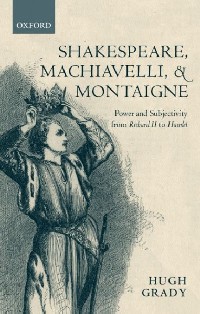
The four plays of Shakespeare's Henriad and the slightly later Hamlet explore interconnections between political power and interior subjectivity as productions of the newly emerging constellation we call modernity. This book argues that for Shakespeare subjectivity was a critical, negative mode of resistance to power - not its abettor.
From 1595-1600 Shakespeare dissected the workings of political power in the four histories of the Henriad and in Hamlet in ways which were remarkably parallel - and were perhaps influenced by - the ideas of the father of modern political analysis, Niccolo Machiavelli. However, the very same plays simultaneously explored the dynamics of self- and identity-formation under new conditions of secular modernity, in the process producing such memorable characters as Richard II, Prince Hal, Falstaff, and Hamlet. Hugh Grady argues that in analyzing modern subjectivity, Shakespeare re-produced not the ideas of Machiavelli, but those of Michel de Montaigne, that Renaissance definer of shifting identities and subjectivities and of complexly formed, sceptical knowledge. In so doing, Shakespeare in effect contributes to the theoretical debates over power and subjectivity in literary and cultural studies at the dawn of the twenty-first century.
目录
HISTORICISM AND THE CULTURAL PRESENT IN SHAKESPEARE STUDIES: SUBJECTIVITY IN EARLY AND LATE MODERNITY; 1. A Shakespeare Machiavellian Moment, 1595-1600: An Overview; 2. The Discourse of Princes in Richard II: From Machiavelli to Montaigne; 3. Montaigne, Shakespeare, and the Construction of Modern Subjectivity; 4. The Resistance to Power in 1 Henry IV: Subjectivity in the World; 5. The Reified Worlds of 2 Henry IV and Henry V; HAMLET AND THE TRAGEDY OF THE SUBJECT; Bibliography; Index
- 名称
- 类型
- 大小
光盘服务联系方式: 020-38250260 客服QQ:4006604884
云图客服:
用户发送的提问,这种方式就需要有位在线客服来回答用户的问题,这种 就属于对话式的,问题是这种提问是否需要用户登录才能提问
Video Player
×
Audio Player
×
pdf Player
×
