

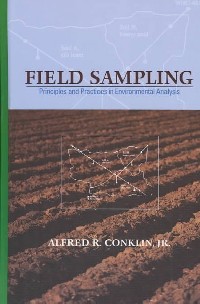
Field sampling : principles and practices in environmental analysis /
副标题:无
作 者:by Alfred R.Conklin and Rolf Meinholtz
分类号:
ISBN:9780824754716
微信扫一扫,移动浏览光盘
简介
Written by a renowned professional with more than 30 years of experience in environmental sampling and analysis, this reference describes in unparalleled detail all the essential elements for the development and execution of a successful sampling plan at both contaminated and uncontaminated sites - leading the reader through presampling planning and decision-making, specific sampling situations, and correct sample labeling, shipping, storage, and examination. Presents the framework and background for the sampling of any contaminated site - evaluating various soil types and varying physical and chemical characteristics for a representative, accurate measurement of the conditions and concentrations of components in a field. Presenting a wide variety of models, quality control procedures, and valuable troubleshooting methods, Field Sampling contains an abundance of topics never before covered in any other source, on the topic including the consideration of a site's history, mass balance calculations, expected error, landscapes, soil profiles and surveys, sampling vs. soil type, horizons, drying, and density; develops sampling plans with reference to analytical procedures to be utilized at various stages within the plan; identifies common traps and errors that occur during sampling processes; details safety considerations in environments that require special precautions; lists useful websites at the end of each chapter; and presents sampling statistics to solidify the sampling plans presented in the text. - Back cover.
目录
1 Introduction to Field Sampling 1
1.1 Assessing the Sampling Needs 3
1.2 Soil 5
1.3 Water and Air 8
1.4 Presampling 10
1.5 Safety 11
1.6 Sampling 11
1.7 Statistics 13
1.8 Modeling 13
1.9 Sample Handling 14
1.10 What Is Present? 15
1.11 Analytical Methods 16
1.12 Traps 16
1.13 Essential Units 17
1.14 Definitions 19
1.15 Other Ways of Sampling and Representing the
Environment 20
1.16 Global Positioning System (GPS) 21
1.17 Geographical Information Systems (GIS)
1.18 Conclusions
Questions
References
2 Characteristics of the Environment
2.1 Parts of the Environment
2.2 Soil Formation
2.3 Soil Types
2.4 Soil Texture, Structure, and Bulk Density
2.5 Water Movement Over and Through Soil
2.6 Conclusions
Questions
References
3 Presampling
3.1 Field Office
3.2 Field Office Laboratory
3.3 The Project Notebook
3.4 Maps
3.5 Preliminary Field Survey
3.6 Field History
3.7 Sampling Tools
3.8 Other Soil Sampling Considerations
3.9 Safety
3.10 Sample Containers
3.11 Transportation and Storage
3.12 Chain of Custody
3.13 Analytical Laboratory and Procedures
3.14 Statistics
3.15 Other Tools to Consider
3.16 Modeling
3.17 Permitting
3.18 Resources
3.19 Conclusions
Questions
References
4 Safety 91
4.1 Areas of Safety Concern 92
4.2 Safety Resources 94
4.3 Basic Safety 96
4.4 Signage 96
4.5 Personnel Exposure 100
4.6 Personnel Protection 104
4.7 Monitoring 111
4.8 Safety at Different Field Types 112
4.9 Contamination Types and Concentrations 114
4.10 Off-Field Protection 115
4.11 The Chemical Hygiene Plan 115
4.12 Environmental Protection 116
4.13 MSDS Sheets 116
4.14 Merck Index 117
4.15 Conclusions 117
Questions 118
References 118
5 Sampling 120
5.1 General Sampling Considerations 121
5.2 Global Positioning System 123
5.3 Ground-Penetrating Radar 128
5.4 Remote Sensing 130
5.5 Geographical Information Systems 130
5.6 Samplers 132
5.7 Sample Amount 136
5.8 Sample Container 138
5.9 Duplicate, Split, and Composite Samples 138
5.10 Sampling Strategies 139
5.11 Topography 143
5.12 Other Sampling Strategies for Different Field Situations 144
5.13 Sample Handling 153
5.14 Sampling Using GPS 153
5.15 Determining Sample Sites 155
5.16 Quality Control 157
5.17 Labeling 157
5.18 Conclusions 159
Questions 159
References 160
6 Statistics
6.1 Random Numbers
6.2 Variation
6.3 Population
6.4 Hypothesis
6.5 Median and Mean
6.6 Standard Deviation
6.7 Different or Same Population?
6.8 Extraneous Values
6.9 How Many Samples?
6.10 Comparing Areas
6.11 Linear Regression
6.12 Geostatisitics
6.13 Coregionalization
6.14 Geostatisitical Problems
6.15 Conclusions
Questions
References
7 Modeling
7.1 Physical Models
7.2 Chemical Models
7.3 Simple Mathematical Models
7.4 Landscape Models
7.5 Modeling Movement of Particles Through the
Environment
7.6 Dynamic Models
7.7 Commercial Computer Modeling
7.8 GIS and Environmental Modeling
7.9 Whole Planet Model
7.10 Conclusions
Questions
References
8 Sample Transport and Storage
8.1 Security
8.2 Containers
8.3 Controls
8.4 Transport in the Field
8.5 Transport Boxes
8.6 Transport Out of Field 233
8.7 Storage 233
8.8 Archival Samples 234
8.9 Separation of Samples at the Field Office 235
8.10 Field Laboratory Handling 235
8.11 Transportation to the Commercial Laboratory 235
8.12 Storage at the Commercial Analytical Laboratory 237
8.13 Chain of Custody 237
8.14 Computer Chain of Custody 238
8.15 Request for Analysis 241
8.16 Conclusions 243
Questions 244
References 245
9 What Is Present? 246
9.1 In Total 248
9.2 The Inorganic Components 250
9.3 The Organic Component 260
9.4 The Biochemical Component 269
9.5 The Living Component 271
9.6 Conclusions 273
Questions 273
References 274
10 An Overview of Basic Principles of Analytical Methods
Rolf Meinholtz 276
10.1 Determining the Problem 281
10.2 What is the Nature of the Sample? 282
10.3 The Sampling Process 283
10.4 What Is to Be Sampled and How Is It to Be Sampled 285
10.5 Documentation 290
10.6 Sample Preparation for Analysis 291
10.7 Analytical Testing 291
10.8 Analytical Methods-Some Specifics 304
10.9 Data Assessment 307
10.10 Report Generation and Documentation 309
10.11 Do the Results Answer the Client's Question? 310
10.12 Some General Questions and Considerations 310
10.13 Conclusions 311
Questions 311
References 312
11 Traps, Mistakes, and Errors
Alfred R. Conklin, Jr., and Rolf Meinholtz
11.1 History of the Area
11.2 Area Geology
11.3 Knowing What Is or Is Likely to Be Present
11.4 Not Accounting for Inputs, Losses, and Movement
11.5 Personnel
11.6 Analyzing or Sampling for the Wrong Component
11.7 Antagonisms and Interferences
11.8 Sample Analysis Mismatch
11.9 Extraction or Method Errors
11.10 Sample/Test Container Errors
11.11 Improper Sampling Techniques
11.12 Variations in Method
11.13 Movement of a Contaminant
11.14 Statistical Errors
11.15 Conclusions
Questions
References
Field sampling : principles and practices in environmental analysis /
- 名称
- 类型
- 大小
光盘服务联系方式: 020-38250260 客服QQ:4006604884
云图客服:
用户发送的提问,这种方式就需要有位在线客服来回答用户的问题,这种 就属于对话式的,问题是这种提问是否需要用户登录才能提问
Video Player
×
Audio Player
×
pdf Player
×
