

简介
Summary:
Publisher Summary 1
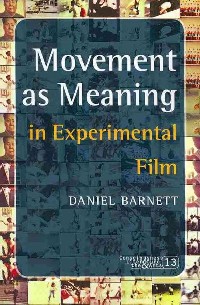
This book offers sweeping and cogent arguments as to why analytic philosophers should take experimental cinema seriously as a medium for illuminating mechanisms of meaning in language. Using the analogy of the movie projector, Barnett deconstructs all communication acts into functions of interval, repetition and context. He describes how Wittgenstein's concepts of family resemblance and language games provide a dynamic perspective on the analysis of acts of reference. He then develops a hyper-simplified formula of movement as meaning to discuss, with true equivalence, the process of reference as it occurs in natural language, technical language, poetic language, painting, photography, music, and of course, cinema. Barnett then applies his analytic technique to an original perspective on cine-poetics based on Paul Valerys concept of omnivalence, and to a projection of how this style of analysis, derived from analog cinema, can help us clarify our view of the digital mediasphere and its relation to consciousness.
Informed by the philosophy of Quine, Dennett, Merleau-Ponty as well as the later work of Wittgenstein, among others, he uses the film work of Stan Brakhage, Tony Conrad, A.K. Dewdney, Nathaniel Dorsky, Ken Jacobs, Owen Land, Saul Levine, Gregory Markopoulos Michael Snow, and the poetry of Basho, John Cage, John Cayley and Paul Valery to illustrate the power of his unique perspective on meaning.
目录
Foreword: What this book is, what this book isn't
Preface: Arriving at the scene
Two pictures of a rose in the dark
Modes of Perception and Modes of Expression
First ideas in new media: the cinematic suspension of disbelief p. 9
Describing how the mind moves toward understandings p. 11
New paradigms for viewing experience and new ways of creating meaning p. 12
Theories of meaning: media, messages and how the mind moves p. 12
The relevance of the mechanism: lessons to carry forward from an already ancient medium p. 13
Frames vs. shots, surface vs. window p. 16
What the surface of the screen can tell us about language p. 17
Language integrates our perceptions as surely as the nervous system integrates our sense data - Hallucination or Metadata? p. 18
Letting the mind surround an idea: an introduction to Wittgenstein p. 20
Ascertaining understanding: What one language must evoke, another may stipulate (and vice versa) p. 24
Dynamic and static theories of meaning p. 27
Color, types of reference and the inveterate narrative p. 28
The polyvalence of the picture p. 32
Meaning and mutual experience - kinds of reference redefined p. 34
What has art got to do with it p. 36
A whole new way of reading - the surface of the screen and the modulation of self consciousness p. 37
The anteroom of meaning and our conception of space p. 41
Meaning and mental habits p. 43
Assumed and earned meaning p. 44
The spectrum of shared reference p. 46
The story sequence and the montage - prologue p. 47
When the editor learns about meaning p. 48
Montage and metaphor p. 49
The imitation of perception p. 52
Dynamic And Syntactic Universals
Non-Verbal Universals p. 55
The polyvalence of the picture and the omnivalence of the movie p. 58
The description of omnivalence as a floating target p. 60
Dynamic universals: beginning, middle and end - a prologue p. 62
Language and the momentum of the body p. 64
Syntactic universals: interval, context and repetition p. 66
The synergy of symmetry p. 72
Sidebar - another parallel model and another speculative future p. 73
Formal references in music and cinema p. 76
The developmental leap - keeping the referent a mystery p. 77
Resemblance and resonance p. 79
The subliminal pull of the flicker p. 81
Aural and visual cadence p. 83
The frame of the experience p. 85
Resonance among frames p. 89
Ancient history - the medium as the model p. 95
Illustration, induction and repetition p. 101
The material and the medium p. 109
Sonics and seamlessness p. 112
The private language machine and the evolution of a medium p. 114
Illusions and ontological linchpins p. 118
Delimiting an audience p. 125
Summarizing the singular window en route to the panoramic view p. 130
The Moving Target
Digital ubiquity - the memosphere & the mediasphere p. 133
Compression and consciousness p. 140
Indeterminacy of translation revisited and context reconsidered p. 148
The reconfigured attention span p. 154
The synergy of the mediasphere p. 157
The search engine and the editor-in-chief p. 159
A sidebar on consciousness p. 166
So, where is the screen? p. 167
Definitions and boundaries p. 171
The meaning is the metaphor (or not) p. 173
The raw and the cooked p. 176
A final reflection on method p. 180
The grain and the pixel p. 184
The Paillard Bolex Movie Camera And the J-K Optical Printer p. 191
Acknowledgements p. 195
Bibliography p. 197
Filmography p. 201
Index p. 217
Preface: Arriving at the scene
Two pictures of a rose in the dark
Modes of Perception and Modes of Expression
First ideas in new media: the cinematic suspension of disbelief p. 9
Describing how the mind moves toward understandings p. 11
New paradigms for viewing experience and new ways of creating meaning p. 12
Theories of meaning: media, messages and how the mind moves p. 12
The relevance of the mechanism: lessons to carry forward from an already ancient medium p. 13
Frames vs. shots, surface vs. window p. 16
What the surface of the screen can tell us about language p. 17
Language integrates our perceptions as surely as the nervous system integrates our sense data - Hallucination or Metadata? p. 18
Letting the mind surround an idea: an introduction to Wittgenstein p. 20
Ascertaining understanding: What one language must evoke, another may stipulate (and vice versa) p. 24
Dynamic and static theories of meaning p. 27
Color, types of reference and the inveterate narrative p. 28
The polyvalence of the picture p. 32
Meaning and mutual experience - kinds of reference redefined p. 34
What has art got to do with it p. 36
A whole new way of reading - the surface of the screen and the modulation of self consciousness p. 37
The anteroom of meaning and our conception of space p. 41
Meaning and mental habits p. 43
Assumed and earned meaning p. 44
The spectrum of shared reference p. 46
The story sequence and the montage - prologue p. 47
When the editor learns about meaning p. 48
Montage and metaphor p. 49
The imitation of perception p. 52
Dynamic And Syntactic Universals
Non-Verbal Universals p. 55
The polyvalence of the picture and the omnivalence of the movie p. 58
The description of omnivalence as a floating target p. 60
Dynamic universals: beginning, middle and end - a prologue p. 62
Language and the momentum of the body p. 64
Syntactic universals: interval, context and repetition p. 66
The synergy of symmetry p. 72
Sidebar - another parallel model and another speculative future p. 73
Formal references in music and cinema p. 76
The developmental leap - keeping the referent a mystery p. 77
Resemblance and resonance p. 79
The subliminal pull of the flicker p. 81
Aural and visual cadence p. 83
The frame of the experience p. 85
Resonance among frames p. 89
Ancient history - the medium as the model p. 95
Illustration, induction and repetition p. 101
The material and the medium p. 109
Sonics and seamlessness p. 112
The private language machine and the evolution of a medium p. 114
Illusions and ontological linchpins p. 118
Delimiting an audience p. 125
Summarizing the singular window en route to the panoramic view p. 130
The Moving Target
Digital ubiquity - the memosphere & the mediasphere p. 133
Compression and consciousness p. 140
Indeterminacy of translation revisited and context reconsidered p. 148
The reconfigured attention span p. 154
The synergy of the mediasphere p. 157
The search engine and the editor-in-chief p. 159
A sidebar on consciousness p. 166
So, where is the screen? p. 167
Definitions and boundaries p. 171
The meaning is the metaphor (or not) p. 173
The raw and the cooked p. 176
A final reflection on method p. 180
The grain and the pixel p. 184
The Paillard Bolex Movie Camera And the J-K Optical Printer p. 191
Acknowledgements p. 195
Bibliography p. 197
Filmography p. 201
Index p. 217
- 名称
- 类型
- 大小
光盘服务联系方式: 020-38250260 客服QQ:4006604884
云图客服:
用户发送的提问,这种方式就需要有位在线客服来回答用户的问题,这种 就属于对话式的,问题是这种提问是否需要用户登录才能提问
Video Player
×
Audio Player
×
pdf Player
×
