

简介
Summary:
Publisher Summary 1
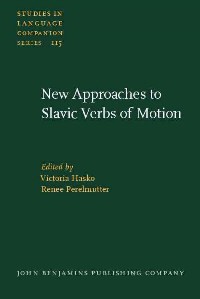
This volume unifies a wide breadth of interdisciplinary studies examining the expression of motion in Slavic languages. The contributors to the volume have joined in the discussion of Slavic motion talk from diachronic, typological, comparative, cognitive, and acquisitional perspectives with a particular focus on verbs of motion, the nuclei of the lexicalization patterns for encoding motion. Motion verbs are notorious among Slavic linguists for their baffling idiosyncratic behavior in their lexical, semantic, syntactical, and aspectual characteristics. The collaborative effort of this volume is aimed both at highlighting and accounting for the unique properties of Slavic verbs of motion and at situating Slavic languages within the larger framework of typological research investigating cross-linguistic encoding of the motion domain. Due to the multiplicity of approaches to the linguistic analysis the collection offers, it will suitably complement courses and programs of study focusing on Slavic linguistics as well as typology, diachronic and comparative linguistics, semantics, and second language acquisition.
"This important book is a model of in-depth exploration that is much needed: intra-typological, diachronic, and synchronic exploration of contrasting ways of encoding a particular semantic domain 没 in this case the domain of motion events. The various Slavic languages present contrasting but related solutions to the intersection of motion and aspect. And, as a group, they offer alternate forms of satellite-framed typology, in contrast to the more heavily studied Germanic languages of this general type. The up-to-date and interdisciplinary nature of the volume makes it essential reading in cognitive and typological linguistics."-Dan I. Slobin, Professor Emeritus of Psychology and Linguistics, University of California, Berkeley
"A feast for the mind, with untold riches and variety: different approaches, patterns and usage, diachronic as well as synchronic, Slavic and not just Russian. All on a high intellectual level from capable scholars. Ful besy were the editors in every thing, That to the feste was appertinent."-Alan Timberlake, Columbia University
目录
Table Of Contents:
Contributors ix
INTRODUCTION, Verbs of motion in Slavic languages: Paths for exploration 1(14)
Victoria Hasko
Renee Perelutter
Part I. Diachrony of motion expressions
Chapter 1 Clause and text organization in early East Slavic with reference to motion and position expressions 15(32)
Sarah Turner
Chapter 2 Indeterminate motion verbs are denominal 47(20)
Johanna Nichols
Chapter 3 Common Slavic Indeterminate verbs of motion were really manner-of-motion verbs 67(44)
Stephen M. Dickey
Chapter 4 PIE inheritance and word-formational innovation in Slavic motion verbs in i 111(14)
Marc L. Greenberg
Part II. Synchronic approaches to aspect
Chapter 5 Perfectives from indeterminate motion verbs in Russian 125(16)
Laura A. Janda
Chapter 6 Aspects of motion: On the semantics and pragmatics of indeterminate aspect 141(22)
Olga Kagan
Chapter 7 Verbs of motion under negation in Modern Russian 163(34)
Renee Perelmutter
Part III. Typological approach to the study of Slavic verbs of motion
Chapter 8 Semantic composition of motion verbs in Russian and English: The case of intra-typological variability 197(28)
Victoria Hasko
Chapter 9 Motion events in Polish: Lexicalization patterns and the description of Manner 225(22)
Anetta Kopecka
Chapter 10 The importance of being a prefix: Prefixal morphology and the lexicalization of motion events in Serbo-Croatian 247(20)
Luna Filipovic
Chapter 11 Variation in the encoding of endpoints of motion in Russian 267(24)
Tatiana Nikitina
Chapter 12 Verbs of rotation in Russian and Polish 291(24)
Ekaterina V. Rakhilina
Chapter 13 Aquamotion verbs in Slavic and Germanic A case study in lexical typology 315(28)
Maria Kopijevskaja-Tamm
Dagmar Divjak
Ekaterina V. Rakhilina
Chapter 14 Metaphorical walking: Russian idti as a generalized motion verb 343(18)
Tore Nesset
Chapter 15 Russian verbs of motion: Second language acquisition and cognitive linguistics perspectives 361(22)
Kira Gor
Svetlana Cook
Vera Malyushenkova
Tatyana Vdovina
Author index 383(4)
Language index 387(2)
Subject index 389
Contributors ix
INTRODUCTION, Verbs of motion in Slavic languages: Paths for exploration 1(14)
Victoria Hasko
Renee Perelutter
Part I. Diachrony of motion expressions
Chapter 1 Clause and text organization in early East Slavic with reference to motion and position expressions 15(32)
Sarah Turner
Chapter 2 Indeterminate motion verbs are denominal 47(20)
Johanna Nichols
Chapter 3 Common Slavic Indeterminate verbs of motion were really manner-of-motion verbs 67(44)
Stephen M. Dickey
Chapter 4 PIE inheritance and word-formational innovation in Slavic motion verbs in i 111(14)
Marc L. Greenberg
Part II. Synchronic approaches to aspect
Chapter 5 Perfectives from indeterminate motion verbs in Russian 125(16)
Laura A. Janda
Chapter 6 Aspects of motion: On the semantics and pragmatics of indeterminate aspect 141(22)
Olga Kagan
Chapter 7 Verbs of motion under negation in Modern Russian 163(34)
Renee Perelmutter
Part III. Typological approach to the study of Slavic verbs of motion
Chapter 8 Semantic composition of motion verbs in Russian and English: The case of intra-typological variability 197(28)
Victoria Hasko
Chapter 9 Motion events in Polish: Lexicalization patterns and the description of Manner 225(22)
Anetta Kopecka
Chapter 10 The importance of being a prefix: Prefixal morphology and the lexicalization of motion events in Serbo-Croatian 247(20)
Luna Filipovic
Chapter 11 Variation in the encoding of endpoints of motion in Russian 267(24)
Tatiana Nikitina
Chapter 12 Verbs of rotation in Russian and Polish 291(24)
Ekaterina V. Rakhilina
Chapter 13 Aquamotion verbs in Slavic and Germanic A case study in lexical typology 315(28)
Maria Kopijevskaja-Tamm
Dagmar Divjak
Ekaterina V. Rakhilina
Chapter 14 Metaphorical walking: Russian idti as a generalized motion verb 343(18)
Tore Nesset
Chapter 15 Russian verbs of motion: Second language acquisition and cognitive linguistics perspectives 361(22)
Kira Gor
Svetlana Cook
Vera Malyushenkova
Tatyana Vdovina
Author index 383(4)
Language index 387(2)
Subject index 389
- 名称
- 类型
- 大小
光盘服务联系方式: 020-38250260 客服QQ:4006604884
云图客服:
用户发送的提问,这种方式就需要有位在线客服来回答用户的问题,这种 就属于对话式的,问题是这种提问是否需要用户登录才能提问
Video Player
×
Audio Player
×
pdf Player
×
