

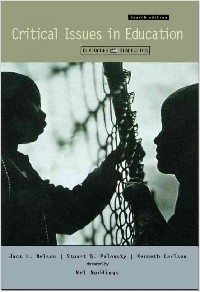
Critical issues in education : dialogues and dialectics / 4th ed.
副标题:无
作 者:Jack L. Nelson, Stuart B. Palonsky, Kenneth Carlson.
分类号:
ISBN:9780072286618
微信扫一扫,移动浏览光盘
简介
Summary:
Publisher Summary 1
Critical Issues in Education is designed to be used in courses that examine current, relevant pro-and-con disputes about schools and schooling. By exploring the major opposing viewpoints on these issues, the text encourages education students to think critically and develop their own viewpoints. The clear writing and dramatic dialectic approach are conducive to dynamic classroom discussions that help students grasp the many sides of these complex issues. Three integrating themes provide a solid framework for examining the nineteen topics covered. Each part begins with a chapter-length introduction that provides background material and organizing themes for the issues that follow. Each issue is then presented from two divergent viewpoints, each one written in advocate language to be as compelling as possible. The book's objective, in addition to informing the reader about the issues, is to develop critical thinking skills within the context of education. The fourth edition includes updated research and scholarship, updated bibliographic references, and three new chapters (鈥淏eginning Reading 鈥?Is there one best approach to literacy?鈥?鈥淕ender 鈥?Should gender differences affect schools and schooling?鈥?and 鈥淢ainstreaming and Inclusion 鈥?How should we provide for students with special needs?鈥?.
目录
Chapter 1 Introduction: Critical Issues and Critical Thinking
Part 1 What Interests Should Schools Serve?
Chapter 2 School Choice: For Family Choice or Against Vouchers
Chapter 3 School Finance: Equity or Disparity
Chapter 4 School Integration: Compulsory or Voluntary
Chapter 5 Gender: Easing Discrimination or Making Legitimate Distinctions
Chapter 6 Affirmative Action: Progressive or Restrictive
Part 2 What Should Be Taught?
Chapter 7 Basic Education: Traditional Disciplines or Critical Thinking
Chapter 8 Reading: Phonics or Whole Language
Chapter 9 Multicultural Education: Representative or Divisive
Chapter 10 Curriculum Control: National or Local
Chapter 11 Values and Character: Traditional or Liberational
Chapter 12 Business Influence: Positive or Negative
Chapter 13 Standardized Testing: Restrict or Expand
Part 3 How Should Schools Be Organized and Operated?
Chapter 14 School Leadership: Teacher-Directed or Administrator-Controlled?
Chapter 15 Academic Freedom: Teacher Rights or Responsibility
Chapter 16 Teacher Unions: Detrimental or Beneficial
Chapter 17 Inclusion and Mainstreaming: Special or Common Education
Chapter 18 School Violence: School or Social Responsibility
Chapter 19 Privatization of Schools: Boon or Bane
Index
Part 1 What Interests Should Schools Serve?
Chapter 2 School Choice: For Family Choice or Against Vouchers
Chapter 3 School Finance: Equity or Disparity
Chapter 4 School Integration: Compulsory or Voluntary
Chapter 5 Gender: Easing Discrimination or Making Legitimate Distinctions
Chapter 6 Affirmative Action: Progressive or Restrictive
Part 2 What Should Be Taught?
Chapter 7 Basic Education: Traditional Disciplines or Critical Thinking
Chapter 8 Reading: Phonics or Whole Language
Chapter 9 Multicultural Education: Representative or Divisive
Chapter 10 Curriculum Control: National or Local
Chapter 11 Values and Character: Traditional or Liberational
Chapter 12 Business Influence: Positive or Negative
Chapter 13 Standardized Testing: Restrict or Expand
Part 3 How Should Schools Be Organized and Operated?
Chapter 14 School Leadership: Teacher-Directed or Administrator-Controlled?
Chapter 15 Academic Freedom: Teacher Rights or Responsibility
Chapter 16 Teacher Unions: Detrimental or Beneficial
Chapter 17 Inclusion and Mainstreaming: Special or Common Education
Chapter 18 School Violence: School or Social Responsibility
Chapter 19 Privatization of Schools: Boon or Bane
Index
Critical issues in education : dialogues and dialectics / 4th ed.
- 名称
- 类型
- 大小
光盘服务联系方式: 020-38250260 客服QQ:4006604884
云图客服:
用户发送的提问,这种方式就需要有位在线客服来回答用户的问题,这种 就属于对话式的,问题是这种提问是否需要用户登录才能提问
Video Player
×
Audio Player
×
pdf Player
×
