

简介
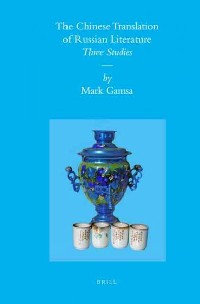
"The important place of Russian literature in China is widely acknowledged. To better understand the processes of its translation, transmission and interpretation during the first half of the 20th century, this book draws on an array of Chinese and Russian sources, providing insight into the interplay of political ideologies, cultural trends, commercial forces, and the self-definition of Chinese culture in the period under consideration."
"By focusing on the translation and translators of three writers, Boris Savinkov, Mikhail Artsybashev and Leonid Andreev, it analyzes the critical fortune in China of the modernist literature written in Russia during the two decades preceding the Great War and Revolution. Offering a thorough study of Lu Xun, the most important Chinese author of the 20th century, as a reader, translator and interpreter of Russian literature, this book also displays the variety of the groups and persons involved in the introduction of foreign literature, going beyond shopworn generalizations about "East" and "West" to make meaningful statements about a complex period in Chinese history."--BOOK JACKET.
目录
CONTENTS
Abbreviations used in notes
........................................................ ix
Conventions
......................................................................
.......... xi
List of Illustrations
......................................................................
xiii
Introduction
......................................................................
.......... 1
I. Three Russian writers
..................................................... 2
II. The translation of Russian literature in China .............. 16
III. Aims and method; state of the .eld
............................... 25
Chapter One Savinkov and the technique of translation ...... 49
I. Kon Blednyi and its author
............................................... 49 A philosophy of
revolution , and a challenge to revolutionary literature
........................................ 56
II. The Pale Horse in China
................................................... 62 The
intermediary: Zinaida Vengerova s English translation
................................................... 63 The Chinese
translation by Zheng Zhenduo ............. 69
III. The reception of Huise ma
.............................................. 83
The translator s interpretation ....................................
83
Response: critical and creative ....................................
92
Chapter Two Artsybashev and the ideology of translation ... 107
I. The author of Sanin and Shevyrev
.................................... 107
Sanin
......................................................................
....... 109
Worker Shevyrev
............................................................... 116
II. Sanin and Shevyrev in China
............................................. 120 Shaning and
individualism ............................................ 120 Gongren
Suihuil|efu, and Lu Xun as a translator of Artsybashev
.............................................................. 141
Chapter Three Appropriation and decline; the channels of translation
......................................................................
......... 190
I. Bloodstains from 1905 to 1925, and the rise of Marxist criticism
.......................................................... 190
II. Intermediaries
.................................................................. 205
III. A story, essay and play and their translators ............... 213
GAMSA_F1_i-xiv.indd vii 6/2/2008 5:39:53 PM
Chapter Four Andreev and the practice of translation .......... 228
I. The translator as an engaged intellectual .......................
232
II. The translator as a political activist
................................ 247
III. Translating, and adapting for the theatre .......................
260
IV. Translation in a collective
............................................... 275
Chapter Five The translator s profession
................................ 289
I. The translation market of the 1910s ..............................
289
II. Putative professionals
....................................................... 304
III. Decadents and agents of the modern ............................
323
IV. Occasional translators, and forgotten names .................. 339
Conclusion
......................................................................
............ 359
I. The Russian Silver age in China ................................
359
II. The translator in society
................................................. 365
III. The travels of the Russian book
..................................... 368
Annex Three Russian writers in Chinese translation, 1909 1950
......................................................................
......... 371
Acknowledgements
.....................................................................
387
Bibliography
......................................................................
.......... 389
Glossary
......................................................................
................. 415
Index
......................................................................
..................... 000
- 名称
- 类型
- 大小
光盘服务联系方式: 020-38250260 客服QQ:4006604884
云图客服:
用户发送的提问,这种方式就需要有位在线客服来回答用户的问题,这种 就属于对话式的,问题是这种提问是否需要用户登录才能提问
Video Player
×
Audio Player
×
pdf Player
×
