

简介
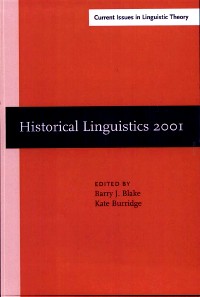
Preface This volume contains 25 papers from the 15th International Conference on Historical Linguistics (ICHL 15) held August 13-17, 2001, in Melbourne., hosted by the Linguistics Program of La Trobe University. Over 200 people attended over the five days of the conference. Six plenaries were presented plus 110 papers. On the final day there were three workshops at which another 32 papers were presented. This volume presents a selection of papers presented at the general sessions and the plenaries. All papers offered for inclusion in the proceedings were read by at least two referees. It was Nigel Vincent who suggested a decade ago that La Trobe offer to host ICHL, and 2001 was the first time this conference was held in the southern hemisphere. As might be expected this meant a greater participation from Australian linguists, mainly reflected in the workshop on Reconstruction and subgrouping in Australian languages, but the 150 presenters came from 33 countries with particularly strong representation from the United States and northern Europe. The selection in this volume reflects the fact that themajority of papers were onmorphosyntax with a smaller number on phonology. There is one paper on semantics (Riemer) and one on contact (Aikhenvald). Finally we would like to thank those who supported the conference and the production of this volume. Our vice-chancellor, Michael Osborne was generous in providing financial backing, while our secretary, Rosemary Bellair, worked indefatigably on setting up the conference, and Jo Taylor carried out the arduous task of copy-editing this volume. Barry J. Blake, Kate Burridge October 2002
目录
HISTORICAL LINGUISTICS 2001 1
Editorial page 2
Title page 3
LCC page 4
Table of contents 5
Contributors\u2019 addresses 7
Preface 8
Language contact and language change in Amazonia 11
1. Amazonian languages and comparative linguistics 11
2. Linguistic diffusion and grammatical borrowing 12
3. Language contact situations to be discussed 14
4. Prefixing, suffixing and marking grammatical relations in Tucanoan and in Arawak 16
5. Outcomes of language contact: discussion 24
Abbreviations 28
References 28
Grammaticalization and the historical development of the genitive in Mainland Scandinavian 31
1. Preliminaries 31
2. The historical development of genitive morphology 32
3. The historical development of genitive functions 35
4. Degrammaticalization or increased grammaticalization? 37
5. Summary 40
Notes 41
References 41
Beyond the comparative method? 43
1. Introduction 43
2. To believe or not to believe? 44
3. Multilateral comparison 45
4. Nichols 49
4.1. `Spread' vs. `accretion' zones problems 49
4.2. Typological `stability' 53
4.3. Binary splits 56
4.4. Time depths 57
4.5. Problems with the classification of languages and the sample 57
5. Dixon's approach: punctuated equilibrium 58
5.1. The status of punctuated equilibrium in biology 59
5.2. The view of human society 59
5.3. The problem of equilibrium without diffusion 60
5.4. The problem of equilibrium with diversification 60
5.5. Diffusion in punctuation 60
5.6. Conclusions concerning punctuated equilibrium 61
6. Conclusions 61
Notes 62
References 64
The transition from early to modern Portuguese 69
1. Introduction 69
2. Exploring the medieval Portuguese corpus: the social context of morphological changes 71
3. Towards a new proposal of periodisation 74
Notes 75
References 77
Isomorphism and language change 81
1. Introduction 81
2. The verbal string and isomorphism 83
3. `Freezes' in the verbal string 88
3.1. Loss of a realis/irrealis contrast 89
3.2. Past participle plus auxiliary het ``have'' and the case of was gewees 90
3.3. Linking verb plus main verb 90
4. Isomorphism and subject identification 92
5. In conclusion 93
References 93
From purposive/future to present 97
1. Introduction 97
2. Reconstructing a purposive/future *-(l)ku 98
3. Conservative uses of *-(l)ku as a purposive 99
4. The *-(l)ku suffix as a present tense 101
5. Between `purposive' and `present' - the Nyamal `prospective' 105
6. Purposive > Prospective > Present 109
7. Conclusion 110
Notes 111
References 112
The formation of periphrastic perfects and passives in Europe 115
1. Introduction 115
2. Preliminaries 116
2.1. Proto-Indo-European 116
2.2. Greek 117
2.3. Latin 118
3. Innovation tied to diathetic expansion in Greek 119
3.1. Creation of the HAVE perfect 121
3.2. Creation of the BE (medio)passives 121
4. The role of HAVE in distinguishing BE perfect vs. BE passive 123
5. `Cluster of periphrastics' & subject orientation 124
6. Developments in Latin: the role of deponents 126
6.1. Evidence from Celtic 126
6.2. Greek influence on Latin deponents 127
7. `Greek accusative' 128
8. Larger considerations 130
8.1. PPP as an Indo-European construct 130
8.2. The rarity of the European periphrastic type 132
9. Conclusion 133
Notes 133
References 136
The grammaticalization of movement 139
1. Introduction 139
2. From pragmatics to grammar 140
3. Word order change in Nordic 140
3.1. Liberal landing rights: the subject position 141
3.2. Adjunction: extraposition 145
3.3. Adjunction: verb final order 147
3.4. Head-to-specifier movement: topicalization 147
4. Supporting evidence 149
4.1. Anaphor binding 149
4.2. pro 150
5. Conclusion 150
Sources 151
Notes 151
References 152
Paths of development for modal meanings 153
1. Introduction 153
2. The uses of the potential mood in the Finnic languages 154
2.1. Present-day Standard Finnish 155
2.2. Present-day Finnish dialects 155
2.3. Earlier stages of spoken Finnish 157
2.4. Karelian and the other Finnic languages 158
3. Generalisations in grammars 160
4. The functions of the potential mood in a diachronic perspective 161
4.1. The semantic development of the Finnic potential mood 161
4.2. The paths of developments for modal meanings 163
5. Conclusion 167
Abbreviations 168
Notes 168
References 169
On degrammaticalization 173
1. Grammaticalization theory 173
2. Degrammaticalization 174
2.1. Loss of grammatical meaning 175
2.2. Mirror image reversal 175
2.3. Lexicalization 176
2.4. Euphemism 177
2.5. Exaptation 178
2.6. Adaptation 179
2.7. Replacement 180
2.8. `Upgrading' 181
2.9. Discussion 182
3. Conclusions 184
Notes 185
References 187
Process inhibition in historical phonology 191
1. Introduction 191
1.1. Preliminary assumptions 192
2. Phonological processes and their inhibition 194
2.1. Historical phonology and synchronic phonology 195
2.2. What is lenition? 196
2.3. Lenition inhibition 197
3. Case studies: lenitions and their inhibition 199
3.1. The High German Consonant Shift 199
3.2. Lenition in Liverpool English 201
4. Lenition inhibition revisited: can we explain why processes are inhibited? 204
4.1. The prosodic inhibition of process innovation 205
4.2. The melodic inhibition of process innovation 205
5. Back-up and extension 208
5.1. The `English 1'176 Change' 208
6. Conclusion 210
Notes 210
References 212
Reconsidering the canons of sound-change 215
1. Introduction 215
2. Romance vowel-prothesis 218
3. Northeastern Swiss German vowel-lowering ([o] > [\ 220
4. Contemporary English s-retraction to [\ 222
5. Summation regarding sound-change 223
Notes 224
References 227
Case in Middle Danish 231
1. Introduction 231
2. The orthographic and linguistic skills of the Danish medieval scribe 232
3. The double content case system 235
4. Examples of cohesive case in B 69 236
5. Signs of cohesive case in other sources 240
6. Other changes in Middle Danish 241
7. The reinterpretation of the case system in Middle Danish 243
8. The role played by the change of stress pattern 244
References 244
The development of some Indonesian pronominal systems 247
1. Introduction 247
2. Basic sentence structures in some Indonesian languages: A description 249
2.1. `Two-transitive' system 250
2.2. `Single-transitive' systems: `Accusative-pattern' and `Ergative-pattern' systems 252
3. A comparison of Indonesian pronominal systems and forms 255
3.1. Proto Extra-Formosan Genitive pronouns and Indonesian pronominal forms 256
3.2. Internal morphosyntactic comparison 259
4. A comparison with the Proto Extra-Formosan System 263
4.1. Proto Extra-Formosan sentence structures 263
4.2. Proto Extra-Formosan and Indonesian sentence structures: A comparison 264
4.3. Development of an Accusative-pattern system 265
4.4. Word order change 267
5. Concluding remarks 272
Abbreviations 274
Notes 275
References 276
Morphological reconstruction as an etymological method 281
1. Introduction 281
2. Lexical and morphological comparison 283
2.1. Lexical reconstruction: comparative wordlists vs. cognate sets 283
2.2. Morphological comparison: comparative tables vs. cognates 286
2.3. Morphological reconstruction and types of morphological change 289
3. Person inflection in Arandic kin nouns 290
3.1. Reconstruction of morphologisation 290
3.2. Reconstruction of demorphologisation 291
3.3. Summary of reconstruction of kin noun inflection 293
4. Arandic complex case markers 294
4.1. Allative 294
4.2. Comitative 294
4.3. Residues of nominal suffixes in *arle 295
4.4. Methodological summary 297
5. Summary and conclusion 297
5.1. Summary 297
5.2. Implications for reconstruction 298
5.3. Implications for Australian comparative linguistics 298
Notes 299
References 300
Labovian principles of vowel shifting revisited 303
1. Introduction 303
1.1. The Labovian principles 303
1.2. Reinterpretation of Labov's data and principles: `Vowel convection' 304
2. The New Zealand English (NZE) shift 305
3. The Cantonese vowel shift 306
3.1. NZE vowel shift and dialects of Guangdong 306
4. Discussion 310
References 310
Conventional implicature and language change 313
Introduction 313
1. Markers of an unexpected identity 314
1.1. The bound morpheme -'263i and the emphatic pronouns 314
1.2. -'223i and the identity pronoun ``same'' 318
2. Stage II (18th c.): the decay of the bound morpheme -'263i 320
2.1. SIBI proper: Rom. reflexive dative pronouns 320
2.2. Lat. IPSE - Rom. 卯nsu'263i, as an alternate reinforcement pronoun 321
2.3. The Romanian emphatic pronoun 卯nsu'263i 323
3. Stage III: Modern Romanian 324
3.1. A new paradigm of identity 324
3.2. Stage IV (18th c.-): The decay of the emphatic pronouns 325
3.3. Adjectival SINGUR ``alone'' 326
4. Conclusions 327
Notes 327
References 328
The rise of IPs in the history of English 331
1. Introduction 331
2. Background assumptions 331
3. Theoretical assumptions: Higginbotham's (1985) theta-binding theory 332
4. Gerunds 335
4.1. Non-presence of a D system in OE 335
4.2. Non-presence of gerunds in OE 336
4.3. The emergence of gerunds 336
5. Infinitives 337
5.1. Introduction 337
5.2. OE precursors of infinitives 337
5.3. The absence of INFL 337
5.4. The historical facts 338
5.5. My hypothesis 341
6. Concluding remark 343
Acknowledgments 343
Notes 343
References 345
From subject to object 349
1. Introduction 349
2. The form and the function of the obligation construction 350
3. The restructuration process of the obligation construction 352
4. The restructuration of the possibility construction 356
5. Conclusion 358
Abbreviations 359
Acknowledgments 359
Notes 359
References 360
Meaning change in verbs 361
1. Introduction 361
2. Methodological and interpretative principles 362
2.1. Means before ends 362
2.2. The account of metaphor 363
2.3. Recursiveness of the means of extension 365
2.4. Postcategoriality 365
3. Meaning change in strike 366
3.1. Metaphorical applications of the core verbal meaning 366
3.2. Metonymic extension to the effect of the action of the verb 368
3.3. Metonymic extension to the context in which the action of the verb occurs 370
3.4. Metonymic extension by selection of a constituent of the verbal event 371
4. Conclusion 371
Notes 372
References 372
Borrowing as a tool for grammatical optimization in the history of German brand names 373
1. Introduction: External vs. internal conditioning of borrowing 373
2. The `strong adjective inflection' in the immanent typology of German 374
3. The strong adjective inflection in brand names 376
3.1. Circumventive strategies 377
3.2. Circumventive strategies in 1894 379
3.3. Circumventive strategies in 1994 380
4. First signs of a `decay' of strongly inflected adjectives in present-day German? 383
5. Conclusions for a theory of borrowing 384
Notes 385
References 385
Pragmatic relevance as cause for syntactic change 387
1. Introduction 387
2. Non-finite clausal subordination in Classical Latin 388
3. The rise of the prepositional infinitive 388
4. How the adjunct becomes a complement 390
5. Subsequent development of prepositional complementizers 392
5.1. Romanian: Analogical levelling 392
5.2. Maintaining a balance between several complementizers 394
6. Supporting evidence from current ongoing processes: para/pra as emerging complementizer in Portuguese 395
7. Conclusion and theoretical implications 397
Notes 397
References 398
Early Nordic language history and modern runology 401
1. Prospectus 401
1.1. Terminology 401
2. Reduction and prefix loss: a general perspective 402
2.1. Right-hand reduction 403
2.2. Left-hand reduction and stress assignment 404
2.3. A parallel from Standard German 405
2.4. The loss of unstressed prefixes 406
2.5. Metrical structure in Early and Transitional Runic 408
2.6. The expletive particles of and um in Old Norse 408
3. Conclusion 409
Notes 409
References 410
On the interpretation of early evidence for ME vowel-change 413
1. Introduction 413
2. Sources 414
3. Discussion 415
4. A look at MS Oxford, Bodleian Library, Additional E.6, roll, Hand B 419
5. Further corroborative evidence 420
6. Conclusion 420
Notes 422
References 424
On the reflexes of Proto-Germanic ai 427
Introduction 427
1. Manuals and methods 428
2. Results 430
2.1. Distribution of the spelling ie 430
2.2. Distribution of the spelling e(e) 430
2.3. Distribution of the spelling ei 431
2.4. Distribution of the spelling ey 432
2.5. Conclusions 433
3. Interpretation 434
3.1. Sources of independent evidence 434
3.2. Phonetic values 437
3.3. Umlaut 438
4. Conclusion 438
Notes 439
References 439
Index 441
The series Current Issues in Linguistic Theory 453
Editorial page 2
Title page 3
LCC page 4
Table of contents 5
Contributors\u2019 addresses 7
Preface 8
Language contact and language change in Amazonia 11
1. Amazonian languages and comparative linguistics 11
2. Linguistic diffusion and grammatical borrowing 12
3. Language contact situations to be discussed 14
4. Prefixing, suffixing and marking grammatical relations in Tucanoan and in Arawak 16
5. Outcomes of language contact: discussion 24
Abbreviations 28
References 28
Grammaticalization and the historical development of the genitive in Mainland Scandinavian 31
1. Preliminaries 31
2. The historical development of genitive morphology 32
3. The historical development of genitive functions 35
4. Degrammaticalization or increased grammaticalization? 37
5. Summary 40
Notes 41
References 41
Beyond the comparative method? 43
1. Introduction 43
2. To believe or not to believe? 44
3. Multilateral comparison 45
4. Nichols 49
4.1. `Spread' vs. `accretion' zones problems 49
4.2. Typological `stability' 53
4.3. Binary splits 56
4.4. Time depths 57
4.5. Problems with the classification of languages and the sample 57
5. Dixon's approach: punctuated equilibrium 58
5.1. The status of punctuated equilibrium in biology 59
5.2. The view of human society 59
5.3. The problem of equilibrium without diffusion 60
5.4. The problem of equilibrium with diversification 60
5.5. Diffusion in punctuation 60
5.6. Conclusions concerning punctuated equilibrium 61
6. Conclusions 61
Notes 62
References 64
The transition from early to modern Portuguese 69
1. Introduction 69
2. Exploring the medieval Portuguese corpus: the social context of morphological changes 71
3. Towards a new proposal of periodisation 74
Notes 75
References 77
Isomorphism and language change 81
1. Introduction 81
2. The verbal string and isomorphism 83
3. `Freezes' in the verbal string 88
3.1. Loss of a realis/irrealis contrast 89
3.2. Past participle plus auxiliary het ``have'' and the case of was gewees 90
3.3. Linking verb plus main verb 90
4. Isomorphism and subject identification 92
5. In conclusion 93
References 93
From purposive/future to present 97
1. Introduction 97
2. Reconstructing a purposive/future *-(l)ku 98
3. Conservative uses of *-(l)ku as a purposive 99
4. The *-(l)ku suffix as a present tense 101
5. Between `purposive' and `present' - the Nyamal `prospective' 105
6. Purposive > Prospective > Present 109
7. Conclusion 110
Notes 111
References 112
The formation of periphrastic perfects and passives in Europe 115
1. Introduction 115
2. Preliminaries 116
2.1. Proto-Indo-European 116
2.2. Greek 117
2.3. Latin 118
3. Innovation tied to diathetic expansion in Greek 119
3.1. Creation of the HAVE perfect 121
3.2. Creation of the BE (medio)passives 121
4. The role of HAVE in distinguishing BE perfect vs. BE passive 123
5. `Cluster of periphrastics' & subject orientation 124
6. Developments in Latin: the role of deponents 126
6.1. Evidence from Celtic 126
6.2. Greek influence on Latin deponents 127
7. `Greek accusative' 128
8. Larger considerations 130
8.1. PPP as an Indo-European construct 130
8.2. The rarity of the European periphrastic type 132
9. Conclusion 133
Notes 133
References 136
The grammaticalization of movement 139
1. Introduction 139
2. From pragmatics to grammar 140
3. Word order change in Nordic 140
3.1. Liberal landing rights: the subject position 141
3.2. Adjunction: extraposition 145
3.3. Adjunction: verb final order 147
3.4. Head-to-specifier movement: topicalization 147
4. Supporting evidence 149
4.1. Anaphor binding 149
4.2. pro 150
5. Conclusion 150
Sources 151
Notes 151
References 152
Paths of development for modal meanings 153
1. Introduction 153
2. The uses of the potential mood in the Finnic languages 154
2.1. Present-day Standard Finnish 155
2.2. Present-day Finnish dialects 155
2.3. Earlier stages of spoken Finnish 157
2.4. Karelian and the other Finnic languages 158
3. Generalisations in grammars 160
4. The functions of the potential mood in a diachronic perspective 161
4.1. The semantic development of the Finnic potential mood 161
4.2. The paths of developments for modal meanings 163
5. Conclusion 167
Abbreviations 168
Notes 168
References 169
On degrammaticalization 173
1. Grammaticalization theory 173
2. Degrammaticalization 174
2.1. Loss of grammatical meaning 175
2.2. Mirror image reversal 175
2.3. Lexicalization 176
2.4. Euphemism 177
2.5. Exaptation 178
2.6. Adaptation 179
2.7. Replacement 180
2.8. `Upgrading' 181
2.9. Discussion 182
3. Conclusions 184
Notes 185
References 187
Process inhibition in historical phonology 191
1. Introduction 191
1.1. Preliminary assumptions 192
2. Phonological processes and their inhibition 194
2.1. Historical phonology and synchronic phonology 195
2.2. What is lenition? 196
2.3. Lenition inhibition 197
3. Case studies: lenitions and their inhibition 199
3.1. The High German Consonant Shift 199
3.2. Lenition in Liverpool English 201
4. Lenition inhibition revisited: can we explain why processes are inhibited? 204
4.1. The prosodic inhibition of process innovation 205
4.2. The melodic inhibition of process innovation 205
5. Back-up and extension 208
5.1. The `English 1'176 Change' 208
6. Conclusion 210
Notes 210
References 212
Reconsidering the canons of sound-change 215
1. Introduction 215
2. Romance vowel-prothesis 218
3. Northeastern Swiss German vowel-lowering ([o] > [\ 220
4. Contemporary English s-retraction to [\ 222
5. Summation regarding sound-change 223
Notes 224
References 227
Case in Middle Danish 231
1. Introduction 231
2. The orthographic and linguistic skills of the Danish medieval scribe 232
3. The double content case system 235
4. Examples of cohesive case in B 69 236
5. Signs of cohesive case in other sources 240
6. Other changes in Middle Danish 241
7. The reinterpretation of the case system in Middle Danish 243
8. The role played by the change of stress pattern 244
References 244
The development of some Indonesian pronominal systems 247
1. Introduction 247
2. Basic sentence structures in some Indonesian languages: A description 249
2.1. `Two-transitive' system 250
2.2. `Single-transitive' systems: `Accusative-pattern' and `Ergative-pattern' systems 252
3. A comparison of Indonesian pronominal systems and forms 255
3.1. Proto Extra-Formosan Genitive pronouns and Indonesian pronominal forms 256
3.2. Internal morphosyntactic comparison 259
4. A comparison with the Proto Extra-Formosan System 263
4.1. Proto Extra-Formosan sentence structures 263
4.2. Proto Extra-Formosan and Indonesian sentence structures: A comparison 264
4.3. Development of an Accusative-pattern system 265
4.4. Word order change 267
5. Concluding remarks 272
Abbreviations 274
Notes 275
References 276
Morphological reconstruction as an etymological method 281
1. Introduction 281
2. Lexical and morphological comparison 283
2.1. Lexical reconstruction: comparative wordlists vs. cognate sets 283
2.2. Morphological comparison: comparative tables vs. cognates 286
2.3. Morphological reconstruction and types of morphological change 289
3. Person inflection in Arandic kin nouns 290
3.1. Reconstruction of morphologisation 290
3.2. Reconstruction of demorphologisation 291
3.3. Summary of reconstruction of kin noun inflection 293
4. Arandic complex case markers 294
4.1. Allative 294
4.2. Comitative 294
4.3. Residues of nominal suffixes in *arle 295
4.4. Methodological summary 297
5. Summary and conclusion 297
5.1. Summary 297
5.2. Implications for reconstruction 298
5.3. Implications for Australian comparative linguistics 298
Notes 299
References 300
Labovian principles of vowel shifting revisited 303
1. Introduction 303
1.1. The Labovian principles 303
1.2. Reinterpretation of Labov's data and principles: `Vowel convection' 304
2. The New Zealand English (NZE) shift 305
3. The Cantonese vowel shift 306
3.1. NZE vowel shift and dialects of Guangdong 306
4. Discussion 310
References 310
Conventional implicature and language change 313
Introduction 313
1. Markers of an unexpected identity 314
1.1. The bound morpheme -'263i and the emphatic pronouns 314
1.2. -'223i and the identity pronoun ``same'' 318
2. Stage II (18th c.): the decay of the bound morpheme -'263i 320
2.1. SIBI proper: Rom. reflexive dative pronouns 320
2.2. Lat. IPSE - Rom. 卯nsu'263i, as an alternate reinforcement pronoun 321
2.3. The Romanian emphatic pronoun 卯nsu'263i 323
3. Stage III: Modern Romanian 324
3.1. A new paradigm of identity 324
3.2. Stage IV (18th c.-): The decay of the emphatic pronouns 325
3.3. Adjectival SINGUR ``alone'' 326
4. Conclusions 327
Notes 327
References 328
The rise of IPs in the history of English 331
1. Introduction 331
2. Background assumptions 331
3. Theoretical assumptions: Higginbotham's (1985) theta-binding theory 332
4. Gerunds 335
4.1. Non-presence of a D system in OE 335
4.2. Non-presence of gerunds in OE 336
4.3. The emergence of gerunds 336
5. Infinitives 337
5.1. Introduction 337
5.2. OE precursors of infinitives 337
5.3. The absence of INFL 337
5.4. The historical facts 338
5.5. My hypothesis 341
6. Concluding remark 343
Acknowledgments 343
Notes 343
References 345
From subject to object 349
1. Introduction 349
2. The form and the function of the obligation construction 350
3. The restructuration process of the obligation construction 352
4. The restructuration of the possibility construction 356
5. Conclusion 358
Abbreviations 359
Acknowledgments 359
Notes 359
References 360
Meaning change in verbs 361
1. Introduction 361
2. Methodological and interpretative principles 362
2.1. Means before ends 362
2.2. The account of metaphor 363
2.3. Recursiveness of the means of extension 365
2.4. Postcategoriality 365
3. Meaning change in strike 366
3.1. Metaphorical applications of the core verbal meaning 366
3.2. Metonymic extension to the effect of the action of the verb 368
3.3. Metonymic extension to the context in which the action of the verb occurs 370
3.4. Metonymic extension by selection of a constituent of the verbal event 371
4. Conclusion 371
Notes 372
References 372
Borrowing as a tool for grammatical optimization in the history of German brand names 373
1. Introduction: External vs. internal conditioning of borrowing 373
2. The `strong adjective inflection' in the immanent typology of German 374
3. The strong adjective inflection in brand names 376
3.1. Circumventive strategies 377
3.2. Circumventive strategies in 1894 379
3.3. Circumventive strategies in 1994 380
4. First signs of a `decay' of strongly inflected adjectives in present-day German? 383
5. Conclusions for a theory of borrowing 384
Notes 385
References 385
Pragmatic relevance as cause for syntactic change 387
1. Introduction 387
2. Non-finite clausal subordination in Classical Latin 388
3. The rise of the prepositional infinitive 388
4. How the adjunct becomes a complement 390
5. Subsequent development of prepositional complementizers 392
5.1. Romanian: Analogical levelling 392
5.2. Maintaining a balance between several complementizers 394
6. Supporting evidence from current ongoing processes: para/pra as emerging complementizer in Portuguese 395
7. Conclusion and theoretical implications 397
Notes 397
References 398
Early Nordic language history and modern runology 401
1. Prospectus 401
1.1. Terminology 401
2. Reduction and prefix loss: a general perspective 402
2.1. Right-hand reduction 403
2.2. Left-hand reduction and stress assignment 404
2.3. A parallel from Standard German 405
2.4. The loss of unstressed prefixes 406
2.5. Metrical structure in Early and Transitional Runic 408
2.6. The expletive particles of and um in Old Norse 408
3. Conclusion 409
Notes 409
References 410
On the interpretation of early evidence for ME vowel-change 413
1. Introduction 413
2. Sources 414
3. Discussion 415
4. A look at MS Oxford, Bodleian Library, Additional E.6, roll, Hand B 419
5. Further corroborative evidence 420
6. Conclusion 420
Notes 422
References 424
On the reflexes of Proto-Germanic ai 427
Introduction 427
1. Manuals and methods 428
2. Results 430
2.1. Distribution of the spelling ie 430
2.2. Distribution of the spelling e(e) 430
2.3. Distribution of the spelling ei 431
2.4. Distribution of the spelling ey 432
2.5. Conclusions 433
3. Interpretation 434
3.1. Sources of independent evidence 434
3.2. Phonetic values 437
3.3. Umlaut 438
4. Conclusion 438
Notes 439
References 439
Index 441
The series Current Issues in Linguistic Theory 453
- 名称
- 类型
- 大小
光盘服务联系方式: 020-38250260 客服QQ:4006604884
云图客服:
用户发送的提问,这种方式就需要有位在线客服来回答用户的问题,这种 就属于对话式的,问题是这种提问是否需要用户登录才能提问
Video Player
×
Audio Player
×
pdf Player
×
