

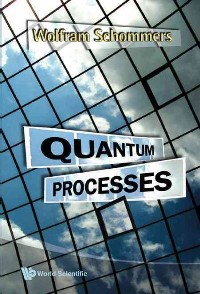
简介
Space and time are probably the most important elements in physics. Within the memory of man, all essential things are represented within the frame of space-time pictures. This is obviously the most basic information. What can we say about space and time? It is normally assumed that the space is a container filled with matter and that the time is just that which we measure with our clocks. However, there are some reasons to take another standpoint and to consider this container-conception as unrealistic, as prejudice so to say. Already the philosopher Immanuel Kant pointed on this serious problem.
In this monograph, the author discusses the so-called projection theory. In contrast to the container-conception (reality is embedded in space and time), within projection theory the physical reality is projected onto space and time and quantum processes are of particular relevance. Like Whitehead and Bergson, the author argues for the primacy of process.
One of the most interesting results is that projection theory automatically leads to a new aspect for the notion "time". Here we have not only the time of conventional physics, which is exclusively treated as an external parameter, but we obtain within projection theory a system-specific time. Just this system-specific time might be of fundamental importance in the future description of physical systems. For example, the self-assembly of nano-systems could lead to predictions that are even not thinkable within usual physics. Also in connection with cosmology the projection principle must inevitably lead to fundamentally new statements.
目录
Table Of Contents:
Foreword v
1 Conventional Quantum Theory 1(24)
1.1 Classical Description 1(1)
1.2 Schr枚dinger's Equations 2(5)
1.2.1 Operator Treatment of Schr枚dinger's Equation 4(1)
1.2.2 Momentum Representation 5(2)
1.3 Uncertainty Relations 7(2)
1.4 Individuals 9(5)
1.5 Conclusion 14(1)
1.6 Aspects 14(2)
1.6.1 The Principle of Complementarity 14(2)
1.6.2 Objectivity 16(1)
1.7 Remarks on the Superposition Principle 16(4)
1.8 Basic New Experiments 20(5)
1.8.1 General Remarks 20(3)
1.8.2 Conclusion 23(2)
2 Projection Theory 25(92)
2.1 Preliminary Remarks 25(2)
2.2 The Projection Principle 27(15)
2.2.1 The Elements of Space and Time 27(1)
2.2.2 Relationship between Matter and Space-Time 28(1)
2.2.3 Two Relevant Features 29(2)
2.2.4 Two Kinds of "Objects" 31(1)
2.2.5 Perception Processes 31(4)
2.2.6 Inside World and Outside World 35(1)
2.2.7 The Influence of Evolution 36(2)
2.2.8 Information in the Picture versus Information in Basic Reality (Outside Reality) 38(1)
2.2.9 Other Biological Systems 39(3)
2.2.10 Summary 42(1)
2.3 Projections 42(73)
2.3.1 Principal Remarks 42(2)
2.3.2 Mach's Principle 44(1)
2.3.3 Conclusion 45(1)
2.3.4 Other Spaces 45(6)
2.3.4.1 Fourier-space 45(1)
2.3.4.2 The influence of Planck's constant 46(2)
2.3.4.3 Reality and its picture 48(2)
2.3.4.4 Remark 50(1)
2.3.5 Basic Properties 51(4)
2.3.5.1 Operators 51(2)
2.3.5.2 Conclusion 53(2)
2.3.6 Basic Transformation Effects 55(4)
2.3.6.1 Particles 55(1)
2.3.6.2 Role of time t 56(1)
2.3.6.3 Non-local effects 57(1)
2.3.6.4 Conclusion 58(1)
2.3.7 Operator Equations 59(15)
2.3.7.1 Determination of ψ(r, t) and ψ(p, E) 59(1)
2.3.7.2 Remarks 60(1)
2.3.7.3 Space-specific formulation 61(3)
2.3.7.4 Discussion concerning equations (2.35) and (2.50) 64(3)
2.3.7.5 Other representations 67(3)
2.3.7.6 Superposition principle 70(4)
2.3.8 Processes 74(9)
2.3.8.1 General remarks 74(1)
2.3.8.2 Description of properties and appearances 75(3)
2.3.8.3 The meaning of the wave function 78(3)
2.3.8.4 Properties of probability distributions 81(2)
2.3.8.5 Does God play dice? 83(1)
2.3.9 Time 83(36)
2.3.9.1 Reference time and selection processes 84(2)
2.3.9.2 Structure of reference time 86(2)
2.3.9.3 Selections 88(7)
2.3.9.4 Information inside, information outside 95(1)
2.3.9.5 Reality outside 96(1)
2.3.9.6 Constancy phenomena 96(1)
2.3.9.7 Schr枚dinger's equation and its limitations 97(8)
2.3.9.8 Real situation 105(2)
2.3.9.9 τ-Dependent systems 107(1)
2.3.9.10 Some additional remarks 108(2)
2.3.9.11 Uncertainty relation for time and energy 110(1)
2.3.9.12 Time within special theory of relativity 110(5)
2.4 Summary 115(2)
3 Free, Non-interacting Systems (Particles) 117(72)
3.1 General Remarks 117(2)
3.2 The Behaviour of the Basic Equations 119(9)
3.2.1 The Case 茠(p0, E0)free = infinity 121(1)
3.2.2 On the Relationship Between p0 and E0 122(3)
3.2.3 The Case 茠(p0, E0)free not = to infinity 125(3)
3.2.4 Conclusion 128(1)
3.3 Classical and Quantum-Theoretical Elements 128(1)
3.4 Behaviour of the Wave Function in (r, t)-Space and (p, E)-Space 129(4)
3.5 Probability Considerations in Connection with ψ(P0,E0) 133(1)
3.6 Normalization Condition 134(3)
3.7 Mean Values for the Momentum and the Energy 137(3)
3.8 The p, E-Pool 140(2)
3.9 Free, Elementary Systems do not Exist 142(2)
3.10 No Equation for the Determination of the Wave Function ψ(p0, E0) 144(3)
3.10.1 Additional Physically Relevant Conditions? 144(1)
3.10.2 Multi-valuedness of the Wave Function ψ(P0,E0) 145(1)
3.10.3 Existence and Non-Existence 146(1)
3.10.4 Summary 147(1)
3.11 Principle of Usefulness 147(1)
3.12 Further General Remarks 148(1)
3.13 Rest Mass Effect 149(3)
3.14 Summary 152(1)
Appendix 3.A Free System within Usual Quantum Theory 153(7)
3.A.1 Superposition Ansatz 153(2)
3.A.2 Mean Momentum for a Free System 155(1)
3.A.3 Usual Quantum Theory and Projection Theory 156(4)
Appendix 3.B 160(3)
Appendix 3.C 163(3)
Appendix 3.D 166(1)
The Stationary Case 166(17)
3.D.1 Definition 166(1)
3.D.2 Relevant Properties 167(3)
3.D.3 The Behaviour of the Wave Functions 170(10)
3.D.3.1 Singularities 170(2)
3.D.3.2 The probability argument 172(1)
3.D.3.3 More details concerning the potential V(x,y,z) 173(4)
3.D.3.4 Mean value for the energy 177(2)
3.D.3.5 Normalization condition 179(1)
3.D.4 Stationary Systems do not Exist 180(2)
3.D.5 Final Remarks 182(1)
Appendix 3.E. 183(1)
Dependence of Mass on Velocity 183(6)
4 Interactions 189(172)
4.1 Interactions within Projection Theory 189(1)
4.2 What does Interaction Mean within Projection Theory 190(4)
4.2.1 Relationships 191(1)
4.2.2 Fourier-Effects 192(2)
4.3 How Basic is the Notion "Interaction" 194(6)
4.3.1 Classical Force Laws 194(2)
4.3.2 Equivalent Conceptions 196(1)
4.3.3 Further Remarks 197(1)
4.3.4 Remarks Concerning Quantum Field Theory and the Theory of Strings (Branes) 198(1)
4.3.5 Delocalised Systems in (p, E)-Space 198(1)
4.3.6 Summary 199(1)
4.4 Description of Interactions within Projection Theory: Principal Remarks 200(21)
4.4.1 Space-Time Limiting Interactions 200(3)
4.4.2 Mutual (Distance-Dependent) Interactions 203(6)
4.4.3 Specific Treatment in Connection with the Exchange of Momentum and Energy 209(5)
4.4.4 The p, E-Concert 214(3)
4.4.5 Individual Processes 217(2)
4.4.6 Analogy to Conventional Physics 219(1)
4.4.7 Total Momentum and Total Energy 220(1)
4.5 Pair Distributions 221(13)
4.5.1 Information About the Interaction 222(2)
4.5.2 Collective Effects in Connection with ψ(p, E) 224(1)
4.5.3 Analysis in (r, t )-Space 225(5)
4.5.4 Example for N = 4 230(3)
4.5.5 Further Discussions 233(1)
4.6 Basic Equations 234(20)
4.6.1 The Main Features 234(5)
4.6.2 Some Additional Statements 239(4)
4.6.3 Classical Formulation 243(3)
4.6.4 Introduction of Pair Potentials for Certain Configurations 246(6)
4.6.5 Interaction Effects 252(2)
4.7 Energy Levels 254(17)
4.7.1 Treatment of the Problem 256(2)
4.7.2 Specific Properties 258(1)
4.7.3 Conditional Wave Functions 259(3)
4.7.4 Eα-Fluctuations 262(7)
4.7.5 Extension to N Subsystems 269(2)
4.7.6 Summary 271(1)
4.8 Distance-Independent Interactions 271(29)
4.8.1 Principal Remarks 272(1)
4.8.2 Some Minor Changes 273(1)
4.8.3 Some Basic Features of Distance-Independent Interactions 274(2)
4.8.4 Absolute Space-Time Positions 276(2)
4.8.5 Arbitrary Jumps 278(2)
4.8.6 Effective Velocities 280(5)
4.8.7 Space-Effects 285(2)
4.8.8 Arbitrary Jumps and p, E-States 287(3)
4.8.9 Resting and Moving Frames 290(4)
4.8.10 Arbitrary Jumps within Single Systems 294(6)
4.9 The Meaning of the Potential Functions 300(8)
4.9.1 Introduction of a Potential Function in the Case of Distance-Independent Interactions (Form Interactions) 301(1)
4.9.2 Interaction within Conventional Physics 302(1)
4.9.3 Interaction Potentials are Auxiliary Elements 303(1)
4.9.4 Conventional Physics: What Mechanism is Behind Interaction? 304(1)
4.9.5 "Gravity ... an Occult Quality" 305(1)
4.9.6 Phenomena in Usual Quantum Theory 306(1)
4.9.7 Summary 307(1)
4.10 Further Basic Features 308(4)
4.10.1 Can Systems be Elementary in Character? 308(1)
4.10.2 Self-Creating Interaction Processes 309(3)
4.11 Absolute Space-Time Conceptions 312(9)
4.11.1 Mach's Principle 312(1)
4.11.2 The Effect of Inertia within Newton's Theory 313(1)
4.11.3 Mach's Principle and Theory of Relativity 314(6)
4.11.4 Final Remarks 320(1)
4.12 Relativistic Effects 321(7)
4.12.1 General Remarks 321(1)
4.12.2 Frames of Reference within Projection Theory 322(3)
4.12.3 Transformation Formulas 325(2)
4.12.4 Arbitrary Jumps of the Entire Complex in Space-Time 327(1)
4.13 Hierarchy of the Parts in a Part 328(12)
4.13.1 Conventional Physics 329(1)
4.13.2 Is this Principle Realizable within Projection Theory? 330(10)
4.13.2.1 Pictures and p, E-fluctuations 331(1)
4.13.2.2 No static building blocks 332(3)
4.13.2.3 No fluctuations of fluctuations 335(2)
4.13.2.4 Independent p, E-fluctuations 337(2)
4.13.2.5 Conclusion 339(1)
4.14 Granular Space-Time Structures 340(12)
4.14.1 Combined Interactions 341(2)
4.14.2 Selections 343(1)
4.14.3 The Unified Whole 344(3)
4.14.4 Simple Cosmological Considerations 347(1)
4.14.5 Arbitrary Motions through Space and Time 348(4)
4.14.6 Decomposition of the Cosmos 352(1)
4.15 Summary and Final Remarks 352(9)
5 Some Basic Questions 361(20)
5.1 The Particle-Wave Question 361(11)
5.1.1 No Need for an Experimental Arrangement 362(3)
5.1.2 What do We Measure 365(7)
5.1.2.1 Situation in conventional quantum theory 365(6)
5.1.2.2 Situation in projection theory 371(1)
5.2 The Role of the Observer 372(6)
5.2.1 Compatible with the Principles of Evolution 372(3)
5.2.2 Configurations in Space-Time 375(3)
5.3 Summary 378(3)
6 Summary 381(12)
Bibliography 393(2)
Index 395
Foreword v
1 Conventional Quantum Theory 1(24)
1.1 Classical Description 1(1)
1.2 Schr枚dinger's Equations 2(5)
1.2.1 Operator Treatment of Schr枚dinger's Equation 4(1)
1.2.2 Momentum Representation 5(2)
1.3 Uncertainty Relations 7(2)
1.4 Individuals 9(5)
1.5 Conclusion 14(1)
1.6 Aspects 14(2)
1.6.1 The Principle of Complementarity 14(2)
1.6.2 Objectivity 16(1)
1.7 Remarks on the Superposition Principle 16(4)
1.8 Basic New Experiments 20(5)
1.8.1 General Remarks 20(3)
1.8.2 Conclusion 23(2)
2 Projection Theory 25(92)
2.1 Preliminary Remarks 25(2)
2.2 The Projection Principle 27(15)
2.2.1 The Elements of Space and Time 27(1)
2.2.2 Relationship between Matter and Space-Time 28(1)
2.2.3 Two Relevant Features 29(2)
2.2.4 Two Kinds of "Objects" 31(1)
2.2.5 Perception Processes 31(4)
2.2.6 Inside World and Outside World 35(1)
2.2.7 The Influence of Evolution 36(2)
2.2.8 Information in the Picture versus Information in Basic Reality (Outside Reality) 38(1)
2.2.9 Other Biological Systems 39(3)
2.2.10 Summary 42(1)
2.3 Projections 42(73)
2.3.1 Principal Remarks 42(2)
2.3.2 Mach's Principle 44(1)
2.3.3 Conclusion 45(1)
2.3.4 Other Spaces 45(6)
2.3.4.1 Fourier-space 45(1)
2.3.4.2 The influence of Planck's constant 46(2)
2.3.4.3 Reality and its picture 48(2)
2.3.4.4 Remark 50(1)
2.3.5 Basic Properties 51(4)
2.3.5.1 Operators 51(2)
2.3.5.2 Conclusion 53(2)
2.3.6 Basic Transformation Effects 55(4)
2.3.6.1 Particles 55(1)
2.3.6.2 Role of time t 56(1)
2.3.6.3 Non-local effects 57(1)
2.3.6.4 Conclusion 58(1)
2.3.7 Operator Equations 59(15)
2.3.7.1 Determination of ψ(r, t) and ψ(p, E) 59(1)
2.3.7.2 Remarks 60(1)
2.3.7.3 Space-specific formulation 61(3)
2.3.7.4 Discussion concerning equations (2.35) and (2.50) 64(3)
2.3.7.5 Other representations 67(3)
2.3.7.6 Superposition principle 70(4)
2.3.8 Processes 74(9)
2.3.8.1 General remarks 74(1)
2.3.8.2 Description of properties and appearances 75(3)
2.3.8.3 The meaning of the wave function 78(3)
2.3.8.4 Properties of probability distributions 81(2)
2.3.8.5 Does God play dice? 83(1)
2.3.9 Time 83(36)
2.3.9.1 Reference time and selection processes 84(2)
2.3.9.2 Structure of reference time 86(2)
2.3.9.3 Selections 88(7)
2.3.9.4 Information inside, information outside 95(1)
2.3.9.5 Reality outside 96(1)
2.3.9.6 Constancy phenomena 96(1)
2.3.9.7 Schr枚dinger's equation and its limitations 97(8)
2.3.9.8 Real situation 105(2)
2.3.9.9 τ-Dependent systems 107(1)
2.3.9.10 Some additional remarks 108(2)
2.3.9.11 Uncertainty relation for time and energy 110(1)
2.3.9.12 Time within special theory of relativity 110(5)
2.4 Summary 115(2)
3 Free, Non-interacting Systems (Particles) 117(72)
3.1 General Remarks 117(2)
3.2 The Behaviour of the Basic Equations 119(9)
3.2.1 The Case 茠(p0, E0)free = infinity 121(1)
3.2.2 On the Relationship Between p0 and E0 122(3)
3.2.3 The Case 茠(p0, E0)free not = to infinity 125(3)
3.2.4 Conclusion 128(1)
3.3 Classical and Quantum-Theoretical Elements 128(1)
3.4 Behaviour of the Wave Function in (r, t)-Space and (p, E)-Space 129(4)
3.5 Probability Considerations in Connection with ψ(P0,E0) 133(1)
3.6 Normalization Condition 134(3)
3.7 Mean Values for the Momentum and the Energy 137(3)
3.8 The p, E-Pool 140(2)
3.9 Free, Elementary Systems do not Exist 142(2)
3.10 No Equation for the Determination of the Wave Function ψ(p0, E0) 144(3)
3.10.1 Additional Physically Relevant Conditions? 144(1)
3.10.2 Multi-valuedness of the Wave Function ψ(P0,E0) 145(1)
3.10.3 Existence and Non-Existence 146(1)
3.10.4 Summary 147(1)
3.11 Principle of Usefulness 147(1)
3.12 Further General Remarks 148(1)
3.13 Rest Mass Effect 149(3)
3.14 Summary 152(1)
Appendix 3.A Free System within Usual Quantum Theory 153(7)
3.A.1 Superposition Ansatz 153(2)
3.A.2 Mean Momentum for a Free System 155(1)
3.A.3 Usual Quantum Theory and Projection Theory 156(4)
Appendix 3.B 160(3)
Appendix 3.C 163(3)
Appendix 3.D 166(1)
The Stationary Case 166(17)
3.D.1 Definition 166(1)
3.D.2 Relevant Properties 167(3)
3.D.3 The Behaviour of the Wave Functions 170(10)
3.D.3.1 Singularities 170(2)
3.D.3.2 The probability argument 172(1)
3.D.3.3 More details concerning the potential V(x,y,z) 173(4)
3.D.3.4 Mean value for the energy 177(2)
3.D.3.5 Normalization condition 179(1)
3.D.4 Stationary Systems do not Exist 180(2)
3.D.5 Final Remarks 182(1)
Appendix 3.E. 183(1)
Dependence of Mass on Velocity 183(6)
4 Interactions 189(172)
4.1 Interactions within Projection Theory 189(1)
4.2 What does Interaction Mean within Projection Theory 190(4)
4.2.1 Relationships 191(1)
4.2.2 Fourier-Effects 192(2)
4.3 How Basic is the Notion "Interaction" 194(6)
4.3.1 Classical Force Laws 194(2)
4.3.2 Equivalent Conceptions 196(1)
4.3.3 Further Remarks 197(1)
4.3.4 Remarks Concerning Quantum Field Theory and the Theory of Strings (Branes) 198(1)
4.3.5 Delocalised Systems in (p, E)-Space 198(1)
4.3.6 Summary 199(1)
4.4 Description of Interactions within Projection Theory: Principal Remarks 200(21)
4.4.1 Space-Time Limiting Interactions 200(3)
4.4.2 Mutual (Distance-Dependent) Interactions 203(6)
4.4.3 Specific Treatment in Connection with the Exchange of Momentum and Energy 209(5)
4.4.4 The p, E-Concert 214(3)
4.4.5 Individual Processes 217(2)
4.4.6 Analogy to Conventional Physics 219(1)
4.4.7 Total Momentum and Total Energy 220(1)
4.5 Pair Distributions 221(13)
4.5.1 Information About the Interaction 222(2)
4.5.2 Collective Effects in Connection with ψ(p, E) 224(1)
4.5.3 Analysis in (r, t )-Space 225(5)
4.5.4 Example for N = 4 230(3)
4.5.5 Further Discussions 233(1)
4.6 Basic Equations 234(20)
4.6.1 The Main Features 234(5)
4.6.2 Some Additional Statements 239(4)
4.6.3 Classical Formulation 243(3)
4.6.4 Introduction of Pair Potentials for Certain Configurations 246(6)
4.6.5 Interaction Effects 252(2)
4.7 Energy Levels 254(17)
4.7.1 Treatment of the Problem 256(2)
4.7.2 Specific Properties 258(1)
4.7.3 Conditional Wave Functions 259(3)
4.7.4 Eα-Fluctuations 262(7)
4.7.5 Extension to N Subsystems 269(2)
4.7.6 Summary 271(1)
4.8 Distance-Independent Interactions 271(29)
4.8.1 Principal Remarks 272(1)
4.8.2 Some Minor Changes 273(1)
4.8.3 Some Basic Features of Distance-Independent Interactions 274(2)
4.8.4 Absolute Space-Time Positions 276(2)
4.8.5 Arbitrary Jumps 278(2)
4.8.6 Effective Velocities 280(5)
4.8.7 Space-Effects 285(2)
4.8.8 Arbitrary Jumps and p, E-States 287(3)
4.8.9 Resting and Moving Frames 290(4)
4.8.10 Arbitrary Jumps within Single Systems 294(6)
4.9 The Meaning of the Potential Functions 300(8)
4.9.1 Introduction of a Potential Function in the Case of Distance-Independent Interactions (Form Interactions) 301(1)
4.9.2 Interaction within Conventional Physics 302(1)
4.9.3 Interaction Potentials are Auxiliary Elements 303(1)
4.9.4 Conventional Physics: What Mechanism is Behind Interaction? 304(1)
4.9.5 "Gravity ... an Occult Quality" 305(1)
4.9.6 Phenomena in Usual Quantum Theory 306(1)
4.9.7 Summary 307(1)
4.10 Further Basic Features 308(4)
4.10.1 Can Systems be Elementary in Character? 308(1)
4.10.2 Self-Creating Interaction Processes 309(3)
4.11 Absolute Space-Time Conceptions 312(9)
4.11.1 Mach's Principle 312(1)
4.11.2 The Effect of Inertia within Newton's Theory 313(1)
4.11.3 Mach's Principle and Theory of Relativity 314(6)
4.11.4 Final Remarks 320(1)
4.12 Relativistic Effects 321(7)
4.12.1 General Remarks 321(1)
4.12.2 Frames of Reference within Projection Theory 322(3)
4.12.3 Transformation Formulas 325(2)
4.12.4 Arbitrary Jumps of the Entire Complex in Space-Time 327(1)
4.13 Hierarchy of the Parts in a Part 328(12)
4.13.1 Conventional Physics 329(1)
4.13.2 Is this Principle Realizable within Projection Theory? 330(10)
4.13.2.1 Pictures and p, E-fluctuations 331(1)
4.13.2.2 No static building blocks 332(3)
4.13.2.3 No fluctuations of fluctuations 335(2)
4.13.2.4 Independent p, E-fluctuations 337(2)
4.13.2.5 Conclusion 339(1)
4.14 Granular Space-Time Structures 340(12)
4.14.1 Combined Interactions 341(2)
4.14.2 Selections 343(1)
4.14.3 The Unified Whole 344(3)
4.14.4 Simple Cosmological Considerations 347(1)
4.14.5 Arbitrary Motions through Space and Time 348(4)
4.14.6 Decomposition of the Cosmos 352(1)
4.15 Summary and Final Remarks 352(9)
5 Some Basic Questions 361(20)
5.1 The Particle-Wave Question 361(11)
5.1.1 No Need for an Experimental Arrangement 362(3)
5.1.2 What do We Measure 365(7)
5.1.2.1 Situation in conventional quantum theory 365(6)
5.1.2.2 Situation in projection theory 371(1)
5.2 The Role of the Observer 372(6)
5.2.1 Compatible with the Principles of Evolution 372(3)
5.2.2 Configurations in Space-Time 375(3)
5.3 Summary 378(3)
6 Summary 381(12)
Bibliography 393(2)
Index 395
- 名称
- 类型
- 大小
光盘服务联系方式: 020-38250260 客服QQ:4006604884
云图客服:
用户发送的提问,这种方式就需要有位在线客服来回答用户的问题,这种 就属于对话式的,问题是这种提问是否需要用户登录才能提问
Video Player
×
Audio Player
×
pdf Player
×
