

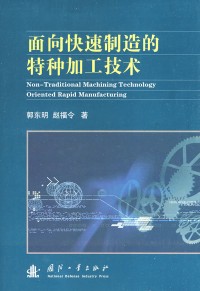
Non-traditional machining technology oriented rapid manufacturing
副标题:无
作 者:郭东明,赵福令著
分类号:
ISBN:9787118061154
微信扫一扫,移动浏览光盘
简介
本书是国内第一部系统阐述面向快速制造的特种加工技术的论著。其
内容是作者及其所负责的科研团队承担国家自然科学基金重点和面上项目
、辽宁省和大连市科技计划项目的科研成果和工作实践的总结,并补充了
结题后在本领域继续研究的新进展,重点论述面向制造的快速响应在特种
加工方面的新成果、新观点、新方法。主要内容包括可控电解珩磨复合加
工新技术、混粉电火花大面积镜面加工技术、超声波铣削加工原理及相关
技术、基于蜡模的快速精密铸技术。本书在阐述技术原理的同时,注重技
术的应用,以便让读者全面地了解并掌握面向快速制造的特种加工技术。
本书可以作为高等院校机械专业的研究生、本科生教材,也可供从事
特种加工的科研、工艺、教学人员参考。
目录
目录
第1章 绪论
1.1 特种加工技术的研究现状和发展趋势
1.1.1 人工智能技术为特种加工工艺规律建模奠定了基础
1.1.2 智能控制将成为特种加工领域主要的控制策略
1.1.3 新兴的特种加工技术将对制造业的生产模式产生深刻的影响
1.2 面向快速制造的特种加工技术基础
1.2.1 面向快速制造的特种加工技术体系
1.2.2 基于分层制造思想,利用简单工具的电加工工艺理论及技术
1.2.3 基于电场控制、溶解与切削相结合的复合加工方法与技术
1.2.4 三维型腔的精密成形及镜面电火花加工一体化技术
1.2.5 基于RP技术的特种加工方法与技术及面向RP技术的特种加工工艺组合技术
1.2.6 基于特种加工工艺的快速制造技术体系
第2章 可控电解珩磨复合加工技术
2.1 可控电解珩磨技术的基本理论
2.1.1 可控电解珩磨技术原理
2.1.2 可控电解珩磨加工中的钝化与活化
2.1.3 可控电解珩磨的电化学反应特性
2.1.4 准稳态及动态加工的金属去除规律
2.1.5 电场分布及与金属去除量分布的关系
2.2 可控电解珩磨的控制及实施方法
2.2.1 可控电解珩磨的实施条件
2.2.2 可控直流电解电源
2.2.3 可控电解珩磨的施电控制方法
2.2.4 可控电解珩磨的实施方法
2.2.5 阴极形式及组合阴极加工的控制实施方法
2.2.6 珩磨活化形式
2.3 可控电解珩磨电解液的加工特性
2.3.1 电解液的基本要求
2.3.2 电解液的选择
2.3.3 可控电解珩磨加工研究中的规定与假设
2.3.4 电解液的准稳态加工特性
2.3.5 电解液的动态特性
2.3.6 电解液的对比度及光整加工特性
2.4 准稳态加工去除规律的基本模型
2.4.1 周向去除规律的基本模型
2.4.2 对应施电规律的周向去除量分布计算
2.4.3 向径沿轴向变化类工件加工的去除规律基本模型
2.4.4 向径沿轴向变化类工件加工的去除量分布计算
2.4.5 向径沿轴向和周向均变化的异形曲面加工去除规律基本模型及去除量计算
2.5 准稳态加工去除规律数学模型的参数确定
2.5.1 工艺方案及条件
2.5.2 电解液模型参数的实验及拟合
2.5.3 1号电解液模型参数的实验及拟合
2.5.4 3号、4号和5号电解液模型参数的实验及拟合
2.6 动态去除规律模型及去除量分布
2.6.1 U-I动态响应规律及动态去除量分布
2.6.2 考虑“通延断止”现象影响的去除量分布计算与分析
2.6.3 1号电解液动态加工特性分析
2.6.4 3号电解液动态加工特性分析
2.7 已知工件误差及加工余量的施电规律求解方法
2.7.1 逐次逼近法
2.7.2 施电电流分布的逐次逼近法求解
2.8 本章小结
第3章 混粉电火花加工机理及应用
3.1 混粉电火花加工机理
3.1.1 粉末颗粒作用机理
3.1.2 介质击穿过程及放电通道的位形分析
3.2 混粉电火花加工工艺特性
3.2.1 加工极性的影响
3.2.2 峰值电流的影响
3.2.3 脉冲宽度的影响
3.2.4 工具电极材料的影响
3.2.5 工件材料的影响
3.2.6 加工面积的影响
3.2.7 冲油方式的影响
3.2.8 电极转速的影响
3.3 粉末特性对加工性能的影响
3.3.1 粉末性能及主要工艺参数
3.3.2 粉末材料对加工特性的影响
3.3.3 粉末浓度对加工特性的影响
3.4 混粉电火花加工表面特性
3.4.1 混粉电火花加工表面微观形貌分析
3.4.2 混粉电火花加工表面显微裂纹
3.4.3 混粉电火花加工表面显微硬度
3.5 本章小结
第4章 超声波铣削加工原理及相关技术
4.1 超声波铣削加工原理及材料去除率理论
4.1.1 超声波分层铣削加工原理
4.1.2 超声波加工中材料去除机理
4.1.3 超声波加工中材料去除率及其模型
4.1.4 超声波铣削加工中材料去除模型
4.1.5 超声波铣削加工中材料去除率模型
4.2 超声波铣削加工技术的实现
4.2.1 超声波铣削加工机床的组成
4.2.2 超声波数控加工中工具振幅的简易测量
4.2.3 数控超声波钻孔加工
4.2.4 超声波铣削加工中的工具损耗和补偿方式
4.2.5 超声波铣削工艺
4.3 本章小结
第5章 熔融沉积制造精度及快速模具制造技术
5.1 快速模具制造技术原理
5.1.1 快速成型技术原理及特点
5.1.2 模具零件快速制造方法体系
5.2 熔融沉积制造精度分析与材料收缩分析
5.2.1 ABS树脂基本特性
5.2.2 熔融沉积制造精度分析
5.2.3 材料收缩对零件尺寸精度的影响
5.3 FDM工艺丝宽模型与补偿研究
5.3.1 FDM工艺的工作原理
5.3.2 FDM工艺出丝过程及其影响因素分析
5.3.3 FDM工艺的丝宽模型
5.3.4 FDM工艺原型尺寸的正确补偿
5.4 熔融沉积制造工艺参数的优化
5.4.1 FDM主要工艺参数的确定
5.4.2 标准测试件设计
5.4.3 主要因素对原型尺寸、几何精度以及表面粗糙度的影响
5.5 基于FDM原型的电加工电极快速制造
5.5.1 FDM原型用于电加工电极快速制造的工艺路线
5.5.2 FDM原型电铸前的导电化处理
5.5.3 电铸最佳工艺参数的确定
5.5.4 FDM原型的电铸
5.5.5 电弧喷涂材料的确定
5.5.6 粗化及电弧喷涂紫铜
5.5.7 电铸电极的微观形貌和物相分析
5.5.8 电铸电极的电加工性能分析
5.6 分层实体制造用于快速模具制造的分析
5.6.1 分层实体制造技术原理
5.6.2 分层实体制造成型精度分析
5.6.3 基于LOM原型的金属模具快速制造
5.7 本章小结
参考文献
Chapter 1 Exordium
1.1 Present research status and development trends of nontraditional machining technology
1.1.1 Artificial intelligence technique lays scientific foundation for modeling of the technology
1.1.2 Intelligence control will become main control strategy in those fields
1.1.3 Newly nontraditional machining influence the production mode of manufacturing industry
1.2 Foundations of nontraditional machining technology oriented to rapid manufacturing
1.2.1 Systems of non traditional machining technology oriented to rapid manufacturing
1 2.2 Theoretical system of EDM milling by simple tool based on the layering manufacturing
1.2.3 Machining Technology of Combination of field control, dissolution and cutting
1.2.4 Integrative Technology of precision forming of 3D Micro Structure Cavity and Mirror EDM
1.2.5 Nontraditional machining methods based on RP and combination technology facing RP
1.2.6 RP Technology System based on Non Traditional Machining process
Chapter 2 Research on the field controlled electro-chemical honing
2.1 Basic theory of the field controlled electro-chemical honing
2.1.1 Principle of the field controlled electro-chemical honing
2.1.2 Passivation and activation of FCECH
2.1.3 Electrochemical reaction characteristic of FCECH
2.1.4 Removal low of metal in metastable state & dynamics
2.1.5 Distribution Relations between electric field and metal removal
2.2 Control and application method of FCECH
2.2.1 Application conditions of FCECH
2.2.3 Power control method of FCECH
2.2.4 Actualization of FCECH
2.2.5 Control actualization of cathode and assembled cathode
2.2.6 Modality of honing activation
2.3 Process characteristics of FCECH electrolyte
2.3.1 Requirement of electrolyte
2.3.2 Choice of electrolyte
2.3.3 Regulation and hypothesis in FCECH
2.3.4 Machining characteristic of metastable state ofelectrolyte
2.3.5 Dynamic behavior of electrolyte
2.3.6 Contrast and Surface Finishing characteristic of electrolyte
2.4 Model of removal in Quasi-Steady-State
2.4.1 Model of circumferential removal rule
2.4.2 Circumferential removal distribution calculation
2.4.3 Removal model of workpiece with varied diameter along axially
2.4.4 Removal distribution calculation of workpiece with varied diameter along axially
2.4.5 Removal model and calculation of abnormity workpiece with varied diameter along axially and contour
2.5 Parameters confirm of math model in quasi-steady-state
2.5.1 Condition and scheme of experiment
2.5.2 Electrolyte model experiments and fitting
2.5.3 Experimental fitting of〓 electrolyte parameter model
2.5.4 Experimental fitting of〓,〓 ,〓electrolyte parameter model
2.6 Dynamic removal model and removal distribution
2.6.1 U -I dynamic response law and dynamic removal
2.6.2 Removal distribution analysis and computation under the influence of starting with delay and immediate stop
2.6.3 Experimental analysis of dynamic removal in〓electrolyte
2.6.4 Experimental analysis of dynamic removal in〓electrolyte
2.7 Approaches of current distribution from known error and removal distribution
2.7.1 Successive approximation method
2.7.2 Realization of successive approximation method
2.8 Summary
Chapter 3 Mechanism and application of powder mixed EDM
3.1 Mechanism of powder mixed EDM
3.1.2 Breakdown process and discharge channel configuration
3.2 Process characteristics of powder mixed EDM
3.2.2 Impaction of pulse current
3.2.3 Impaction of pulse-on time
3.2.4 Impaction of electrode material
3.2.5 Impaction of workpiece material
3.2.6 Impaction of discharge area
3.2.7 Impaction ofjet flushing
3.2.8 Impaction of electrode rotary speed
3.3 Effect of physical properties of powder on machining performance
3.3.1 Properties of powder and process conditions
3.3.2 Influence of powder metirial on EDM Characteristics
3.3.3 Influence of concentration of powder on EDM Characteristics
3.4 Surface integrity of powder mixed EDM
3.4.1 Surface micro topography
3.4.2 Microcrack
Chapter 4 Principle and Relevant Technology of Ultrasonic Milling
4.1 Principle of in USM and material removal rate mechanisms
4.1.1 Machining process of Layered milling
4.1.2 Mechanisms of material removal in USM
4.1.3 Model of material removal rate in USM
4.1.4 Model of material removal in Ultrasomc Milling
4.1.5 Model of material removal rate in Ultrasonic Milling
4.2 Realization of ultrasonic milling
4.2.1 Component of ultrasonic milling machine
4.2.2 Simple amplitude measuring of horn
4.2.3 Ultrasonic drilling experiment
4.2.4 Representation and wear of tool
4.2.5 Ultrasonic milling Experiments
4.3 Summary
Chapter 5 Study on Precision of FDM and Rapid Tooling Based on FDM & LOM
5.1 Principle of rapid tooling
5.1.1 Principle and characteristics of RPM
5.1.2 Rapid tooling system based on RPM
5.2 Accuracy analysis and material shrinkage in FDM
5 2.1 Characteristics of ABS resin
5.2.2 Accuracy analysis in FDM
5.2.3 Ihe effect of material shrinkage on part size
5.3 Filament width model and compensation of FDM
5.3.2 The process of jostling ABS and influencing factor analysis
5.3.3 Filament width model of FDM
5.3.4 Reasonable compensation on FDM
5.4 Parameter optimization of FDM
5.4.1 Major parameters determination of FDM
5.4.2 Design of standard test piece
5.4.3 Experimental
5.5 Fast manufacture of electrode based on FDM
5.5.2 Conductive processing before FDM electroform
5.5.3 The best parameters determination of electroform
5.5.4 FDM electroform
5.5.5 Determination of arc spraying materials
5.5.6 Making rough and arc spraying copper
5.5.7 Surface topography and energy dispersion analysis of electroformed copper electrode
5.5.8 Analysis of EDM performance of electroformed electrodes
5.6 Researches on FDM based LOM
5 6.2 Precision analysis of LOM
5.6.3 The FDM of LOM
5.7 Summary
Reference
第1章 绪论
1.1 特种加工技术的研究现状和发展趋势
1.1.1 人工智能技术为特种加工工艺规律建模奠定了基础
1.1.2 智能控制将成为特种加工领域主要的控制策略
1.1.3 新兴的特种加工技术将对制造业的生产模式产生深刻的影响
1.2 面向快速制造的特种加工技术基础
1.2.1 面向快速制造的特种加工技术体系
1.2.2 基于分层制造思想,利用简单工具的电加工工艺理论及技术
1.2.3 基于电场控制、溶解与切削相结合的复合加工方法与技术
1.2.4 三维型腔的精密成形及镜面电火花加工一体化技术
1.2.5 基于RP技术的特种加工方法与技术及面向RP技术的特种加工工艺组合技术
1.2.6 基于特种加工工艺的快速制造技术体系
第2章 可控电解珩磨复合加工技术
2.1 可控电解珩磨技术的基本理论
2.1.1 可控电解珩磨技术原理
2.1.2 可控电解珩磨加工中的钝化与活化
2.1.3 可控电解珩磨的电化学反应特性
2.1.4 准稳态及动态加工的金属去除规律
2.1.5 电场分布及与金属去除量分布的关系
2.2 可控电解珩磨的控制及实施方法
2.2.1 可控电解珩磨的实施条件
2.2.2 可控直流电解电源
2.2.3 可控电解珩磨的施电控制方法
2.2.4 可控电解珩磨的实施方法
2.2.5 阴极形式及组合阴极加工的控制实施方法
2.2.6 珩磨活化形式
2.3 可控电解珩磨电解液的加工特性
2.3.1 电解液的基本要求
2.3.2 电解液的选择
2.3.3 可控电解珩磨加工研究中的规定与假设
2.3.4 电解液的准稳态加工特性
2.3.5 电解液的动态特性
2.3.6 电解液的对比度及光整加工特性
2.4 准稳态加工去除规律的基本模型
2.4.1 周向去除规律的基本模型
2.4.2 对应施电规律的周向去除量分布计算
2.4.3 向径沿轴向变化类工件加工的去除规律基本模型
2.4.4 向径沿轴向变化类工件加工的去除量分布计算
2.4.5 向径沿轴向和周向均变化的异形曲面加工去除规律基本模型及去除量计算
2.5 准稳态加工去除规律数学模型的参数确定
2.5.1 工艺方案及条件
2.5.2 电解液模型参数的实验及拟合
2.5.3 1号电解液模型参数的实验及拟合
2.5.4 3号、4号和5号电解液模型参数的实验及拟合
2.6 动态去除规律模型及去除量分布
2.6.1 U-I动态响应规律及动态去除量分布
2.6.2 考虑“通延断止”现象影响的去除量分布计算与分析
2.6.3 1号电解液动态加工特性分析
2.6.4 3号电解液动态加工特性分析
2.7 已知工件误差及加工余量的施电规律求解方法
2.7.1 逐次逼近法
2.7.2 施电电流分布的逐次逼近法求解
2.8 本章小结
第3章 混粉电火花加工机理及应用
3.1 混粉电火花加工机理
3.1.1 粉末颗粒作用机理
3.1.2 介质击穿过程及放电通道的位形分析
3.2 混粉电火花加工工艺特性
3.2.1 加工极性的影响
3.2.2 峰值电流的影响
3.2.3 脉冲宽度的影响
3.2.4 工具电极材料的影响
3.2.5 工件材料的影响
3.2.6 加工面积的影响
3.2.7 冲油方式的影响
3.2.8 电极转速的影响
3.3 粉末特性对加工性能的影响
3.3.1 粉末性能及主要工艺参数
3.3.2 粉末材料对加工特性的影响
3.3.3 粉末浓度对加工特性的影响
3.4 混粉电火花加工表面特性
3.4.1 混粉电火花加工表面微观形貌分析
3.4.2 混粉电火花加工表面显微裂纹
3.4.3 混粉电火花加工表面显微硬度
3.5 本章小结
第4章 超声波铣削加工原理及相关技术
4.1 超声波铣削加工原理及材料去除率理论
4.1.1 超声波分层铣削加工原理
4.1.2 超声波加工中材料去除机理
4.1.3 超声波加工中材料去除率及其模型
4.1.4 超声波铣削加工中材料去除模型
4.1.5 超声波铣削加工中材料去除率模型
4.2 超声波铣削加工技术的实现
4.2.1 超声波铣削加工机床的组成
4.2.2 超声波数控加工中工具振幅的简易测量
4.2.3 数控超声波钻孔加工
4.2.4 超声波铣削加工中的工具损耗和补偿方式
4.2.5 超声波铣削工艺
4.3 本章小结
第5章 熔融沉积制造精度及快速模具制造技术
5.1 快速模具制造技术原理
5.1.1 快速成型技术原理及特点
5.1.2 模具零件快速制造方法体系
5.2 熔融沉积制造精度分析与材料收缩分析
5.2.1 ABS树脂基本特性
5.2.2 熔融沉积制造精度分析
5.2.3 材料收缩对零件尺寸精度的影响
5.3 FDM工艺丝宽模型与补偿研究
5.3.1 FDM工艺的工作原理
5.3.2 FDM工艺出丝过程及其影响因素分析
5.3.3 FDM工艺的丝宽模型
5.3.4 FDM工艺原型尺寸的正确补偿
5.4 熔融沉积制造工艺参数的优化
5.4.1 FDM主要工艺参数的确定
5.4.2 标准测试件设计
5.4.3 主要因素对原型尺寸、几何精度以及表面粗糙度的影响
5.5 基于FDM原型的电加工电极快速制造
5.5.1 FDM原型用于电加工电极快速制造的工艺路线
5.5.2 FDM原型电铸前的导电化处理
5.5.3 电铸最佳工艺参数的确定
5.5.4 FDM原型的电铸
5.5.5 电弧喷涂材料的确定
5.5.6 粗化及电弧喷涂紫铜
5.5.7 电铸电极的微观形貌和物相分析
5.5.8 电铸电极的电加工性能分析
5.6 分层实体制造用于快速模具制造的分析
5.6.1 分层实体制造技术原理
5.6.2 分层实体制造成型精度分析
5.6.3 基于LOM原型的金属模具快速制造
5.7 本章小结
参考文献
Chapter 1 Exordium
1.1 Present research status and development trends of nontraditional machining technology
1.1.1 Artificial intelligence technique lays scientific foundation for modeling of the technology
1.1.2 Intelligence control will become main control strategy in those fields
1.1.3 Newly nontraditional machining influence the production mode of manufacturing industry
1.2 Foundations of nontraditional machining technology oriented to rapid manufacturing
1.2.1 Systems of non traditional machining technology oriented to rapid manufacturing
1 2.2 Theoretical system of EDM milling by simple tool based on the layering manufacturing
1.2.3 Machining Technology of Combination of field control, dissolution and cutting
1.2.4 Integrative Technology of precision forming of 3D Micro Structure Cavity and Mirror EDM
1.2.5 Nontraditional machining methods based on RP and combination technology facing RP
1.2.6 RP Technology System based on Non Traditional Machining process
Chapter 2 Research on the field controlled electro-chemical honing
2.1 Basic theory of the field controlled electro-chemical honing
2.1.1 Principle of the field controlled electro-chemical honing
2.1.2 Passivation and activation of FCECH
2.1.3 Electrochemical reaction characteristic of FCECH
2.1.4 Removal low of metal in metastable state & dynamics
2.1.5 Distribution Relations between electric field and metal removal
2.2 Control and application method of FCECH
2.2.1 Application conditions of FCECH
2.2.3 Power control method of FCECH
2.2.4 Actualization of FCECH
2.2.5 Control actualization of cathode and assembled cathode
2.2.6 Modality of honing activation
2.3 Process characteristics of FCECH electrolyte
2.3.1 Requirement of electrolyte
2.3.2 Choice of electrolyte
2.3.3 Regulation and hypothesis in FCECH
2.3.4 Machining characteristic of metastable state ofelectrolyte
2.3.5 Dynamic behavior of electrolyte
2.3.6 Contrast and Surface Finishing characteristic of electrolyte
2.4 Model of removal in Quasi-Steady-State
2.4.1 Model of circumferential removal rule
2.4.2 Circumferential removal distribution calculation
2.4.3 Removal model of workpiece with varied diameter along axially
2.4.4 Removal distribution calculation of workpiece with varied diameter along axially
2.4.5 Removal model and calculation of abnormity workpiece with varied diameter along axially and contour
2.5 Parameters confirm of math model in quasi-steady-state
2.5.1 Condition and scheme of experiment
2.5.2 Electrolyte model experiments and fitting
2.5.3 Experimental fitting of〓 electrolyte parameter model
2.5.4 Experimental fitting of〓,〓 ,〓electrolyte parameter model
2.6 Dynamic removal model and removal distribution
2.6.1 U -I dynamic response law and dynamic removal
2.6.2 Removal distribution analysis and computation under the influence of starting with delay and immediate stop
2.6.3 Experimental analysis of dynamic removal in〓electrolyte
2.6.4 Experimental analysis of dynamic removal in〓electrolyte
2.7 Approaches of current distribution from known error and removal distribution
2.7.1 Successive approximation method
2.7.2 Realization of successive approximation method
2.8 Summary
Chapter 3 Mechanism and application of powder mixed EDM
3.1 Mechanism of powder mixed EDM
3.1.2 Breakdown process and discharge channel configuration
3.2 Process characteristics of powder mixed EDM
3.2.2 Impaction of pulse current
3.2.3 Impaction of pulse-on time
3.2.4 Impaction of electrode material
3.2.5 Impaction of workpiece material
3.2.6 Impaction of discharge area
3.2.7 Impaction ofjet flushing
3.2.8 Impaction of electrode rotary speed
3.3 Effect of physical properties of powder on machining performance
3.3.1 Properties of powder and process conditions
3.3.2 Influence of powder metirial on EDM Characteristics
3.3.3 Influence of concentration of powder on EDM Characteristics
3.4 Surface integrity of powder mixed EDM
3.4.1 Surface micro topography
3.4.2 Microcrack
Chapter 4 Principle and Relevant Technology of Ultrasonic Milling
4.1 Principle of in USM and material removal rate mechanisms
4.1.1 Machining process of Layered milling
4.1.2 Mechanisms of material removal in USM
4.1.3 Model of material removal rate in USM
4.1.4 Model of material removal in Ultrasomc Milling
4.1.5 Model of material removal rate in Ultrasonic Milling
4.2 Realization of ultrasonic milling
4.2.1 Component of ultrasonic milling machine
4.2.2 Simple amplitude measuring of horn
4.2.3 Ultrasonic drilling experiment
4.2.4 Representation and wear of tool
4.2.5 Ultrasonic milling Experiments
4.3 Summary
Chapter 5 Study on Precision of FDM and Rapid Tooling Based on FDM & LOM
5.1 Principle of rapid tooling
5.1.1 Principle and characteristics of RPM
5.1.2 Rapid tooling system based on RPM
5.2 Accuracy analysis and material shrinkage in FDM
5 2.1 Characteristics of ABS resin
5.2.2 Accuracy analysis in FDM
5.2.3 Ihe effect of material shrinkage on part size
5.3 Filament width model and compensation of FDM
5.3.2 The process of jostling ABS and influencing factor analysis
5.3.3 Filament width model of FDM
5.3.4 Reasonable compensation on FDM
5.4 Parameter optimization of FDM
5.4.1 Major parameters determination of FDM
5.4.2 Design of standard test piece
5.4.3 Experimental
5.5 Fast manufacture of electrode based on FDM
5.5.2 Conductive processing before FDM electroform
5.5.3 The best parameters determination of electroform
5.5.4 FDM electroform
5.5.5 Determination of arc spraying materials
5.5.6 Making rough and arc spraying copper
5.5.7 Surface topography and energy dispersion analysis of electroformed copper electrode
5.5.8 Analysis of EDM performance of electroformed electrodes
5.6 Researches on FDM based LOM
5 6.2 Precision analysis of LOM
5.6.3 The FDM of LOM
5.7 Summary
Reference
Non-traditional machining technology oriented rapid manufacturing
- 名称
- 类型
- 大小
光盘服务联系方式: 020-38250260 客服QQ:4006604884
云图客服:
用户发送的提问,这种方式就需要有位在线客服来回答用户的问题,这种 就属于对话式的,问题是这种提问是否需要用户登录才能提问
Video Player
×
Audio Player
×
pdf Player
×
