

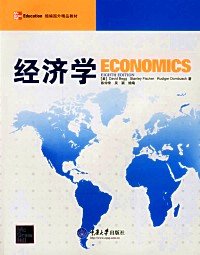
Economics
副标题:无
作 者:(美)David Begg,(美)Stanley Fischer,(美)Rudiger Dornbusch著;陈仲常,吴颖,陈立泰缩编
分类号:
ISBN:9787562437574
微信扫一扫,移动浏览光盘
简介
本教材是David Begg、Stanley Fischer和Rudiger Dornbusch教授所著的《Economics》(8th Edition)的缩编版。原本被BBC誉为“经济学圣经”,它简单明了地阐述了经济学的基本原理,广泛援引实例和数据来帮助学生分析理解重要理论,是为以经济学为基础课程的学生精心编写的入门教材。
本书内容包括:经济学与经济、经济学分析工具、市场与供求关系、供求弹性、消费者选择与需求决策、供给决策、成本与供给、完全竞争市场与完全垄断市场、市场结构与不完全竞争市场、劳动力市场、要素市场与收入分配、福利经济学、宏观经济学基础、总产出与总需求、财政政策与国际贸易、货币和银行、利率与货币传导机制、货币与财政政策、总供给与价格波动、通货膨胀及其预期、失业理论、汇率与国际收支平衡、经济增长、经济周期、宏观经济学争鸣等。
本书可作为高等院校经济管理等方向的经济学基础课程双语教学教材,也可供广大从事经济管理工作的人事阅读。更多>>
目录
目录
Preface
Guided Tour
Technology to Enhance Learning and Teaching
Part One Microeconomics
Chapter 1 ECONOMICS AND THE ECONOMY
1.1 Economic issues
1.2 Scarcity and the competing use of resources
1.3 The role of the market
1.4 Positive and normative
1.5 Micro and macro
Summary
Review questions
Chapter 2 TOOLS OF ECONOMIC ANALYSIS
2.1 Economic data
2.2 Index numbers
2.3 Nominal and real variables
2.4 Measuring changes in economic variables
2.5 Economic models
2.6 Models and data
2.7 Diagrams,lines and equations
2.8 Another look at'other things equal'
2.9 Theories and evidence
2.10 Some popular criticisms of economics and economists
Summary
Review questions
Chapter 3 DEMAND,SUPPLY AND THE MARKET
3.1 The market
3.2 Demand,supply and equilibrium
3.3 Demand and supply curves
3.4 Behind the demand curve
3.5 Shifts in the demand curve
3.6 Behind the supply curve
3.7 Shifts in the supply curve
3.8 Free markets and price controls
3.9 What,how and for whom
Summary
Review questions
Chapter 4 ELASTICITIES OF DEMAND AND SUPPLY
4.1 The price responsiveness of demand
4.2 Price,quantity demanded and total expenditure
4.3 Further applications of the price elasticity of demand
4.4 Short run and long run
4.5 The cross-price elasticity of demand
4.6 The effect of income on demand
4.7 Inflation and demand
4.8 Elasticity of supply
4.9 Who really pays the tax?
Summary
Review questions
Chapter 5 CONSUMER CHOICE AND DEMAND DECISIONS
5.1 Demand by a single consumer
5.2 Adjustment to income changes
5.3 Adjustment to price changes
5.4 The market demand curve
5.5 Complements and substitutes
5.6 Transfers in kind
Summary
Review questions
Appendix Consumer choice with measurable utility
Chapter 6 INTRODUCING SUPPLY DECISIONS
6.1 Business organization
6.2 A firm's accounts
6.3 Firms and profit maximization
6.4 Corporate finance and corporate control
6.5 The firm's supply decision
6.6 Marginal cost and marginal revenue
6.7 Marginal cost and marginal revenue curves
Summary
Review questions
Chapter 7 COSTS AND SUPPLY
7.1 Input and output
7.2 Costs and the choice of technique
7.3 Long-run total,marginal and average costs
7.4 Returns to scale
7.5 Average cost and marginal cost
7.6 The firm's long-rin output decision
7.7 Short-run costs and diminishing marginal returns
7.8 A firm's output decision in the short run
7.9 Short-run and long-run costs
Summary
Review questions
Chapter 8 PERFECT COMPETITION AND PURE MONOPOLY
8.1 Perfect competition
8.2 A perfectly competitive firm's supply decision
8.3 Industry supply curves
8.4 Comparative statics for a competitive industry
8.5 Pure'monopoly:the opposite limiting case
8.6 Profit-maximizing output for a monopolist
8.7 Output and price under monopoly and competition
8.8 A monopoly has no supply curve
8.9 Monopoly and technical change
Summary
Review questions
Chapter 9 MARKET STRUCTURE AND IMPERFECT COMPETITION
9.1 Why market structures differ
9.2 Monopolistic competition
9.3 Oligopoly and interdependence
9.4 Game theory and interdependent decisions
9.5 Reaction functions
9.6 Entry and potential competition
9.7 Strategic entry deterrence
9.8 Summing up
Summary
Review questions
Chapter 10 THE LABOUR MARKET
10.1 The firm's demand for factors in the long run
10.2 The firm's demand for labour in the short run
10.3 The industry demand curve for labour
10.4 The supply of labour
10.5 Industry labour market equilibrium
10.6 Transfer earnings and economic rents
10.7 Do labour markets clear?
Surnmary
Review questions
Appendix Isoquants and the choice of production technique
Chapter 11 FACTOR MARKETS AND INCOME DISTRIBUTION
11.1 Physical capital
11.2 Rentals,interest rates and asset prices
11.3 Saving,investment and the real interest rate
11.4 The demand for capital services
11.5 The supply of capital services
11.6 Equilibrium and adjustment in the market for capital services
11.7 The price of capital assets
11.8 Land and rents
11.9 Allocating a fixed land supply between competing uses
Summary
Review questions
Appendix The simple algebra of present values and
Chapter 12 WELFARE ECONOMICS
12.1 Equity and efficiency
12.2 Perfect competition and Pareto-efficiency
12.3 Distortions and the second best
12.4 Market failure
12.5 Externalities
12.6 Environmental issues
12.7 Other missing markets:time and risk
12.8 Quality,health and safety
Summary
Review questions
Part Two Macroeonomics
Chapter 13 INTRODUCTION TO MACROECONOMICS
13.1 The big issues
13.2 The facts
13.3 An overview
13.4 National income accounting
13.5 What GNP measures
Summary
Review questions
Chapter 14 OUTPUT AND AGGREGATE DEMAND
14.1 Components of aggregate demand
14.2 Aggregate demand
14.3 Equilibrium output
14.4 Another approach:planned saving equals planned investment
14.5 A fall in aggregate demand
14.6 The multiplier
14.7 The paradox of thrift
Summary
Review questions
Chapter 15 FISCAL POLICY AND FOREIGN TRADE
15.1 Government and the circular flow
15.2 The government and aggregate demand
15.3 The government budget
15.4 Deficits and the fiscal stance
15.5 Automatic stabilizers and discretionary fiscal policy
15.6 The national debt and the deficit
15.7 Foreign trade and income determination
Summary
Review questions
Chapter 16 MONEY AND BANKING
16.1 Money and its functions
16.2 Modern banking
16.3 How banks create money
16.4 The monetary base and the money multiplier
16.5 Measures of money
16.6 Competition between banks
16.7 The demand for money
Summary
Review questions
Chapter 17 INTEREST RATES AND MONETARY TRANSMISSION
17.1 The Bank and the money supply
17.2 Lender of last resort
17.3 Equilibrium in financial markets
17.4 Monetary control
17.5 Targets and instruments of monetary policy
17.6 The transmission mechanism
Summary
Review questions
Chapter 18 MONETARY AND FISCAL POLICY
18.1 Monetary policy rules
18.2 The IS-LM model
18.3 The IS-LM model in action
18.4 Shocks to money demand
18.5 The policy mix
18.6 The effect of future taxes
18.7 Demand management revisited
Summary
Review questions
Chapter 19 AGGREGATE SUPPLY,PRICES AND ADJUSTMENT TO SHOCKS
19.1 Inflation and aggregate demand
19.2 Aggregate supply
19.3 Equilibrium inflation
19.4 The labour market and wage behaviour
19.5 Short-run aggregate supply
19.6 The adjustment process
19.7 Sluggish adjustment to shocks
19.8 Tradeoffs in monetary objectives
Summary
Review questions
Chapter 20 INFLATION,EXPECTATIONS AND CREDIBILITY
20.1 Money and inflation
20.2 Inflation and interest rates
20.3 Inflation,money and deficits
20.4 Inflation,unemployment and output
20.5 The costs of inflation
20.6 Defeating inflation
20.7 The Monetary Policy Committee
Summary
Review questions
Chapter 21 UNEMPLOYMENT
21.1 The labour market
21.2 Analysing unemployment
21.3 Explaining changes in unemployment
21.4 Cyclical fluctuations in unemployment
21.5 The cost of unemployment
Summary
Review questions
Chapter 22 EXCHANGE RATES AND THE BALANCE OF PAYMENTS
22.1 The foreign exchange market
22.2 Exchange rate regimes
22.3 The balance.of payments
22.4 The real exchange rate
22.5 Determinants of the current account
22.6 The financial account
22.7 Internal and external balance
22.8 The long-run equilibrium real exchange rate
Summary
Review questions
Chapter 23 ECONOMIC GROWTH
23.1 Economic growth
23.2 Growth:an overview
23.3 Technical knowledge
23.4 Growth and accumulation
23.5 Growth through technical progress
23.6 Endogenous growth
23.7 The costs of growth
Summary
Review questions
Chapter 24 BUSINESS CYCLES
24.1 Trend and cycle:statistics or economics?
24.2 Theories of the business cycle
24.3 Real business cycles
24.4 An international business cycle?
24.5 UK recovery after 1992
24.6 The odyssey after 2001
Summary
Review questions
Chapter 25 MACROECONOMICS:TAKING STOCK
25.1 Areas of disagreement
25.2 New Classical macroeconomics
25.3 Gradualist monetarists
25.4 Moderate Keynesians
25.5 Extreme Keynesians
25.6 A summing up
Summary
Review questions
APPENDIX:ANSWERS TO REVIEW QUESTIONS
GLOSSARY
教师反馈表
Preface
Guided Tour
Technology to Enhance Learning and Teaching
Part One Microeconomics
Chapter 1 ECONOMICS AND THE ECONOMY
1.1 Economic issues
1.2 Scarcity and the competing use of resources
1.3 The role of the market
1.4 Positive and normative
1.5 Micro and macro
Summary
Review questions
Chapter 2 TOOLS OF ECONOMIC ANALYSIS
2.1 Economic data
2.2 Index numbers
2.3 Nominal and real variables
2.4 Measuring changes in economic variables
2.5 Economic models
2.6 Models and data
2.7 Diagrams,lines and equations
2.8 Another look at'other things equal'
2.9 Theories and evidence
2.10 Some popular criticisms of economics and economists
Summary
Review questions
Chapter 3 DEMAND,SUPPLY AND THE MARKET
3.1 The market
3.2 Demand,supply and equilibrium
3.3 Demand and supply curves
3.4 Behind the demand curve
3.5 Shifts in the demand curve
3.6 Behind the supply curve
3.7 Shifts in the supply curve
3.8 Free markets and price controls
3.9 What,how and for whom
Summary
Review questions
Chapter 4 ELASTICITIES OF DEMAND AND SUPPLY
4.1 The price responsiveness of demand
4.2 Price,quantity demanded and total expenditure
4.3 Further applications of the price elasticity of demand
4.4 Short run and long run
4.5 The cross-price elasticity of demand
4.6 The effect of income on demand
4.7 Inflation and demand
4.8 Elasticity of supply
4.9 Who really pays the tax?
Summary
Review questions
Chapter 5 CONSUMER CHOICE AND DEMAND DECISIONS
5.1 Demand by a single consumer
5.2 Adjustment to income changes
5.3 Adjustment to price changes
5.4 The market demand curve
5.5 Complements and substitutes
5.6 Transfers in kind
Summary
Review questions
Appendix Consumer choice with measurable utility
Chapter 6 INTRODUCING SUPPLY DECISIONS
6.1 Business organization
6.2 A firm's accounts
6.3 Firms and profit maximization
6.4 Corporate finance and corporate control
6.5 The firm's supply decision
6.6 Marginal cost and marginal revenue
6.7 Marginal cost and marginal revenue curves
Summary
Review questions
Chapter 7 COSTS AND SUPPLY
7.1 Input and output
7.2 Costs and the choice of technique
7.3 Long-run total,marginal and average costs
7.4 Returns to scale
7.5 Average cost and marginal cost
7.6 The firm's long-rin output decision
7.7 Short-run costs and diminishing marginal returns
7.8 A firm's output decision in the short run
7.9 Short-run and long-run costs
Summary
Review questions
Chapter 8 PERFECT COMPETITION AND PURE MONOPOLY
8.1 Perfect competition
8.2 A perfectly competitive firm's supply decision
8.3 Industry supply curves
8.4 Comparative statics for a competitive industry
8.5 Pure'monopoly:the opposite limiting case
8.6 Profit-maximizing output for a monopolist
8.7 Output and price under monopoly and competition
8.8 A monopoly has no supply curve
8.9 Monopoly and technical change
Summary
Review questions
Chapter 9 MARKET STRUCTURE AND IMPERFECT COMPETITION
9.1 Why market structures differ
9.2 Monopolistic competition
9.3 Oligopoly and interdependence
9.4 Game theory and interdependent decisions
9.5 Reaction functions
9.6 Entry and potential competition
9.7 Strategic entry deterrence
9.8 Summing up
Summary
Review questions
Chapter 10 THE LABOUR MARKET
10.1 The firm's demand for factors in the long run
10.2 The firm's demand for labour in the short run
10.3 The industry demand curve for labour
10.4 The supply of labour
10.5 Industry labour market equilibrium
10.6 Transfer earnings and economic rents
10.7 Do labour markets clear?
Surnmary
Review questions
Appendix Isoquants and the choice of production technique
Chapter 11 FACTOR MARKETS AND INCOME DISTRIBUTION
11.1 Physical capital
11.2 Rentals,interest rates and asset prices
11.3 Saving,investment and the real interest rate
11.4 The demand for capital services
11.5 The supply of capital services
11.6 Equilibrium and adjustment in the market for capital services
11.7 The price of capital assets
11.8 Land and rents
11.9 Allocating a fixed land supply between competing uses
Summary
Review questions
Appendix The simple algebra of present values and
Chapter 12 WELFARE ECONOMICS
12.1 Equity and efficiency
12.2 Perfect competition and Pareto-efficiency
12.3 Distortions and the second best
12.4 Market failure
12.5 Externalities
12.6 Environmental issues
12.7 Other missing markets:time and risk
12.8 Quality,health and safety
Summary
Review questions
Part Two Macroeonomics
Chapter 13 INTRODUCTION TO MACROECONOMICS
13.1 The big issues
13.2 The facts
13.3 An overview
13.4 National income accounting
13.5 What GNP measures
Summary
Review questions
Chapter 14 OUTPUT AND AGGREGATE DEMAND
14.1 Components of aggregate demand
14.2 Aggregate demand
14.3 Equilibrium output
14.4 Another approach:planned saving equals planned investment
14.5 A fall in aggregate demand
14.6 The multiplier
14.7 The paradox of thrift
Summary
Review questions
Chapter 15 FISCAL POLICY AND FOREIGN TRADE
15.1 Government and the circular flow
15.2 The government and aggregate demand
15.3 The government budget
15.4 Deficits and the fiscal stance
15.5 Automatic stabilizers and discretionary fiscal policy
15.6 The national debt and the deficit
15.7 Foreign trade and income determination
Summary
Review questions
Chapter 16 MONEY AND BANKING
16.1 Money and its functions
16.2 Modern banking
16.3 How banks create money
16.4 The monetary base and the money multiplier
16.5 Measures of money
16.6 Competition between banks
16.7 The demand for money
Summary
Review questions
Chapter 17 INTEREST RATES AND MONETARY TRANSMISSION
17.1 The Bank and the money supply
17.2 Lender of last resort
17.3 Equilibrium in financial markets
17.4 Monetary control
17.5 Targets and instruments of monetary policy
17.6 The transmission mechanism
Summary
Review questions
Chapter 18 MONETARY AND FISCAL POLICY
18.1 Monetary policy rules
18.2 The IS-LM model
18.3 The IS-LM model in action
18.4 Shocks to money demand
18.5 The policy mix
18.6 The effect of future taxes
18.7 Demand management revisited
Summary
Review questions
Chapter 19 AGGREGATE SUPPLY,PRICES AND ADJUSTMENT TO SHOCKS
19.1 Inflation and aggregate demand
19.2 Aggregate supply
19.3 Equilibrium inflation
19.4 The labour market and wage behaviour
19.5 Short-run aggregate supply
19.6 The adjustment process
19.7 Sluggish adjustment to shocks
19.8 Tradeoffs in monetary objectives
Summary
Review questions
Chapter 20 INFLATION,EXPECTATIONS AND CREDIBILITY
20.1 Money and inflation
20.2 Inflation and interest rates
20.3 Inflation,money and deficits
20.4 Inflation,unemployment and output
20.5 The costs of inflation
20.6 Defeating inflation
20.7 The Monetary Policy Committee
Summary
Review questions
Chapter 21 UNEMPLOYMENT
21.1 The labour market
21.2 Analysing unemployment
21.3 Explaining changes in unemployment
21.4 Cyclical fluctuations in unemployment
21.5 The cost of unemployment
Summary
Review questions
Chapter 22 EXCHANGE RATES AND THE BALANCE OF PAYMENTS
22.1 The foreign exchange market
22.2 Exchange rate regimes
22.3 The balance.of payments
22.4 The real exchange rate
22.5 Determinants of the current account
22.6 The financial account
22.7 Internal and external balance
22.8 The long-run equilibrium real exchange rate
Summary
Review questions
Chapter 23 ECONOMIC GROWTH
23.1 Economic growth
23.2 Growth:an overview
23.3 Technical knowledge
23.4 Growth and accumulation
23.5 Growth through technical progress
23.6 Endogenous growth
23.7 The costs of growth
Summary
Review questions
Chapter 24 BUSINESS CYCLES
24.1 Trend and cycle:statistics or economics?
24.2 Theories of the business cycle
24.3 Real business cycles
24.4 An international business cycle?
24.5 UK recovery after 1992
24.6 The odyssey after 2001
Summary
Review questions
Chapter 25 MACROECONOMICS:TAKING STOCK
25.1 Areas of disagreement
25.2 New Classical macroeconomics
25.3 Gradualist monetarists
25.4 Moderate Keynesians
25.5 Extreme Keynesians
25.6 A summing up
Summary
Review questions
APPENDIX:ANSWERS TO REVIEW QUESTIONS
GLOSSARY
教师反馈表
Economics
- 名称
- 类型
- 大小
光盘服务联系方式: 020-38250260 客服QQ:4006604884
云图客服:
用户发送的提问,这种方式就需要有位在线客服来回答用户的问题,这种 就属于对话式的,问题是这种提问是否需要用户登录才能提问
Video Player
×
Audio Player
×
pdf Player
×
