

微信扫一扫,移动浏览光盘
简介
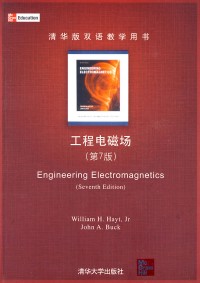
本书是一本国际知名的经典教材,第一版出版距今已50余年。
本书基本概念讲述清晰,注重物理概念,淡化公式推导,强调自主学
习,图文并茂;每章后面配有大量习题。
配书光盘提供了彩色场图、动画、问答测试题和关键内容的交互式学
习,内容丰富,适子自学。
本书文笔流畅,可读性好,其目的是使学生可以使用该教材进行独立
学习。因此,该书是电气工程和相关专业大学本科电磁场课程的理想教材
或参考书,尤其适合作为双语教学或英文授课教材。
目录
Preface
Guided Tour
Chapter 1 Vector Analysis
1.1 Scalars and Vectors
1.2 Vector Algebra
1.3 The Rectangular Coordinate System
1.4 Vector Components and Unit Vectors
1.5 The Vector Field
1.6 The Dot Product
1.7 The Cross Product
1.8 Other Coordinate Systems: Circular Cylindrical Coordinates
1.9 The Spherical Coordinate System
References
Chapter 1 Problems
chapter 2 Coulomb's Law and Electric Field Intensity
2.1 The Experimental Law of Coulomb
2.2 Electric Field Intensity
2.3 Field Due to a Continuous Volume Charge Distribution
2.4 Field of a Line Charge
2.5 Field of a Sheet of Charge
2.6 Streamlines and Sketches of Fields References
Chapter 2 Problems
Chapter 3 Electric Flux Density, Gauss's Law,and Divergence
3.1 Electric Flux Density
3.2 Gauss's Law
3.3 Application of Gauss's Law: Some Symmetrical Charge Distributions
3.4 Application of Gauss's Law: Differential Volume Element
3.5 Divergence
3.6 Maxwell's First Equation (Electrostatics)
3.7 The Vector Operator V and the Divergence
Theorem
References
Chapter 3 Problems
Chapter 4 Energy and Potential
4.1 Energy Expended in Moving a Point Charge in an Electric Field
4.2 The Line Integral
4.3 Definition of Potential Difference and Potential
4.4 The Potential Field of a Point Charge
4.5 The Potential Field of a System of Charges:Conservative Property
4.6 Potential Gradient
4.7 The Dipole
4.8 Energy Density in the Electrostatic Field
References
Chapter 4 Problems
Chapter 5 Current and Conductors
5.1 Current and Current Density
5.2 Continuity of Current
5.3 Metallic Conductors
5.4 Conductor Properties and Boundary Conditions
5.5 The Method of Images
5.6 Semiconductors
References
Chapter 5 Problems
Chapter 6 Dielectrics and Capacitance
6.1 The Nature of Dielectric Materials
6.2 Boundary Conditions for Perfect Dielectric Materials
6.3 Capacitance
6.4 Several Capacitance Examples
6.5 Capacitance of a Two-Wire Line
6.6 Using Field Sketches to Estimate Capacitance in Two-Dimensional Problems
6.7 Current Analogies
References
Chapter 6 Problems
Chapter 7 Poisson's and Laplace's Equations
7.1 Derivation of Poisson's and Laplace's Equations
7.2 Uniqueness Theorem 175
7.3 Examples of the Solution of Laplace's Equation
7.4 Example of the Solution of Poisson's Equation
7.5 Product Solution of Laplace's Equation
7.6 Solving Laplace's Equation Through Numerical Iteration
References
Chapter 7 Problems
Chapter 8 The Steady Magnetic Field
8.1 Biot-Savart Law
8.2 Ampbre's Circuital Law
8.3 Curl
8.4 Stokes' Theorem2
8.5 Magnetic Flux and Magnetic Flux Density
8.6 The Scalar and Vector Magnetic Potentials
8.7 Derivation of the Steady-Magnetic-Field Laws
References
Chapter 8 Problems
Chapter 9 Magnetic Forces, Materials, and inductance
9.1 Force on a Moving Charge
9.2 Force on a Differential Current Element
9.3 Force Between Differential Current Elements
9.4 Force and Torque on a Closed Circuit
9.5 The Nature of Magnetic Materials
9.6 Magnetization and Permeability
9.7 Magnetic Boundary Conditions
9.8 The Magnetic Circuit
9.9 Potential Energy and Forces on Magnetic Materials
9.10 Inductance and Mutual Inductance
References
Chapter 9 Problems
Chapter 10 Time-Varying Fields and Maxwell's Equations
10.1 Faraday's Law
10.2 Displacement Current
10.3 Maxwell's Equations in Point Form
10.4 Maxwell's Equations in Integral Form
10.5 The Retarded Potentials
References
Chapter 10 Problems
Chapter 12 The Uniform Plane Wave
12.1 Wave Propagation in Free Space
12.2 Wave Propagation in Dielectrics
12.3 Poynting's Theorem and Wave Power
12.4 Propagation in Good Conductors: Skin Effect
12.5 Wave Polarization
References
Chapter 12 Problems
Chapter 13 Plane Wave Reflection and Dispersion
13.1 Reflection of Uniform Plane Waves at Normal Incidence
13.2 Standing Wave Ratio
13.3 Wave Reflection from Multiple Interfaces
13.4 Plane Wave Propagation in General Directions
13.5 Plane Wave Rellection at Oblique Incidence Angles
13.6 Total Reflection and Total Transmission of Obliquely Incident Waves
13.7 Wave Propagation in Dispersive Media
13.8 Pulse Broadening in Dispersive Media
References
Chapter 13 Problems
Chapter 14 Guided Waves and Radiation
14.1 Transmission Line Fields and Primary Constants
14.2 Basic Waveguide Operation
14.3 Plane Wave Analysis of the Parallel-Plate Waveguide
14.4 Parallel-Plate Guide Analysis Using the Wave Equation
14.5 Rectangular Waveguides
14.6 Planar Dielectric Waveguides
14.7 OpticalFiber
14.8 Basic Antenna Principles
References
Chapter 14 Problems
Appendix A
Vector Analysis
A.1 General Curvilinear Coordinates
A.2 Divergence, Gradient, and Curl in General Curvilinear Coordinates 479
A.3 Vector Identities
Appendix B
Units
Appendix C
Material Constants
Appendix D
Origins of the Complex Permittivity
Answers to Odd-Numbered
Problems
Guided Tour
Chapter 1 Vector Analysis
1.1 Scalars and Vectors
1.2 Vector Algebra
1.3 The Rectangular Coordinate System
1.4 Vector Components and Unit Vectors
1.5 The Vector Field
1.6 The Dot Product
1.7 The Cross Product
1.8 Other Coordinate Systems: Circular Cylindrical Coordinates
1.9 The Spherical Coordinate System
References
Chapter 1 Problems
chapter 2 Coulomb's Law and Electric Field Intensity
2.1 The Experimental Law of Coulomb
2.2 Electric Field Intensity
2.3 Field Due to a Continuous Volume Charge Distribution
2.4 Field of a Line Charge
2.5 Field of a Sheet of Charge
2.6 Streamlines and Sketches of Fields References
Chapter 2 Problems
Chapter 3 Electric Flux Density, Gauss's Law,and Divergence
3.1 Electric Flux Density
3.2 Gauss's Law
3.3 Application of Gauss's Law: Some Symmetrical Charge Distributions
3.4 Application of Gauss's Law: Differential Volume Element
3.5 Divergence
3.6 Maxwell's First Equation (Electrostatics)
3.7 The Vector Operator V and the Divergence
Theorem
References
Chapter 3 Problems
Chapter 4 Energy and Potential
4.1 Energy Expended in Moving a Point Charge in an Electric Field
4.2 The Line Integral
4.3 Definition of Potential Difference and Potential
4.4 The Potential Field of a Point Charge
4.5 The Potential Field of a System of Charges:Conservative Property
4.6 Potential Gradient
4.7 The Dipole
4.8 Energy Density in the Electrostatic Field
References
Chapter 4 Problems
Chapter 5 Current and Conductors
5.1 Current and Current Density
5.2 Continuity of Current
5.3 Metallic Conductors
5.4 Conductor Properties and Boundary Conditions
5.5 The Method of Images
5.6 Semiconductors
References
Chapter 5 Problems
Chapter 6 Dielectrics and Capacitance
6.1 The Nature of Dielectric Materials
6.2 Boundary Conditions for Perfect Dielectric Materials
6.3 Capacitance
6.4 Several Capacitance Examples
6.5 Capacitance of a Two-Wire Line
6.6 Using Field Sketches to Estimate Capacitance in Two-Dimensional Problems
6.7 Current Analogies
References
Chapter 6 Problems
Chapter 7 Poisson's and Laplace's Equations
7.1 Derivation of Poisson's and Laplace's Equations
7.2 Uniqueness Theorem 175
7.3 Examples of the Solution of Laplace's Equation
7.4 Example of the Solution of Poisson's Equation
7.5 Product Solution of Laplace's Equation
7.6 Solving Laplace's Equation Through Numerical Iteration
References
Chapter 7 Problems
Chapter 8 The Steady Magnetic Field
8.1 Biot-Savart Law
8.2 Ampbre's Circuital Law
8.3 Curl
8.4 Stokes' Theorem2
8.5 Magnetic Flux and Magnetic Flux Density
8.6 The Scalar and Vector Magnetic Potentials
8.7 Derivation of the Steady-Magnetic-Field Laws
References
Chapter 8 Problems
Chapter 9 Magnetic Forces, Materials, and inductance
9.1 Force on a Moving Charge
9.2 Force on a Differential Current Element
9.3 Force Between Differential Current Elements
9.4 Force and Torque on a Closed Circuit
9.5 The Nature of Magnetic Materials
9.6 Magnetization and Permeability
9.7 Magnetic Boundary Conditions
9.8 The Magnetic Circuit
9.9 Potential Energy and Forces on Magnetic Materials
9.10 Inductance and Mutual Inductance
References
Chapter 9 Problems
Chapter 10 Time-Varying Fields and Maxwell's Equations
10.1 Faraday's Law
10.2 Displacement Current
10.3 Maxwell's Equations in Point Form
10.4 Maxwell's Equations in Integral Form
10.5 The Retarded Potentials
References
Chapter 10 Problems
Chapter 12 The Uniform Plane Wave
12.1 Wave Propagation in Free Space
12.2 Wave Propagation in Dielectrics
12.3 Poynting's Theorem and Wave Power
12.4 Propagation in Good Conductors: Skin Effect
12.5 Wave Polarization
References
Chapter 12 Problems
Chapter 13 Plane Wave Reflection and Dispersion
13.1 Reflection of Uniform Plane Waves at Normal Incidence
13.2 Standing Wave Ratio
13.3 Wave Reflection from Multiple Interfaces
13.4 Plane Wave Propagation in General Directions
13.5 Plane Wave Rellection at Oblique Incidence Angles
13.6 Total Reflection and Total Transmission of Obliquely Incident Waves
13.7 Wave Propagation in Dispersive Media
13.8 Pulse Broadening in Dispersive Media
References
Chapter 13 Problems
Chapter 14 Guided Waves and Radiation
14.1 Transmission Line Fields and Primary Constants
14.2 Basic Waveguide Operation
14.3 Plane Wave Analysis of the Parallel-Plate Waveguide
14.4 Parallel-Plate Guide Analysis Using the Wave Equation
14.5 Rectangular Waveguides
14.6 Planar Dielectric Waveguides
14.7 OpticalFiber
14.8 Basic Antenna Principles
References
Chapter 14 Problems
Appendix A
Vector Analysis
A.1 General Curvilinear Coordinates
A.2 Divergence, Gradient, and Curl in General Curvilinear Coordinates 479
A.3 Vector Identities
Appendix B
Units
Appendix C
Material Constants
Appendix D
Origins of the Complex Permittivity
Answers to Odd-Numbered
Problems
Engineering electromagnetics
- 名称
- 类型
- 大小
光盘服务联系方式: 020-38250260 客服QQ:4006604884
云图客服:
用户发送的提问,这种方式就需要有位在线客服来回答用户的问题,这种 就属于对话式的,问题是这种提问是否需要用户登录才能提问
Video Player
×
Audio Player
×
pdf Player
×
亲爱的云图用户,
光盘内的文件都可以直接点击浏览哦
无需下载,在线查阅资料!
