

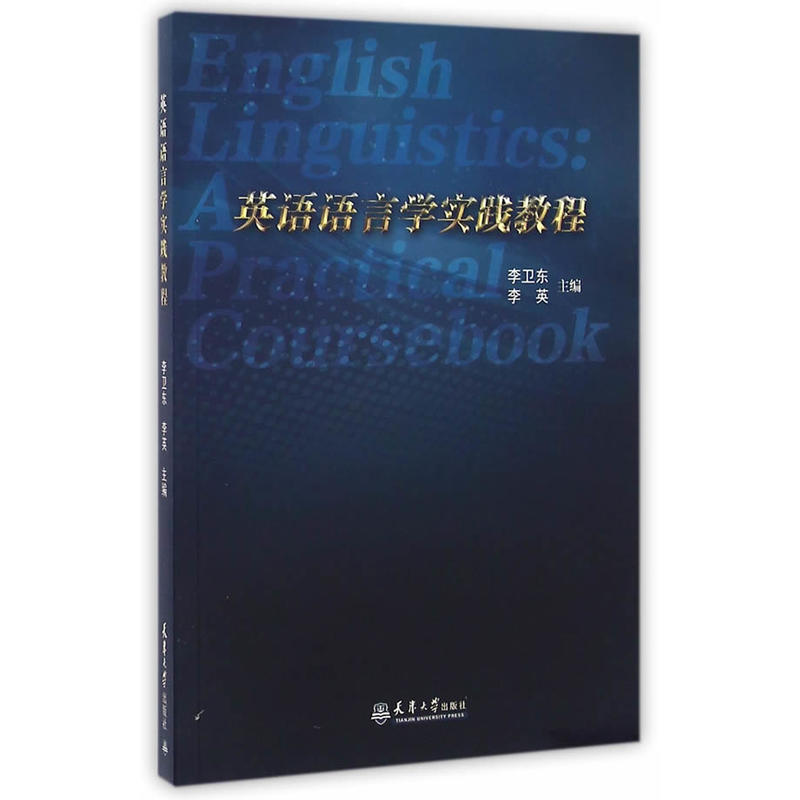
简介
(1)学习要点。列出本章应着重掌握的名词。
(2)正文内容。简明扼要地介绍本章所涉及的英 语语言学理论和知识,并配以简单明了的实例。
(3)课后练习。从各高校英语专业硕士研究生入 学考试试卷中结合本章内容精选试题,主要题型包括 单选题、填空题、判断题、名词解释、简答题、论述 题等。理论和实践相结合,有利于学生融会贯通。
(4)参考文献。每章后附有参考文献,提供可进 一步阅读的书籍,有利于学生继续深入学习与本章相 关的内容。
目录
Chapter 1 Introduction1.1 Language1.1.1 What is language?1.1.2 Design features of language1.1.3 The functions of language1.2 Linguistics1.2.1 Definition of linguistics1.2.2 Short history of modem linguistics1.2.3 Main branches of linguistics1.2.4 Why should we study linguistics?1.3 Some important distinctions in linguistics1.3.1 Descriptive approach vs. prescriptive approach1.3.2 Synchronic vs. diachronic1.3.3 Langue vs. parole1.3.4 Competence vs. performance1.3.5 Linguistic potential vs. linguistic behaviorExercisesReferencesChapter 2 Schools of Modern Linguistics and Modern Linquists2.1 Historical linguistics2.2 Structuralism2.2.1 F. de Saussure's Theories2.2.2 Halliday and Systemic Functional Grammar2.3 Generativism2.3.1 Generative linguistics2.3.2 Chomsky's theory2.4 Other linguistic theories in late half of the 20th centuryExercisesReferencesChapter 3 Speech Sounds3.1 Basic concepts and definitions3.1.1 Speech organs3.1.2 Phonetics vs. phonology3.2 IPA3.3 Segment3.3.1 Phone, phoneme and allophone3.3.2 Consonants3.3.3 Vowels3.4 Phonology3.4.1 Coarticulation and phonetic transcriptions3.4.2 Phonological process and phonological rules3.4.3 Suprasegmental featuresExercisesReferencesChapter 4 Morphology4.1 What is morphology?4.2 Word, lexeme, lexicon and vocabulary4.2.1 "Three senses of "Word"4.2.2 Classification of "Word"4.2.3 Internal structure of "Word"4.3 Inflection and word formation4.3.1 Inflection4.3.2 Word formation4.4 Semantic change4.5 Orthographic changeExercisesReferencesChapter 5 Syntax5.1 What is syntax ?5.2 The traditional approach5.2.1 Number5.2.2 Gender5.2.3 Case5.2.4 Countability5.2.5 Tense and aspect5.2.6 Voice5.2.7 Mood5.2.8 Person5.2.9 Concord and government5.3 The structural approach5.3.1 Syntagmatic relation5.3.2 Paradigmatic relation5.3.3 Relation of co-occurrence5.3.4 Immediate constituent analysis5.3.5 Endocentric construction and exocentric construction5.4 The generative grammar5.4.1 Classical theory5.4.2 The standard theory5.4.3 The summary of TG grammarExercisesReferencesChapter 6 Semantics6.1 What is semantics?6.2 Approaches to meaning6.2.1 The Referential Theory6.2.2 The semantic triangle theory6.3 Word meaning6.3.l Sense and reference6.3.2 Types of meanings6.3.3 Semantic relations between words6.3.4 Componential analysis6.4 Sentence meaning6.4.1 An integrated theory6.4.2 Semantic relations between sentencesExercisesReferencesChapter 7 Pragmatics7.1 Some basic notions7.1.1 What is pragmatics?7.1.2 Pragmatics and semantics7.1.3 Context7.1.4 Sentence meaning and utterance meaning7.2 Speech act theory7.2.1 Performatives and constatives7.2.2 A theory of the illocutionary act7.2.3 Indirect speech act7.3 The theory of conversational implicature7.3.1 The cooperative principle and its maxims7.3.2 Violation of the maxims7.4 The politeness principle and irony7.5 Neo-Gricean conversationalimplicature theory7.5.1 Relevance theory7.5.2 The Q- and R-principles7.5.3 The Q-, I- and M-principlesExercisesReferencesChapter 8 Psycholinguistics8.1 Language acquisition8.1.1 First language acquisition8.1.2 Second language acquisition8.2 Language comprehension8.2.1 Sound comprehension8.2.2 Word comprehension8.2.3 Sentence comprehension8.2.4 Text comprehension8.3 Language production8.3.1 Articulation stage8.3.2 Self-monitoring stageExercisesReferencesChapter 9 Language, Culture and Society9.1 Language and culture9.1.1 What is culture?9.1.2 The relationship between language and culture9.1.3 Sapir-Whorf Hypothesis9.1.4 Linguistic evidence of cultural differences9.1.5 Intercultural communication9.2 Language and society9.2.1 The relationship between language and society9.2.2 What is sociolinguistics?9.2.3 Varieties of EnglishExercisesReferencesChapter 10 Applied Linguistics10.1 Introduction10.2 Theories of foreign language teaching10.2.1 The grammar-translation method10.2.2 The direct method10.2.3 The audiolingual method10.2.4 Cognitive approach10.2.5 Communicative language teaching10.3 Syllabus design10.3.1 Curriculum and syllabus10.3.2 Types of syllabus10.3.3 Rules for syllabus design10.4 Contrastive analysis and error analysis10.5 Testing10.5.1 Types of language tests10.5.2 Qualities of good language testsExercisesReferencesGlossary and Index
- 名称
- 类型
- 大小
光盘服务联系方式: 020-38250260 客服QQ:2410046007
云图客服:
用户发送的提问,这种方式就需要有位在线客服来回答用户的问题,这种 就属于对话式的,问题是这种提问是否需要用户登录才能提问
