

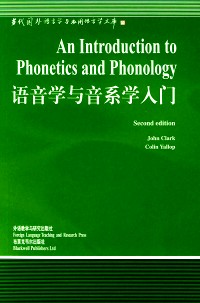
An Introduction to Phonetics and Phonology
副标题:无
作 者:(美)John Clark,(美)Colin Yallop著;史宝辉导读
分类号:
ISBN:9787560018997
微信扫一扫,移动浏览光盘
简介
'Informative, interesting and well written... an excellent general reference for students and scholars at a variety of levels' Language, reviewing the first edition Assuming no prior knowledge of the subject. this book offers a thorough introduction to phonetics and phonology. It is unusually comprehensive, including detailed attention to articulatory and acoustic phonetics as well as to the foundations of phonolgical analysis. The second edition of this highly successful textbook incorporates several improvements: a completely new chapter on speech perception has been added: the material on anatomy and physiology has been rearranged and much of the detail placed later in the book to made it less demanding on readers; further coverage has been given to the sounds of the world's languages; and the entire text has been edited to bring it up to date.
-------
目录
王宗炎序
导读
Figures
Tables
Preface to the Second Edition
List of Abbreviations
1 Introduction
1.1 Phonetics and phonology
1.2 Theory and analysis
1.3 Relationships with other fields
1.4 Outline of this book
Exercises
2 Segmental Articulation
2.1 Introduction
2.2 A functional overview of the speech production process
2.3 The organs of speech
2.4 Describing speech sounds
2.5 Airstream mechanisms
2.6 Modes of phonation
2.7 Vocalic sounds
2.8 Duration and glide in vocalic articulations
2.9 Consonantal sounds
2.10 Vocal tract Place
2.11 Tongue position
2.12 Manner of articulation
2.13 Stricture
2.14 Force
2.15 Length
2.16 Voice onset
Exercises
3 Units of Speech
4 The Phonemic Organization of Speech
5 The Generative Approach to Phonology
6 The Anatomy and Physiology of Speech Production
7 The Acoustics of Speech Production
8 Speech Perception
9 Prosody
10 Feature Systems
11 The Progress of Phonology
Appendix 1:Phonetic Symbols
Appendix 2:Features
References
Index
文库索引
目录
preface by halliday
王宗炎序
导读
figures
tables
preface to the second edition
list of abbreviations
1introduction
1.1 phonetics and phonology
1.2 theory and analysis
1.3 relationships with other fields
1.4 outline of this book exercises
2segmental articulation
2.1 introduction
2.2 a functional overview of the speech production process
2.3 the organs of speech
2.4 describing speech sounds
2.5 airstream mechanisms
2.6 modes of phonation
2.7 vocalic sounds
.2.8 duration and glide in vocalic articulations
2.9 consonantal sounds
2.10 vocal tract place
2.11 tongue position
2.12 manner of articulation
2.13 stricture
2.14 force
2.15 length
2.16 voice onset
exercises
3units of speech
3.1 identifying the units of speech
3.2 complex articulations
3.3 nasalization
3.4 labialization
3.5 palatalization
3.6 velarization and pharyngealization
3.7 affrication
3.8 double articulation
3.9 vowel retroflexion
3.10 diphthongization
3.11 syllabicity
3.12 segmentation and structure
3.13 diphthongs and related phenomena
3.14 interpretations exercises
4 the phonemic organization of speech
4.1 phonetic variability
4.2 the phoneme
4.3 allophones
4.4 phonemic norms
4.5 pattern and symmetry
4.6 phonological reality
4.7 units and boundaries
4.8 invariance and overlap
4.9 biuniqueness and neutralization
4.10 morphophonemic alternations
4.11 free variation
4.12 the sounds of the world's languages exercises
5the generative approach to phonology
5.1 the origins of generative phonology
5.2 the sound pattern of english
5.3 basic rule notation in generative phonology
5.4 formalism and evaluation
5.5 abbreviatory devices in rule notation
5.6 rule order
5.7 functional considerations
5.8 naturalness and markedness
5.9 abstractness exercises
6the anatomy and physiology of speech production
6.1 introduction
6.2 conventions of anatomical description
6.3 the nervous system
6.4 the respiratory system
6.5 the larynx
6.6 phonation
6.7 the pharynx
6.8 the velum and the nasal cavity
6.9 the oral cavity
6.10 the tongue
6.11 the lips
6.12 the mandibleexercises
7the acoustics of speech production
7.1 the nature of sound
7.2 the propagation of sound
7.3 simple harmonic motion
7.4 complex vibrations
7.5 resonance
7.6 basic amplitude properties of sound waves
7.7 time domain properties of sound waves
7.8 frequency domain properties of sound waves
7.9 some basic perceptual properties of sound waves
7.10 the acoustic model of speech production
7.11 phonation as a sound source
7.12 sources of frication
7.13 the vocal tract filter in vowel production
7.14 spectrographic analysis of speech
7.15 acoustic properties of vowel quality
7.16 the vocal tract filter in consonant production
7.17 the acoustic properties of consonants in syllables
7.18 the relationship between articulatory and acoustic properties of speech production
7.19 acoustic features of prosodyexercises
8 8speech perception
8.1 introduction
8.2 the auditory system
8.3 psychophysical properties of the auditory system
8.4 speech intelligibility
8.5 acoustic-phonetic perception
8.6 vowel perception
8.7 consonant perception
8.8 units of perception
8.9 prosodic perception
8.10 word recognition
8.11 models of speech perception
8.12 conclusion
exercises
9prosody
9.1 introduction
9.2 the phonetic basis of suprasegmentals
9.3 the systemic organization of prosody
9.4 tone languages
9.5 pitch-accent languages
9.6 stress in english
9.7 stress assignment
9.8 intonation in english
exercises
10 feature systems
10.1 introduction
10.2 acoustic features
10.3 articulatory features
10.4 perceptual features
10.5 distinctive features
10.6 cover features
10.7 abstract features
10.8 accuracy and universality
10.9 universal feature systems
10.10 features and discreteness
10.11 hierarchical organization of features
10.12 feature geometry
10.13 overview
exercises
11the progress of phonology
11.1 currents of theory
11.2 phonetics and phonology before the twentieth century
11.3 the phoneme
11.4 the traditions of phonetics
11.5 phonology in north america
11.6 the prague school
11.7 glossematics and stratificational phonology
11.8 prosodic phonology
11.9 generative phonology
11.10 natural generative phonology
11.11 natural phonology
11.12 autosegmental and cv phonology
11.13 metrical phonology
11.14 lexical phonology
11.15 dependency phonology
11.16 experimental phonology
11.17 conclusion
exercises
appendix 1: phonetic symbols
1.1 vowel symbols
1.2 consonant symbols
1.3 diacritics and conventions for complex articulations
1.4 symbols used in transcription of english
appendix 2: features
2.1 jakobson and halle's distinctive features
2.2 chomsky and halle's universal set of phonetic features
2.3 ladefoged's 'traditional features'
2.4 components in dependency phonology
references
index
文库索引
王宗炎序
导读
figures
tables
preface to the second edition
list of abbreviations
1introduction
1.1 phonetics and phonology
1.2 theory and analysis
1.3 relationships with other fields
1.4 outline of this book exercises
2segmental articulation
2.1 introduction
2.2 a functional overview of the speech production process
2.3 the organs of speech
2.4 describing speech sounds
2.5 airstream mechanisms
2.6 modes of phonation
2.7 vocalic sounds
.2.8 duration and glide in vocalic articulations
2.9 consonantal sounds
2.10 vocal tract place
2.11 tongue position
2.12 manner of articulation
2.13 stricture
2.14 force
2.15 length
2.16 voice onset
exercises
3units of speech
3.1 identifying the units of speech
3.2 complex articulations
3.3 nasalization
3.4 labialization
3.5 palatalization
3.6 velarization and pharyngealization
3.7 affrication
3.8 double articulation
3.9 vowel retroflexion
3.10 diphthongization
3.11 syllabicity
3.12 segmentation and structure
3.13 diphthongs and related phenomena
3.14 interpretations exercises
4 the phonemic organization of speech
4.1 phonetic variability
4.2 the phoneme
4.3 allophones
4.4 phonemic norms
4.5 pattern and symmetry
4.6 phonological reality
4.7 units and boundaries
4.8 invariance and overlap
4.9 biuniqueness and neutralization
4.10 morphophonemic alternations
4.11 free variation
4.12 the sounds of the world's languages exercises
5the generative approach to phonology
5.1 the origins of generative phonology
5.2 the sound pattern of english
5.3 basic rule notation in generative phonology
5.4 formalism and evaluation
5.5 abbreviatory devices in rule notation
5.6 rule order
5.7 functional considerations
5.8 naturalness and markedness
5.9 abstractness exercises
6the anatomy and physiology of speech production
6.1 introduction
6.2 conventions of anatomical description
6.3 the nervous system
6.4 the respiratory system
6.5 the larynx
6.6 phonation
6.7 the pharynx
6.8 the velum and the nasal cavity
6.9 the oral cavity
6.10 the tongue
6.11 the lips
6.12 the mandibleexercises
7the acoustics of speech production
7.1 the nature of sound
7.2 the propagation of sound
7.3 simple harmonic motion
7.4 complex vibrations
7.5 resonance
7.6 basic amplitude properties of sound waves
7.7 time domain properties of sound waves
7.8 frequency domain properties of sound waves
7.9 some basic perceptual properties of sound waves
7.10 the acoustic model of speech production
7.11 phonation as a sound source
7.12 sources of frication
7.13 the vocal tract filter in vowel production
7.14 spectrographic analysis of speech
7.15 acoustic properties of vowel quality
7.16 the vocal tract filter in consonant production
7.17 the acoustic properties of consonants in syllables
7.18 the relationship between articulatory and acoustic properties of speech production
7.19 acoustic features of prosodyexercises
8 8speech perception
8.1 introduction
8.2 the auditory system
8.3 psychophysical properties of the auditory system
8.4 speech intelligibility
8.5 acoustic-phonetic perception
8.6 vowel perception
8.7 consonant perception
8.8 units of perception
8.9 prosodic perception
8.10 word recognition
8.11 models of speech perception
8.12 conclusion
exercises
9prosody
9.1 introduction
9.2 the phonetic basis of suprasegmentals
9.3 the systemic organization of prosody
9.4 tone languages
9.5 pitch-accent languages
9.6 stress in english
9.7 stress assignment
9.8 intonation in english
exercises
10 feature systems
10.1 introduction
10.2 acoustic features
10.3 articulatory features
10.4 perceptual features
10.5 distinctive features
10.6 cover features
10.7 abstract features
10.8 accuracy and universality
10.9 universal feature systems
10.10 features and discreteness
10.11 hierarchical organization of features
10.12 feature geometry
10.13 overview
exercises
11the progress of phonology
11.1 currents of theory
11.2 phonetics and phonology before the twentieth century
11.3 the phoneme
11.4 the traditions of phonetics
11.5 phonology in north america
11.6 the prague school
11.7 glossematics and stratificational phonology
11.8 prosodic phonology
11.9 generative phonology
11.10 natural generative phonology
11.11 natural phonology
11.12 autosegmental and cv phonology
11.13 metrical phonology
11.14 lexical phonology
11.15 dependency phonology
11.16 experimental phonology
11.17 conclusion
exercises
appendix 1: phonetic symbols
1.1 vowel symbols
1.2 consonant symbols
1.3 diacritics and conventions for complex articulations
1.4 symbols used in transcription of english
appendix 2: features
2.1 jakobson and halle's distinctive features
2.2 chomsky and halle's universal set of phonetic features
2.3 ladefoged's 'traditional features'
2.4 components in dependency phonology
references
index
文库索引
An Introduction to Phonetics and Phonology
- 名称
- 类型
- 大小
光盘服务联系方式: 020-38250260 客服QQ:4006604884
云图客服:
用户发送的提问,这种方式就需要有位在线客服来回答用户的问题,这种 就属于对话式的,问题是这种提问是否需要用户登录才能提问
Video Player
×
Audio Player
×
pdf Player
×
