

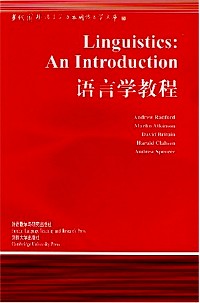
Linguistics: An Introduction
副标题:无
分类号:
ISBN:9787560020082
微信扫一扫,移动浏览光盘
简介
This book is a self-contained introduction to language and linguistics. suitable for use as a textbook and for self-study. Written by a team of distinguished linguists, it offers a unified approach to language from several perspectives. A language is a complex structure represented in the minds of its speakers, and this book provides the tools necessary for understanding this structure, It explains basic concepts and recent theoretical ideas in the major aresa of linguistics (phonetics, phonology, morphology, syntax and semantics), as well as the applications of these to the study of child laguage acquisition, psycholinguistics, language disorders and sociolinguistics. The book is divided into three parts: sounds, words and sentences. In each of these parts, the foundational concepts are introduced along with their applications in the above fields. giving this book a clear and unique structure. Each section is accompanied by extensive exercises and guidance on further reading. The authors all teach at the department of Language and Linguistics at the University of Essex, Andrew Radford is the author of four best-selling textbooks: Transformational Syntax(1981),Transformational Grammar(1988),Syntax(1997)and Syntactic Theory and the Structure of English (1997), all published by Cambridge Uniersity Press. Martin Atkinson is the author of Explanations in Child Language Acquisition(1982), Children's Syntax(1992)and Foundations of General Linguistics(With D.Kilby and 1. Roca, 1988).David Britain has published articles in Language in Society and Language Variation and Change. Harald Clahsen has written a number of books and articles on child language acquisition, developmental language disorders and the acquisition of German as a second language. Andrew Spencer is the author of Morphological Theory(1991)and Phonology (4996)and has contributed to the Handbook of Morphology and the Handbook of Linguistics. This intoduction, by some of today's most distinguished linguists, should rapidly become the market leader. lnstead of offering the usual catalogue of unconnected topics, the authors of this intoduction cover each of the major areas of language-sounds, words and sentences-from several viewpoints at once, giving a unified account of the field with unparalleled clarity and elegance. Each section is complemented by exercises which are at once challenging, illuninating and entertaining.' Neil Smith. University College London
目录
preface by halliday f11
王宗炎序 f12
导读 f15
list of figures f25
list of maps f27
list of tables f28
a note for course organisers and class teachers on the use of this
book f30
introduction 1
linguistics 3
developmental linguistics
psycholinguistics 10
neurolinguistics 12
sociolinguistics 16
exercises 19
further reading and references 24
part i sounds 25
1 introduction 27
sounds and suprasegmentals 29
consonants 31
.vowels 39
suprasegmentals 45
exercises 49
sound variation 52
linguistic variables and sociological variables 52
stylistic variation 57
linguistically determined variation 58
variation and language change 61
exercises 62
4 sound change 66
consonant change 66
vowel change 69
the transition problem: regular sound change versus lexical
diffusion 73
suprasegmental change 76
exercises 78
phonemes, syllables and phonological processes 84
phonemes 84
syllables 88
syllabification and the maximal onset principle 91
phonological processes 92
phonological features 95
features and processes 97
exercises 101
6 child phonology 105
early achievements 105
phonological processes in acquisition 106
perception, production and a dual lexicon model 110
exercises 117
processing sounds 120
speech perception 120
speech production 125
other aspects of phonological processing 130
exercises 133
further reading and references 135
appendix 1: the international phonetic alphabet 137
appendix 2: list of distinctive features 138
appendix 3: distinctive feature matrix for english consonant
phonemes 141
part 2 words 143
8 introduction 145
word classes 147
lexical categories 147
functional categories 150
the morphological properties of english verbs 153
inflectional classes in italian and russian 156
exercises 160
10 building words 162
morphemes 162
morphological processes - derivation and inflection 165
compounds 171
clitics 173
allomorphy 175
exercises 177
11 morphology across languages 180
the agglutinative ideal 180
types of morphological operations 186
exercises 190
12 word meaning 193
entailment and hyponymy 194
meaning opposites 199
semantic features 200
dictionaries and prototypes 204
exercises 207
13 children and words 211
early words - a few facts 211
apprentices in morphology 214
the semantic significance of early words 218
exercises 223
14 lexicai processing and the mental lexicon 226
serial-autonomous versus parallel-interactive processing models 226
on the representation of words in the mental lexicon 232
exercises 240
15 lexical disorders 243
words and morphemes in aphasia 244
agrammatism 245
paraphasias 248
dissociations in sli subjects' inflectional systems 250
exercises 252
16 lexical variation and change 254
borrowing words 254
register: words for brain surgeons and soccer players, hairdressers and life-
savers 256
biscuit or cookie? variation and change in word choice 257
same word - new meaning 260
variation and change in morphology 264
exercises 271
further reading and references 274
part 3 sentences 277
17 introduction 279
18 basic terminology 282
categories and functions 282
complex sentences 285
the functions of clauses 289
exercises 290
19 sentence structure 292
merger 292
tests for constituency 298
constraints on merger: features and checking 300
exercises 302
20 empty categories 304
empty infl 304
pro: the empty subject of infinitive clauses 310
covert complements 312
empty constituents in nominal phrases 313
exercises 318
21 movement 321
head movement 322
operator movement 325
yes-no questions 331
other types of movement 333
exercises 336
22 syntactic variation 338
inversion in varieties of english 338
syntactic parameters of variation 342
the null subject parameter 347
parametric differences between english and german 349
exercises 354
23 logical form 357
preliminaries 357
a philosophical diversion 359
covert movement and logical form 364
more evidence for covert movement 371
exercises 375
24 children's sentences 378
setting parameters: two examples 379
null subjects in early child english 381
non-finite clauses in child english 384
children's nominals 389
exercises 391
25 sentence processing 394
click studies 395
processing empty categories 397
strategies of sentence processing 399
exercises 404
26 syntactic disorders 406
agrammatism 407
paragrammatism 412
specific language impairment (sli) 413
conclusion 416
exercises 419
further reading and references 422
bibliography 424
index 429
文库索引 439
王宗炎序 f12
导读 f15
list of figures f25
list of maps f27
list of tables f28
a note for course organisers and class teachers on the use of this
book f30
introduction 1
linguistics 3
developmental linguistics
psycholinguistics 10
neurolinguistics 12
sociolinguistics 16
exercises 19
further reading and references 24
part i sounds 25
1 introduction 27
sounds and suprasegmentals 29
consonants 31
.vowels 39
suprasegmentals 45
exercises 49
sound variation 52
linguistic variables and sociological variables 52
stylistic variation 57
linguistically determined variation 58
variation and language change 61
exercises 62
4 sound change 66
consonant change 66
vowel change 69
the transition problem: regular sound change versus lexical
diffusion 73
suprasegmental change 76
exercises 78
phonemes, syllables and phonological processes 84
phonemes 84
syllables 88
syllabification and the maximal onset principle 91
phonological processes 92
phonological features 95
features and processes 97
exercises 101
6 child phonology 105
early achievements 105
phonological processes in acquisition 106
perception, production and a dual lexicon model 110
exercises 117
processing sounds 120
speech perception 120
speech production 125
other aspects of phonological processing 130
exercises 133
further reading and references 135
appendix 1: the international phonetic alphabet 137
appendix 2: list of distinctive features 138
appendix 3: distinctive feature matrix for english consonant
phonemes 141
part 2 words 143
8 introduction 145
word classes 147
lexical categories 147
functional categories 150
the morphological properties of english verbs 153
inflectional classes in italian and russian 156
exercises 160
10 building words 162
morphemes 162
morphological processes - derivation and inflection 165
compounds 171
clitics 173
allomorphy 175
exercises 177
11 morphology across languages 180
the agglutinative ideal 180
types of morphological operations 186
exercises 190
12 word meaning 193
entailment and hyponymy 194
meaning opposites 199
semantic features 200
dictionaries and prototypes 204
exercises 207
13 children and words 211
early words - a few facts 211
apprentices in morphology 214
the semantic significance of early words 218
exercises 223
14 lexicai processing and the mental lexicon 226
serial-autonomous versus parallel-interactive processing models 226
on the representation of words in the mental lexicon 232
exercises 240
15 lexical disorders 243
words and morphemes in aphasia 244
agrammatism 245
paraphasias 248
dissociations in sli subjects' inflectional systems 250
exercises 252
16 lexical variation and change 254
borrowing words 254
register: words for brain surgeons and soccer players, hairdressers and life-
savers 256
biscuit or cookie? variation and change in word choice 257
same word - new meaning 260
variation and change in morphology 264
exercises 271
further reading and references 274
part 3 sentences 277
17 introduction 279
18 basic terminology 282
categories and functions 282
complex sentences 285
the functions of clauses 289
exercises 290
19 sentence structure 292
merger 292
tests for constituency 298
constraints on merger: features and checking 300
exercises 302
20 empty categories 304
empty infl 304
pro: the empty subject of infinitive clauses 310
covert complements 312
empty constituents in nominal phrases 313
exercises 318
21 movement 321
head movement 322
operator movement 325
yes-no questions 331
other types of movement 333
exercises 336
22 syntactic variation 338
inversion in varieties of english 338
syntactic parameters of variation 342
the null subject parameter 347
parametric differences between english and german 349
exercises 354
23 logical form 357
preliminaries 357
a philosophical diversion 359
covert movement and logical form 364
more evidence for covert movement 371
exercises 375
24 children's sentences 378
setting parameters: two examples 379
null subjects in early child english 381
non-finite clauses in child english 384
children's nominals 389
exercises 391
25 sentence processing 394
click studies 395
processing empty categories 397
strategies of sentence processing 399
exercises 404
26 syntactic disorders 406
agrammatism 407
paragrammatism 412
specific language impairment (sli) 413
conclusion 416
exercises 419
further reading and references 422
bibliography 424
index 429
文库索引 439
Linguistics: An Introduction
- 名称
- 类型
- 大小
光盘服务联系方式: 020-38250260 客服QQ:4006604884
云图客服:
用户发送的提问,这种方式就需要有位在线客服来回答用户的问题,这种 就属于对话式的,问题是这种提问是否需要用户登录才能提问
Video Player
×
Audio Player
×
pdf Player
×
