

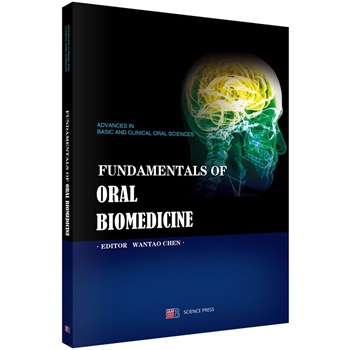
简介
PREFACECHAPTER Ⅰ MOLECULAR REGULATION OF TOOTH DEVELOPMENT AND DENTAL STEM CELLS 001PART Ⅰ TOOTH DEVELOPMENT 001PART Ⅱ MOLECULAR REGULATION OF TOOTH DEVELOPMENT 0022.1 Initiation of the Tooth 0022.2 Bud-to-cap Transition 0032.3 Condense of Mesenchyme 0042.4 Enamel Knot And Tooth Type Determination 0042.5 The Homeobox Code 0052.6 Hard Tissue Formation 006PART Ⅲ DENTAL STEM CELLS 0073.1 Different Populations of Dental Stem Cells with Diverse Potential 0083.2 Tooth Tissue Regeneration 010REFERENCES 012CHAPTER Ⅱ BIOLOGICAL BASIS IN THE DEVELOPMENT AND REMODELING OF JAWS 014INTRODUCTION 014PART Ⅰ CHEMICAL COMPOSITION OF JAWS 0151.1 Inorganic Components 0151.2 Organic Components 015PART Ⅱ BIOLOGICAL BASIS ASSOCIATED WITH THE DEVELOPMENT OF JAW 0162.1 Bone Development 0162.2 Processes of Bone Development 019PART Ⅲ BIOLOGICAL BASIS ASSOCIATED WITH THE REMODELING OF JAWS 0233.1 Features of Bone Remodeling 0233.2 Cytological Basis of Bone Remodeling 024REFERENCES 026CHAPTER Ⅲ THE IDENTIFICATION OF GENES RELATED TO ORAL HEREDITARY DISEASE 028PART Ⅰ FOREWORD 0281.1 The Concept of Medical Genetics 0281.2 The Characteristics of Oral And Maxillofacial Genetic Diseases 029PART Ⅱ THE CLASSIFICATION OF GENETIC DISEASES 0302.1 Single-gene Disease 0302.2 Mitochondrial Inherited Disease 0302.3 Chromosomal Disease 0312.4 Polygenic Disease 032PART Ⅲ CONFIRMATION OF PATHOGENIC GENES IN MONO-GENE DISEASES 0323.1 Family Pedigree Analysis in Mono-gene Diseases 0333.2 Disease Gene Mapping 0353.3 Genetic Polymorphism And Mutation 035PART Ⅳ ORAL GENETIC DISEASES AND CONGENITAL DISORDERS 0364.1 Genetic Diseases in Dental Hard Tissues 0364.2 Genetic Diseases in Periodontal Tissues 0394.3 Genetic Diseases in Oral Bone Tissues 0424.4 Congenital Facial Cleft 043REFERENCES 050CHAPTER Ⅳ ORAL ECOSYSTEM AND THE INFLUENTIAL FACTORS 053PART Ⅰ ECOSYSTEM AND ECOLOGY 0531.1 Oral Micro-ecosystem 0531.2 The Influential Factors of Oral Micro-ecosystem 054PART Ⅱ DENTAL PLAQUE BIOFILM 0572.1 The Formation of Dental Plaque Biofilm 0582.2 The Classification of Plaque Biofilm 0592.3 The Components of Plaque Biofilm 060PART Ⅲ BIOFILM DISEASE IN ORAL CAVITY 0603.1 The Related Microflora of Dental Caries 0613.2 The Related Microflora of Periodontal Diseases 0633.3 The Progress in Oral Micro-ecosystem Research 065REFERENCES 067CHAPTER Ⅴ TECHNOLOGY AND APPLICATION OF ORAL TISSUE ENGINEERING 069PART Ⅰ THE CONCEPT OF ORAL TISSUE ENGINEERING 0691.1 Biomaterials 0691.2 Seed Cells 0711.3 Growth Factors 072PART Ⅱ APPLICATION OF TISSUE ENGINEERED SKIN AND MUCOSA 0732.1 Tissue Engineered Skin 0732.2 Tissue Engineered Mucosa 075PARTⅢ APPLICATION OF TISSUE ENGINEERED BONE 0763.1 Cell Sources for Bone Regeneration 0763.2 Growth/transcription Factors for Bone Regeneration 0763.3 Biomaterials for Bone Regeneration 0763.4 Pre-clinical Animal Model Research for Bone Regeneration 0773.5 Clinical Translational Researches for Bone Regeneration 078PART Ⅳ FUTURE PERSPECTIVES 0784.1 Strategies for Neovascularization 0784.2 Strategies for Osseointegration 0794.3 Strategies for Tissue Engineered Tooth 079REFERENCES 081CHAPTER Ⅵ CHARACTERISTICS AND APPLICATION OF NEW DENTAL MATERIALS 082PART Ⅰ NEW DENTAL FILLING MATERIAL AND THEIR CHARACTERISTICS 0821.1 Dental Filling Materials 0821.2 Composition And Properties of Dental Filling Materials 082PART Ⅱ CHARACTERISTICS AND APPLICATION OF BIOLOGICAL CERAMIC 0842.1 Species of Biological Ceramic 0842.2 Structure And Properties of Biological Ceramics 085PART Ⅲ EVALUATION OF BIOCOMPATIBILITY AND THEIR CHARACTERISTICS OF NANO-DENTAL MATERIALS 0863.1 Conception of Nano-dental Materials 0863.2 Composition And Properties of Nano-dental Materials 0863.3 Species of Nano-dental Materials 0873.4 Safety Evaluation of Nano-dental Materials 087PART Ⅳ NANOMETER TECHNOLOGIES OF METAL IMPLANT MATERIALS 0884.1 Species of Nanometer Technologies of Metal Implant Material 0884.2 Characteristics of Nanometer Technologies of Metal Implant Material 089REFERENCES 089CHAPTER Ⅶ THE GENETIC AND EPIGENETIC ALTERATIONS IN ORAL SQUAMOUS CELL CARCINOMA 091INTRODUCTION 091PATT Ⅰ GENETIC ALTERATIONS IN ORAL SQUAMOUS CELL CARCINOMA 0921.1 Chromosome Abnormalities And Microsatellite Instability 0921.2 Inherited Genetic Gactors 0961.3 Abnormal Gene And Protein Expression 0991.4 Somatic Mutations in OSCC 102PART Ⅱ EPIGENETIC ALTERATIONS IN OSCC 1022.1 DNA Methylation 1022.2 Histone Modifications 104REFERENCES 105CHAPTER Ⅷ THE BIOLOGICAL CHARACTERISTICS AND SIGNAL PATHWAYS INORAL CANCER 108PART Ⅰ CELL PROLIFERATION AND APOPTOSIS 1081.1 Preface 1081.2 Signal Transduction of Cell Proliferation And Apoptosis 1091.3 Regulation of Cancer Cell Proliferation And Apoptosis 1111.4 Apoptosis Targeted Therapy in Oral Cancer 113PART Ⅱ CELL DIFFERENTIATION AND DEDIFFERENTIATION 1132.1 Concepts of Cell Differentiation And Dedifferentiation 1132.2 Regulation Mechanisms of Cell Di
目录
Chapter 1 MOLECULAR REGULATION OF TOOTH DEVELOPMENT AND DENTAL STEM CELLS Zhen Tian
PART Ⅰ TOOTH DEVELOPMENT
PART Ⅱ MOLECULAR REGULATION OF TOOTH DEVELOPMENT
2.1 Initiation of the Tooth
2.2 Bud-to-cap Transition
2.3 Condense of Mesenchyme
2.4 Enamel Knot And Tooth Type Determination
2.5 The Homeobox Code
2.6 Hard Tissue Formation
PART Ⅲ DENTAL STEM CELLS
3.1 Different Populations of Dental Stem Cells with Diverse Potential
3.2 Tooth Tissue Regeneration
REFERENCES
PART Ⅰ TOOTH DEVELOPMENT
There are many things that make teeth special: froman evolutionary genetic standpoint, they contain thehardest biological substance; much of our understandingof animal evolution is based on teeth; forensicscience relies on dental records for identification.From a developmental perspective, the modelof tooth development offers a useful paradigm forstudying patterning and morphogenesis or the dete-rmination of position, size, shape and number duringorganogenesis (1).
Teeth are highly mineralized and the bulk ofa tooth is composed of a mineralized tissue calledthe dentin, which is a bone-like matrix characterizedby closely packed dentinal tubules that containthe cytoplasmic extensions of odontoblasts (2).Dentin is the major component of the tooth and iscompletely surrounded by enamel in the crown andby cementum in the root. It is a mineralized tissue,formed of a network of type I collagen fibrils andcarbonated apatite crystals organized in a tubularpattern. Dentin surrounds the pulp, which is the softconnective tissue that occupies the central portionof the tooth. The dental pulp is rich in fibroblastlikecells, blood vessels and nerves. Odontoblastscontinue to deposit dentin throughout life. Theprimary dentin forms till the completion of root development,secondary dentin forms at the roof andfloor of the pulp chamber after root formation and ,reactionary dentin (tertiary dentin) is formed by theoriginal odontoblasts in response to stimuli, suchas dental decay or restorative treatment. Dentin andpulp are related embryologically, histologically andfunctionally. They are usually described together as“dentin-pulp complex”.
The dentition is derived from the first branchialarch, or from two major cell types: stomodealectoderm and cranial, neural crest derived ectomesenchymecells (3). The tooth development begins asa thickening of the oral epithelium. Then the epitheliumat specific sites invaginates into the underlyingmesenchyme form the dental placode. The dentalplacode then further invaginates into the surroundingdental mesenchyme to form a tooth bud. At thisstage, the mesenchyme proliferates and condensatesaround the tooth bud. After that, the epithelium ofthe tooth bud folds to form a cap-shaped structure .
The folding divides the epithelium into the innerand outer enamel epithelium. The mesenchymalcells adjacent to the inner enamel epithelium willform the dental papilla and those near the outsidewill form the dental follicle. Morphogenesis fromthe bud to the cap stage involves the formation ofenamel knot, which is an important signaling centerfor tooth morphogenesis. The enamel knot is transientstructure and will disappear at the end of thecap stage, but molars will continue to form secondaryenamel knot, which determines the locationsand shapes of the molar cusps (4).
Subsequently, the dental epithelium furtherfolds and extends into the mesenchyme to formbell-shaped tooth germs and then the enamel knotdisappears. At the late bell stage, cell differentiationstarts: the cells of the internal enamel epitheliumdifferentiating into ameloblasts (enamel-producingcells) while adjacent cells in the dental papilla differentiatinginto odontoblasts (dentine-producingcells). The ameloblasts and odontoblasts depositenamel and dentin back-to-back and mineralizationof the sematrices forms the two principal hard tissuesof the tooth.
After the tooth crown formed, epithelial cellsof the inner and outer enamel epithelium proliferatefrom the cervical loop of the enamel organ and forma double layer of cells known as Hertwig’s epithelialroot sheath. This sheath of epithelium extendsand encloses all but the basal portion of the dentalpulp. The inner enamel epithelial cells of the sheathinitiate the differentiation of odontoblasts fromectomesenchymal cells at the periphery of the pulpand form the dentin of root. Cementum formationoccurs later and cementoblasts are the cells responsiblefor cementogenesis. During the roots formation,the supporting tissues also developed. Aftertooth eruption, with the formation of root apex, thedevelopment of tooth is completed (5,6).
PART Ⅱ MOLECULAR REGULATION OF TOOTH DEVELOPMENT
The molecular regulation of tooth developmentshares many similarities with development of anumber of other organs. Thus, the tooth providesan excellent model for studying how an organ develops.During tooth development, the initiation oftooth, the formation of enamel knot, the determinationof tooth type and the formation of hard tissueare key st
PART Ⅰ TOOTH DEVELOPMENT
PART Ⅱ MOLECULAR REGULATION OF TOOTH DEVELOPMENT
2.1 Initiation of the Tooth
2.2 Bud-to-cap Transition
2.3 Condense of Mesenchyme
2.4 Enamel Knot And Tooth Type Determination
2.5 The Homeobox Code
2.6 Hard Tissue Formation
PART Ⅲ DENTAL STEM CELLS
3.1 Different Populations of Dental Stem Cells with Diverse Potential
3.2 Tooth Tissue Regeneration
REFERENCES
PART Ⅰ TOOTH DEVELOPMENT
There are many things that make teeth special: froman evolutionary genetic standpoint, they contain thehardest biological substance; much of our understandingof animal evolution is based on teeth; forensicscience relies on dental records for identification.From a developmental perspective, the modelof tooth development offers a useful paradigm forstudying patterning and morphogenesis or the dete-rmination of position, size, shape and number duringorganogenesis (1).
Teeth are highly mineralized and the bulk ofa tooth is composed of a mineralized tissue calledthe dentin, which is a bone-like matrix characterizedby closely packed dentinal tubules that containthe cytoplasmic extensions of odontoblasts (2).Dentin is the major component of the tooth and iscompletely surrounded by enamel in the crown andby cementum in the root. It is a mineralized tissue,formed of a network of type I collagen fibrils andcarbonated apatite crystals organized in a tubularpattern. Dentin surrounds the pulp, which is the softconnective tissue that occupies the central portionof the tooth. The dental pulp is rich in fibroblastlikecells, blood vessels and nerves. Odontoblastscontinue to deposit dentin throughout life. Theprimary dentin forms till the completion of root development,secondary dentin forms at the roof andfloor of the pulp chamber after root formation and ,reactionary dentin (tertiary dentin) is formed by theoriginal odontoblasts in response to stimuli, suchas dental decay or restorative treatment. Dentin andpulp are related embryologically, histologically andfunctionally. They are usually described together as“dentin-pulp complex”.
The dentition is derived from the first branchialarch, or from two major cell types: stomodealectoderm and cranial, neural crest derived ectomesenchymecells (3). The tooth development begins asa thickening of the oral epithelium. Then the epitheliumat specific sites invaginates into the underlyingmesenchyme form the dental placode. The dentalplacode then further invaginates into the surroundingdental mesenchyme to form a tooth bud. At thisstage, the mesenchyme proliferates and condensatesaround the tooth bud. After that, the epithelium ofthe tooth bud folds to form a cap-shaped structure .
The folding divides the epithelium into the innerand outer enamel epithelium. The mesenchymalcells adjacent to the inner enamel epithelium willform the dental papilla and those near the outsidewill form the dental follicle. Morphogenesis fromthe bud to the cap stage involves the formation ofenamel knot, which is an important signaling centerfor tooth morphogenesis. The enamel knot is transientstructure and will disappear at the end of thecap stage, but molars will continue to form secondaryenamel knot, which determines the locationsand shapes of the molar cusps (4).
Subsequently, the dental epithelium furtherfolds and extends into the mesenchyme to formbell-shaped tooth germs and then the enamel knotdisappears. At the late bell stage, cell differentiationstarts: the cells of the internal enamel epitheliumdifferentiating into ameloblasts (enamel-producingcells) while adjacent cells in the dental papilla differentiatinginto odontoblasts (dentine-producingcells). The ameloblasts and odontoblasts depositenamel and dentin back-to-back and mineralizationof the sematrices forms the two principal hard tissuesof the tooth.
After the tooth crown formed, epithelial cellsof the inner and outer enamel epithelium proliferatefrom the cervical loop of the enamel organ and forma double layer of cells known as Hertwig’s epithelialroot sheath. This sheath of epithelium extendsand encloses all but the basal portion of the dentalpulp. The inner enamel epithelial cells of the sheathinitiate the differentiation of odontoblasts fromectomesenchymal cells at the periphery of the pulpand form the dentin of root. Cementum formationoccurs later and cementoblasts are the cells responsiblefor cementogenesis. During the roots formation,the supporting tissues also developed. Aftertooth eruption, with the formation of root apex, thedevelopment of tooth is completed (5,6).
PART Ⅱ MOLECULAR REGULATION OF TOOTH DEVELOPMENT
The molecular regulation of tooth developmentshares many similarities with development of anumber of other organs. Thus, the tooth providesan excellent model for studying how an organ develops.During tooth development, the initiation oftooth, the formation of enamel knot, the determinationof tooth type and the formation of hard tissueare key st
光盘服务联系方式: 020-38250260 客服QQ:2410046007
云图客服:
用户发送的提问,这种方式就需要有位在线客服来回答用户的问题,这种 就属于对话式的,问题是这种提问是否需要用户登录才能提问
Video Player
×
Audio Player
×
pdf Player
×
