

简介
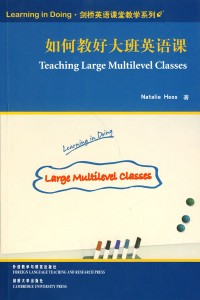
《如何教好大班英语课》内容简介:针对大班英语课教学,《如何教好大班英语课》介绍了150余个生动、有趣的课堂活动。每个活动都清晰标明了活动目的、适合水平及活动时间。除逐条详列操作步骤外,还提供活动涉及的范例、表格、图片样本供参考。书中活动均来自作者亲身教学实践,操作简便、实用性强,颇具启发性。《如何教好大班英语课》文字浅显易懂,编排一目了然,特别适合从事一线教学工作的中学、大学及培训学校英语教师使用,经验丰富的老教师也可从中获益。
目录
Thanks and acknowledgementsIntroductionHow to make best use of this bookWhat is a large multilevel class?Benefits and challenges of the large multilevel classEleven principles of coping in large multilevel classes1 Getting to know our students Learning their names 1.1 Name toss 1.2 Picture it 1.3 Names as crosswords 1.4 The story of my name 1.5 Names and adjectives 1.6 I am and I love 1.7 Desk placards 1.8 Use real pictures Learning about our students' lives 1.9 The letter 1.10 Guess who? 1.11 Three things about me 1.12 Mutual interviews 1.13 The missing person announcement 1.14 Managing my time 1.15 Formal introductions2 Motivation and activation 2.1 Burst the balloon- expressing opinions 2.2 The preference line - explaining yourself 2.3 The quick-write 2.4 Like, dislike, or neutral 2.5 What's your number? 2.6 Again and again and again 2.7 Friendship 2.8 More about friendship 2.9 People I admire 2.10 Special places 2.11 Dreams I have 2.12 How I feel now 2.13 Slip exchange 2.14 Flip-flop books 2.15 Frame it 2.16 Colored round robin 2.17 Circle talk 2.18 Teaming up 2.19 Needle in a haystack 2.20 Optimistic snapshots 2.21 Words on cards 2.22 A solution for the problem 2.23 Student-centered dictation 2.24 The seminar3 Reviewing while maintaining interest and momentum 3.1 Answers into questions 3.2 Review posters 3.3 Student-made quickie quizzes 3.4 Group reviews 3.5 Group summaries 3.6 Vocabulary wall 3.7 Class goals 3.8 The KWL procedure 3.9 The Venn diagram 3.10 Judging people 3.11 Running dictation 3.12 My sentence 3.13 Where is my other half? 3.14 Person, place or thing4 Dealing with written work 4.1 Keep it going 4.2 Peer reviews 4.3 Writing conferences 4.4 Write before you talk 4.5 Buddy journals 4.6 Using email 4.7 Wall newspaper 4.8 Using chat rooms 4.9 Using websites 4.10 Writing about landscape pictures 4.11 Writing about pictures of people 1 4.12 Writing about pictures of people 2 4.13 Service writing 4.14 A bio-poem class book 4.15 The cumulative folder 4.16 Sentences into story 4.17 Personalized guide books 4.18 Change the audience 4.19 Clustering 4.20 The writing cycle 4.21 A resource for self-correction 4.22 Letters of advice 4.23 In the middle of the story 4.24 The spelling list 4.25 From words to story 4.26 Plot construction5 Working well in groups 5.1 Working together 5.2 The quiet signal 5.3 Give me your sticks 5.4 The text jigsaw 5.5 The picture jigsaw 5.6 Making mine long 5.7 Sentences into story 5.8 The aquarium 5.9 All for one 5.10 Group dictations 5.11 The community group project 5.12 The walk-about 5.13 Picture puzzle 5.14 Back and forth movie preview/in view 5.15 Three in one 5.16 The missing word 5.17 Alphabet shopping 5.18 Pronoun search 5.19 Words to make a cake 5.20 Things we share 5.21 Our group cheer 5.22 Dictated stories 5.23 Three good questions6 Individualizing and personalizing student work Individualizing 6.1 Multilevel dictation 6.2 The book cart 6.3 Silent task work with a self-access box 6.4 Working with words 6.5 Sentence completion 6.6 Question the reading Personalizing 6.7 Vocabulary cards 6.8 Three-minute talks 6.9 The story of my life posters 6.10 My object 6.11 The vocabulary house 6.12 The mailbox 6.13 My machine 6.14 An important decision 6.15 An important sentence 6.16 Color sadness blue 6.17 Water words 6.18 I don't like people who 6.19 Careers in my family 6.20 What we want from our work 6.21 Our own good folder 6.22 Words on my desk 6.23 Drawing interpretation7 Making students responsible for their own learning 7.1 What kind of a learner am I? 7.2 Setting goals for myself 7.3 How a teacher helped me 7.4 How can the teacher help me? 7.5 How I can help myself 7.6 Personal conferences 7.7 What kind of a listener am I? 7.8 This course will be a success for me if ... 7.9 What kind of a reader am I? 7.10 Am I brave enough? 7.11 Question posters 7.12 How do I catch and correct my own mistakes? 7.13 Instant answers 7.14 Words from the world 7.15 Questions on a stick 7.16 Many ways to be smart 7.17 Grade contracts 7.18 Self-check forms8 Establishing routines and procedures 8.1 Introducing the class syllabus 8.2 Setting up the class calendar 8.3 Checking homework, tardiness, and attendance 8.4 The daily plan 8.5 The absent student notebook 8.6 Exit notes Class rituals 8.7 Lesson starters 8.8 Today's special student 8.9 Celebrating birthdays 8.10 The complaint/suggestion/compliment box 8.11 Elves and giants: an occasional on-going ritualBibliographyIndex
Teaching large multilevel classes
- 名称
- 类型
- 大小
光盘服务联系方式: 020-38250260 客服QQ:4006604884
云图客服:
用户发送的提问,这种方式就需要有位在线客服来回答用户的问题,这种 就属于对话式的,问题是这种提问是否需要用户登录才能提问
Video Player
×
Audio Player
×
pdf Player
×
