

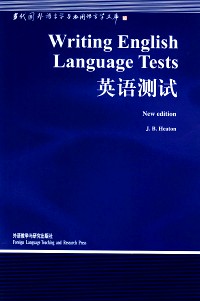
Writing English Language Tests
副标题:无
分类号:
ISBN:9787560019444
微信扫一扫,移动浏览光盘
简介
Writing English Language Tests is for all teachers who write tests of English, from the classroom teacher writing for a particular class to the test constructor writing for an examination board. It gives detailed guidance on how to write, administer and score test questions, and how to avoid the pitfalls. It outlines the general principles of language testing, and shows how different types of test questions can be applied to different language tests. The new edition of this well-established title reflects recent development in language testing techniques, and contains a more comprehensive selection of sample test items from current examinations and tests administered by the major examining bodies.
J. B. Heaton is Senior Lecturer and Director of the English Language Unit for Overseas Students at the University of Leeds. He is the author of several books concerned with English as a second or foreign language, and has taught and lectured throughout Europe and Asia. He has had a long association with the University of Cambridge Local Examination Syndicate and with the Joint Matriculation Board.
目录
preface by halliday
王宗炎序
导读
1 introduction to language testing
1.1 testing and teaching
1.2 why test?
1.3 wharshouid be tested and to
what standard?
1.4 testing the language skills
1.5 testing language areas
1.6 language skills and language
elements
1.7 recognition and production
1.8 problems of sampling
1.9 avoiding traps for the students
2 approaches to language testing
2.1 background
2.2 the essay-translation approach
2.3 the structuralist approach
2.4 the integrative approach
. 2.5 the communicative approach
3 objective testing
3.1 subjective and objective testing
3.2 objective tests
3.3 multiple-choice items: general
3.4 multiple-choice items: the stem/
the correct option/the distractors
3.5 writing the test
4 tests of grammar and usage
4.1 introduction
4.2 multiple-choice grammar items:
item types
4.3 constructing multiple-choice items
4.4 constructing error-recognition
multiple-choice items
4.5 constructing rearrangement items
4.6 constructing completion items
4.7 constructing transformation items
4.8 constructing items involving the
changing of words
4.9 constructing 'broken sentence' items
4.10 constructing pairing and
matching items
4.11 constructing combination and
addition items
5 testing vocabulary
5.1 selection of items
5.2 multiple-choice items (a)
5.3 multiple-choice items (b)
5.4 sets (associated words)
5.5 matching items
5.6 more objective items
5.7 completion items
6 listening comprehension tests
6.1 general
6.2 phoneme discrimination tests
6.3 tests of stress and intonation
6.4 statements and dialogues
6.5 testing comprehension through
visual materials
6.6 understanding talks and
lectures
7 oral production tests
7.1 some difficulties in testing the
speaking skills
7.2 reading aloud
7.3 conversational exchanges
7.4 using pictures for assessing oral
production
7.5 the oral interview
7.6 some other techniques for oral
examining
8 testing reading comprehension
8.1 the nature of the reading skills
8.2 initial stages of reading:
matching tests
8.3 intermediate and advanced
stages of reading: matching tests
8.4 true/false reading tests
8.5 multiple-choice items (a): short
texts
8.6 multiple-choice items (b):
longer texts
8.7 completion items
8.8 rearrangement items
8.9 cloze procedure
8.10 open-ended and miscellaneous
items
8.11 cursory reading
9 testing the writing skills
9.1 the writing skills
9.2 testing composition writing
9.3 setting the composition
9.4 grading the composition
9.5 treatment of written errors
9.6 objective tests: mechanics
9.7 objective tests: style and
register
9.8 controlled writing
10 criteria and types of tests
10.1 validity
10.2 reliability
10.3 reliability versus validity
10.4 discrimination
10.5 administration
10.6 test instructions to the
candidate
10.7 backwash effects
10.8 types of tests
11 interpreting test scores
11.1 frequency distribution
11.2 measures of central tendency
11.3 measures of dispersion
11.4 item analysis
11.5 moderating
11.6 item cards and banks
selected bibliography
index
文库索引
王宗炎序
导读
1 introduction to language testing
1.1 testing and teaching
1.2 why test?
1.3 wharshouid be tested and to
what standard?
1.4 testing the language skills
1.5 testing language areas
1.6 language skills and language
elements
1.7 recognition and production
1.8 problems of sampling
1.9 avoiding traps for the students
2 approaches to language testing
2.1 background
2.2 the essay-translation approach
2.3 the structuralist approach
2.4 the integrative approach
. 2.5 the communicative approach
3 objective testing
3.1 subjective and objective testing
3.2 objective tests
3.3 multiple-choice items: general
3.4 multiple-choice items: the stem/
the correct option/the distractors
3.5 writing the test
4 tests of grammar and usage
4.1 introduction
4.2 multiple-choice grammar items:
item types
4.3 constructing multiple-choice items
4.4 constructing error-recognition
multiple-choice items
4.5 constructing rearrangement items
4.6 constructing completion items
4.7 constructing transformation items
4.8 constructing items involving the
changing of words
4.9 constructing 'broken sentence' items
4.10 constructing pairing and
matching items
4.11 constructing combination and
addition items
5 testing vocabulary
5.1 selection of items
5.2 multiple-choice items (a)
5.3 multiple-choice items (b)
5.4 sets (associated words)
5.5 matching items
5.6 more objective items
5.7 completion items
6 listening comprehension tests
6.1 general
6.2 phoneme discrimination tests
6.3 tests of stress and intonation
6.4 statements and dialogues
6.5 testing comprehension through
visual materials
6.6 understanding talks and
lectures
7 oral production tests
7.1 some difficulties in testing the
speaking skills
7.2 reading aloud
7.3 conversational exchanges
7.4 using pictures for assessing oral
production
7.5 the oral interview
7.6 some other techniques for oral
examining
8 testing reading comprehension
8.1 the nature of the reading skills
8.2 initial stages of reading:
matching tests
8.3 intermediate and advanced
stages of reading: matching tests
8.4 true/false reading tests
8.5 multiple-choice items (a): short
texts
8.6 multiple-choice items (b):
longer texts
8.7 completion items
8.8 rearrangement items
8.9 cloze procedure
8.10 open-ended and miscellaneous
items
8.11 cursory reading
9 testing the writing skills
9.1 the writing skills
9.2 testing composition writing
9.3 setting the composition
9.4 grading the composition
9.5 treatment of written errors
9.6 objective tests: mechanics
9.7 objective tests: style and
register
9.8 controlled writing
10 criteria and types of tests
10.1 validity
10.2 reliability
10.3 reliability versus validity
10.4 discrimination
10.5 administration
10.6 test instructions to the
candidate
10.7 backwash effects
10.8 types of tests
11 interpreting test scores
11.1 frequency distribution
11.2 measures of central tendency
11.3 measures of dispersion
11.4 item analysis
11.5 moderating
11.6 item cards and banks
selected bibliography
index
文库索引
Writing English Language Tests
- 名称
- 类型
- 大小
光盘服务联系方式: 020-38250260 客服QQ:4006604884
云图客服:
用户发送的提问,这种方式就需要有位在线客服来回答用户的问题,这种 就属于对话式的,问题是这种提问是否需要用户登录才能提问
Video Player
×
Audio Player
×
pdf Player
×
