

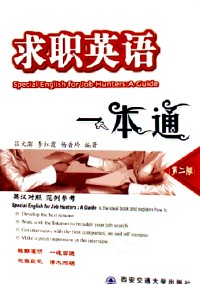
简介
迎着新世纪的曙光,身处网络时代,广大求职者,尤其是刚刚走出校门的大学生、研究生,若有志赴国外求职,或意欲到外资或合资企业择业时,该如何准备求职材料?怎样利用现代求职工具提高求职的成功率?……这些问题时常困扰着众多求职者。
本书较为详实地介绍了现代求职的每一个环节:招聘广告的阅读,求职书信的写作,电话求职、网上求职的基本方法与技巧,求职面试策略等,并就女性求职进行了专门论述与具体指导。作者对所有参考范例都以“提示”的形式,指出了英文求职写作与面试的基本要领。
书中所列范例均采用英汉对照形式,便于读者学习掌握。
本书可作为大学生、研究生的英文求职训练教材使用。
在中国走向世界、世界拥抱中国的今天,若想成为就业市场的胜利者,除了会写地道的英文求职书信,会说一口流利的求职英语,还必须掌握现代求职方式一—电话求职、网上求职。如果您想征服就业市场,在最短的时间内借助现代化的求职工具找到理想的工作,本书将是您最好的助手和参谋。
本书从社会需求出发,着重对求职信息的掌握、求职书信的写作、网上求职的基本方法与技巧以及求职面试策略作了详细介绍,并就女性求职进行了专门论述与具体指导。本书重在实用,为了方便不同专业、不同职业的读者进行自学与自我训练,本书各章均附有若干范例或模拟练习。并以“提示”的形式。指出其基本要领。词语释义力求准确、简明;范例尽可能实用、规范,采用英汉对照形式,便于读者学习掌握。
全书根据求职程序归类成章,共分为七章:
第一章,关注招聘信息,把握求职良机。本章重点介绍了求职信息的来源、招聘广告的格式及特点以及人才市场、因特网等土要的求职渠道;
第二章,英文求职书信的写作。本章详细叙述了各类求职书信的写作要领及格式,并提供了求职信、个人简历、自荐信、应聘信等方面的大量范例;
第三章,网上求职导航。本章介绍了国内外主要英丈求职站点以及网上求职的基本方法与技巧;
第四章,远程面试。远程面试主要指电话面试与网上面试。本章介绍了远程面试的基本方法与技巧,并提供了这方面的一些实例;
第五章至第七章。列举了“面对面”求职面试中的常见问答,重点介绍了取得成功的策略,并模拟面试场景,设计了参加丈秘、公关、财会、商务代表、公司职员、空乘人员、餐饮业部门经理、领班、电脑设计师等不同职业面试的英语会话。
另外,本书还提供了“职称与职位名称”、“院校名称”等4个附录。
本书的特色在于突出现代求职方式,如电话求职、网上求职等,并专门指导女性如何在求职中取得成功。
本书参照了国内外许多读物,就内容的新颖性、丰富性、规范性和实用性来说,适用面较广,既可供有志赴国外求职者案头查阅,供意欲到外资或合资企业求职者模仿行文,同时也可供在校学生参阅,以进一步提高英语实用能力。
总之,本书富有时代气息,既强调英语书面能力的培养,又重视口语能力的提高,同时提醒求职者切莫忽视电话、电脑及其网络在现代求职中的重要作用。
目录
第一章 关注招聘信息,把握求职良机(Chapter OnePaying Close Attention to Recruitment Information and Holding Good)
第一节 英语招聘信息与求职良机(Section OneEnglish Recruitment Information and Good Opportunity for a Job)
1. 英语招聘广告的格式及特点(Format and feature of English recruitment ads )
(1) 英语招聘广告的大标题 (Titles of English recruitment ads )
(2) 英语招聘广告的正文 (Body of an English recruitment ad )
(3) 英语招聘广告的结尾 (Ending of an English recruitment ad)
2. 英语招聘广告中的缩写词(Abbreviations used in English recruitment ads)
3. 英语招聘广告范例 (Models of English recruitment ads)
4. 英语招聘信息的来源 (Source of English recruitment information)
(1) 英语新闻媒体(English mass media)
(2) 因特网(Internet)
5. 求职良机 (Good opportunity for a job)
(1) 人才市场 (Talent markets)
(2) 学校就业办 (Employment office in a college or university)
(3) 就业中介机构 (Employment agencies)
(4) 因特网 (Internet)
第二节 了解用人单位(Section TwoMaking a Survey of the Employers)
1.对用人单位进行书面调查 (Making a survey of the employers with written materials)
2.对用人单位进行网上调查 (Making a survey of the employers on the Internet)
第二章 英文求职书信的写作(Chapter TwoEnglish Writing for Job睞pplications)
第一节 英文求职信的结构与格式(Section OneStructure and Format of English Job睞pplication Letters)
1. 英文求职信的结构 (Structure of English Job睞pplication Letters)
(1) 信头(Letterhead)
(2) 信内地址(Inside address)
(3) 称谓(Salutation)
(4) 信文(Body of the letter)
(5) 结尾谦称(Complimentary close)
(6) 签字(Signature)
(7) 附件(Enclosure)
2. 英文求职信的格式 (Format of English Job睞pplication Letters)
3. 英文信封的格式(Format of addressing an English envelope)
第二 节自荐信的写作及范例(Section TwoEnglish Writing and Models for Self睷ecommendation Letters)
第三节 应聘信的写作及范例(Section ThreeEnglish Writing and Models for Letters in Answering to Recruitment )
第四节 个人简历的写作和版面设计及范例(Section FourEnglish Writing and Models for Resume)
1. 篇首简介 (Brief introduction)
2. 求职目标 (Job objective)
3. 任职资格 (Qualifications)
4. 学历 (Education)
5. 工作经历 (Professional experience)
6. 个人资料 (Personal data)
7. 外语技能 (Foreign language skills)
8. 专长与成就 (Specialization and accomplishments)
9. 出版物 (Publications)
10.推荐人 (References)
11. 个人简历的版面设计及范例(Space layouts and models of résumé)
(1)表格式个人简历的版面设计(Space layouts of résumé in form style)
(2)分项式个人简历的版面设计及范例(Space layouts and models of résumé in itemized style)
第五节 统一的英文求职申请表(Section FiveEnglish Writing and Models for Unified Job Application)
第六节 自传的写作及范例(Section SixEnglish Writing and Models for Autobiography)
第七节 推荐信的写作及范例(Section SevenEnglish Writing and Models for Reference Letter)
1. 通用型推荐信(Reference letters for general use)
2. 专用型推荐信(Reference letters for special use)
第八节 查询函的写作及范例(Section EightEnglish Writing and Models for Follow瞮p Letter)
第三章 网上求职导航(Chapter ThreeA Guide to Seeking a Job on the Internet)
第一节 国内外主要英文求职站点(Section OneMajor English Recruitment Websites in China and abroad)
1. 国内主要英文求职站点 (Major English recruitment websites in China)
2. 国外主要英文求职站点 (Major English recruitment websites abroad)
第二节 网上求职基本方法与技巧(Section TwoBasic Methods and Skills for Looking for a job on the Internet)
1. 查询招聘信息 (Searching recruitment information)
2. 发送电子求职邮件 (Emailing your job瞐pplication and r髎um)
(1) 电子简历的设计 (Designing resume e瞞ails)
(2) 登记电子简历的诀窍 (Strategies of registering resume an e瞞ail)
(3) 如何充分使用电子简历 (Methods of making full use of resume e瞞ails)
(4) 其他(And beyond)
3. 电子求职邮件范例 (Models of job瞙unting e瞞ails)
(1) 电子求职信范例 (Models of job瞐pplication e瞞ails)
(2) 电子简历范例 (Models of resumes)
4. 发布求职信息 (Posting your job瞙unting information)
5. 参加网上招聘会或职业展览会 (Exploring job fairs and browsing career expos on the Internet)
(1) 网上招聘会 (Job fairs on the Internet)
(2) 网上职业展览会 (Career expos on the Internet)
第四章 远程面试(Chapter FourRemote Interview)
第一节网上面试(Section One Interview on the Internet)
1. 了解网上面试系统 (Learning the interview system in the Internet)
2. “远程面试系统”使用说明 (Directions for using the “Remote Interview System”)
第二节 电话面试(Section TwoTelephone Interviews)
1.电话面试前的准备与面试策略(Preparations before a telephone interview and strategies used during it)
(1) 电话面试前的准备(Preparations before a telephone interview)
(2) 电话面试中的策略 (Strategies used during a telephone interview)
(3) 结束电话面试(Ending a telephone interview)
2.电话面试范例(Models of telephone interviews)
(1) 应征招聘广告(Responding to a recruitment ad)
(2) 经推荐人与招聘者联系(Contacting with the employer through a reference)
(3) 询问招聘者是否收到自己的求职信或履历表Asking the employer if he/she has received your job瞐pplication or resume
(4) 询问招聘者是否需要相关专业的人才(Asking the employer if he/she needs some specialists)
(5) 在预先约定的时间内进行电话面试 (Making a telephone interview as pre瞐rranged)
(6) 应对招聘者的突然来电(Answering the employer’s unexpected call) 120
3.电话面试之后 (After a telephone interview)
第五章 英语求职面试(Chapter FiveJob Interviews in English)
第一节 英语求职面试成功的诀窍(Section OneStrategies for a Successful Job Interview)
1. 做好面试前的准备工作(Making full preparations before an interview)
(1) 了解主试人可能提及的问题(Learning the questions to be asked by the interviewer)
(2) 准备自己的问题(Preparing questions of your own)
(3) 树立良好的第一印象(Making a good first impression )
(4) 检查所需材料是否齐备(Checking up the necessary materials)
2. 运用面试技巧 (Applying interview strategies)
(1) 面面俱到(Paying close attention to every aspect)
(2) 尽量避免面试中可能出现的种种典型错误 (Avoiding typical mistakes during an interview)
3. 现代女性求职面试策略(Strategies of job瞙unting and interviews for modern women)
(1) 服装(Clothing)
(2) 化妆(Makeup)
(3) 饰物(Decoration)
(4) 注意力(Attention)
(5) 诚实(Honesty)
(6) 自信心(Self—confidence)
4.面试失败的原因(Reasons for interview failure)
第二节 求职英语求职面试必答(Section TwoQuestions to Answer in a Job Interview)
1.普通问题(Common questions)
(1) 自我介绍(Self瞚ntroduction)
(2) 家庭情况(Family information)
(3) 教育背景 (Educational background)
(4) 外语水平(Foreign language proficiency)
(5) 其它技能(Other skills and technical qualifications)
(6) 工作经历 (Work experience)
(7) 工作成就(Your merits)
(8) 生活态度(Attitude towards life)
(9) 兼职工作(Your part瞭ime jobs)
(10) 个性与爱好(Personality and hobbies)
(11) 更换工作的原因 (Reasons for changing the present job)
(12) 应聘原因(Reasons for your application)
(13) 薪水(Your remuneration)
(14) 录用后的打算(Plans after getting employment)
2. 棘手问题(Tough questions)
第六章 应聘会话实例(Chapter SixModel Conversations of Job睮nterviews)
1. 英文秘书(English secretary)
2. 英文报纸记者(Journalist on an English newspaper)
3. 导游 (Tourist guide)
4. 空姐(Stewardess)
5. 注册会计师(Certified public accountant)
6. 贸易业务员 (Trading clerk)
7. 公关部主任 (Director of public relations)
8. 建筑工程师 (Architectural engineer)
9. 电话接线员 (Telephone operator)
10. 银行职员(Bank staff member)
11. 司机 (Car driver)
12. 护士 (Nurse)
13. 饭店女招待 (Restaurant waitress)
14. 电脑设计师(Computer engineer)
15. 推销员 (Salesperson)
第七章 结束面试与面试之后(Chapter SevenEnding a Job Interview and Tips for Things After It)
第一节 结束面试(Section OneEnding a Job Interview)
1. 把握结束面试的最佳时间(Seizing the best time to end an interview)
2. 您的问题(About your questions)
3. 联系(Contract)
4. 道别(Saying good瞓ye)
第二节 求职面试之后(Section TwoTips for Things After Job Interview)
1. 表示感谢(Extending thanks)
(1) 感谢信(Thank瞴ou note)
(2) 电话致谢(Extending thanks through telephone)
2. 查询结果(Inquiring the result)
(1) 书信联系(Correspondence contact)
(2) 电话联系(Telephone contact)
(3) 继续网上查询(Continued networking)
3.对待拒绝录用(Handling rejection)
附录
一、职称与职位名称(Titles and positions)
二、单位名称(Organizations)
三、院校名称(Schools, colleges and universities)
四、院系名称(Departments of a college or university)
五、招聘广告缩略语中英对照表(An English and Chinese list of abbreviations used in recruitment ads)
六、英语求职信常用词汇(Commonly瞮sed Glossary in English Job睞pplication Letters)
七、英语求职信常用语句 (Commonly瞮sed Sentences in English Job睞pplication letters)
八、面试中的经典问题(The Classical Questions in the Interview)
九、面试失败的原因(Reasons People Don’t Get Hired)
第一节 英语招聘信息与求职良机(Section OneEnglish Recruitment Information and Good Opportunity for a Job)
1. 英语招聘广告的格式及特点(Format and feature of English recruitment ads )
(1) 英语招聘广告的大标题 (Titles of English recruitment ads )
(2) 英语招聘广告的正文 (Body of an English recruitment ad )
(3) 英语招聘广告的结尾 (Ending of an English recruitment ad)
2. 英语招聘广告中的缩写词(Abbreviations used in English recruitment ads)
3. 英语招聘广告范例 (Models of English recruitment ads)
4. 英语招聘信息的来源 (Source of English recruitment information)
(1) 英语新闻媒体(English mass media)
(2) 因特网(Internet)
5. 求职良机 (Good opportunity for a job)
(1) 人才市场 (Talent markets)
(2) 学校就业办 (Employment office in a college or university)
(3) 就业中介机构 (Employment agencies)
(4) 因特网 (Internet)
第二节 了解用人单位(Section TwoMaking a Survey of the Employers)
1.对用人单位进行书面调查 (Making a survey of the employers with written materials)
2.对用人单位进行网上调查 (Making a survey of the employers on the Internet)
第二章 英文求职书信的写作(Chapter TwoEnglish Writing for Job睞pplications)
第一节 英文求职信的结构与格式(Section OneStructure and Format of English Job睞pplication Letters)
1. 英文求职信的结构 (Structure of English Job睞pplication Letters)
(1) 信头(Letterhead)
(2) 信内地址(Inside address)
(3) 称谓(Salutation)
(4) 信文(Body of the letter)
(5) 结尾谦称(Complimentary close)
(6) 签字(Signature)
(7) 附件(Enclosure)
2. 英文求职信的格式 (Format of English Job睞pplication Letters)
3. 英文信封的格式(Format of addressing an English envelope)
第二 节自荐信的写作及范例(Section TwoEnglish Writing and Models for Self睷ecommendation Letters)
第三节 应聘信的写作及范例(Section ThreeEnglish Writing and Models for Letters in Answering to Recruitment )
第四节 个人简历的写作和版面设计及范例(Section FourEnglish Writing and Models for Resume)
1. 篇首简介 (Brief introduction)
2. 求职目标 (Job objective)
3. 任职资格 (Qualifications)
4. 学历 (Education)
5. 工作经历 (Professional experience)
6. 个人资料 (Personal data)
7. 外语技能 (Foreign language skills)
8. 专长与成就 (Specialization and accomplishments)
9. 出版物 (Publications)
10.推荐人 (References)
11. 个人简历的版面设计及范例(Space layouts and models of résumé)
(1)表格式个人简历的版面设计(Space layouts of résumé in form style)
(2)分项式个人简历的版面设计及范例(Space layouts and models of résumé in itemized style)
第五节 统一的英文求职申请表(Section FiveEnglish Writing and Models for Unified Job Application)
第六节 自传的写作及范例(Section SixEnglish Writing and Models for Autobiography)
第七节 推荐信的写作及范例(Section SevenEnglish Writing and Models for Reference Letter)
1. 通用型推荐信(Reference letters for general use)
2. 专用型推荐信(Reference letters for special use)
第八节 查询函的写作及范例(Section EightEnglish Writing and Models for Follow瞮p Letter)
第三章 网上求职导航(Chapter ThreeA Guide to Seeking a Job on the Internet)
第一节 国内外主要英文求职站点(Section OneMajor English Recruitment Websites in China and abroad)
1. 国内主要英文求职站点 (Major English recruitment websites in China)
2. 国外主要英文求职站点 (Major English recruitment websites abroad)
第二节 网上求职基本方法与技巧(Section TwoBasic Methods and Skills for Looking for a job on the Internet)
1. 查询招聘信息 (Searching recruitment information)
2. 发送电子求职邮件 (Emailing your job瞐pplication and r髎um)
(1) 电子简历的设计 (Designing resume e瞞ails)
(2) 登记电子简历的诀窍 (Strategies of registering resume an e瞞ail)
(3) 如何充分使用电子简历 (Methods of making full use of resume e瞞ails)
(4) 其他(And beyond)
3. 电子求职邮件范例 (Models of job瞙unting e瞞ails)
(1) 电子求职信范例 (Models of job瞐pplication e瞞ails)
(2) 电子简历范例 (Models of resumes)
4. 发布求职信息 (Posting your job瞙unting information)
5. 参加网上招聘会或职业展览会 (Exploring job fairs and browsing career expos on the Internet)
(1) 网上招聘会 (Job fairs on the Internet)
(2) 网上职业展览会 (Career expos on the Internet)
第四章 远程面试(Chapter FourRemote Interview)
第一节网上面试(Section One Interview on the Internet)
1. 了解网上面试系统 (Learning the interview system in the Internet)
2. “远程面试系统”使用说明 (Directions for using the “Remote Interview System”)
第二节 电话面试(Section TwoTelephone Interviews)
1.电话面试前的准备与面试策略(Preparations before a telephone interview and strategies used during it)
(1) 电话面试前的准备(Preparations before a telephone interview)
(2) 电话面试中的策略 (Strategies used during a telephone interview)
(3) 结束电话面试(Ending a telephone interview)
2.电话面试范例(Models of telephone interviews)
(1) 应征招聘广告(Responding to a recruitment ad)
(2) 经推荐人与招聘者联系(Contacting with the employer through a reference)
(3) 询问招聘者是否收到自己的求职信或履历表Asking the employer if he/she has received your job瞐pplication or resume
(4) 询问招聘者是否需要相关专业的人才(Asking the employer if he/she needs some specialists)
(5) 在预先约定的时间内进行电话面试 (Making a telephone interview as pre瞐rranged)
(6) 应对招聘者的突然来电(Answering the employer’s unexpected call) 120
3.电话面试之后 (After a telephone interview)
第五章 英语求职面试(Chapter FiveJob Interviews in English)
第一节 英语求职面试成功的诀窍(Section OneStrategies for a Successful Job Interview)
1. 做好面试前的准备工作(Making full preparations before an interview)
(1) 了解主试人可能提及的问题(Learning the questions to be asked by the interviewer)
(2) 准备自己的问题(Preparing questions of your own)
(3) 树立良好的第一印象(Making a good first impression )
(4) 检查所需材料是否齐备(Checking up the necessary materials)
2. 运用面试技巧 (Applying interview strategies)
(1) 面面俱到(Paying close attention to every aspect)
(2) 尽量避免面试中可能出现的种种典型错误 (Avoiding typical mistakes during an interview)
3. 现代女性求职面试策略(Strategies of job瞙unting and interviews for modern women)
(1) 服装(Clothing)
(2) 化妆(Makeup)
(3) 饰物(Decoration)
(4) 注意力(Attention)
(5) 诚实(Honesty)
(6) 自信心(Self—confidence)
4.面试失败的原因(Reasons for interview failure)
第二节 求职英语求职面试必答(Section TwoQuestions to Answer in a Job Interview)
1.普通问题(Common questions)
(1) 自我介绍(Self瞚ntroduction)
(2) 家庭情况(Family information)
(3) 教育背景 (Educational background)
(4) 外语水平(Foreign language proficiency)
(5) 其它技能(Other skills and technical qualifications)
(6) 工作经历 (Work experience)
(7) 工作成就(Your merits)
(8) 生活态度(Attitude towards life)
(9) 兼职工作(Your part瞭ime jobs)
(10) 个性与爱好(Personality and hobbies)
(11) 更换工作的原因 (Reasons for changing the present job)
(12) 应聘原因(Reasons for your application)
(13) 薪水(Your remuneration)
(14) 录用后的打算(Plans after getting employment)
2. 棘手问题(Tough questions)
第六章 应聘会话实例(Chapter SixModel Conversations of Job睮nterviews)
1. 英文秘书(English secretary)
2. 英文报纸记者(Journalist on an English newspaper)
3. 导游 (Tourist guide)
4. 空姐(Stewardess)
5. 注册会计师(Certified public accountant)
6. 贸易业务员 (Trading clerk)
7. 公关部主任 (Director of public relations)
8. 建筑工程师 (Architectural engineer)
9. 电话接线员 (Telephone operator)
10. 银行职员(Bank staff member)
11. 司机 (Car driver)
12. 护士 (Nurse)
13. 饭店女招待 (Restaurant waitress)
14. 电脑设计师(Computer engineer)
15. 推销员 (Salesperson)
第七章 结束面试与面试之后(Chapter SevenEnding a Job Interview and Tips for Things After It)
第一节 结束面试(Section OneEnding a Job Interview)
1. 把握结束面试的最佳时间(Seizing the best time to end an interview)
2. 您的问题(About your questions)
3. 联系(Contract)
4. 道别(Saying good瞓ye)
第二节 求职面试之后(Section TwoTips for Things After Job Interview)
1. 表示感谢(Extending thanks)
(1) 感谢信(Thank瞴ou note)
(2) 电话致谢(Extending thanks through telephone)
2. 查询结果(Inquiring the result)
(1) 书信联系(Correspondence contact)
(2) 电话联系(Telephone contact)
(3) 继续网上查询(Continued networking)
3.对待拒绝录用(Handling rejection)
附录
一、职称与职位名称(Titles and positions)
二、单位名称(Organizations)
三、院校名称(Schools, colleges and universities)
四、院系名称(Departments of a college or university)
五、招聘广告缩略语中英对照表(An English and Chinese list of abbreviations used in recruitment ads)
六、英语求职信常用词汇(Commonly瞮sed Glossary in English Job睞pplication Letters)
七、英语求职信常用语句 (Commonly瞮sed Sentences in English Job睞pplication letters)
八、面试中的经典问题(The Classical Questions in the Interview)
九、面试失败的原因(Reasons People Don’t Get Hired)
Special English for Job Hunters: A Guide
- 名称
- 类型
- 大小
光盘服务联系方式: 020-38250260 客服QQ:4006604884
云图客服:
用户发送的提问,这种方式就需要有位在线客服来回答用户的问题,这种 就属于对话式的,问题是这种提问是否需要用户登录才能提问
Video Player
×
Audio Player
×
pdf Player
×
