

简介
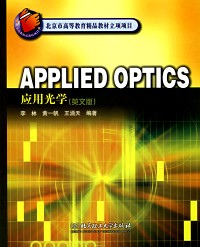
This book, Applied Optics, is a fundamental technical course for the specialties of optical engineering, optical measurement, control instruments and electronic science and technology. The book mainly includes basic theories and methods of how to solve the problems of geometrical optics, typical optical instruments, optical measurement, color measurement, optical fiber systems, laser systems and infrared optics. The knowledge mentioned above is a must for the opto-electronic students learning.
The Chinese edition of the book has been acknowledged as the earliest and the best classical text in China. Many Chinese universities have chosen the book as the textbook for the course. However, there is no equivalent English version for applied optics in China, which results in lacking industry wordings for Chinese students. In order to encourage them to keep up with international level and has the ability of referring to global materials during their Master Degree studies, this English version for applied optics is thus pushed forward.
The book starts with the basic theory of geometrical optics, where the imaging properties of the ideal system, the relationship between the object and the image for the symmetrical spherical system, the instruments for the human eyes, the mirror and prism systems and selection of image rays in optical systems are described. Then it discusses the radiometry and photometry, where the calculations of radiometry and photometry for various optical systems are introduced. At last, it incorporates the image quality of an optical system, where geometrical aberrations, wave aberrations and optical transfer function are described. And, the theories of telescope, microscope and camera systems are also included.
目录
chapter 1 basic principles of geometrical optics .
1.1 waves and rays
1.2 basic law of geometrical optics
1.3 refractive index and speed of light
1.4 reversibility of ray paths and total internal reflection
1.5 vector form of basic laws
1.6 classfication of optical systems and concept of imaging
1.7 ideal images and ideal optical systems
chapter 2 image formation of symmetrical systems made from spherical surfaces
2.1 ray tracing formulae for symmetrical systems made from spherical surfaces
2.2 sign convention
2.3 imaging characters and ray tracing in the paraxial region
2.4 basic formula of paraxial region
2.5 cardinal points of an optical system
2.6 principal planes and focal points of a coaxial spheric system
2.7 principal planes and focal points of a coaxial spheric system
2.8 chart illustration for image formation
2.9 image position and size
2.10 magnifications of optical systems
2.11 optical invariant
.2.12 relationship between front effective and back effective focal lengths
2.13 nodal planes and nodal points
2.14 image heigh of the object at infinity
2.15 the combination of ideal optical systems
2.16 ray tracing for ideal optical systems
2.17 equations for calculating positions of principal planes and focal focal points of a single lens chapter 3 instruments for human eyes
3.1 characteristics of the eye
3.2 principles of magnifier and microscope
3.3 principle of telescope
3.4 defect of eyes and diopter accommodation of optical instruments
3.5 spatial depth of focus and stereoscopic effect
3.6 binocular instruments
chapter 4 mirror and prism systems
4.1 applications of mirror and prism systems in optical instruments
4.2 imaging properties of mirrors
4.3 rotation of mirrors
4.4 prism and its unfolding
4.5 roof surfaces and roof prisms
4.6 imaging property of parallel glass block and prism size calculation
4.7 determination of image orientations for mirrors and prisms
4.8 combination of coaxial system and the mirror and prism system
chapter 5 selection of image rays in optical systems
5.1 stop and its application
5.2 selection of image rays in telescope system
5.3 selection of image rays in microscope and telecentric system..
5.4 field lens
5.5 depth of field
chapter 6 basics of radiometry and photometry
6.1 solid angle and its applications in photometry
6.2 basic ideas in radiometry
6.3 relative sensitivity of the eye to different wavelengths
6.4 basic ideas in photometry
6.5 illuminance formula and the cosine law of luminous intensity
6.6 luminance of the perfect diffusive surface
6.7 luminance of light beam in optical systems
6.8 illuminance of the image plane
6.9 illuminance and f number of the image plane of the camera kens
6.10 the subjective brightness of human eyes
6.11 the subjective brightness when observing through telescope
6.12 calctilation of light energy koss in optical systems
chapter 7 image quality of optical system
7.1 introduction
7.2 color dispersion and chromatic aberrations
7.3 the axial monochromatic aberration- spherical aberration
7.4 off-axial monochromatic aberrations
7.5 aberration curves
7.6 wave front aberration
7.7 resolution of ah ideal system
7.8 resolutions of typical systems
7.9 optical transfer function
7.10 application of optical transfer function
chapter 8 telescope and microscope
8.1 optical performance of telescope
8.2 the objectives of the telescopes
8.3 eyepieces of telescopes
8.4 introduction of microscopes and their properties
8.5 the objective and eyepiece of the microscope
chapter 9 camera and projector
9.1 claaraetedstics of the camera kens
9.2 typical camera lenses
9.3 typical projector
9.4 mumination system in a projector
9.5 projector lens
9.6 energy calculation of projector
vocabulary
bibliography ...
1.1 waves and rays
1.2 basic law of geometrical optics
1.3 refractive index and speed of light
1.4 reversibility of ray paths and total internal reflection
1.5 vector form of basic laws
1.6 classfication of optical systems and concept of imaging
1.7 ideal images and ideal optical systems
chapter 2 image formation of symmetrical systems made from spherical surfaces
2.1 ray tracing formulae for symmetrical systems made from spherical surfaces
2.2 sign convention
2.3 imaging characters and ray tracing in the paraxial region
2.4 basic formula of paraxial region
2.5 cardinal points of an optical system
2.6 principal planes and focal points of a coaxial spheric system
2.7 principal planes and focal points of a coaxial spheric system
2.8 chart illustration for image formation
2.9 image position and size
2.10 magnifications of optical systems
2.11 optical invariant
.2.12 relationship between front effective and back effective focal lengths
2.13 nodal planes and nodal points
2.14 image heigh of the object at infinity
2.15 the combination of ideal optical systems
2.16 ray tracing for ideal optical systems
2.17 equations for calculating positions of principal planes and focal focal points of a single lens chapter 3 instruments for human eyes
3.1 characteristics of the eye
3.2 principles of magnifier and microscope
3.3 principle of telescope
3.4 defect of eyes and diopter accommodation of optical instruments
3.5 spatial depth of focus and stereoscopic effect
3.6 binocular instruments
chapter 4 mirror and prism systems
4.1 applications of mirror and prism systems in optical instruments
4.2 imaging properties of mirrors
4.3 rotation of mirrors
4.4 prism and its unfolding
4.5 roof surfaces and roof prisms
4.6 imaging property of parallel glass block and prism size calculation
4.7 determination of image orientations for mirrors and prisms
4.8 combination of coaxial system and the mirror and prism system
chapter 5 selection of image rays in optical systems
5.1 stop and its application
5.2 selection of image rays in telescope system
5.3 selection of image rays in microscope and telecentric system..
5.4 field lens
5.5 depth of field
chapter 6 basics of radiometry and photometry
6.1 solid angle and its applications in photometry
6.2 basic ideas in radiometry
6.3 relative sensitivity of the eye to different wavelengths
6.4 basic ideas in photometry
6.5 illuminance formula and the cosine law of luminous intensity
6.6 luminance of the perfect diffusive surface
6.7 luminance of light beam in optical systems
6.8 illuminance of the image plane
6.9 illuminance and f number of the image plane of the camera kens
6.10 the subjective brightness of human eyes
6.11 the subjective brightness when observing through telescope
6.12 calctilation of light energy koss in optical systems
chapter 7 image quality of optical system
7.1 introduction
7.2 color dispersion and chromatic aberrations
7.3 the axial monochromatic aberration- spherical aberration
7.4 off-axial monochromatic aberrations
7.5 aberration curves
7.6 wave front aberration
7.7 resolution of ah ideal system
7.8 resolutions of typical systems
7.9 optical transfer function
7.10 application of optical transfer function
chapter 8 telescope and microscope
8.1 optical performance of telescope
8.2 the objectives of the telescopes
8.3 eyepieces of telescopes
8.4 introduction of microscopes and their properties
8.5 the objective and eyepiece of the microscope
chapter 9 camera and projector
9.1 claaraetedstics of the camera kens
9.2 typical camera lenses
9.3 typical projector
9.4 mumination system in a projector
9.5 projector lens
9.6 energy calculation of projector
vocabulary
bibliography ...
Applied optics = 应用光学 /
- 名称
- 类型
- 大小
光盘服务联系方式: 020-38250260 客服QQ:4006604884
云图客服:
用户发送的提问,这种方式就需要有位在线客服来回答用户的问题,这种 就属于对话式的,问题是这种提问是否需要用户登录才能提问
Video Player
×
Audio Player
×
pdf Player
×
