

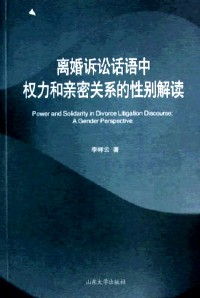
Power and solidarity in divorce litigation discourse:a gender perspective
副标题:无
作 者:李祥云著
分类号:
ISBN:9787560739113
微信扫一扫,移动浏览光盘
简介
《离婚诉讼话语中权利和亲密关系的性别解读》的研究对象是12个一审离婚官司(包括调解和开庭审理两种形式)的录音转写语料。这些录音由作者本人采集于山东某区级法院,所有案件均由同一位女性法官进行审理。 就研究方法来说,《离婚诉讼话语中权利和亲密关系的性别解读》以描述性和定性分析为主,同时辅以量化数据支持。
目录
Chapter 1 Introduction
1.1 Rationales for the present research
1.1.1 Theoretical rationale
1.1.2 Practical rationale
1.2 Research questions
1.3 Methodology of the present research
1.3.1 Data collection
1.3.2 Transcription of the data
1.3.3 Calculation and interpretation of the
results
1.4 Organization of the book
Chapter 2 Literature Review: Two Main Social
Approaches
2.1 Introduction
2.2 Related law issues in China
2.2.1 Inquisitorial system
2.2.2 Trial procedures
2.2.3 Mediation
2.3 Forensic linguistics
2.3.1 Forensic linguistics abroad
2.3.2 Forensic linguistics in China
2.4 Power and forensic linguistics
2.4.1 Power: A social perspective
2.4.2 Power: A linguistic perspective
2.4.3 Power in forensic linguistics
2.5 Gender and language
2.5.1 Sex and gender
2.5.2 Men and women in society
2.5.3 Linguistic studies on gender
2.6 Summary
Chapter 3 Relevant Linguistic Theories and the
Analytical Framework
3.1 Introduction
3.2 Critical discourse analysis
3.2.1 Femifiist critical discourse analysis
3.2.2 Fairclough's three-level model
3.3 Systemic functional linguistics
3.3.1 Language as a social semiotic system:
Key tenets of SFL
3.3.2 Systemic functional linguistics
in critical discourse analysis
3.4 Appraisal theory
3.5 Conversation analysis
3.6 The analytical framework
3.7 Summary
Chapter 4 Power and Solidarity in Court: The
Lexicogrammatieal Level
4.1 Introduction
4.2 Power and solidarity
4.2.1 Power and solidarity in court
4.2.2 Power in marriage
4.2.3 Power comparisons in twelve cases
4.3 Appraisal elements in court discourse
4.3.1 Affect
4.3.2 Engagement and deontic modality
4.3.3 Graduation
4.4 Summary
Chapter 5 Power and Solidarity in Court: The
Textual Level
5.1 Introduction
5.2 Speech turns
5.2. 1 Men and women's total turns in court
5.2.2 Turn-taking without the judge's
permission
5.2.3 Dispreferred turns
5.3 Interruptions
5.3.1 Interruptions in court
5.3.2 Interpretation
5.4 Overlap
5.5 Topic initiation/change
5.6 Utterances inviting judges' involvement
5.7 Summary
Chapter 6 Reflected Prejudicing Ideologies in Court
6.1 Introduction
6.2 Ideology
6.3 Women's self-depictions
6.4 The judge's bias
6.5 Summary
Chapter 7 Conclusion
7.1 Major findings and suggestions
7.2 Major contributions
7.3 Limitations and further studies
Appendices
References
1.1 Rationales for the present research
1.1.1 Theoretical rationale
1.1.2 Practical rationale
1.2 Research questions
1.3 Methodology of the present research
1.3.1 Data collection
1.3.2 Transcription of the data
1.3.3 Calculation and interpretation of the
results
1.4 Organization of the book
Chapter 2 Literature Review: Two Main Social
Approaches
2.1 Introduction
2.2 Related law issues in China
2.2.1 Inquisitorial system
2.2.2 Trial procedures
2.2.3 Mediation
2.3 Forensic linguistics
2.3.1 Forensic linguistics abroad
2.3.2 Forensic linguistics in China
2.4 Power and forensic linguistics
2.4.1 Power: A social perspective
2.4.2 Power: A linguistic perspective
2.4.3 Power in forensic linguistics
2.5 Gender and language
2.5.1 Sex and gender
2.5.2 Men and women in society
2.5.3 Linguistic studies on gender
2.6 Summary
Chapter 3 Relevant Linguistic Theories and the
Analytical Framework
3.1 Introduction
3.2 Critical discourse analysis
3.2.1 Femifiist critical discourse analysis
3.2.2 Fairclough's three-level model
3.3 Systemic functional linguistics
3.3.1 Language as a social semiotic system:
Key tenets of SFL
3.3.2 Systemic functional linguistics
in critical discourse analysis
3.4 Appraisal theory
3.5 Conversation analysis
3.6 The analytical framework
3.7 Summary
Chapter 4 Power and Solidarity in Court: The
Lexicogrammatieal Level
4.1 Introduction
4.2 Power and solidarity
4.2.1 Power and solidarity in court
4.2.2 Power in marriage
4.2.3 Power comparisons in twelve cases
4.3 Appraisal elements in court discourse
4.3.1 Affect
4.3.2 Engagement and deontic modality
4.3.3 Graduation
4.4 Summary
Chapter 5 Power and Solidarity in Court: The
Textual Level
5.1 Introduction
5.2 Speech turns
5.2. 1 Men and women's total turns in court
5.2.2 Turn-taking without the judge's
permission
5.2.3 Dispreferred turns
5.3 Interruptions
5.3.1 Interruptions in court
5.3.2 Interpretation
5.4 Overlap
5.5 Topic initiation/change
5.6 Utterances inviting judges' involvement
5.7 Summary
Chapter 6 Reflected Prejudicing Ideologies in Court
6.1 Introduction
6.2 Ideology
6.3 Women's self-depictions
6.4 The judge's bias
6.5 Summary
Chapter 7 Conclusion
7.1 Major findings and suggestions
7.2 Major contributions
7.3 Limitations and further studies
Appendices
References
Power and solidarity in divorce litigation discourse:a gender perspective
- 名称
- 类型
- 大小
光盘服务联系方式: 020-38250260 客服QQ:4006604884
云图客服:
用户发送的提问,这种方式就需要有位在线客服来回答用户的问题,这种 就属于对话式的,问题是这种提问是否需要用户登录才能提问
Video Player
×
Audio Player
×
pdf Player
×
