

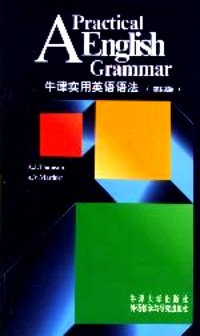
A practical English grammar:fourth edition
副标题:无
作 者:(英)汤姆森(Thomson,A.J.),(英)马蒂内特(Martinet,A.V.)著
分类号:
ISBN:9787560006109
微信扫一扫,移动浏览光盘
简介
语法是语言学习的重要环节。无论哪种语言,都有自己的语法体系。英语语法和汉语语法有相通的地方,但更多的是不同。因此,要想学到正确、地道的英语,就必须学习掌握英语语法。学会语法,可以起到以一晓十,触类旁通的作用。
《牛津实用英语语法》是专门为非英语国家的英语学习者编写的学习用书。全书分34章,以词类为纲,用浅易的现代英语对英语语法结构及其习惯用法进行了全面系统的论述。特别是对外国学习者容易感到困难的项目做了细致透彻的讲解。对于许多意义相近的语法形式和词语在用法上的差别,都作了扼要说明。在每一条说明下面都配有大量典型例句。另外,本书还在必要的地方指出了严格的语法惯用法与日常会话形式之间的区别,并把侧重点放在日常会话形式上,可以使学习者不仅从本书中学到基本的语法规则,还可以学到英语国家的人在日常生活中怎样讲话。因此,书中许多例句都是两个人之间的简短对话,更加生动、简洁、实用。
本书自1960年第一次出版以来,受到各国英语学习者和教师的普遍欢迎,屡经修订再版。现在我们出版的这本是牛津大学出版社推出的最新版本,内容更加完善,可供中、高级英语学习者使用,也可用作英语教师的教学参考书。
目录
references are to sections, unless
otherwise stated.
1 articles and one, a little /
a few, this, that page 15
a/an (the indefinite article) 1
use of a/an 2
omission of a/an 3
a/an and one 4
a little/a few and little/few 5
the (the definite article), 6
omission of the 7
omission of the before home etc. 8
this/these, that/those 9
2 nouns page 24
kinds and function 10
gender 11
plurals 12
uncountable nouns 13
form of possessive case 14
use of possessive case etc. 15
.compound nouns 16
3 adjectives page 33
kinds of adjectives 17
position df adjectives 18
order of adjectives of quality 19
comparison 20
constructions with comparisons 21
than/as + pronoun + auxiliary 22
the + adjective 23
adjectives + one/ones etc. 24
many and much 25
adjectives + infinitives 26
adjectives + various
constructions 27
4 adverbs page 47
kinds of adverbs 28
form and use
formation of adverbs with ly 29
adverbs and adjectives with
the same form 30
comparative and superlative 31
far, farther/farthest etc. 32
much, more, most 33
constructions with comparisons 34
position
adverbs of manner 35
adverbs of place 36
adverbs of time 37
adverbs of frequency 38
order of adverbs 39
sentence adverbs 40
adverbs of degree 41
fairly, rather, quite, hardly etc.
fairly and rather 42
quite 43
hardly, scarcely, barely 44
inversion of the verb
inversion after certain adverbs 45
5 all, each every, both,
neither, either, some, any,
no, none, page 64
all, each, every, everyone etc. 46
both 47
all/both/each + of etc. 48
neither, either 49
some, any, no and none 50
someone, anyone, no one etc. 51
else after someone/anybody etc. 52
another, other etc. with one, some 53
6 interrogatives: wh-? words
and how? page 71
interrogative adjectives and
pronouns 54
affirmative verb after who etc. 55
who, whom, whose, which, what 56
who, whom, which and what as
objects of prepositions 57
uses of what 58
which compared with who, what 59
interrogative adverbs:
why, when, where, how 60
ever after who, what etc: 61
7 possessives, personal and
reflexive pronouns: my,
mine, i, myself etc. page 75
possessive adjectives and
pronouns 62
agreement a..d use of
possessive adjectives 63
possessive pronouns replacing
possessive adjectives + nouns 64
personal pronouns 65
position of pronoun objects 66
use of it 67
indefinite pronouns 68
use of they/them/their with
neither/either, someone etc. 69
reflexive pronouns 70
emphasizing pronouns 71
8 relative pronouns and
clauses page 81
defining relative clauses 72
relative pronouns used in
defining clauses 73
defining clauses: persons 74
defining clauses: things 75
cleft sentences 76
relative clause replaced by
infinitive or participle 77
non-defining relative clauses 78
non-defining clauses: persons 79
all, both, few, most, several etc. +
of + whom/which 80
non-defining clauses: things 81
connective relative clauses 82
what (relative pronoun) and
which (connective relative) 83
commas in relative clauses 84
whoever, whichever etc. 85
9 prepositions page 91
introduction 86
alternative position 87
omission of to and for before
indirect objects 88
use and omission of to with
verbs of communication 89
time and date: at, on, by etc. 90
time: from, since, for etc. 91
time: to, till/until, after,
afterwards (adverb) 92
travel and movement: from, to,
at, in, by, on, into etc. 93
at, in; in, into; on, onto 94
above, over, under etc. 95
prepositions used with
adjectives and participles 96
verbs and prepositions 97
gerunds after prepositions 98
prepositions/adverbs 99
10 introduction to verbs
page 105
classes of verbs 100
ordinary verbs
principal parts 101
active tenses 102
negatives of tenses 103
interrogative for questions and
requests 104
negative interrogative 105
auxiliary verbs
auxiliaries and modals 106
forms and patterns 107
use of auxiliaries in short answers,
agreements etc.
in short answers 108
agreements and
disagreements 109
question tags 110
comment tags 111
additions to remarks 112
11 be, have, do, page 116
be as an auxiliary verb
form and use 113
be + infinitive 114
be as an ordinary verb
be to denote existence,
be + adjective 115
there is/are/was/were etc. 116
it is and there is compared 117
have as an auxiliary verb
form and use 118
have + object + past participle 119
had better + bare infinitive 120
have + object + present participle 121
have as an ordinary verb
have meaning 'possess' 122
have meaning 'take', 'give' 123
do
form 124
do used as an auxiliary 125
do used as an ordinary verb 126
12 may and can for permission
and possibility page 128
permission
may for permission: forms 127
can for permission: forms 128
may and can used for permission
in the present or future 129
could or was/were allowed to for
permission in the past 130
requests for permission 131
possibility
may/might for possibility 132
may/might + perfect infinitive 133
could or may/might 134
can for possibility 135
13 can and be able for ability
page 134
can and be able: forms 136
can/am able, could/was able 137
could + perfect infinitive 138
14 ought, should, must, have.
to, need for obligation
page 137
ought: forms 139
should: forms 140 '
ought/should compared to
must and have to 141
ought/should with the continuous
infinitive 142
ought/should with the perfect
infinitive 143
must and have to: forms 144
must and have to: difference 145
need not and must not in
the present and future 146
need not, must not and must in
the present and future 147
need: forms 148
absence of obligation 149
need not and other forms 150
must, have to and need in
the interrogative 151
needn't + perfect infinitive 152
needn't have (done) and
didn't have/need (to do) 153
needn't, could and should +
perfect infinitive 154
to need meaning 'require' 155
15 must, have, will and should
for deduction and
assumption page 147
must for deduction 156
must compared to may/might 157
have/had for deduction 158
can't and couldn't used for
negative deduction 159
will and should: assumption 160
16 the auxiliaries dare and
used page 150
dare 161
used 162
to be/become/get used to 163
17 the present tenses
page 153
the present continuous
form 164
present participle: spelling 165
uses 166
other possible uses 167
verbs not normally used 168
feel, look, smell and taste 169
see and hear 170
think, assume and expect 171
the simple present tense
form i72
used for habitual action 173
other uses 174
18 the past and perfect tenses
page 161
the simple past tense
form 175
irregular verbs: form 176
use for past events 177
the past continuous tense
form 178
main uses 179
other uses 180
past continuous or simple past 181
the present perfect tense
form and use 182
use with just 183
past actions: indefinite time 184
actions in an incomplete period 185
actions lasting throughout
an incomplete period 186
use with for and since 187
it is + period + since + past or
perfect tense 188
present perfect and simple past 189
the present perfect continuous tense
form 190
use 191
comparison of the present perfect
simple and continuous 192
some more examples 193
the past perfect tense
form and use 194
in time clauses 195
in indirect speech 196.
the past perfect continuous tense
form and use 197
19 the future page 180
future forms 198
the simple present 199
future with intention 200
will + infinitive 201
the present continuous 202
the be going to form 203
be going to used for intention 204
be going to and will + infinitive
to express intention 205
be going to used for prediction 206
the future simple 207
first person will and shall 208
uses of the future simple 209
will contrasted with
want/wish/would like 210
the future continuous tense 211
the future continuous used as
an ordinary continuous tense 212
the future continuous used to
express future without intention 213
the future continuous and
will + infinitive compared 214
various future forms 215
the future perfect and the future
perfect continuous 216
20 the sequence of tenses
page 195
subordinate clauses 217
the sequence of tenses 218
21 the conditional page 196
the conditional tenses
the present conditional tense 219
the perfect conditional tense 220
conditional sentences
conditional sentences type 1 221
conditional sentences type 2 222
conditional sentences type 3 223
will/would and should 224
if + were and inversion 225
if, even if, whether, unless,
but for, otherwise etc. 226
if and in case 227
if only 228
in indirect speech 229
22 other uses of will / would,
shall / should page 206
habits expressed by will, would 230
should/would think +
that-clause or so/not 231
would for past intention 232
shall i/we? 233
shall: second and third persons 234
that.., should 235
it is/was + adjective +
that.., should 236
other uses of should 237
23 the infinitive page 212
form 238
uses of the infinitive 239
the infinitive as subject 240
as object or complement 241
verb + how/what etc. + infinitive 242
infinitive after verb or
verb + object 243
infinitive after verb + object 244
infinitive after verbs of
knowing and thinking etc. 245
the bare infinitive 246
infinitive represented by to 247
split infinitives 248
infinitive as connective link 249
infinitive used to replace
a relative clause 250
infinitive after certain nouns 251
after too, enough, so... as 252
infinitive phrases 253
the continuous infinitive 254
the perfect infinitive 255
perfect infinitive continuous 256
24 the gerund page 228
form and use 257
the gerund as subject 258
gerunds after prepositions 259
the word to 260
verbs followed by the gerund 261
verbs + possessive adjective/
pronoun object + gerund 262
the verb mind 263
the perfect gerund 264
the passive gerund 265
25 infinitive and gerund
constructions page 234
verbs + infinitive or gerund 266
verbs + infinitive or gerund
without change of meaning 267
regret, remember, forget 268
agree/agree to, mean, propose 269
go on, stop, try, used (to) 270
be afraid (of), be softy (for),
be ashamed (of) 271
26 the participles page 239
present (or active) participle 272
after verbs of sensation 273
catch, find, leave + object +
present participle 274
go, come, spend, waste etc. 275
a present participle phrase
replacing a main clause 276
a present participle phrase
replacing a subordinate clause 277
perfect participle (active) 278
part participle (passive) and
perfect participle (passive) 279
misrelated 'participles 280
27 commands, requests,
invitations, advice,
suggestions page 245
the imperative for commands 281
other ways of expressing
commands 282
requests with
can/could/may/might i/we 283
requests with
could/will/would you etc. 284
requests with might 285
invitations 286
advice forms 287
advice with may/might as well +
infinitive 288
suggestions 289
28 the subjunctive page 253
form 290
use of the present subjunctive 291
as ff etc. + past subjunctive 292
it is time + past subjunctive 293
29 care, like, love, hate,
prefer, wish page 255
care and like 294
care, like, love, hate, prefer 295
would like and want 296
would rather/sooner and
prefer/would prefer 297
more examples of preference 298
wish, want and would like 299
wish + subject + unreal past 300
wish (that) + subject + would 301
30 the passive voice page 263
form 302
active and passive equivalents 303
uses of the passive 304
prepositions with passive verbs 305
infinitive constructions after
passive verbs 306
31 indirect speech page 269
direct and indirect speech 307
statements in indirect speech:
tense changes necessary 308
past tenses 309
unreal past tenses 310
might, ought to, should, would,
used to in indirect statements 311
could in indirect statements 312
pronoun and adjective 313
expressions of time and place 314
infinitive and gerund 315
say, tell etc. 316
questions in indirect speech 317
questions beginning shall i/we? 318
questions beginning will you/
would you/could you? 319
commands, requests, advice 320
other ways of expressing
indirect commands 321
let's, let us, let him/them 322
exclamations and yes and no 323
indirect speech: mixed types 324
must and needn't 325
32 conjunctions page 288
co-ordinating conjunctions 326
besides, so, still, yet etc. 327
subordinating conjunctions 328
though/although, in spite of,
despite 329
for and because 330
when, while, as to express time 331
as meaning when/while or
because/since 332
as, when, while used to mean
although, but, seeing that 333
33 purpose page 294
purpose expressed by infinitive 334
infinitives after go and come 335
clauses of purpose 336
in case-and lest 337
34 clauses of reason, result,
concession, comparison,
time page 298
reason and result/cause 338
result with such/so ... that 339
clauses of concession 340
clauses of comparison 341
time clauses 342
35 noun clauses page 303
noun clauses as subject 343
that-clauses after certain
adjectives/participles 344'
that-clauses after nouns 345
noun clauses as objects 346
so and not representing
a that-clause 347
36 numerals, dates, and
weights and measures
page 307
cardinal numbers 348
points about cardinal numbers 349
ordinal numbers 350
points about ordinal numbers 351
dates 352
weights, length, liquids 353
37 spelling rules page 311
introduction 354
doubling the consonant 355
omission of a final e 356
words ending in ce and ge 357
the suffix ful 358
words ending in y 359
ie and ei 360
hyphens 361
38 phrasal verbs page 315
introduction 362
verb + preposition/adverb 363
39 list of irregular verbs
page 353
irregular verbs 364
index page 359
otherwise stated.
1 articles and one, a little /
a few, this, that page 15
a/an (the indefinite article) 1
use of a/an 2
omission of a/an 3
a/an and one 4
a little/a few and little/few 5
the (the definite article), 6
omission of the 7
omission of the before home etc. 8
this/these, that/those 9
2 nouns page 24
kinds and function 10
gender 11
plurals 12
uncountable nouns 13
form of possessive case 14
use of possessive case etc. 15
.compound nouns 16
3 adjectives page 33
kinds of adjectives 17
position df adjectives 18
order of adjectives of quality 19
comparison 20
constructions with comparisons 21
than/as + pronoun + auxiliary 22
the + adjective 23
adjectives + one/ones etc. 24
many and much 25
adjectives + infinitives 26
adjectives + various
constructions 27
4 adverbs page 47
kinds of adverbs 28
form and use
formation of adverbs with ly 29
adverbs and adjectives with
the same form 30
comparative and superlative 31
far, farther/farthest etc. 32
much, more, most 33
constructions with comparisons 34
position
adverbs of manner 35
adverbs of place 36
adverbs of time 37
adverbs of frequency 38
order of adverbs 39
sentence adverbs 40
adverbs of degree 41
fairly, rather, quite, hardly etc.
fairly and rather 42
quite 43
hardly, scarcely, barely 44
inversion of the verb
inversion after certain adverbs 45
5 all, each every, both,
neither, either, some, any,
no, none, page 64
all, each, every, everyone etc. 46
both 47
all/both/each + of etc. 48
neither, either 49
some, any, no and none 50
someone, anyone, no one etc. 51
else after someone/anybody etc. 52
another, other etc. with one, some 53
6 interrogatives: wh-? words
and how? page 71
interrogative adjectives and
pronouns 54
affirmative verb after who etc. 55
who, whom, whose, which, what 56
who, whom, which and what as
objects of prepositions 57
uses of what 58
which compared with who, what 59
interrogative adverbs:
why, when, where, how 60
ever after who, what etc: 61
7 possessives, personal and
reflexive pronouns: my,
mine, i, myself etc. page 75
possessive adjectives and
pronouns 62
agreement a..d use of
possessive adjectives 63
possessive pronouns replacing
possessive adjectives + nouns 64
personal pronouns 65
position of pronoun objects 66
use of it 67
indefinite pronouns 68
use of they/them/their with
neither/either, someone etc. 69
reflexive pronouns 70
emphasizing pronouns 71
8 relative pronouns and
clauses page 81
defining relative clauses 72
relative pronouns used in
defining clauses 73
defining clauses: persons 74
defining clauses: things 75
cleft sentences 76
relative clause replaced by
infinitive or participle 77
non-defining relative clauses 78
non-defining clauses: persons 79
all, both, few, most, several etc. +
of + whom/which 80
non-defining clauses: things 81
connective relative clauses 82
what (relative pronoun) and
which (connective relative) 83
commas in relative clauses 84
whoever, whichever etc. 85
9 prepositions page 91
introduction 86
alternative position 87
omission of to and for before
indirect objects 88
use and omission of to with
verbs of communication 89
time and date: at, on, by etc. 90
time: from, since, for etc. 91
time: to, till/until, after,
afterwards (adverb) 92
travel and movement: from, to,
at, in, by, on, into etc. 93
at, in; in, into; on, onto 94
above, over, under etc. 95
prepositions used with
adjectives and participles 96
verbs and prepositions 97
gerunds after prepositions 98
prepositions/adverbs 99
10 introduction to verbs
page 105
classes of verbs 100
ordinary verbs
principal parts 101
active tenses 102
negatives of tenses 103
interrogative for questions and
requests 104
negative interrogative 105
auxiliary verbs
auxiliaries and modals 106
forms and patterns 107
use of auxiliaries in short answers,
agreements etc.
in short answers 108
agreements and
disagreements 109
question tags 110
comment tags 111
additions to remarks 112
11 be, have, do, page 116
be as an auxiliary verb
form and use 113
be + infinitive 114
be as an ordinary verb
be to denote existence,
be + adjective 115
there is/are/was/were etc. 116
it is and there is compared 117
have as an auxiliary verb
form and use 118
have + object + past participle 119
had better + bare infinitive 120
have + object + present participle 121
have as an ordinary verb
have meaning 'possess' 122
have meaning 'take', 'give' 123
do
form 124
do used as an auxiliary 125
do used as an ordinary verb 126
12 may and can for permission
and possibility page 128
permission
may for permission: forms 127
can for permission: forms 128
may and can used for permission
in the present or future 129
could or was/were allowed to for
permission in the past 130
requests for permission 131
possibility
may/might for possibility 132
may/might + perfect infinitive 133
could or may/might 134
can for possibility 135
13 can and be able for ability
page 134
can and be able: forms 136
can/am able, could/was able 137
could + perfect infinitive 138
14 ought, should, must, have.
to, need for obligation
page 137
ought: forms 139
should: forms 140 '
ought/should compared to
must and have to 141
ought/should with the continuous
infinitive 142
ought/should with the perfect
infinitive 143
must and have to: forms 144
must and have to: difference 145
need not and must not in
the present and future 146
need not, must not and must in
the present and future 147
need: forms 148
absence of obligation 149
need not and other forms 150
must, have to and need in
the interrogative 151
needn't + perfect infinitive 152
needn't have (done) and
didn't have/need (to do) 153
needn't, could and should +
perfect infinitive 154
to need meaning 'require' 155
15 must, have, will and should
for deduction and
assumption page 147
must for deduction 156
must compared to may/might 157
have/had for deduction 158
can't and couldn't used for
negative deduction 159
will and should: assumption 160
16 the auxiliaries dare and
used page 150
dare 161
used 162
to be/become/get used to 163
17 the present tenses
page 153
the present continuous
form 164
present participle: spelling 165
uses 166
other possible uses 167
verbs not normally used 168
feel, look, smell and taste 169
see and hear 170
think, assume and expect 171
the simple present tense
form i72
used for habitual action 173
other uses 174
18 the past and perfect tenses
page 161
the simple past tense
form 175
irregular verbs: form 176
use for past events 177
the past continuous tense
form 178
main uses 179
other uses 180
past continuous or simple past 181
the present perfect tense
form and use 182
use with just 183
past actions: indefinite time 184
actions in an incomplete period 185
actions lasting throughout
an incomplete period 186
use with for and since 187
it is + period + since + past or
perfect tense 188
present perfect and simple past 189
the present perfect continuous tense
form 190
use 191
comparison of the present perfect
simple and continuous 192
some more examples 193
the past perfect tense
form and use 194
in time clauses 195
in indirect speech 196.
the past perfect continuous tense
form and use 197
19 the future page 180
future forms 198
the simple present 199
future with intention 200
will + infinitive 201
the present continuous 202
the be going to form 203
be going to used for intention 204
be going to and will + infinitive
to express intention 205
be going to used for prediction 206
the future simple 207
first person will and shall 208
uses of the future simple 209
will contrasted with
want/wish/would like 210
the future continuous tense 211
the future continuous used as
an ordinary continuous tense 212
the future continuous used to
express future without intention 213
the future continuous and
will + infinitive compared 214
various future forms 215
the future perfect and the future
perfect continuous 216
20 the sequence of tenses
page 195
subordinate clauses 217
the sequence of tenses 218
21 the conditional page 196
the conditional tenses
the present conditional tense 219
the perfect conditional tense 220
conditional sentences
conditional sentences type 1 221
conditional sentences type 2 222
conditional sentences type 3 223
will/would and should 224
if + were and inversion 225
if, even if, whether, unless,
but for, otherwise etc. 226
if and in case 227
if only 228
in indirect speech 229
22 other uses of will / would,
shall / should page 206
habits expressed by will, would 230
should/would think +
that-clause or so/not 231
would for past intention 232
shall i/we? 233
shall: second and third persons 234
that.., should 235
it is/was + adjective +
that.., should 236
other uses of should 237
23 the infinitive page 212
form 238
uses of the infinitive 239
the infinitive as subject 240
as object or complement 241
verb + how/what etc. + infinitive 242
infinitive after verb or
verb + object 243
infinitive after verb + object 244
infinitive after verbs of
knowing and thinking etc. 245
the bare infinitive 246
infinitive represented by to 247
split infinitives 248
infinitive as connective link 249
infinitive used to replace
a relative clause 250
infinitive after certain nouns 251
after too, enough, so... as 252
infinitive phrases 253
the continuous infinitive 254
the perfect infinitive 255
perfect infinitive continuous 256
24 the gerund page 228
form and use 257
the gerund as subject 258
gerunds after prepositions 259
the word to 260
verbs followed by the gerund 261
verbs + possessive adjective/
pronoun object + gerund 262
the verb mind 263
the perfect gerund 264
the passive gerund 265
25 infinitive and gerund
constructions page 234
verbs + infinitive or gerund 266
verbs + infinitive or gerund
without change of meaning 267
regret, remember, forget 268
agree/agree to, mean, propose 269
go on, stop, try, used (to) 270
be afraid (of), be softy (for),
be ashamed (of) 271
26 the participles page 239
present (or active) participle 272
after verbs of sensation 273
catch, find, leave + object +
present participle 274
go, come, spend, waste etc. 275
a present participle phrase
replacing a main clause 276
a present participle phrase
replacing a subordinate clause 277
perfect participle (active) 278
part participle (passive) and
perfect participle (passive) 279
misrelated 'participles 280
27 commands, requests,
invitations, advice,
suggestions page 245
the imperative for commands 281
other ways of expressing
commands 282
requests with
can/could/may/might i/we 283
requests with
could/will/would you etc. 284
requests with might 285
invitations 286
advice forms 287
advice with may/might as well +
infinitive 288
suggestions 289
28 the subjunctive page 253
form 290
use of the present subjunctive 291
as ff etc. + past subjunctive 292
it is time + past subjunctive 293
29 care, like, love, hate,
prefer, wish page 255
care and like 294
care, like, love, hate, prefer 295
would like and want 296
would rather/sooner and
prefer/would prefer 297
more examples of preference 298
wish, want and would like 299
wish + subject + unreal past 300
wish (that) + subject + would 301
30 the passive voice page 263
form 302
active and passive equivalents 303
uses of the passive 304
prepositions with passive verbs 305
infinitive constructions after
passive verbs 306
31 indirect speech page 269
direct and indirect speech 307
statements in indirect speech:
tense changes necessary 308
past tenses 309
unreal past tenses 310
might, ought to, should, would,
used to in indirect statements 311
could in indirect statements 312
pronoun and adjective 313
expressions of time and place 314
infinitive and gerund 315
say, tell etc. 316
questions in indirect speech 317
questions beginning shall i/we? 318
questions beginning will you/
would you/could you? 319
commands, requests, advice 320
other ways of expressing
indirect commands 321
let's, let us, let him/them 322
exclamations and yes and no 323
indirect speech: mixed types 324
must and needn't 325
32 conjunctions page 288
co-ordinating conjunctions 326
besides, so, still, yet etc. 327
subordinating conjunctions 328
though/although, in spite of,
despite 329
for and because 330
when, while, as to express time 331
as meaning when/while or
because/since 332
as, when, while used to mean
although, but, seeing that 333
33 purpose page 294
purpose expressed by infinitive 334
infinitives after go and come 335
clauses of purpose 336
in case-and lest 337
34 clauses of reason, result,
concession, comparison,
time page 298
reason and result/cause 338
result with such/so ... that 339
clauses of concession 340
clauses of comparison 341
time clauses 342
35 noun clauses page 303
noun clauses as subject 343
that-clauses after certain
adjectives/participles 344'
that-clauses after nouns 345
noun clauses as objects 346
so and not representing
a that-clause 347
36 numerals, dates, and
weights and measures
page 307
cardinal numbers 348
points about cardinal numbers 349
ordinal numbers 350
points about ordinal numbers 351
dates 352
weights, length, liquids 353
37 spelling rules page 311
introduction 354
doubling the consonant 355
omission of a final e 356
words ending in ce and ge 357
the suffix ful 358
words ending in y 359
ie and ei 360
hyphens 361
38 phrasal verbs page 315
introduction 362
verb + preposition/adverb 363
39 list of irregular verbs
page 353
irregular verbs 364
index page 359
A practical English grammar:fourth edition
- 名称
- 类型
- 大小
光盘服务联系方式: 020-38250260 客服QQ:4006604884
云图客服:
用户发送的提问,这种方式就需要有位在线客服来回答用户的问题,这种 就属于对话式的,问题是这种提问是否需要用户登录才能提问
Video Player
×
Audio Player
×
pdf Player
×
