

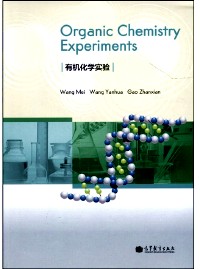
简介
根据教育部关于高等学校本科教学质量工程要重视双语教学的文件精神,我们选择高占先教授主编的《有机化学实验》(第四版)中第一、二篇关于有机化学实验综合介绍部分和第三至六篇中具有代表性的30个实验,结合教学实践经验编译作为有机化学实验双语教材。全书分为六部分:有机化学实验室须知和有机化学实验的一般知识,有机化学实验技术,有机化合物的基本制备实验,综合性实验,设计性和研究性实验。书后附有常用数据表、索引和中英文专业词汇对照表。本书以基本有机化学实验常用技术为主,也包含微波反应和手性拆分等新的实验技术;以常量和小量实验为主,兼顾半微量和微量实验;以有机化学中传统的典型反应为主,同时引入绿色合成的理念;以训练学生基本实验技能为主,也包括初步的设计和研究能力培养。本书配有《有机化学实验双语教学辅助课件》光盘,可作为化学、化工专业的有机化学实验双语教材,亦可作为其它相关专业的实验教学参考书,可使学生在学习和掌握有机化学实验技能的同时提高专业英文水平。
目录
?Contents
Chapter 1 Introduction
1.1 General Rules for Organic Chemistry Laboratory
1.2 Safe Laboratory Practice and First Aid in Case of an Accident
1.2.1 Prevention of Fires and First Aid in Case of a Fire
1.2.2 Prevention of Explosions
1.2.3 First Aid for Cuts and Scalds
1.2.4 Prevention of Damages from Hazardous Chemicals and First Aid for Chemical Burns
1.2.5 Toxicity and Safety Data of Chemicals
1.2.6 Disposal of Chemical Wastes
1.3 Information Sources for Experimental Organic Chemistry
1.3.1 Important Handbooks and Dictionaries
1.3.2 Important Journals Involving Organic Experiment
1.3.3 Important Online Resources
1.4 Common Glassware and Apparatus
1.4.1 Names and Uses of Common Glassware
1.4.2 Cleaning and Drying Glassware
1.4.3 Common Organic Lab Apparatus
1.4.4 Assembling and Disassembling Apparatus
1.5 Preparation and Notebook for the Laboratory
1.5.1 Laboratory Preparation Note
1.5.2 Experimental Record
1.5.3 Sample Calculation for Notebook Records
1.5.4 Laboratory Notebook Formats
1.5.5 Experimental Report
Chapter 2 Basic Techniques for Organic Experiments
2.1 Working on Glass Tubes
2.1.1 Cutting and Bending Glass Tubes
2.1.2 Stretching Glass Tubes
2.2 Weighing , Measuring and Transferring Reagents
2.2.1 Measuring and Transferring Liquids
2.2.2 Weighing Methods
2.3 Heating , Cooling and Stirring Methods
2.3.1 Heating Methods and Precautions
2.3.2 Cooling Methods and Coolants
2.3.3 Stirring Methods and Equipment
2.4 Extraction
2.4.1 Liquid‐Liquid Extraction
2.4.2 Liquid‐Solid Extraction
2.5 Drying and Drying Agents
2.5.1 Drying Organic Liquids
2.5.2 Drying Solids
2.6 Gas Traps
2.7 Separating and Purifying Liquid Compounds
2.7.1 Simple Distillation
2.7.2 Fractional Distillation
2.7.3 Vacuum Distillation
2.7.4 Steam Distillation
2.8 Separating and Purifying Solid Compounds
2.8.1 Filtration Apparatus and Techniques
2.8.2 Centrifugation and Decanting Solutions
2.8.3 Evaporating Solvents
2.8.4 Decolorizing Carbon
2.8.5 Recrystallization
2.8.6 Sublimation
2.9 Chromatography
2.9.1 Column Chromatography
2.9.2 Thin‐Layer Chromatography (TLC)
2.9.3 Gas Chromatography (GC)
2.9.4 High‐Performance Liquid Chromatography (HPLC)
2.10 Measuring Physical Constants of Organic Compounds
2.10.1 Melting Point
2.10.2 Boiling Point
2.10.3 Refractive Index
2.10.4 Optical Rotation and Specific Rotation
2.10.5 Relative Density
2.11 Spectroscopic Identification of Organic Compounds
2.11.1 Infrared (IR) Spectroscopy
2.11.2 Nuclear Magnetic Resonance (NMR) Spectroscopy
2.11.3 Ultra‐Violet‐Visible (UV‐Vis) Spectroscopy
2.12 Manipulation Techniques for Air‐Sensitive Compounds
2.12.1 General Introduction
2.12.2 Basic Techniques for Handling Air‐Sensitive Compounds
Chapter 3 Basic Experiments
3.1 Simple and Fractional Distillations : Separation of a Cyclohexane‐Toluene Mixture(环己烷甲苯混合物)
3.2 Intramolecular Dehydration of Alcohols : Preparation of Cyclohexene (环己烯)
3.3 Intermolecular Dehydration of Alcohols : Preparation of Dibutyl Ether (正丁醚)
3.4 The SN 2 Reaction : Preparation of 1 Bromobutane (1 溴丁烷)
3.5 Decarboxylation of Dicarboxylic Acids : Preparation of Cyclopentanone (环戊酮)
3.6 Oxidation of Secondary Alcohols to Ketones : Preparation of Cyclohexanone(环己酮)
3.7 Oxidation of Primary Alcohols to Aldehydes : Preparation of Benzaldehyde(苯甲醛)
3.8 Fischer Esterification of Carboxylic Acids : n Butyl Acetate (乙酸正丁酯)
3.9 Acetylation of Salicylic Acid : Preparation of Acetylsalicylic Acid (乙酰水杨酸)
3.10 Amidation of Carboxylic Acids : Preparation of Acetanilide (乙酰苯胺)
3.11 Friedel‐Crafts Reaction : Preparation of Acetophenone (苯乙酮)
3.12 The Claisen Ester Condensation : Preparation of Ethyl Acetoacetate(乙酰乙酸乙酯)
3.13 Perkin Condensation : Preparation of Cinnamic Acid (肉桂酸)
3.14 Cannizzaro Reaction : Preparation of Benzyl Alcohol (苯甲醇) and Benzoic Acid(苯甲酸)
3.15 Carbene Additions with Phase‐Transfer Catalysis : Preparation of 7 ,7‐Dichlorobicyclo[4.1.0]heptane (7 ,7 二氯双环[4.1.0]庚烷)
3.16 Nitration Reaction : Preparation of p‐Nitroaniline (对硝基苯胺)
3.17 Skraup Reaction : Preparation of Quinoline (喹啉)
3.18 Electrochemical Synthesis : Preparation of Iodoform (碘仿)
3.19 Extraction : Isolation of Caffeine from Tea Leaves
3.20 Thin‐Layer and Column Chromatography : Isolation of a Red Pigment from RedChilli
Chapter 4 Comprehensive Experiments
4.1 Preparation of 5‐n‐Butylmalonyl Urea (5‐n‐Butylbarbituric Acid ,正丁基巴比妥酸)
4.2 Diels‐Alder Reaction : Microwave‐Assisted Preparation of 9 ,10‐Dihydroanthracene‐9 ,10‐ α, β‐Succinic Anhydride (9 ,10 二氢蒽9 ,10 α, β 丁二酸酐)
4.3 Grignard Reaction : Preparation of Methyl Triphenylmethyl Ether(甲基三苯甲基醚)
4.4 Organometallic Chemistry : Preparation of n‐Butyllithium (正丁基锂)and Titration of its Concentration
Chapter 5 Self‐Designing Experiments
5.1 Identification of Functional Compounds
5.2 Microwave‐Assisted Preparation of Acetaminophenol (醋氨酚)
Chapter 6 Investigative Experiments
6.1 Studies on Synthetic Conditions for Preparation of Isopentyl Acetate(乙酸异戊酯)
6.2 Preparation of α‐and β‐D‐Glucose Pentaacetates (五乙酸葡萄糖酯)
6.3 Preparation of 9 ,9‐Bis(methoxymethyl)fluorene (9 ,9‐双(甲氧基甲基)芴)
6.4 Preparation and Resolution of Racemic 1 ,1′‐Bi‐2‐naphthol (1 ,1′ 联2 萘酚)
References
Appendix
Index
Vocabulary
Periodic Table of the Elements
Chapter 1 Introduction
1.1 General Rules for Organic Chemistry Laboratory
1.2 Safe Laboratory Practice and First Aid in Case of an Accident
1.2.1 Prevention of Fires and First Aid in Case of a Fire
1.2.2 Prevention of Explosions
1.2.3 First Aid for Cuts and Scalds
1.2.4 Prevention of Damages from Hazardous Chemicals and First Aid for Chemical Burns
1.2.5 Toxicity and Safety Data of Chemicals
1.2.6 Disposal of Chemical Wastes
1.3 Information Sources for Experimental Organic Chemistry
1.3.1 Important Handbooks and Dictionaries
1.3.2 Important Journals Involving Organic Experiment
1.3.3 Important Online Resources
1.4 Common Glassware and Apparatus
1.4.1 Names and Uses of Common Glassware
1.4.2 Cleaning and Drying Glassware
1.4.3 Common Organic Lab Apparatus
1.4.4 Assembling and Disassembling Apparatus
1.5 Preparation and Notebook for the Laboratory
1.5.1 Laboratory Preparation Note
1.5.2 Experimental Record
1.5.3 Sample Calculation for Notebook Records
1.5.4 Laboratory Notebook Formats
1.5.5 Experimental Report
Chapter 2 Basic Techniques for Organic Experiments
2.1 Working on Glass Tubes
2.1.1 Cutting and Bending Glass Tubes
2.1.2 Stretching Glass Tubes
2.2 Weighing , Measuring and Transferring Reagents
2.2.1 Measuring and Transferring Liquids
2.2.2 Weighing Methods
2.3 Heating , Cooling and Stirring Methods
2.3.1 Heating Methods and Precautions
2.3.2 Cooling Methods and Coolants
2.3.3 Stirring Methods and Equipment
2.4 Extraction
2.4.1 Liquid‐Liquid Extraction
2.4.2 Liquid‐Solid Extraction
2.5 Drying and Drying Agents
2.5.1 Drying Organic Liquids
2.5.2 Drying Solids
2.6 Gas Traps
2.7 Separating and Purifying Liquid Compounds
2.7.1 Simple Distillation
2.7.2 Fractional Distillation
2.7.3 Vacuum Distillation
2.7.4 Steam Distillation
2.8 Separating and Purifying Solid Compounds
2.8.1 Filtration Apparatus and Techniques
2.8.2 Centrifugation and Decanting Solutions
2.8.3 Evaporating Solvents
2.8.4 Decolorizing Carbon
2.8.5 Recrystallization
2.8.6 Sublimation
2.9 Chromatography
2.9.1 Column Chromatography
2.9.2 Thin‐Layer Chromatography (TLC)
2.9.3 Gas Chromatography (GC)
2.9.4 High‐Performance Liquid Chromatography (HPLC)
2.10 Measuring Physical Constants of Organic Compounds
2.10.1 Melting Point
2.10.2 Boiling Point
2.10.3 Refractive Index
2.10.4 Optical Rotation and Specific Rotation
2.10.5 Relative Density
2.11 Spectroscopic Identification of Organic Compounds
2.11.1 Infrared (IR) Spectroscopy
2.11.2 Nuclear Magnetic Resonance (NMR) Spectroscopy
2.11.3 Ultra‐Violet‐Visible (UV‐Vis) Spectroscopy
2.12 Manipulation Techniques for Air‐Sensitive Compounds
2.12.1 General Introduction
2.12.2 Basic Techniques for Handling Air‐Sensitive Compounds
Chapter 3 Basic Experiments
3.1 Simple and Fractional Distillations : Separation of a Cyclohexane‐Toluene Mixture(环己烷甲苯混合物)
3.2 Intramolecular Dehydration of Alcohols : Preparation of Cyclohexene (环己烯)
3.3 Intermolecular Dehydration of Alcohols : Preparation of Dibutyl Ether (正丁醚)
3.4 The SN 2 Reaction : Preparation of 1 Bromobutane (1 溴丁烷)
3.5 Decarboxylation of Dicarboxylic Acids : Preparation of Cyclopentanone (环戊酮)
3.6 Oxidation of Secondary Alcohols to Ketones : Preparation of Cyclohexanone(环己酮)
3.7 Oxidation of Primary Alcohols to Aldehydes : Preparation of Benzaldehyde(苯甲醛)
3.8 Fischer Esterification of Carboxylic Acids : n Butyl Acetate (乙酸正丁酯)
3.9 Acetylation of Salicylic Acid : Preparation of Acetylsalicylic Acid (乙酰水杨酸)
3.10 Amidation of Carboxylic Acids : Preparation of Acetanilide (乙酰苯胺)
3.11 Friedel‐Crafts Reaction : Preparation of Acetophenone (苯乙酮)
3.12 The Claisen Ester Condensation : Preparation of Ethyl Acetoacetate(乙酰乙酸乙酯)
3.13 Perkin Condensation : Preparation of Cinnamic Acid (肉桂酸)
3.14 Cannizzaro Reaction : Preparation of Benzyl Alcohol (苯甲醇) and Benzoic Acid(苯甲酸)
3.15 Carbene Additions with Phase‐Transfer Catalysis : Preparation of 7 ,7‐Dichlorobicyclo[4.1.0]heptane (7 ,7 二氯双环[4.1.0]庚烷)
3.16 Nitration Reaction : Preparation of p‐Nitroaniline (对硝基苯胺)
3.17 Skraup Reaction : Preparation of Quinoline (喹啉)
3.18 Electrochemical Synthesis : Preparation of Iodoform (碘仿)
3.19 Extraction : Isolation of Caffeine from Tea Leaves
3.20 Thin‐Layer and Column Chromatography : Isolation of a Red Pigment from RedChilli
Chapter 4 Comprehensive Experiments
4.1 Preparation of 5‐n‐Butylmalonyl Urea (5‐n‐Butylbarbituric Acid ,正丁基巴比妥酸)
4.2 Diels‐Alder Reaction : Microwave‐Assisted Preparation of 9 ,10‐Dihydroanthracene‐9 ,10‐ α, β‐Succinic Anhydride (9 ,10 二氢蒽9 ,10 α, β 丁二酸酐)
4.3 Grignard Reaction : Preparation of Methyl Triphenylmethyl Ether(甲基三苯甲基醚)
4.4 Organometallic Chemistry : Preparation of n‐Butyllithium (正丁基锂)and Titration of its Concentration
Chapter 5 Self‐Designing Experiments
5.1 Identification of Functional Compounds
5.2 Microwave‐Assisted Preparation of Acetaminophenol (醋氨酚)
Chapter 6 Investigative Experiments
6.1 Studies on Synthetic Conditions for Preparation of Isopentyl Acetate(乙酸异戊酯)
6.2 Preparation of α‐and β‐D‐Glucose Pentaacetates (五乙酸葡萄糖酯)
6.3 Preparation of 9 ,9‐Bis(methoxymethyl)fluorene (9 ,9‐双(甲氧基甲基)芴)
6.4 Preparation and Resolution of Racemic 1 ,1′‐Bi‐2‐naphthol (1 ,1′ 联2 萘酚)
References
Appendix
Index
Vocabulary
Periodic Table of the Elements
- 名称
- 类型
- 大小
光盘服务联系方式: 020-38250260 客服QQ:4006604884
云图客服:
用户发送的提问,这种方式就需要有位在线客服来回答用户的问题,这种 就属于对话式的,问题是这种提问是否需要用户登录才能提问
Video Player
×
Audio Player
×
pdf Player
×
